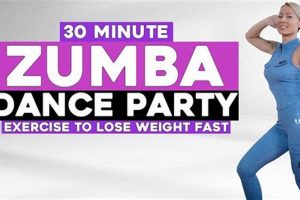
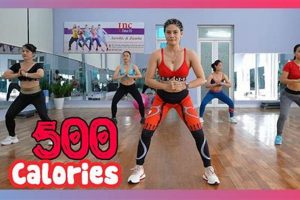
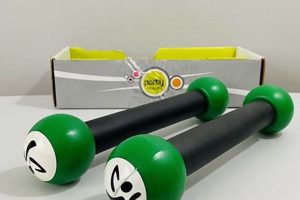
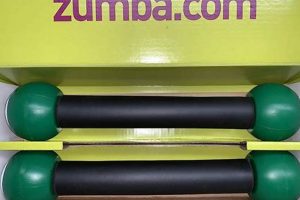
A fitness modality blends the energetic choreography of a popular dance fitness program with the added resistance of handheld weights. This approach integrates cardiovascular exercise with strength training, aiming to enhance muscle endurance and tone. Participants execute dance-inspired movements while holding light dumbbells or resistance bands, increasing the intensity of each repetition and engaging a wider range of muscle groups.
The integration of resistance into a dance-based routine offers several advantages. It can contribute to improved bone density, increased caloric expenditure, and enhanced muscle definition compared to solely cardiovascular workouts. Furthermore, incorporating weights can amplify the afterburn effect, where the body continues to burn calories at a higher rate post-exercise. This fusion fitness trend has gained traction as individuals seek time-efficient and enjoyable ways to achieve comprehensive physical conditioning.
Subsequent sections will delve into the specific muscles targeted, appropriate weight selection strategies, considerations for injury prevention, and the overall effectiveness of combining rhythmic dance movements with resistance training principles.
Guidance for Dance Fitness with Resistance
Optimal execution of dance fitness routines incorporating added resistance necessitates careful planning and mindful execution to maximize benefits and mitigate potential risks. The following guidance is provided to ensure a safe and effective training experience.
Tip 1: Weight Selection. Begin with lighter weights. It is recommended to start with dumbbells between 1 to 3 pounds. Emphasize maintaining proper form throughout the entire range of motion. Gradually increase the weight as strength and coordination improve.
Tip 2: Controlled Movements. Prioritize controlled and deliberate movements over speed. Rapid or jerky motions can compromise form and increase the risk of injury, particularly to the shoulder and elbow joints.
Tip 3: Core Engagement. Maintain consistent engagement of the core musculature throughout the workout. A strong core stabilizes the spine and contributes to proper posture, reducing the risk of lower back strain.
Tip 4: Proper Posture. Adhere to proper postural alignment. Keep the shoulders relaxed and down, the chest lifted, and the spine neutral. Avoid rounding the back or hyperextending the neck.
Tip 5: Gradual Progression. Incrementally increase the intensity and duration of workouts. Avoid sudden jumps in weight or workout length. Allow the body adequate time to adapt to the increased demands.
Tip 6: Footwear Considerations. Wear supportive athletic shoes that provide adequate cushioning and stability. Avoid shoes with excessive tread that may impede pivoting and turning movements.
Tip 7: Hydration and Nutrition. Ensure adequate hydration before, during, and after the workout. Consume a balanced diet that supports energy levels and muscle recovery.
Adhering to these guidelines can help individuals safely and effectively integrate resistance training into their dance fitness routine, maximizing the potential for strength gains, improved cardiovascular fitness, and enhanced body composition.
The subsequent sections will explore common errors to avoid and alternative resistance modalities that can be incorporated into this type of fitness activity.
1. Muscle Endurance

Muscle endurance, the capacity of a muscle or group of muscles to sustain repeated contractions against resistance over an extended period, is a critical factor in maximizing the benefits derived from a dance fitness program incorporating added resistance. The integration of weights into a dance-based workout places increased demands on muscular systems, requiring enhanced endurance for effective performance and reduced risk of fatigue-related injuries.
- Movement Repetition
The rhythmic and repetitive nature of dance fitness routines necessitates a high degree of muscle endurance. The addition of weights amplifies this requirement, as muscles must work harder to execute each movement against the added load. Insufficient muscle endurance can lead to premature fatigue, compromising form and potentially resulting in injury.
- Weight Management
Maintaining control of the added resistance throughout the duration of the workout is directly dependent on muscle endurance. As muscles fatigue, the ability to stabilize joints and control movement diminishes, increasing the risk of sprains, strains, and other musculoskeletal injuries. Adequate muscle endurance allows for consistent and controlled execution of weighted movements.
- Workout Intensity and Duration
Muscle endurance directly influences the ability to sustain a desired workout intensity and duration. Individuals with higher levels of muscle endurance can participate in longer and more challenging sessions, leading to greater caloric expenditure and improved cardiovascular fitness. Conversely, limited muscle endurance may necessitate frequent breaks or reduced intensity, limiting the overall effectiveness of the workout.
- Postural Control
Maintaining proper posture throughout a dance fitness routine with weights relies heavily on the endurance of core and back muscles. These muscles work continuously to stabilize the spine and prevent compensatory movements that can lead to pain and injury. Adequate muscle endurance in these key postural muscles is essential for safe and effective participation.
In essence, the relationship between muscle endurance and resistance-enhanced dance fitness is symbiotic. Building and maintaining sufficient muscle endurance is not merely an ancillary benefit but a fundamental prerequisite for safe, effective, and enjoyable participation. Progressing gradually and prioritizing proper form are crucial strategies for developing the necessary muscle endurance to thrive in this fitness modality.
2. Calorie Expenditure

The integration of resistance into dance fitness significantly influences caloric expenditure. A dance-based routine already elevates metabolic rate due to its cardiovascular demands. However, the addition of weights introduces an increased workload on the musculoskeletal system, demanding more energy to execute each movement. This combined effect leads to a higher overall caloric burn compared to a similar dance fitness class performed without added resistance. Individuals effectively seeking weight management may find this approach beneficial due to the heightened energy demands.
The precise number of calories expended during a dance fitness session with weights is contingent upon several variables, including the individual’s weight, fitness level, the intensity of the workout, and the specific weights utilized. For example, a heavier individual engaging in a high-intensity routine with moderate weights will generally expend more calories than a lighter individual participating in a low-intensity session with minimal resistance. Furthermore, the afterburn effect, or Excess Post-exercise Oxygen Consumption (EPOC), is likely amplified when weights are incorporated, resulting in a continued elevation of metabolic rate post-workout. This sustained caloric burn can contribute to long-term weight management and improved body composition.
Ultimately, understanding the interplay between dance fitness, resistance, and caloric expenditure allows participants to optimize their workout strategies for specific fitness goals. It is essential to recognize that while the addition of weights can enhance caloric expenditure, consistent adherence to proper form and a balanced dietary intake are equally crucial for achieving sustainable and measurable results. Monitoring workout intensity and heart rate can provide valuable insights into the effectiveness of the workout in terms of caloric expenditure.
3. Joint Stability

Joint stability, the ability of a joint to resist displacement or injury, is a paramount consideration in any exercise program, particularly when combining high-impact movements with added resistance, as is the case with dance fitness routines incorporating weights. The dynamic choreography characteristic of dance fitness places considerable stress on joints, especially the ankles, knees, hips, and shoulders. Adding weights amplifies this stress, increasing the potential for instability and subsequent injury if proper precautions are not taken. For instance, improper alignment during a weighted squat while performing a dance move could lead to knee instability and possible ligament damage.
Maintaining adequate joint stability in this context requires a multifaceted approach. Strengthening the muscles surrounding the joints, including the rotator cuff for shoulder stability and the quadriceps, hamstrings, and calf muscles for knee and ankle stability, is crucial. These muscles act as dynamic stabilizers, actively controlling joint movement and preventing excessive range of motion. Furthermore, proprioceptive training, which enhances the body’s awareness of its position in space, plays a significant role in improving joint stability. Examples of proprioceptive exercises include balance drills on unstable surfaces, which challenge the body to maintain equilibrium and strengthen the supporting muscles. The integration of proper warm-up routines, focusing on dynamic stretching and joint mobilization, is also vital for preparing the body for the demands of the workout.
Ultimately, neglecting joint stability while participating in a dance fitness program with weights can have significant consequences, ranging from minor sprains and strains to more severe injuries requiring medical intervention. By prioritizing joint stability through targeted strength training, proprioceptive exercises, and mindful movement execution, participants can mitigate the risk of injury and maximize the benefits of this combined fitness approach. Understanding the biomechanics of movement and the impact of added resistance on joint integrity is fundamental to safe and effective participation.
4. Proper Form

The execution of correct form is paramount in dance fitness routines that incorporate weights. The addition of resistance, while beneficial for muscle strengthening and increased caloric expenditure, also amplifies the potential for injury if movements are performed incorrectly. A dance fitness program inherently involves dynamic, multi-planar movements. Integrating weights without adhering to proper biomechanics introduces stress to joints and connective tissues, increasing the risk of sprains, strains, and more severe musculoskeletal injuries. For example, executing a squat with dumbbells while simultaneously performing a lateral dance step demands significant core stability and controlled knee alignment. Failure to maintain proper form during this movement can result in excessive stress on the knee joint, potentially leading to injury.
Correct form necessitates mindful attention to posture, alignment, and muscle engagement. Participants must maintain a neutral spine, engage core muscles for stabilization, and control the range of motion of each movement. Weight selection also plays a critical role. Utilizing weights that are too heavy compromises the ability to maintain proper form, defeating the purpose of the exercise and increasing the risk of injury. It is generally advisable to begin with lighter weights and gradually increase the load as strength and technique improve. Furthermore, mirror work and instructor feedback are essential tools for ensuring proper form. Observing oneself in a mirror allows for real-time adjustments to posture and alignment, while instructor guidance provides personalized feedback and corrections.
In summary, proper form is not merely an aesthetic concern but a fundamental prerequisite for safe and effective participation in dance fitness activities involving weights. Neglecting proper form can negate the benefits of resistance training and substantially elevate the risk of injury. Therefore, prioritizing correct form through mindful movement, appropriate weight selection, and consistent feedback is essential for maximizing the potential and minimizing the risks associated with this fitness modality.
5. Weight Progression

Weight progression, the systematic increase in resistance over time, forms a cornerstone of effective strength training and plays a crucial role within the framework of a dance fitness program incorporating weights. Its absence undermines the potential for muscle adaptation and strength gains, limiting the overall effectiveness of the fitness modality. The principle is straightforward: as muscles adapt to a specific weight, the stimulus must increase to promote further growth and development. Failing to implement weight progression can lead to a plateau, where the body no longer experiences sufficient challenge to elicit further adaptation. An individual consistently using 3-pound dumbbells for an extended period, without increasing the resistance, will eventually cease to experience significant strength gains.
The application of weight progression within a dance fitness context requires careful consideration. Unlike traditional weightlifting, where the focus is often on maximizing strength through heavy loads, the emphasis here is on muscle endurance and tone while maintaining proper form during dynamic, multi-planar movements. Therefore, the progression should be gradual and incremental. This could involve increasing the weight by small increments (e.g., moving from 3-pound to 5-pound dumbbells), or increasing the number of repetitions performed with a given weight before increasing the load. Furthermore, technique must take precedence over weight. If an individual is unable to maintain proper form while using a heavier weight, they should revert to a lighter weight until their technique improves. A practical approach might involve increasing weight only after consistently completing all repetitions of a given exercise with perfect form for two consecutive weeks.
Ultimately, consistent and mindful weight progression is essential for realizing the full benefits of a dance fitness program incorporating weights. Ignoring this principle leads to stagnation, while improperly implementing it increases the risk of injury. The key lies in finding a balance between challenging the muscles and maintaining impeccable form, allowing for progressive adaptation without compromising joint integrity. This balance is not static; it requires ongoing self-assessment and adjustment based on individual progress and feedback.
6. Injury Prevention
The incorporation of handheld weights into a dance fitness program introduces an elevated risk of musculoskeletal injuries compared to a standard dance fitness routine. The inherent dynamic movements, combined with added resistance, create potential for joint stress and muscle strain. Injury prevention, therefore, becomes a paramount consideration for individuals participating in this fitness modality. Improper form, excessive weight, inadequate warm-up, and pre-existing conditions are primary causative factors in exercise-related injuries. For instance, failure to maintain core engagement during weighted arm movements can lead to lower back strain, while attempting rapid turns with dumbbells can increase the risk of ankle sprains. Recognizing these risks and implementing preventative strategies is crucial for sustained participation and achieving fitness goals.
Practical strategies for injury prevention encompass multiple facets. Weight selection should be conservative, prioritizing form over load. A comprehensive warm-up, including dynamic stretching and joint mobilization, prepares the muscles and connective tissues for the demands of the workout. Furthermore, participants should be cognizant of their physical limitations and modify exercises as needed. Individuals with pre-existing joint conditions, such as arthritis, may require modified movements or reduced weight. Adequate hydration and proper footwear are also critical components of injury prevention. Supportive athletic shoes provide stability and cushioning, while sufficient fluid intake maintains muscle function and reduces the risk of cramps. Regular self-assessment and instructor feedback are essential for identifying and correcting improper form, further mitigating the risk of injury.
Concluding, integrating weights into a dance fitness routine can offer substantial fitness benefits. However, injury prevention must be a priority. By understanding the potential risks and implementing proactive strategies, participants can minimize the likelihood of injury and maximize the long-term benefits of this fitness modality. Challenges remain in promoting injury prevention awareness among participants and ensuring consistent adherence to safe exercise practices. Continuous education and emphasis on proper form are necessary to foster a safe and effective fitness environment. The understanding of this connection enhances participation in dance fitness with weights, allowing users to attain their desired fitness outcomes safely.
Frequently Asked Questions
The following section addresses common inquiries regarding dance fitness integrating resistance.
Question 1: Is combining dance fitness with weights safe for individuals with pre-existing joint conditions?
Participation with pre-existing joint conditions requires careful consideration. Consulting a physician or physical therapist before commencing this type of program is advisable. Modifications to exercises may be necessary to accommodate limitations and minimize the risk of exacerbating the condition.
Question 2: What is the recommended weight range for beginners?
New participants should initiate with lighter weights, typically ranging from 1 to 3 pounds. Emphasizing proper form and gradual progression is more important than maximizing weight lifted initially.
Question 3: How frequently should this fitness modality be practiced to observe tangible results?
Consistency is critical. Engaging in this type of workout 2-3 times per week, coupled with a balanced diet, generally yields noticeable improvements in muscle tone and cardiovascular fitness within a few weeks.
Question 4: What are the potential benefits beyond physical conditioning?
Beyond physical benefits, such workouts may also contribute to improved mood, stress reduction, and enhanced coordination due to the combination of dance and resistance training.
Question 5: Are there specific warm-up exercises that are particularly important before beginning?
Dynamic stretching and joint mobilization exercises are crucial to prepare the muscles and joints for the demands of the workout. Focus should be given to major joints, such as shoulders, hips, and knees, to optimize the range of motion.
Question 6: What type of footwear is most appropriate?
Supportive athletic shoes with adequate cushioning are recommended. Shoes should provide lateral stability and allow for ease of movement during dance-based exercises.
The information provided above is for general informational purposes only and does not constitute medical advice. Individual results may vary.
The subsequent section will address variations to further diversify training.
Zumba Workout with Weights
This exploration has illuminated the multifaceted nature of dance fitness enhanced by resistance. Key points encompass the necessity of proper form to mitigate injury, the significance of progressive weight adaptation to foster muscle development, and the importance of understanding individual physical limitations. Strategic integration of these principles is fundamental to realizing the potential benefits of this combined fitness approach.
The synthesis of dance and resistance training presents a dynamic avenue for comprehensive physical conditioning. Continued research and refinement of training methodologies are crucial to optimizing safety and efficacy. Individuals are encouraged to approach this modality with informed awareness and a commitment to sound exercise practices, thus maximizing long-term health and well-being.