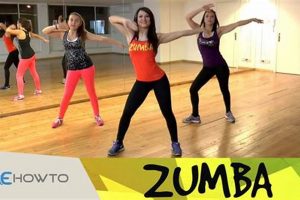
These lightweight, maraca-like instruments are designed to enhance the traditional Zumba workout by adding resistance. Typically weighing between 1 and 2.5 pounds each, they are held in the hands and used to amplify arm movements, increasing the intensity and calorie burn of the exercise. As participants move to the music, the weighted implements engage more muscle groups than a bodyweight-only Zumba class.
The incorporation of added resistance to the Zumba routine provides several advantages. It helps improve muscle strength and endurance, particularly in the arms, shoulders, and core. Furthermore, using the sticks can lead to increased bone density over time, promoting skeletal health. The concept of adding weight to dance-based fitness is not new; however, its specific integration with Zumba provides a unique and engaging approach to full-body conditioning.
The following sections will delve into the specific exercises performed with these implements, proper usage techniques, and considerations for individuals with varying fitness levels. Furthermore, a comparison with other fitness tools will be provided to better understand the unique benefits offered.
Effective Usage Strategies
The following guidelines provide essential insights for maximizing benefits and minimizing potential risks when incorporating these tools into a fitness regimen.
Tip 1: Start with a Light Weight: New users should select the lightest option available. This allows for proper form development and prevents undue stress on joints and muscles.
Tip 2: Maintain Proper Posture: Throughout the workout, focus on maintaining a neutral spine and engaged core. This is crucial for preventing back injuries and maximizing the effectiveness of each movement.
Tip 3: Focus on Controlled Movements: Avoid swinging the sticks haphazardly. Each movement should be deliberate and controlled, engaging the targeted muscle groups.
Tip 4: Integrate with Varied Movements: Employ a variety of upper body movements, including raises, curls, and extensions, to target different muscle groups and enhance overall fitness.
Tip 5: Listen to the Body: If pain is experienced, immediately discontinue use. Adjust the weight or modify the exercise as needed to accommodate individual limitations.
Tip 6: Incorporate Regular Breaks: Especially for beginners, it is advisable to incorporate short rest periods during the workout to prevent fatigue and maintain proper form.
Tip 7: Consult a Professional: Individuals with pre-existing medical conditions should consult with a physician or qualified fitness professional before beginning a new exercise program.
Adhering to these strategies can ensure a safe and effective workout, leading to improved muscle tone, increased calorie burn, and enhanced overall fitness levels.
The subsequent discussion will explore the integration of these fitness accessories into a broader workout routine and provide considerations for long-term fitness goals.
1. Increased Muscle Engagement

The integration of weighted implements significantly alters muscle activation patterns during a Zumba workout. The added resistance necessitates greater muscular effort, transforming familiar dance movements into a more demanding strength training exercise.
- Amplified Arm Activation
The use of weighted implements places a direct demand on the biceps, triceps, and deltoids. Simple arm extensions and curls, which are inherent in many Zumba routines, require significantly more force to execute, leading to increased muscle fiber recruitment and hypertrophy over time. This is a key differentiator from bodyweight-only Zumba classes.
- Enhanced Core Stabilization
Maintaining proper form while using the sticks necessitates increased core engagement. The abdominal muscles, obliques, and lower back muscles must work harder to stabilize the torso against the added weight, promoting improved postural control and core strength. The dynamic movements of Zumba combined with resistance present a continuous challenge to core stability.
- Shoulder and Upper Back Recruitment
Movements involving the arms, when performed with added weight, engage the shoulder girdle and upper back muscles to a greater degree. Muscles such as the trapezius, rhomboids, and rotator cuff muscles are activated to stabilize the shoulder joint and control the arm movements. This contributes to improved shoulder stability and posture.
- Proprioceptive Challenge
The added weight alters the body’s center of gravity and introduces a proprioceptive challenge. The body must continuously adjust to maintain balance and coordination, leading to improved neuromuscular control and body awareness. This enhanced proprioception can translate to improved performance in other physical activities.
The collective effect of these facets highlights that the use of weighted implements is not merely about adding weight; it’s about strategically increasing the demands placed on specific muscle groups and enhancing overall neuromuscular coordination. This translates to a more comprehensive and effective workout experience compared to traditional, bodyweight-only Zumba classes. The resulting increase in muscle engagement is a significant factor driving the potential fitness benefits.
2. Enhanced Calorie Expenditure
The addition of weighted implements to a Zumba routine leads to a demonstrable increase in energy expenditure during and after the exercise session. This stems from the heightened muscle activation required to control the added weight, as muscles consume more calories than fat tissue. The body works harder to stabilize joints and maintain posture throughout the movements, further contributing to caloric burn. For example, a participant engaging in a one-hour Zumba class with the sticks may expend approximately 20-30% more calories compared to an equivalent class without added weight, contingent upon individual factors such as weight and fitness level.
The phenomenon of excess post-exercise oxygen consumption (EPOC) also plays a significant role. EPOC refers to the elevated metabolic rate that persists for several hours after exercise. The increased intensity facilitated by the weighted sticks results in a greater EPOC effect, meaning the body continues to burn calories at a higher rate even after the workout concludes. This translates to a greater overall caloric deficit, which is crucial for weight management and fat loss. The impact of this increase in expended energy is substantial in the long term, contributing to fat loss.
In summary, these weighted fitness tools elevate calorie expenditure through multiple pathways: heightened muscle activation, increased intensity, and a prolonged EPOC effect. The practical significance lies in the enhanced potential for weight management and overall fitness improvements.
3. Improved Upper Body Strength
The use of weighted implements within a Zumba Fitness regimen directly contributes to the development of upper body strength. This section delineates the specific mechanisms and benefits associated with this increase in strength, highlighting its relevance to overall fitness.
- Increased Resistance and Muscle Activation
The added weight from the implements challenges muscles beyond what is typically encountered in bodyweight Zumba routines. This increased resistance prompts greater muscle fiber recruitment in the arms, shoulders, and upper back, leading to strength gains over time. The body adapts to handle the increased load, resulting in tangible improvements in muscular strength and endurance.
- Enhanced Muscle Endurance
Repeated movements performed with weighted implements build muscle endurance. The muscles responsible for arm movements must sustain effort for longer periods during the Zumba class, fostering fatigue resistance and promoting overall muscle stamina. The repetitive nature of Zumba routines coupled with the added weight serves to promote muscular endurance, supplementing strength gains.
- Improved Bone Density
Resistance exercise, such as that provided by these fitness tools, stimulates bone remodeling and increases bone mineral density. The impact of the weighted movements places stress on the bones of the upper extremities, prompting them to become stronger and more resistant to fractures. This is particularly beneficial for mitigating the risk of osteoporosis and maintaining skeletal health.
- Enhanced Postural Control
Strengthening the muscles of the upper back and shoulders contributes to improved postural control. Stronger back muscles help maintain proper alignment of the spine, counteracting the effects of prolonged sitting and preventing rounded shoulders. This improved posture can alleviate back pain and enhance overall physical well-being.
The combined effect of these factors underscores the effectiveness of incorporating weighted implements into Zumba Fitness for improving upper body strength. The increase in resistance, the repetitive nature of the exercises, and the resulting adaptations in muscle and bone contribute to a stronger and healthier upper body. This enhancement benefits not only athletic performance but also daily activities, contributing to a higher quality of life.
4. Rhythmic Coordination Challenge

The incorporation of weighted implements into a Zumba Fitness routine introduces a heightened demand on rhythmic coordination. This challenge arises from the need to synchronize body movements with both the music and the added weight, requiring a greater degree of motor control and cognitive processing. The following details the facets of this challenge.
- Enhanced Limb Awareness
The added weight necessitates a heightened awareness of limb positioning and movement. Participants must consciously control the trajectory and speed of their arms to maintain rhythm and prevent injury. The implements serve as proprioceptive feedback enhancers, compelling greater attention to bodily movement in space. For example, simple arm extensions become complex when one has to manage both momentum and rhythm.
- Increased Cognitive Load
Coordinating movements with the implements requires greater cognitive processing. Participants must simultaneously process auditory cues from the music, visual cues from the instructor, and proprioceptive feedback from their own bodies. This multitasking increases the cognitive load, promoting improved mental agility and focus. The act of following a complex Zumba sequence while managing extra weight is a testament to this cognitive exercise.
- Temporal Precision Requirement
Maintaining accurate timing becomes more critical with the added weight. Inconsistencies in timing are amplified due to momentum effects. Participants must refine their motor skills to execute movements precisely on the beat, fostering improved rhythmic accuracy. The difference between an amateur and a professional becomes discernible with how effectively one maintains time. Even a simple arm raise can become a complicated exercise.
- Multi-Limb Coordination Demand
The integration requires precise coordination between upper and lower body movements. Participants must synchronize the actions of their arms with footwork and core engagement. This multi-limb coordination challenge enhances inter-muscular communication and improves overall motor control, which is crucial for Zumba fitness toning sticks.
These facets highlight that the rhythmic coordination challenge is not simply about moving to music; it is about integrating external resistance into a complex movement pattern, demanding greater motor skill acquisition, proprioceptive awareness, and cognitive function. This heightened coordination challenge offers the potential for improved physical fitness and cognitive enhancement.
5. Compact Size, Portability
The inherent design of Zumba Fitness Toning Sticks emphasizes minimal dimensions and ease of transport, which significantly contributes to their practicality and widespread appeal within the fitness community. This attribute allows for consistent exercise adherence regardless of location or time constraints.
- Home Storage Efficiency
The sticks require minimal storage space within a household environment. Unlike larger fitness equipment such as treadmills or weight benches, the implements can be easily stored in a closet, under a bed, or even within a drawer. This accessibility encourages more frequent use, as the barrier to entry for a workout is significantly reduced. Home storage efficiency is a great advantage.
- Travel Convenience
Their compact size facilitates easy packing in luggage for travel. Whether for business trips or vacations, individuals can maintain their exercise routine without disruption. The ability to bring the implements along ensures consistent muscle engagement and calorie expenditure, even when access to traditional fitness facilities is limited or unavailable. It is a great feature for travelling. These are easily moved from space to space without problem.
- Studio Class Integration
Instructors can easily transport multiple sets of the toning sticks to different class locations. Their lightweight nature and small footprint streamline the setup and takedown process, allowing instructors to focus on delivering quality instruction without being burdened by cumbersome equipment. Easy to manage in and out of the studios.
- Outdoor Fitness Adaptability
The portability of these fitness sticks permits their integration into outdoor exercise routines. Individuals can incorporate them into workouts in parks, beaches, or any open space, leveraging the benefits of fresh air and natural surroundings. This adaptability expands the range of workout environments and promotes greater exercise adherence. Allows new ways to exercise.
In summation, the design contributes significantly to the adoption and consistent utilization of Zumba Fitness Toning Sticks. Their convenience transcends spatial limitations, enabling users to seamlessly integrate them into diverse lifestyles and fitness settings, thereby promoting long-term health and well-being.
Frequently Asked Questions
This section addresses common inquiries regarding the use, benefits, and safety considerations associated with Zumba Fitness Toning Sticks. The information provided aims to offer clarity and guidance for potential and current users.
Question 1: What specific muscle groups are targeted during a Zumba Fitness class that incorporates toning sticks?
The use of these implements increases muscle activation primarily in the upper body, including the biceps, triceps, deltoids, and muscles of the shoulder girdle. Core stabilization is also enhanced due to the need to maintain balance during weighted movements.
Question 2: What is the recommended weight for Zumba Fitness Toning Sticks, particularly for beginners?
Beginners are advised to start with the lightest available weight, typically 1 to 1.5 pounds per stick. This allows for the development of proper form and minimizes the risk of injury. As strength increases, the weight can be gradually increased.
Question 3: Are Zumba Fitness Toning Sticks suitable for individuals with pre-existing joint conditions, such as arthritis?
Individuals with pre-existing joint conditions should consult a physician or physical therapist before using these implements. The added weight can exacerbate certain conditions if proper precautions are not taken.
Question 4: How often should these fitness tools be used per week to see noticeable results?
For optimal results, it is recommended to incorporate them into a Zumba routine 2-3 times per week. Consistency is key to achieving improvements in muscle tone, strength, and endurance.
Question 5: What are the potential risks associated with improper use of Zumba Fitness Toning Sticks?
Improper use can lead to muscle strains, joint pain, and, in rare cases, more serious injuries. It is essential to maintain proper form, use an appropriate weight, and listen to the body’s signals to avoid overexertion.
Question 6: Can Zumba Fitness Toning Sticks be used independently of a Zumba class?
While primarily designed for use within a Zumba class, these implements can be incorporated into other exercise routines, such as strength training or cardio workouts. However, users should ensure they are familiar with proper exercise techniques to prevent injury.
In summary, Zumba Fitness Toning Sticks can be a valuable tool for enhancing a fitness regimen, provided they are used safely and appropriately. Awareness of potential risks and adherence to proper form are paramount.
The subsequent discussion will explore alternative fitness tools and their comparative benefits, offering a broader perspective on exercise options.
Zumba Fitness Toning Sticks
This examination has detailed the function, benefits, and safe application of Zumba Fitness Toning Sticks. The analysis clarifies how these tools can augment muscle engagement, caloric expenditure, and upper body strength within a Zumba framework. Furthermore, proper usage strategies, potential risks, and answers to frequently asked questions have been addressed, providing a comprehensive understanding of their role in fitness routines.
The integration of Zumba Fitness Toning Sticks presents an opportunity to elevate physical conditioning. However, responsible implementation, guided by awareness and proper technique, remains paramount. The informed application of such tools can contribute to enhanced fitness outcomes and sustained well-being.