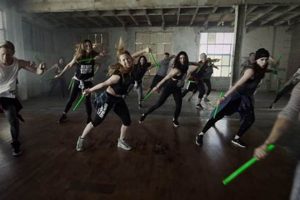
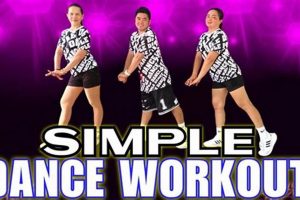
Engaging in physical activity through dance-based fitness programs within a residential setting is becoming increasingly prevalent. This approach offers the opportunity to participate in structured exercise routines led by instructors via streaming services or pre-recorded videos, eliminating the need for travel to a physical gym or studio. Individuals can modify the intensity of the routines to align with their fitness levels and preferences. For example, a beginner may opt for low-impact modifications, while a more advanced participant could increase the tempo or add resistance using light weights.
The appeal of this form of exercise stems from its accessibility and convenience. Individuals with time constraints, limited access to fitness facilities, or a preference for exercising in a familiar environment find it particularly beneficial. Moreover, this modality promotes cardiovascular health, improves coordination, and enhances mood through the release of endorphins. Historically, group fitness classes have fostered a sense of community and motivation; the virtual adaptation allows individuals to retain aspects of this social dynamic through online platforms.
The subsequent sections will delve into the optimal setup for a home-based fitness area, discuss strategies for selecting appropriate online classes, provide guidance on injury prevention techniques, and explore methods for maximizing the effectiveness of such fitness activities. Further analysis will address considerations for adapting exercises based on individual needs and fitness levels.
Optimizing Dance Fitness Routines in a Home Setting
The following recommendations aim to maximize the effectiveness and safety of engaging in dance-based fitness programs within a residential environment. Adherence to these guidelines can contribute to improved physical conditioning and reduced risk of injury.
Tip 1: Space Preparation: Designate a sufficient workout area free from obstructions. The area should allow for unrestricted movement in all directions, minimizing the potential for collisions with furniture or other objects. A minimum clear space of 6 feet by 6 feet is recommended.
Tip 2: Appropriate Footwear: Select athletic shoes that provide adequate support and cushioning. Avoid exercising barefoot or in socks, as this can increase the risk of foot and ankle injuries. Cross-training shoes are generally suitable for the diverse movements involved.
Tip 3: Warm-up Protocol: Prior to commencing the primary activity, engage in a thorough warm-up routine. This should include dynamic stretching exercises that prepare the muscles for activity and increase joint mobility. A 5-10 minute warm-up is advisable.
Tip 4: Hydration Maintenance: Ensure adequate hydration by consuming water before, during, and after the exercise session. Dehydration can negatively impact performance and increase the risk of muscle cramps.
Tip 5: Modification Strategies: Adapt the exercises to match individual fitness levels and physical limitations. If a particular movement causes pain or discomfort, modify it or substitute it with a less demanding alternative. Lower impact variations can be used as needed.
Tip 6: Post-Exercise Cool-down: Conclude the exercise session with a cool-down period. This should involve static stretching exercises held for 20-30 seconds each. Cooling down helps to gradually reduce heart rate and prevent muscle soreness.
Tip 7: Consistent Scheduling: Establish a regular exercise schedule to promote adherence and maximize the benefits of the program. Consistency is crucial for achieving long-term fitness goals. Aim for at least three sessions per week.
Tip 8: Monitor Intensity Levels: Pay attention to perceived exertion and adjust the intensity accordingly. Utilize the talk test as a guide; the ability to hold a conversation without significant difficulty indicates an appropriate level of exertion. If you can not hold a conversation reduce the instensity.
By incorporating these strategies, individuals can optimize their home-based dance fitness experiences, contributing to improved physical health and overall well-being. The key is to perform the exercises with right technique and safety.
The concluding section will summarize the benefits of dance-based fitness programs conducted within a residential setting and offer final recommendations for maintaining a safe and effective routine.
1. Proper Footwear Selection

Proper footwear selection is a critical component of a safe and effective dance fitness routine conducted within a residential setting. The dynamic movements inherent in such programs necessitate footwear that provides adequate support, cushioning, and traction to minimize the risk of injury and optimize performance.
- Impact Absorption
Dance fitness activities often involve repetitive jumping and high-impact movements. Footwear with adequate cushioning in the midsole helps to absorb shock, reducing stress on joints such as the ankles, knees, and hips. Insufficient impact absorption can lead to overuse injuries and exacerbate pre-existing conditions. For instance, individuals using worn-out or inappropriate footwear during high-intensity routines may experience increased joint pain or shin splints.
- Lateral Stability
Many dance fitness routines incorporate lateral movements that place significant stress on the ankles. Footwear with good lateral support helps to stabilize the foot and ankle, reducing the risk of sprains and strains. Shoes lacking lateral stability may cause the foot to roll inward or outward during these movements, increasing the likelihood of injury. Cross-training shoes, designed to provide support for both forward and lateral motion, are generally preferable to running shoes in this context.
- Traction and Grip
Sufficient traction and grip are essential for preventing slips and falls, particularly on smooth or polished floors commonly found in residential environments. Footwear with a non-slip outsole provides the necessary grip to maintain balance and control during rapid changes in direction. Shoes with inadequate traction can create a hazardous environment, increasing the risk of accidental falls and related injuries. The outsole material should be selected based on the typical flooring surface used for the workout.
- Fit and Comfort
Proper fit and comfort are crucial for preventing blisters, chafing, and other foot-related discomfort. Footwear that is too tight can restrict circulation and cause pain, while shoes that are too loose can lead to instability and increased risk of injury. Individuals should ensure that their footwear allows for adequate toe room and provides a secure fit around the heel. Trying on shoes and walking or jumping in them is helpful in determining the best fit. Breathable materials enhance comfort, minimize moisture build-up and slippage.
The features associated with proper footwear selection underscores its significance in ensuring a safe and productive fitness experience when doing Zumba in a home. By prioritizing footwear that offers appropriate cushioning, stability, traction, and fit, individuals can minimize the potential for injury and maximize the benefits derived from dance fitness activities within a residential setting. Consideration of flooring material is also paramount for optimal grip.
2. Adequate Space
The availability of sufficient unobstructed area is a foundational prerequisite for safe and effective participation in dance-based fitness programs within a residential setting. The spatial dimension directly impacts the ability to execute movements correctly, reduces the risk of physical harm, and contributes to the overall quality of the workout experience. Failure to address this requirement can severely compromise the benefits and potentially lead to adverse outcomes.
- Range of Motion Accommodation
Dance fitness routines often involve expansive movements, including lateral steps, pivots, and arm extensions. An insufficient workout area restricts the ability to perform these movements fully and accurately, leading to compromised technique and reduced exercise effectiveness. For example, attempting a grapevine step in a confined space may result in shortened steps and incorrect posture, diminishing the intended muscle activation and increasing the risk of imbalance. If the space is restricted, the workout might not be optimal.
- Obstacle Mitigation
A cluttered or restricted space increases the risk of collisions with furniture, walls, or other objects. These collisions can result in injuries ranging from minor bumps and bruises to more serious sprains or fractures. Maintaining a clear workout zone minimizes these hazards, allowing participants to focus on the exercise without the constant concern of potential obstacles. Prior to beginning a home-based dance fitness session, a thorough sweep of the designated area to remove any obstructions is essential. It should also be done, if there is anything that is broken or not stable.
- Movement Trajectory Prediction
Dance fitness involves quick changes in direction and complex footwork patterns. With enough space, anticipating the movement is easier. This anticipation reduces the possibility of missteps and falls. If there is less area, it can affect anticipation of the movement. This is especially important for individuals who are inexperienced. By having more area, it is easier to follow trajectory, which decreases the possibilities of unbalance and injuries.
- Mirrored Feedback Implementation
Mirrors help to monitor form, technique, and alignment. A wide enough space enables placement to see the mirror. Correcting the form ensures more effective and safer workout. The space helps with implementation. Therefore, that allows a better dance fitness for people.
These elements reinforce the critical importance of adequate space when engaging in dance fitness programs at home. By prioritizing spatial considerations, individuals can create a safer, more effective, and more enjoyable exercise environment. The ability to move freely and confidently is fundamental to reaping the full benefits of this type of activity and minimizing the risk of associated injuries.
3. Hydration Protocols

Dance-based fitness routines, characterized by their high-intensity nature, significantly elevate core body temperature and induce substantial fluid loss through perspiration. These physiological responses necessitate the implementation of structured hydration protocols to maintain optimal physiological function and mitigate the risk of dehydration-related complications. Neglecting these protocols during in-home dance fitness sessions can compromise performance, increase the likelihood of muscle cramps, and potentially lead to more severe health consequences such as heat exhaustion. Fluid replacement before, during, and after each session is crucial.
The impact of inadequate hydration extends beyond mere physical discomfort. Dehydration reduces blood volume, placing additional strain on the cardiovascular system as it works to deliver oxygen and nutrients to working muscles. This can manifest as increased heart rate, dizziness, and fatigue, thereby limiting the duration and intensity of the workout. Furthermore, dehydration impairs cognitive function, affecting coordination and increasing the risk of falls or other accidents. For example, an individual experiencing even mild dehydration may exhibit reduced reaction time, leading to missteps during complex dance sequences. An example would be, for a 45 minute workout, there will be water consumption of 16 oz (473 ml) to 24 oz (710 ml). And water replenishment before and after workout to regulate the body’s water loss.
In conclusion, adherence to appropriate hydration guidelines is an indispensable component of a safe and effective dance fitness regimen conducted within a residential setting. Consistent fluid intake, tailored to the duration and intensity of the activity, helps maintain physiological equilibrium, enhances performance, and reduces the risk of adverse health outcomes. While individual fluid needs may vary based on factors such as body weight and environmental conditions, prioritizing hydration remains a fundamental principle for maximizing the benefits and minimizing the risks associated with this type of exercise.
4. Warm-up Essential
The integration of a proper warm-up routine as an essential component of at-home dance fitness regimens, such as Zumba, directly influences participant safety and performance outcomes. The absence of a preparatory phase increases the likelihood of musculoskeletal injuries, including muscle strains and joint sprains, due to the sudden imposition of physical stress on unprepared tissues. A structured warm-up serves to gradually elevate heart rate, increase blood flow to working muscles, and improve joint mobility, thereby reducing the risk of such injuries. For instance, initiating high-impact Zumba movements without first performing dynamic stretches, such as leg swings and torso twists, predisposes individuals to potential hamstring pulls or lower back pain.
The benefits of a warm-up extend beyond injury prevention. A well-designed warm-up routine enhances neuromuscular coordination, improving the body’s ability to execute complex dance sequences with greater precision and control. Furthermore, it prepares the cardiovascular system for the demands of the workout, allowing for a more efficient delivery of oxygen and nutrients to the muscles. Consequently, individuals who incorporate a thorough warm-up into their at-home dance fitness activities typically experience improved endurance and a reduced perception of effort during the workout. Consider an example of an individual performing a 5-10 minute warm-up comprising light cardio and dynamic stretches before starting a Zumba session. This individual would likely exhibit enhanced agility and coordination compared to someone who forgoes the warm-up.
In summary, the warm-up routine serves as a critical prerequisite for engaging in Zumba workouts at home. It is the first line of defense against exercise-related injuries and also is crucial for preparation of proper execution. Adherence to a proper warm-up routine is to have a safe and effective activity.
5. Modification Strategy

The adaptation of movements within dance-based fitness programs like Zumba, particularly when conducted in a home environment, constitutes a critical factor in ensuring accessibility, safety, and sustained engagement. The inherent diversity in fitness levels, physical capabilities, and pre-existing conditions among participants necessitates a flexible approach that accommodates individual needs. Modification strategies serve as the bridge, translating generalized exercise routines into personalized activities that align with specific requirements and limitations. Failure to implement appropriate modifications can lead to increased risk of injury, discouragement, and premature cessation of participation. For instance, an individual with knee osteoarthritis engaging in a standard Zumba routine without modifications may experience exacerbated joint pain and potential long-term damage.
The application of modification strategies manifests across various dimensions of Zumba routines. Lower-impact alternatives can replace high-impact movements such as jumping jacks or leaps, substituting them with stepping variations or modified squats. Range of motion limitations can be addressed by reducing the amplitude of movements, ensuring comfortable and controlled execution. Individuals with balance concerns may benefit from performing exercises near a stable surface or chair for added support. The intensity of the routine can be adjusted by altering the tempo of the music or reducing the number of repetitions performed. Such individualized adjustments transform the generalized Zumba format into a tailored exercise program that promotes inclusivity and caters to a broad spectrum of participants. Further customization involves selecting routines with simplified choreography or focusing on specific muscle groups based on individual fitness goals.
In conclusion, the modification strategy is a cornerstone of successful home-based Zumba workouts. Its effective implementation ensures that the activity remains accessible, safe, and enjoyable for all participants, irrespective of their fitness level or physical limitations. The ability to adapt exercises based on individual needs promotes adherence, minimizes the risk of injury, and maximizes the potential benefits derived from this form of physical activity. Challenges remain in accurately assessing individual needs remotely and providing adequate guidance for self-modification. Overcoming these challenges requires a combination of clear instructional resources, access to qualified instructors for virtual consultations, and a proactive approach to self-monitoring and adjustment.
Frequently Asked Questions
This section addresses common inquiries and concerns regarding the implementation of Zumba workouts within a residential setting. The information provided aims to clarify misconceptions and offer guidance for a safe and effective exercise experience.
Question 1: Is specialized equipment required for Zumba workouts at home?
While specialized equipment enhances the experience, it is not strictly required. Comfortable athletic shoes and adequate floor space are the primary necessities. Light hand weights may be incorporated to increase intensity, but are optional. Adherence to proper form supersedes the use of any equipment.
Question 2: How much space is needed to perform Zumba workouts at home safely?
A minimum clear area of 6 feet by 6 feet is recommended to allow for unrestricted movement in all directions. Ensure the space is free from obstacles such as furniture or electrical cords to prevent accidents. Larger spaces offer greater freedom of movement and reduced risk of collision.
Question 3: Are online Zumba classes as effective as in-person classes?
Online Zumba classes offer comparable effectiveness when performed with proper technique and consistent effort. The primary difference lies in the absence of direct instructor feedback. Individuals must be diligent in monitoring their form and modifying exercises as needed to prevent injury.
Question 4: Can Zumba workouts at home be adapted for individuals with physical limitations?
Yes, Zumba routines can be modified to accommodate various physical limitations. Lower-impact variations can replace high-impact movements, and the range of motion can be adjusted to suit individual needs. Consulting with a healthcare professional or certified fitness instructor is advisable for personalized guidance.
Question 5: What is the recommended frequency for Zumba workouts at home?
A minimum of three sessions per week, lasting approximately 30-60 minutes each, is generally recommended to achieve noticeable fitness benefits. Consistency is crucial for long-term progress. Adjustments to frequency and duration should be made based on individual fitness levels and goals.
Question 6: How can potential injuries be prevented during Zumba workouts at home?
Injury prevention involves several key strategies: proper warm-up and cool-down routines, appropriate footwear, adequate hydration, attention to form, and modification of exercises as needed. Listen to the body and avoid pushing through pain. Consulting with a healthcare professional or certified fitness instructor is recommended for guidance.
In summary, performing Zumba workouts at home requires careful consideration of safety precautions and individual needs. By addressing these factors, individuals can maximize the benefits and minimize the risks associated with this form of exercise.
The next section will delve into strategies for maintaining motivation and adherence to a home-based Zumba fitness program.
Zumba Workouts at Home
This examination of Zumba workouts at home has underscored the multifaceted considerations critical to its successful implementation. Space allocation, appropriate footwear, and adherence to hydration protocols form the foundational elements for a safe and effective exercise regimen. Warm-up routines, and the modification of movements based on individual capabilities, further contribute to minimizing the risk of injury and maximizing the potential benefits derived from this activity.
Sustained engagement with Zumba workouts at home necessitates a commitment to self-monitoring and a proactive approach to addressing individual needs. The information presented herein serves as a guide for optimizing the home-based exercise experience. Continued adherence to these principles ensures improved physical well-being and sustained motivation toward achieving fitness goals.