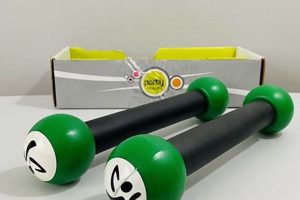
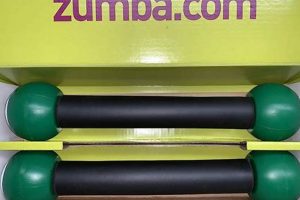
The integration of light resistance tools into the established dance fitness program enhances the traditional workout by incorporating elements of strength training. This adaptation involves performing Zumba routines while holding small dumbbells, typically weighing between one and five pounds, to increase muscular engagement.
This modified approach can contribute to increased calorie expenditure and improved muscle tone compared to the standard program. The added weight creates a higher demand on the muscles, potentially leading to enhanced endurance and definition over time. The practice builds upon the original’s Latin-inspired dance moves, evolving into a more comprehensive fitness activity.
The following discussion will delve into the specific muscle groups targeted, considerations for proper form and weight selection, and potential benefits and risks associated with this exercise modification. A detailed examination of safety precautions and contraindications is also included.
Guidance for Integrating Resistance into Zumba Routines
Effective and safe incorporation of resistance requires careful consideration of technique and load. The following recommendations provide direction for optimizing the experience while minimizing the potential for injury.
Tip 1: Weight Selection: Begin with the lowest possible resistance. One-pound dumbbells are often sufficient for initial adaptation. Gradually increase the weight only as strength and coordination improve.
Tip 2: Form Prioritization: Maintain proper posture and alignment throughout all movements. Compromising technique to accommodate heavier weights increases the risk of strain and injury. Focus on controlled, deliberate motions.
Tip 3: Gradual Progression: Introduce added resistance incrementally. Avoid sudden increases in weight or intensity. Allow adequate time for muscles to adapt to the new demands.
Tip 4: Controlled Movements: Refrain from using momentum to swing or jerk the weights. Engage core muscles to stabilize the torso and prevent lower back strain. Concentrate on muscle activation during each repetition.
Tip 5: Listen to the Body: Pay attention to any discomfort or pain. Discontinue use if experiencing sharp, localized pain, or persistent aching. Modifications or alternative exercises may be necessary.
Tip 6: Balanced Approach: Ensure a balanced approach that supplements the activity with adequate warm-up, cool-down, and stretching routines. Integrate exercises that target other muscle groups to prevent imbalances.
Tip 7: Expert Consultation: Consider consulting with a certified fitness professional or physical therapist, particularly for individuals with pre-existing conditions or limited experience. Personalized guidance can optimize results and minimize risks.
Adhering to these recommendations promotes a safe and effective integration of resistance, allowing individuals to maximize the benefits while mitigating potential drawbacks. These practices ensure a focus on controlled movements and individual progress.
The subsequent sections of this article will explore potential risks and contraindications associated with this specific exercise modality. A comprehensive understanding of these factors is essential for informed decision-making and safe participation.
1. Muscle Engagement

Muscle engagement is a critical determinant of the effectiveness of dance fitness performed with added resistance. It directly influences the metabolic demand and the potential for strength and endurance adaptations. The conscious activation of specific muscle groups during movement sequences is essential for maximizing the benefits of this exercise modality.
- Upper Body Activation
The addition of hand weights necessitates increased activation of muscles in the shoulders, arms, and upper back. For example, during lateral raises or bicep curls performed concurrently with dance steps, the deltoids and biceps brachii must actively contract against the external resistance. Failure to consciously engage these muscles can result in inefficient movement patterns and reduced gains.
- Core Stabilization
Maintaining proper posture while executing dynamic dance movements with weights requires significant core engagement. The transverse abdominis, obliques, and erector spinae muscles must work synergistically to stabilize the spine and prevent excessive lumbar extension or rotation. Inadequate core stabilization can increase the risk of lower back injury and diminish the effectiveness of the workout.
- Lower Body Integration
While the upper body is directly challenged by the added resistance, lower body muscle engagement remains crucial for maintaining balance and generating power. The gluteus maximus, quadriceps, and hamstrings must work in coordination to propel the body through space and control impact forces. Integration of upper and lower body movements promotes functional strength and improved coordination.
- Proprioceptive Awareness
Conscious muscle engagement enhances proprioceptive awareness, or the body’s ability to sense its position in space. By focusing on the contraction and relaxation of specific muscles, individuals can improve their coordination, balance, and agility. Increased proprioceptive awareness can also reduce the risk of falls and other injuries.
In conclusion, the effectiveness of this exercise is directly proportional to the degree of conscious muscle engagement. By focusing on the activation of specific muscle groups, individuals can maximize the metabolic demand, improve strength and endurance, and enhance proprioceptive awareness, thereby deriving the full spectrum of benefits offered by this fitness approach.
2. Calorie Expenditure

The incorporation of hand weights into Zumba routines directly influences energy expenditure during the activity. The addition of resistance necessitates a greater level of muscular exertion compared to the standard format. This increased demand translates into a higher caloric burn within a given time frame. The magnitude of this effect is contingent on factors such as weight load, movement intensity, and individual metabolic rate. For instance, a study comparing standard Zumba to Zumba with added resistance revealed a statistically significant increase in oxygen consumption, indicative of a greater energy demand, in the latter group. This underlines the practical significance of understanding how resistance influences the metabolic cost of the activity.
Furthermore, the afterburn effect, or excess post-exercise oxygen consumption (EPOC), is also potentially augmented. The elevated metabolic rate following the workout may be prolonged due to the increased muscle damage and repair processes associated with resistance training. This post-exercise caloric expenditure contributes to overall weight management goals. Individual responses to this modality can vary, necessitating personalized adjustments to weight and intensity to optimize energy expenditure. The interplay between these elements emphasizes the complexity of estimating and influencing caloric burn effectively.
In summary, using hand weights in Zumba affects calorie expenditure. The effect depends on individual factors. Tailoring intensity and weight is essential. Understanding these relationships helps maximize benefits.
3. Form Correction

Maintaining proper form is paramount when engaging in dance fitness with added resistance. Deviations from correct technique can negate the potential benefits and significantly increase the risk of injury. Understanding and implementing form correction strategies are therefore crucial for safe and effective participation.
- Spinal Alignment
Maintaining a neutral spinal alignment is essential to prevent lower back strain. The natural curves of the spine should be preserved, avoiding excessive arching or rounding. During movements, the core muscles must be engaged to stabilize the spine and prevent compensatory movements that could compromise form and increase the risk of injury.
- Shoulder Engagement
Correct shoulder engagement involves retracting the scapulae (shoulder blades) and depressing them downwards. This position promotes stability in the shoulder joint and prevents rounding of the upper back. During arm movements with weights, proper shoulder engagement helps to distribute the load effectively and reduce the risk of shoulder impingement or rotator cuff injuries.
- Knee Positioning
Maintaining proper knee alignment during weight-bearing movements is critical for preventing knee injuries. The knees should track in line with the toes, avoiding inward or outward rotation. During squats or lunges, the knees should not extend beyond the toes, as this can place excessive stress on the knee joint.
- Controlled Movements
Rapid or jerky movements increase the risk of injury. Execute all movements with control and precision, focusing on engaging the targeted muscles. Avoid using momentum to swing or jerk the weights, as this can compromise form and reduce the effectiveness of the exercise. Emphasize smooth transitions between movements to maintain proper form throughout the routine.
The facets highlight the need for maintaining proper form when doing zumba with hand weights, which includes paying careful attention to spinal alignment, shoulder engagement, knee positioning, and controlled movements to help maximize the benefits and minimize the risks of this exercise modality.
4. Weight Progression

Weight progression, defined as the systematic increase in resistance over time, constitutes a fundamental principle in resistance training. Its application within dance fitness influences physiological adaptation and long-term performance gains. A structured approach to increasing weight loads is crucial for optimizing benefits and minimizing potential injuries associated with this activity.
- Adaptation to Stimulus
Initial exposure to light resistance creates a novel stimulus, prompting neuromuscular adaptation. As the body adapts, the initial weight becomes less challenging, necessitating a gradual increase to maintain overload and stimulate further gains. For example, individuals may begin with 1-pound dumbbells and progress to 2- or 3-pound dumbbells as strength and endurance improve. Failure to progress the weight load limits the potential for continued muscle development and enhanced metabolic demand.
- Incremental Increases
Effective weight progression involves incremental adjustments rather than large jumps in resistance. Sudden increases can compromise form and increase the risk of injury. A conservative approach, such as increasing weight by 0.5 to 1 pound at a time, allows for a smoother transition and minimizes the potential for overuse injuries. This gradual adaptation promotes sustainable progress and reduces the likelihood of setbacks.
- Form Integrity
Maintaining proper form is paramount during weight progression. Prioritizing weight over technique can lead to compensatory movements and increased stress on joints. If proper form cannot be maintained with a given weight, a reduction in load is necessary. The focus should remain on controlled movements and proper alignment throughout the exercise routine. The integration of proper technique reinforces the effectiveness of the weight training being applied.
- Individualized Progression
The rate of weight progression should be tailored to individual capabilities and goals. Factors such as training experience, strength level, and injury history influence the appropriate progression timeline. A personalized approach, guided by a qualified fitness professional, optimizes safety and effectiveness. Generic progression protocols may not be suitable for all individuals and can increase the risk of adverse outcomes.
These aspects emphasize the importance of structured weight progression when adding resistance to dance fitness. Weight progression is essential for maintaining overload and driving adaptation. Proper form and individual assessment are essential components for maximizing safety and effectiveness. Successfully integrating these factors facilitates continuous improvement and long-term adherence.
5. Injury Prevention

The incorporation of hand weights into dance fitness, while potentially enhancing caloric expenditure and muscle tone, presents an increased risk of injury compared to the unweighted activity. A primary mechanism for injury involves compromised form due to added resistance. Individuals may sacrifice correct posture and movement patterns to accommodate the additional load, leading to increased stress on joints and muscles. For example, improper shoulder mechanics during arm raises with weights can lead to rotator cuff impingement, a common injury affecting the shoulder. Another cause of injury is overuse. Repeated movements with even light weights can lead to fatigue and breakdown of tissues, particularly in the wrists, elbows, and shoulders. A preventative approach is crucial to mitigate these risks and ensure safe participation.
Effective injury prevention strategies encompass proper weight selection, technique refinement, and progressive overload. Selecting weights appropriate for individual strength levels and gradually increasing resistance over time is crucial. For example, beginning with 1-pound dumbbells and incrementally progressing to 2- or 3-pound weights allows the body to adapt. Emphasizing correct form, potentially with mirror feedback or instructor guidance, can prevent compensatory movements that increase injury risk. Incorporating rest and recovery periods is also essential to allow muscles to repair and rebuild. Dynamic stretching and warm-up exercises can help prepare the body for the activity, reducing the risk of muscle strains. A balanced approach involves integrating exercises that target other muscle groups to prevent imbalances, which can contribute to injuries.
In summary, injury prevention is an essential component when engaging in Zumba with hand weights. This requires understanding the potential mechanisms of injury, implementing appropriate preventive measures, and listening to the body’s signals of fatigue or pain. These elements collectively contribute to a safer and more sustainable exercise experience.
6. Endurance Enhancement
The incorporation of hand weights into dance fitness routines directly influences muscular and cardiovascular endurance. Muscular endurance, the ability of a muscle to sustain repeated contractions over an extended period, is challenged by the added resistance. The increased demand forces muscle fibers to adapt, leading to improved fatigue resistance. Cardiovascular endurance, the efficiency of the heart and lungs in delivering oxygen to working muscles, is also impacted, as the body requires more oxygen to fuel the activity. This connection highlights the interdependence of these fitness components within the exercise modality. Individuals may find they can perform the routines for longer periods or with greater intensity as endurance improves.
Practical examples illustrate this link. An individual who initially struggles to complete a 30-minute routine with 2-pound weights might, after several weeks of consistent training, find they can maintain the same pace with 3-pound weights or extend the routine to 45 minutes. This demonstrates the tangible benefits of endurance enhancement. The sustained activity necessitates a greater oxygen uptake and delivery, leading to improvements in cardiovascular function. Individuals may also notice a reduced heart rate during similar activity levels, indicating improved cardiovascular efficiency. These adaptations are crucial for overall physical fitness and contribute to improved daily functioning.
Effective endurance enhancement is not without its challenges. Overexertion and inadequate recovery can hinder progress and increase injury risk. Gradual progression, proper nutrition, and sufficient rest are crucial for optimizing adaptations. This underscores the need for a holistic approach that considers not only the physical demands of the activity but also the body’s capacity to recover and adapt. By addressing these factors, individuals can maximize the endurance-enhancing potential, while mitigating the risk of negative consequences.
7. Rhythm Integration
Rhythm integration is a central component that distinguishes dance fitness from other exercise modalities. In the context of Zumba with added resistance, maintaining rhythmic accuracy is crucial for effective muscular engagement and injury prevention. The coordination of movement and beat provides a temporal framework that influences the quality and safety of each repetition.
- Movement Synchronization
Synchronizing movements with the musical rhythm ensures proper timing and coordination. When hand weights are incorporated, maintaining synchronization becomes more challenging, as individuals must control the additional load while adhering to the tempo. For example, lifting weights too quickly or slowly in relation to the beat can disrupt form and increase the risk of muscle strain. Rhythmic accuracy facilitates fluid, controlled movements, reducing the likelihood of injury.
- Muscular Engagement
Rhythm integration can enhance muscular engagement by providing a consistent cue for muscle activation. The beat of the music serves as an external pacemaker, prompting individuals to contract and relax specific muscle groups in time with the rhythm. This rhythmic activation can optimize muscle recruitment and improve the effectiveness of the exercise. In Zumba, syncopated rhythms can challenge stability while holding weights.
- Cardiovascular Response
Maintaining rhythmic consistency influences cardiovascular response by modulating heart rate and oxygen consumption. Consistent, rhythmic movements typically result in a more stable and predictable cardiovascular response compared to erratic or unpredictable movements. This is especially relevant when resistance is added, as sudden changes in intensity or tempo can place undue stress on the cardiovascular system. In the context of integrating dance and fitness, music affects heart rate.
- Cognitive Engagement
Rhythm integration requires cognitive engagement, as individuals must actively process and respond to the musical cues. This cognitive involvement can enhance focus and attention, potentially improving adherence and motivation. In Zumba, anticipating the next movement sequence requires concentration.
These facets highlight the intricate relationship between rhythm integration and dance fitness with added resistance. Rhythm integration promotes controlled and consistent movement, enhances muscular engagement, modulates cardiovascular response, and stimulates cognitive involvement. By prioritizing rhythmic accuracy, individuals can optimize the benefits and minimize the risks associated with this exercise approach.
Frequently Asked Questions
The following questions address common inquiries regarding the practice of incorporating light resistance into dance fitness routines. The answers provide factual information to guide informed decision-making.
Question 1: What is the recommended weight for hand weights in Zumba?
The standard recommendation is to begin with light weights, typically between one and three pounds. It is vital to focus on maintaining proper form. The weight load should be gradually increased as strength improves, never compromising technique.
Question 2: Does Zumba with hand weights lead to muscle bulk?
The primary emphasis of the modality is on endurance and cardiovascular fitness. The light weights used typically do not result in significant muscle hypertrophy, or bulking. The program is designed to improve tone and definition rather than substantial muscle mass gain.
Question 3: Are there any contraindications for this activity?
Individuals with pre-existing joint conditions, particularly in the shoulders, elbows, or wrists, should exercise caution. Pregnant women and those with cardiovascular issues should consult their physician before participating. Those with back problems, hernias, or other physical limitations should consult a medical professional prior to commencing.
Question 4: How frequently should this be performed to see results?
Consistency is essential. Engaging in the activity two to three times per week, coupled with a balanced diet, generally yields noticeable improvements in fitness levels. Results vary depending on individual factors, such as starting fitness level and adherence to the program.
Question 5: What are the primary muscles targeted?
The activity primarily engages the muscles of the upper body, including the shoulders, biceps, and triceps. Core stabilization is also essential. Lower body muscles are engaged for balance and stability, although the focus is typically on the upper body.
Question 6: How does this version compare to traditional Zumba in terms of calorie expenditure?
The inclusion of hand weights generally increases calorie expenditure compared to traditional Zumba. The added resistance requires a greater level of muscular exertion, leading to a higher metabolic demand. The specific amount of added calorie burn is based on weight applied.
These questions address common considerations regarding this activity. Adhering to safety guidelines and adjusting the program to suit individual capabilities is crucial for optimal results.
The subsequent section of this document will provide a conclusion to the points discussed.
Conclusion
This exploration has shown the nature and elements of zumba with hand weights. It is essential for safety and results to consider muscle activation and weight selection. Understanding form is crucial. Controlled execution reduces injury risk and enhances the value of rhythmic action.
The benefits of dance fitness and light resistance need thoughtful integration. Individual customization, safety protocols, and a holistic approach can have positive impacts. Understanding the exercise creates a path to better fitness and well-being. Further exploration of adaptations in the industry is required for more tailored work outs.