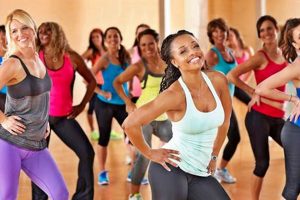
This fitness program combines Latin-inspired music and dance movements to create an energetic workout. Participants engage in a routine that blends fast and slow rhythms, incorporating interval training principles to enhance cardiovascular fitness. The activity can be modified to suit various fitness levels, making it accessible to a broad audience.
The widespread popularity of this exercise format stems from its ability to provide a full-body workout while maintaining an enjoyable atmosphere. Benefits include improved cardiovascular health, increased muscle strength and endurance, and enhanced coordination. Originating in the late 1990s, it rapidly expanded globally, becoming a staple in gyms and fitness studios worldwide.
The following sections will delve into specific aspects of this activity, exploring its techniques, the physiological effects on the body, and considerations for safe participation. This detailed examination aims to provide a thorough understanding of its principles and potential within a comprehensive fitness plan.
Essential Considerations for Effective Participation
Engaging in this fitness activity requires adherence to certain guidelines to maximize benefits and minimize the risk of injury. The following recommendations address key aspects of preparation, execution, and post-exercise recovery.
Tip 1: Prioritize Proper Footwear. Selection of supportive athletic shoes is critical. Ensure shoes provide adequate cushioning and lateral support to mitigate the impact on joints during high-intensity movements.
Tip 2: Maintain Adequate Hydration. Dehydration can impede performance and increase the risk of muscle cramps. Consume sufficient water before, during, and after participation to maintain optimal fluid balance.
Tip 3: Master Fundamental Steps. Familiarize oneself with basic dance steps before attempting complex routines. This approach promotes proper form and reduces the likelihood of errors that can lead to injury.
Tip 4: Listen to the Body’s Signals. Pay close attention to physical sensations and adjust intensity levels accordingly. Discomfort or pain indicates the need for reduced exertion or temporary cessation of activity.
Tip 5: Incorporate Dynamic Stretching. Implement dynamic stretches prior to each session to enhance flexibility and prepare muscles for activity. Examples include leg swings, arm circles, and torso twists.
Tip 6: Cool Down Effectively. Facilitate a gradual transition to a resting state with static stretching and light cardiovascular activity. This aids in muscle recovery and reduces the potential for post-exercise soreness.
Tip 7: Ensure Adequate Space. Perform the activity in a spacious area free from obstructions. This minimizes the risk of collisions or falls that could result in injury.
Adherence to these guidelines will promote a safe and effective experience. Consistency in application will contribute to improved fitness outcomes and a reduced risk of adverse effects.
The concluding section will summarize the comprehensive benefits and provide a final perspective on the role of this activity in a well-rounded fitness regimen.
1. Rhythmic Movement

Rhythmic movement forms an essential and inextricable component of this aerobic dance exercise. It is the foundational element upon which the entire structure of the activity is built. The synchronization of bodily motions with the music’s beat dictates the timing, sequence, and intensity of the movements performed. Without rhythmic precision, the exercise loses its intended flow and effectiveness. The specific dance styles incorporated, such as salsa, merengue, and cumbia, inherently rely on distinct rhythmic patterns. Adherence to these rhythms ensures proper muscle engagement and coordination.
The application of rhythmic movement directly impacts the physiological benefits derived from this activity. For instance, maintaining a consistent tempo during a high-energy routine elevates heart rate and enhances cardiovascular endurance. Incorrectly timed movements disrupt this process, potentially reducing the workout’s efficacy. Moreover, the predictability of rhythmic patterns aids in motor skill development, improving coordination and balance. Consider, for example, the cha-cha step; accurate execution of this sequence demands precise rhythmic awareness, which, in turn, strengthens lower body muscles and improves balance.
In conclusion, the importance of rhythmic movement within this exercise domain cannot be overstated. It is not merely an aesthetic element but a fundamental driver of physiological outcomes and motor skill enhancement. Challenges may arise in coordinating complex rhythms, particularly for beginners; however, consistent practice and attentive listening to the music are key to mastering this essential component. This understanding underscores the activity’s potential as a holistic approach to fitness, combining physical exertion with rhythmic coordination for enhanced well-being.
2. Calorie expenditure

The energy requirements of this fitness activity directly correlate with the intensity and duration of participation. Calorie expenditure, defined as the quantity of energy expended during physical exertion, serves as a primary indicator of its effectiveness in weight management and overall metabolic health. The combination of aerobic activity and rhythmic movement inherent in this exercise stimulates metabolic processes, leading to a quantifiable consumption of calories. Individuals participating in a typical session can expect to expend a range of calories contingent upon factors such as body weight, fitness level, and the specific choreography involved. For instance, a person weighing 150 pounds may expend approximately 300-500 calories during a 60-minute session at moderate intensity.
The practical significance of understanding this caloric expenditure lies in its potential for weight management and improving body composition. Regular participation, coupled with a balanced diet, can create a caloric deficit, leading to gradual weight loss. Furthermore, the interval-training nature of many routines can contribute to an elevated post-exercise oxygen consumption (EPOC), where the body continues to burn calories at a higher rate even after the session concludes. This can increase daily caloric expenditure, aiding in long-term weight maintenance. Consider individuals who are overweight or obese; consistent involvement in this exercise format can offer a viable and engaging means to achieve clinically significant weight reduction, lowering the risk of associated health complications.
In summary, calorie expenditure represents a fundamental component of this exercise’s overall benefit. While individual results may vary, the activity inherently promotes energy consumption through its blend of aerobic and rhythmic movements. Challenges may arise in accurately quantifying calorie expenditure due to the subjective nature of exertion levels, however heart rate monitors and fitness trackers can offer more precise data. Its relevance extends beyond weight management, impacting metabolic health and physical fitness. Further exploration of specific techniques within this format can reveal strategies to optimize caloric expenditure and enhance its overall effectiveness within a comprehensive fitness regimen.
3. Coordination enhancement

Coordination enhancement is an essential outcome of consistent engagement in this fitness activity. It represents the improved ability to synchronize various muscle groups and body segments, enabling fluid and precise movements. Its relevance is underscored by the intricate dance sequences and multifaceted physical actions involved, rendering it a crucial factor in both the execution and the benefits derived from this exercise format.
- Motor Skill DevelopmentMotor skill development is a primary mechanism through which coordination is enhanced. This involves the progressive refinement of neuromuscular pathways, leading to improved accuracy and efficiency in movement. The activity necessitates learning and executing complex dance steps, demanding precise timing and spatial awareness. For example, accurately performing a salsa turn requires coordinated activation of leg muscles, core stability, and upper body control. Repeated execution of these movements strengthens the associated neural connections, resulting in enhanced motor skill proficiency.
- Proprioceptive AwarenessProprioceptive awareness, or kinesthesia, refers to the body’s ability to sense its position and movement in space. It is integral to maintaining balance, executing complex movements, and preventing injuries. This exercise format cultivates proprioceptive awareness through its varied range of motions and dynamic weight shifting. Individuals become more attuned to their body’s position and movement patterns, enabling them to react quickly and efficiently to maintain stability. The increased awareness reduces the likelihood of missteps and imbalances, thereby minimizing the risk of falls or other injuries.
- Cognitive ProcessingCognitive processing is intrinsically linked to coordination enhancement. The activity demands continuous cognitive engagement as participants process musical cues, remember dance sequences, and adapt their movements accordingly. This cognitive engagement fosters improved mental agility and reaction time. Specifically, the ability to rapidly decode rhythmic patterns and translate them into coordinated movements strengthens neural pathways associated with cognitive processing. Regular engagement in the activity, therefore, not only enhances physical coordination but also contributes to cognitive fitness.
- Neuromuscular EfficiencyNeuromuscular efficiency denotes the effectiveness of the nervous system in activating muscles for specific tasks. Through repeated practice of coordinated movements, the neuromuscular system adapts to optimize muscle recruitment and timing, leading to enhanced power and control. The activity, with its diverse range of movements, promotes neuromuscular efficiency by challenging various muscle groups to work synergistically. Improved neuromuscular efficiency translates to enhanced athletic performance, reduced energy expenditure during physical activity, and a lower risk of injury.
These facets underscore the significant role of coordination enhancement in this exercise format. By developing motor skills, fostering proprioceptive awareness, engaging cognitive processes, and improving neuromuscular efficiency, it contributes to overall physical fitness and well-being. Challenges related to coordination may initially present obstacles, particularly for novice participants; however, consistent practice and attentive engagement can progressively mitigate these challenges. In sum, the activity not only provides a dynamic workout but also enhances the capacity for coordinated movement, translating to improvements in athletic performance, functional abilities, and overall quality of life.
4. Cardiovascular improvement
The relationship between cardiovascular improvement and this aerobic dance exercise is fundamentally causal. Consistent participation elevates heart rate and respiration, stimulating the cardiovascular system to adapt and function more efficiently. The activity necessitates sustained moderate to high-intensity exertion, leading to increased cardiac output, improved oxygen uptake, and enhanced peripheral blood flow. Consequently, the heart muscle strengthens, blood vessels become more flexible, and overall cardiovascular health improves. Individuals who engage in this exercise regularly demonstrate a decreased resting heart rate, lower blood pressure, and an improved lipid profile, indicative of enhanced cardiovascular function.
Cardiovascular improvement is not merely a secondary benefit but a central component of this exercise format’s value proposition. The rhythmic movements and varied choreography inherently challenge the heart and lungs, fostering aerobic conditioning. Real-world examples abound: sedentary individuals who adopt this exercise routine often experience increased stamina, reduced shortness of breath during daily activities, and a decreased risk of cardiovascular events such as heart attack or stroke. Furthermore, the social and motivational aspects can enhance adherence to exercise, amplifying the long-term cardiovascular benefits. Understanding this connection is practically significant for healthcare professionals, fitness instructors, and individuals seeking effective strategies for cardiovascular disease prevention and management.
In summary, cardiovascular improvement is a direct consequence of participating in this aerobic dance exercise. The activity’s inherent design promotes sustained aerobic activity, resulting in quantifiable benefits to the heart, blood vessels, and overall cardiovascular function. Potential challenges include pre-existing cardiovascular conditions requiring medical clearance, and the need for gradual progression to avoid overexertion. However, when implemented appropriately, the exercise offers a potent and engaging means of promoting cardiovascular health and mitigating the risk of cardiovascular disease.
5. Social interaction

Social interaction serves as an integral, though often understated, component of this group exercise format. The communal setting inherently fosters interaction among participants, creating a supportive and motivating environment. This interaction transcends the purely physical aspects of the workout, establishing bonds based on shared experience and mutual encouragement. The rhythmic synchronization of movements, coupled with the shared objective of improving fitness, cultivates a sense of collective achievement. For instance, individuals new to fitness often find the group dynamic less intimidating than solitary exercise, leading to increased adherence and sustained participation. The opportunity to connect with others who share similar fitness goals provides emotional support, reduces feelings of isolation, and enhances the overall exercise experience. This social support is particularly beneficial for individuals seeking to overcome challenges related to motivation or self-efficacy in their fitness journey.
The practical implications of recognizing the importance of social interaction within this format extend to program design and implementation. Instructors can deliberately incorporate activities that promote interaction, such as partner exercises or team-based routines. These activities not only enhance the fun and engagement of the class but also facilitate the development of social connections. For example, encouraging participants to introduce themselves to one another or to celebrate each other’s achievements can foster a sense of community. The establishment of these social bonds can significantly improve retention rates, as participants are more likely to continue attending classes when they feel connected to the group. Furthermore, the social aspect can extend beyond the class setting, with participants organizing social events or workout sessions outside of the formal program. This demonstrates the transformative potential of exercise to create lasting social connections and enrich participants’ lives.
In summary, social interaction represents a critical dimension of this group exercise activity, contributing significantly to its effectiveness and appeal. The shared experience fosters a sense of community, provides emotional support, and enhances adherence to the program. While the primary goal may be physical fitness, the social connections forged through participation often yield equally important benefits, improving overall well-being and quality of life. The challenge lies in cultivating an inclusive and welcoming environment that encourages interaction among all participants, regardless of their fitness level or social background. This understanding underscores the importance of considering the social dynamics of exercise programs in addition to the physical components, to maximize the positive impact on participants’ lives.
6. Muscle toning

The capacity of this fitness format to induce muscle toning stems from its integration of resistance training principles with aerobic activity. While not solely focused on hypertrophy, the rhythmic movements and varied choreography engage a diverse range of muscle groups, contributing to increased muscle definition and strength.
- Compound Movements
Compound movements, which activate multiple muscle groups simultaneously, are a hallmark of many dance sequences within the exercise. Examples include squats, lunges, and plyometric variations that target the lower body, core, and upper body. The repeated execution of these movements, often performed against body weight resistance, stimulates muscle fibers, promoting increased tone and definition. The effect is similar to circuit training, albeit with an emphasis on rhythmic coordination.
- Isometric Contractions
Isometric contractions, where muscles are engaged without changing length, are integral to maintaining posture and balance during dance routines. The core muscles, in particular, are continuously engaged to stabilize the spine and maintain proper form. These isometric contractions contribute to increased core strength and stability, resulting in improved muscle tone in the abdominal and back regions. Furthermore, the sustained engagement of postural muscles enhances body awareness and reduces the risk of injury.
- Endurance Training
Endurance training, characterized by sustained activity over extended periods, is a key component of this exercise. The duration of a typical session requires sustained muscle activity, leading to increased muscular endurance. This endurance training effect promotes improved muscle tone by enhancing the muscles’ ability to withstand fatigue. Individuals who consistently participate in the exercise experience increased muscular endurance in the legs, core, and arms, enabling them to perform daily activities with greater ease and efficiency.
- Caloric Deficit Contribution
The contribution to a caloric deficit, achieved through the high energy expenditure of the activity, indirectly promotes muscle toning. By creating a caloric deficit through exercise and diet, the body is more likely to utilize stored fat as energy, revealing underlying muscle definition. This is particularly relevant for individuals seeking to improve body composition. The combination of muscle stimulation and fat reduction results in a more toned and sculpted physique.
These facets collectively underscore the ability of this exercise format to promote muscle toning. While it may not produce the same degree of hypertrophy as dedicated weight training, the combination of compound movements, isometric contractions, endurance training, and caloric deficit contribution yields quantifiable improvements in muscle definition and strength. These benefits contribute to improved physical function, enhanced body image, and an overall sense of well-being.
7. Stress reduction

The correlation between participation in this aerobic dance exercise and stress reduction is substantiated by both physiological and psychological mechanisms. The exercise stimulates the release of endorphins, natural mood elevators that counteract the effects of stress hormones such as cortisol. The rhythmic and repetitive nature of the movements induces a state of flow, facilitating a temporary escape from everyday stressors and promoting a sense of mental calm. For instance, individuals experiencing high levels of work-related stress often report a significant decrease in anxiety and tension following a session. The synchronized group activity additionally provides a sense of camaraderie and social support, which can buffer against the negative impacts of stress and enhance overall psychological well-being. Its ability to act as a cathartic release through physical exertion offers a tangible method for managing stress and promoting emotional equilibrium.
The practical application of this understanding extends to various settings, including corporate wellness programs and therapeutic interventions. Integrating these classes into workplace environments can provide employees with a readily accessible means of managing stress and improving mental health, potentially leading to increased productivity and reduced absenteeism. In therapeutic contexts, the exercise can serve as a complementary therapy for individuals experiencing anxiety, depression, or post-traumatic stress disorder. The combination of physical activity, rhythmic movement, and social interaction creates a holistic approach to stress management that addresses both the physical and emotional dimensions of stress. Case studies have demonstrated the effectiveness of this approach in reducing symptoms and improving overall quality of life for individuals struggling with chronic stress.
In summary, stress reduction constitutes a significant and well-documented benefit of engaging in this aerobic dance exercise. The physiological mechanisms, such as endorphin release and the induction of flow, coupled with the psychological benefits of social support and cathartic release, contribute to a powerful stress-reduction effect. While individual responses may vary, the overall evidence suggests that regular participation offers a viable and accessible strategy for managing stress and promoting mental well-being. Challenges may arise in accommodating diverse physical abilities and preferences; however, adaptable choreography and a supportive environment can mitigate these challenges. Understanding the connection between this exercise and stress reduction underscores its potential as a valuable tool for promoting holistic health and resilience in individuals and communities.
Frequently Asked Questions
This section addresses common inquiries and clarifies prevailing misconceptions regarding this structured fitness regimen. The information provided aims to furnish a comprehensive understanding of its principles and potential applications.
Question 1: What constitutes appropriate attire for participation?
Appropriate attire should prioritize comfort and unrestricted movement. Athletic shoes with adequate support are essential to mitigate the risk of lower extremity injuries. Breathable fabrics are recommended to facilitate temperature regulation during vigorous activity. Form-fitting clothing can be beneficial to allow instructors to assess proper alignment and technique.
Question 2: Are there contraindications to participation?
Individuals with pre-existing cardiovascular conditions, musculoskeletal injuries, or other significant health concerns should consult with a healthcare professional prior to commencing this exercise regimen. Modifications may be necessary to accommodate individual limitations. Pregnancy also warrants medical consultation and potential modifications to the intensity and complexity of the routines.
Question 3: What is the recommended frequency of participation to achieve tangible benefits?
To realize noticeable improvements in cardiovascular fitness, strength, and body composition, participation in at least three sessions per week is generally recommended. Consistency is paramount, and adherence to a regular schedule is crucial for sustained progress. The duration of each session should ideally be between 45 and 60 minutes.
Question 4: How does this exercise format differ from other aerobic activities?
This format distinguishes itself through its integration of dance movements and Latin-inspired music. This combination provides a uniquely engaging and enjoyable workout experience, potentially enhancing adherence compared to traditional aerobic exercises. The incorporation of interval training principles further contributes to its effectiveness in improving cardiovascular fitness and promoting calorie expenditure.
Question 5: Is prior dance experience a prerequisite for participation?
Prior dance experience is not a prerequisite. Classes are typically structured to accommodate individuals of varying skill levels. Instructors often provide modifications and simplified versions of the choreography, enabling beginners to participate effectively. The emphasis is on enjoyment and participation rather than technical perfection.
Question 6: What are the potential risks associated with participation, and how can they be mitigated?
Potential risks include musculoskeletal injuries, such as sprains and strains, as well as cardiovascular complications in susceptible individuals. These risks can be mitigated through proper warm-up and cool-down routines, appropriate footwear, adherence to recommended guidelines, and listening to the body’s signals. Individuals should immediately cease participation if they experience pain or discomfort.
In summary, this activity offers a comprehensive and engaging fitness experience, but requires appropriate precautions and awareness of individual limitations.
The next section will provide a comprehensive set of exercise to maximize effectiveness.
Conclusion
The preceding exploration has illuminated the multifaceted nature of Zumba aerobic dance exercise. This activity encompasses rhythmic movement, significant calorie expenditure, coordination enhancement, cardiovascular improvement, social interaction, targeted muscle toning, and effective stress reduction. Each of these components contributes to its overall efficacy as a fitness modality.
The evidence presented underscores the potential for Zumba aerobic dance exercise to positively impact physical and mental well-being. Continued research and conscientious application will further refine its implementation and maximize its benefits within diverse populations. This fitness approach presents a viable option for individuals seeking a holistic and engaging path toward improved health.