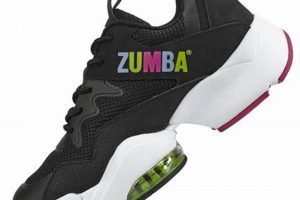
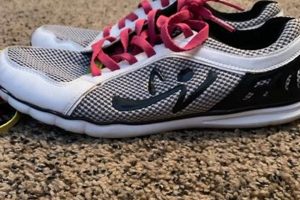
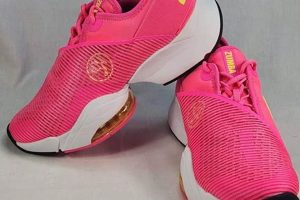
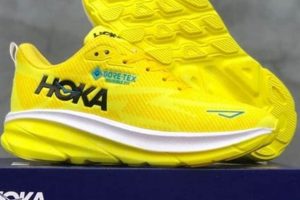
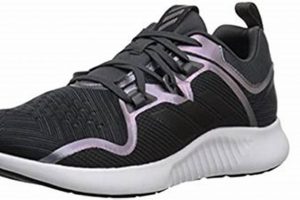
The selection of footwear for a Zumba fitness session is a critical determinant of participant comfort, performance, and safety. Incorrect footwear can contribute to injury and impede the ability to execute the dynamic movements inherent in the Zumba program. For instance, running shoes, designed for forward motion, often possess excessive grip, hindering lateral movements common in Zumba and potentially leading to ankle or knee strain.
Appropriate footwear enhances the overall Zumba experience by allowing for fluid transitions and reducing the risk of injury. Historically, participants often utilized generic athletic shoes, resulting in preventable discomfort and increased susceptibility to impact-related injuries. The recognition of these shortcomings led to the development and recommendation of shoes specifically designed to accommodate the unique demands of Zumba, prioritizing features like cushioning, flexibility, and a smooth sole for easy pivoting.
Therefore, understanding the key characteristics that define suitable footwear for this activity is paramount. This understanding will guide the subsequent discussion of specific shoe features, brands, and models that optimize performance and minimize the potential for musculoskeletal stress during Zumba sessions.
Footwear Selection Guidance for Zumba Fitness
This section outlines crucial considerations for selecting footwear that optimizes safety, performance, and comfort during Zumba fitness activities. Proper footwear mitigates injury risk and enhances movement efficiency.
Tip 1: Prioritize Lateral Support. Zumba involves significant lateral movement. Footwear should offer adequate support to the sides of the feet to prevent ankle roll and instability. Look for reinforced panels or supportive overlays in the shoe’s construction.
Tip 2: Opt for a Smooth Sole. The sole’s design should facilitate easy pivoting and turning. Rubber outsoles with minimal or segmented treads are preferable to those with deep, aggressive patterns that can impede movement and increase the risk of knee strain.
Tip 3: Ensure Adequate Cushioning. Zumba involves high-impact movements. Cushioning in the midsole absorbs impact forces, reducing stress on joints. Evaluate the midsole material for shock absorption properties; gel or foam-based materials are common choices.
Tip 4: Consider a Lightweight Design. Excessively heavy footwear can contribute to fatigue and hinder agility. Opt for lightweight materials and construction to promote ease of movement and reduce strain during extended sessions.
Tip 5: Assess Arch Support. Individual arch type dictates the level of support required. Determine whether a neutral, supportive, or motion-control shoe is necessary to maintain proper foot alignment and prevent overpronation or supination.
Tip 6: Evaluate Breathability. Zumba can be a high-intensity workout. Footwear should allow for adequate ventilation to prevent excessive sweating and discomfort. Mesh uppers and breathable linings promote airflow and moisture management.
Tip 7: Proper Fit is Paramount. Footwear should fit snugly but comfortably, with adequate toe room. Ill-fitting shoes can lead to blisters, chafing, and impaired performance. Ensure a thumb’s width of space between the longest toe and the end of the shoe when standing.
Implementing these considerations will enable participants to select footwear that minimizes injury risk, maximizes comfort, and optimizes performance during Zumba fitness activities. The correct choice enhances movement efficiency and allows participants to fully engage in the workout.
The subsequent section will delve into common footwear styles and brands suitable for Zumba, further assisting in the selection process.
1. Lateral Support

Lateral support constitutes a critical element in footwear designed for Zumba fitness activities. The dynamic nature of Zumba, characterized by rapid lateral movements and changes in direction, necessitates specialized shoe construction to provide adequate stability and minimize the risk of ankle or foot injuries. The following aspects detail the significance of lateral support when considering appropriate footwear.
- Ankle Stability and Injury Prevention
Adequate lateral support prevents excessive ankle roll, a common mechanism of injury during Zumba. Shoes with reinforced sidewalls or supportive overlays provide a structural barrier against lateral forces, reducing the likelihood of sprains or strains. For instance, shoes lacking such support may allow the ankle to invert or evert excessively, particularly during high-impact steps, leading to potential ligament damage.
- Enhanced Movement Efficiency
Proper lateral support optimizes movement efficiency by maintaining foot alignment during lateral transitions. Shoes that effectively control foot motion allow participants to execute steps with greater precision and power, contributing to improved performance and reduced fatigue. Conversely, inadequate support can lead to energy expenditure and compensatory movements, hindering overall workout effectiveness.
- Structural Shoe Components
Lateral support is achieved through specific shoe components such as supportive overlays, reinforced heel counters, and stable midsole designs. Overlays, typically constructed from synthetic leather or TPU, provide structural reinforcement along the sides of the shoe. Heel counters stabilize the rearfoot, preventing excessive pronation or supination. Midsole designs incorporating firmer foams or supportive technologies enhance overall stability.
- Considerations for Different Foot Types
The level of lateral support required varies based on individual foot type and biomechanics. Individuals with flat feet or a tendency to overpronate may benefit from shoes with more substantial lateral support to control excessive foot motion. Those with high arches or a neutral gait may require less support. Consulting with a footwear specialist can assist in determining the appropriate level of support.
In summary, lateral support is an indispensable feature when evaluating footwear options. Its contribution to ankle stability, movement efficiency, and overall injury prevention underscores its importance in optimizing the Zumba experience. Selecting footwear with appropriate lateral support enhances participant safety and enables more effective engagement in Zumba fitness activities.
2. Pivoting Ability

Pivoting ability, defined as the capacity to execute rotational movements with minimal friction between the shoe and the floor, directly influences the suitability of footwear for Zumba fitness programs. Its presence or absence significantly affects participant safety and maneuverability, highlighting its relevance in the selection of appropriate dance footwear.
- Reduced Joint Stress
Footwear that facilitates smooth pivoting minimizes stress on the knees and ankles. In Zumba, frequent changes in direction are integral. Footwear lacking this ability can cause the foot to stick to the floor during rotations, transmitting excessive torque to the joints. Selecting shoes with outsoles engineered for reduced friction is therefore essential for injury prevention.
- Enhanced Agility and Performance
The ability to pivot freely allows for quicker transitions between dance steps. Footwear with a smooth or segmented sole design enables rapid changes in direction, contributing to improved agility and fluidity of movement. Conversely, shoes with high-traction outsoles can impede movement and hinder performance, limiting the ability to execute complex choreography effectively.
- Outsole Material and Design
Outsole material and design are primary determinants of pivoting ability. Rubber outsoles with minimal tread patterns or strategically placed pivot points promote smooth rotation. Leather or suede soles are also viable options, offering a low coefficient of friction suitable for dance activities. The specific design and material should be evaluated based on the flooring surface of the Zumba environment.
- Risk Mitigation
The inability to pivot increases the risk of musculoskeletal injuries. When the foot cannot rotate freely, forces generated during movement are transferred to the joints, potentially leading to sprains, strains, or tears. Prioritizing footwear designed to facilitate pivoting minimizes this risk, ensuring participant safety and promoting long-term engagement in Zumba activities. For instance, running shoes, designed for linear motion, often possess high-grip outsoles and are inherently unsuitable for Zumba due to their limitations in pivoting ability.
Consideration of pivoting ability is therefore an indispensable aspect of footwear selection for Zumba participants. Footwear that facilitates smooth rotation not only reduces joint stress and enhances agility, but also plays a pivotal role in mitigating the risk of injury, thereby ensuring a safe and effective exercise experience.
3. Impact Absorption

Impact absorption, a fundamental characteristic of appropriate Zumba footwear, mitigates the cumulative stress on joints and tissues subjected to repetitive high-impact movements. The selection of suitable footwear directly influences the degree to which impact forces are attenuated during Zumba sessions. Insufficient impact absorption can lead to a heightened risk of stress fractures, plantar fasciitis, and other musculoskeletal injuries. The cushioning properties inherent in the midsole construction of Zumba shoes are primarily responsible for impact reduction. For instance, a shoe with a dual-density foam midsole will typically provide greater impact absorption compared to a shoe with a thin, non-cushioned sole.
The effectiveness of impact absorption is contingent upon the material composition and structural design of the midsole. Materials such as ethylene-vinyl acetate (EVA) and thermoplastic polyurethane (TPU) are frequently employed due to their shock-attenuating properties. Furthermore, gel or air-based cushioning systems can be integrated into the midsole to enhance impact protection. In practical terms, a participant performing a jumping jack in Zumba with shoes lacking sufficient impact absorption will experience a greater jarring force through the lower extremities compared to a participant wearing adequately cushioned footwear. This heightened force transmission can lead to discomfort and eventual injury, particularly with repeated exposure over time.
Therefore, understanding the principles of impact absorption and their relevance to Zumba footwear selection is crucial for promoting participant well-being and preventing injury. Individuals engaging in Zumba should prioritize shoes with a demonstrable capacity for impact attenuation, taking into account the midsole material, design, and overall cushioning properties. The correlation between impact absorption and the type of footwear used is inextricably linked to the long-term health and performance of the Zumba participant.
4. Lightweight Design

The lightweight design of footwear significantly influences performance and minimizes fatigue during Zumba fitness sessions. The iterative nature of Zumba, characterized by repeated movements and prolonged activity, necessitates footwear that reduces the energy expenditure associated with each step. Shoes possessing excessive weight require greater muscular effort for lifting and maneuvering the feet, leading to premature fatigue and reduced overall endurance during the class. A tangible example illustrates this principle: a participant wearing heavier athletic shoes may experience muscle exhaustion sooner than a counterpart utilizing lighter, purpose-designed Zumba footwear, impacting the capacity to fully engage with the routine and potentially increasing the risk of improper form and subsequent injury.
The benefits of a lightweight design extend beyond mitigating fatigue. Enhanced agility and maneuverability are direct consequences of reduced shoe weight, enabling more fluid transitions and precise execution of dance steps. The lighter the shoe, the less restrictive it becomes, allowing for a more natural range of motion. Manufacturers achieve lightweight construction through the utilization of materials such as lightweight mesh uppers, streamlined sole designs, and minimal structural overlays. Recognizing these design features enables informed decision-making when selecting suitable footwear for Zumba.
In conclusion, the lightweight design of Zumba footwear is not merely a superficial attribute, but a critical component impacting performance, fatigue, and agility. It directly influences the ability of participants to sustain activity, execute movements accurately, and minimize the risk of overuse injuries. Prioritizing lightweight construction during footwear selection is essential for optimizing the Zumba experience and maximizing its fitness benefits.
5. Arch Support
Arch support is a critical factor in determining the suitability of footwear for Zumba fitness activities. The arch, a structural component of the foot, plays a crucial role in distributing weight and absorbing impact. Inadequate arch support can lead to biomechanical imbalances and an increased risk of injury, especially during the dynamic and high-impact movements characteristic of Zumba.
- Pronation and Supination Control
Arch support significantly influences pronation and supination, the natural inward and outward rolling motions of the foot during gait. Overpronation, where the foot rolls inward excessively, and oversupination, where the foot rolls outward excessively, can both lead to instability and injury. Footwear with appropriate arch support helps control these motions, promoting a more neutral and efficient gait pattern. For example, a participant with flat feet, who typically overpronates, requires shoes with substantial arch support to prevent excessive inward rolling and subsequent strain on the ankles and knees.
- Plantar Fasciitis Mitigation
Plantar fasciitis, an inflammation of the plantar fascia (the tissue along the bottom of the foot), is a common ailment among individuals engaging in high-impact activities. Arch support helps alleviate stress on the plantar fascia by providing support and preventing excessive stretching of the tissue. Shoes lacking adequate arch support can exacerbate plantar fasciitis symptoms, leading to pain and discomfort. A Zumba instructor who experiences heel pain might benefit from shoes with enhanced arch support to reduce strain on the plantar fascia.
- Load Distribution and Impact Absorption
Proper arch support ensures a more even distribution of weight across the foot, reducing stress on specific areas. By supporting the arch, footwear helps absorb impact forces, minimizing the jarring effect on joints and tissues. Shoes with insufficient arch support can concentrate stress on the heel or forefoot, increasing the risk of stress fractures or metatarsalgia (pain in the ball of the foot). A participant with high arches needs footwear that adequately supports the arch to properly distribute weight and absorb impact during Zumba’s jumping and landing movements.
- Foot Fatigue Reduction
Adequate arch support contributes to reduced foot fatigue during prolonged periods of activity. By providing structural support and promoting proper biomechanics, footwear helps minimize the muscular effort required to maintain foot stability. Shoes lacking sufficient arch support can lead to increased muscle strain and fatigue, resulting in discomfort and reduced performance. A Zumba participant who spends an hour in class might find footwear with good arch support provides more comfort and reduces fatigue compared to a flat, unsupportive shoe.
Therefore, incorporating appropriate arch support into footwear choices for Zumba activities is paramount for mitigating injury risk, promoting efficient movement patterns, and reducing foot fatigue. Individuals should assess their arch type and select shoes accordingly, considering the impact of arch support on pronation control, plantar fascia stress, load distribution, and overall foot comfort.
6. Breathability
Breathability, concerning Zumba footwear, denotes the capacity of shoe materials to facilitate air circulation and moisture evaporation. Its significance lies in mitigating the adverse effects of perspiration during prolonged, high-intensity exercise, such as a Zumba class.
- Moisture Management and Comfort
Adequate breathability in Zumba shoes promotes moisture management by allowing sweat to evaporate effectively. This process helps maintain a comfortable internal shoe environment, reducing the likelihood of blisters, chafing, and fungal infections. For example, shoes constructed with mesh uppers provide superior ventilation compared to those made entirely of synthetic materials, allowing for greater airflow and quicker drying.
- Temperature Regulation
Breathable footwear aids in regulating foot temperature during Zumba workouts. High-intensity activity generates significant heat, and the ability of the shoe to dissipate this heat contributes to overall comfort and performance. Shoes with breathable linings and ventilation ports facilitate heat exchange, preventing overheating and promoting a more stable internal shoe temperature. Conversely, shoes lacking breathability trap heat and moisture, leading to discomfort and decreased performance.
- Material Composition and Design
The breathability of Zumba shoes is directly influenced by the materials used in their construction and the design of ventilation features. Mesh fabrics, perforated leather, and moisture-wicking linings enhance airflow and promote evaporation. Shoes incorporating ventilation ports or strategically placed openings further improve breathability. The design should balance breathability with other critical features, such as support and durability, to ensure optimal performance.
- Odor Control
Breathability plays a role in controlling odor within Zumba shoes. By promoting moisture evaporation, breathable materials reduce the growth of bacteria and fungi, which are primary contributors to foot odor. Shoes with antimicrobial treatments combined with breathable construction offer enhanced odor control. Frequent airing and drying of shoes also contribute to maintaining a fresh and hygienic internal environment.
In conclusion, the breathability of Zumba shoes is a critical factor in maintaining foot comfort, regulating temperature, managing moisture, and controlling odor during high-intensity workouts. Selecting footwear with appropriate breathability features enhances the overall Zumba experience and promotes foot health.
Frequently Asked Questions
This section addresses common queries regarding appropriate footwear for Zumba fitness activities, providing clarity and guidance based on established principles of biomechanics and exercise physiology.
Question 1: Is the use of running shoes in Zumba classes permissible?
Running shoes are generally discouraged for Zumba participation. Their design emphasizes forward motion and often incorporates aggressive tread patterns that impede lateral movement, increasing the risk of ankle or knee injury.
Question 2: What characteristics define a suitable outsole for Zumba footwear?
An ideal outsole facilitates pivoting and rotational movements. Smooth rubber or segmented designs, coupled with minimal tread, are preferable. The outsole should minimize friction while providing adequate grip.
Question 3: How does arch type influence the selection of Zumba footwear?
Arch type is a critical determinant. Individuals with flat feet may require shoes with enhanced arch support to prevent overpronation. Those with high arches may benefit from cushioned footwear that accommodates the rigid foot structure.
Question 4: Is there a specific type of athletic shoe specifically designed for Zumba?
While specific models may be marketed as “Zumba shoes,” the crucial factor is adherence to the principles of lateral support, pivoting ability, and cushioning. Dance sneakers often meet these criteria effectively.
Question 5: What role does breathability play in Zumba footwear?
Breathability contributes to foot comfort and hygiene. Shoes with mesh uppers or ventilation features promote airflow and moisture evaporation, minimizing the risk of blisters and fungal infections.
Question 6: How frequently should Zumba footwear be replaced?
The lifespan of Zumba footwear depends on usage frequency and intensity. Visible wear, loss of cushioning, or diminished support indicate the need for replacement. A general guideline is replacement every 6-12 months for regular participants.
In summary, the selection of appropriate footwear for Zumba involves careful consideration of biomechanical principles and individual needs. Adherence to these guidelines minimizes injury risk and enhances the overall fitness experience.
The subsequent section will offer brand recommendations and considerations for purchase.
Concluding Remarks on Zumba Footwear Selection
The preceding discourse has illuminated the critical aspects of selecting appropriate footwear for Zumba fitness activities. Key considerations include lateral support, pivoting ability, impact absorption, lightweight design, arch support, and breathability. The absence of these features in footwear can elevate the risk of musculoskeletal injuries and diminish exercise efficacy.
Therefore, individuals participating in Zumba classes should prioritize informed decision-making when selecting footwear. The investment in appropriate shoes translates directly into enhanced safety, performance, and long-term participation in this dynamic fitness modality. The correct “what shoes to wear to zumba class” is not a mere fashion choice but a commitment to personal well-being.