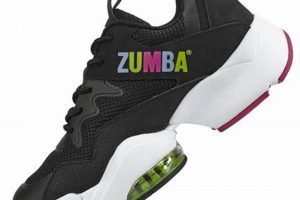
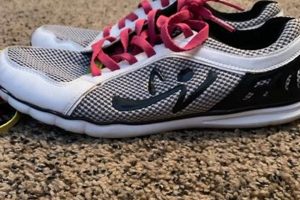
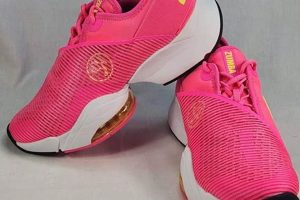
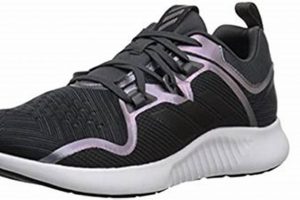
Footwear designed to support and enhance movement during high-impact, rhythmic exercise routines, specifically those resembling Zumba, requires specialized construction. Such footwear typically incorporates features like enhanced cushioning, lateral support, and a non-marking outsole to accommodate the varied dance steps and aerobic activity inherent in these exercise forms. The design prioritizes both performance and injury prevention.
The selection of appropriate footwear is crucial for minimizing the risk of joint strain and maximizing workout efficacy. The impact of repetitive movements in aerobic exercise can place significant stress on ankles, knees, and hips. Specifically-designed footwear mitigates this stress through shock absorption and stability features. Historically, general athletic shoes were used, but the rise in popularity of dance-based fitness prompted the development of footwear tailored to the unique demands of this type of exercise.
The following sections will delve into specific design elements, recommended features, and brand considerations for individuals seeking to optimize their experience within high-energy, dance-fitness environments. Aspects such as outsole composition, upper materials, and fit considerations will be explored to provide a comprehensive understanding of optimal footwear selection.
Selecting Appropriate Footwear for Dance-Fitness Activities
The following guidelines address critical considerations for selecting suitable footwear for activities involving high-energy dance routines such as Zumba. Prioritizing these factors can optimize performance and mitigate potential injury risks.
Tip 1: Prioritize Lateral Support: Footwear should provide robust lateral support to stabilize the foot during side-to-side movements, reducing the risk of ankle sprains. Look for shoes with reinforced sidewalls or supportive overlays.
Tip 2: Evaluate Outsole Flexibility: The outsole must offer a balance of flexibility and grip. Excessive rigidity can restrict movement, while insufficient traction can lead to slips and falls. Opt for outsoles with pivot points or segmented designs.
Tip 3: Assess Cushioning and Shock Absorption: Ample cushioning is essential to absorb impact during high-intensity movements. Consider footwear with gel or foam cushioning in the midsole to protect joints.
Tip 4: Ensure Proper Fit: The shoe should fit snugly but not tightly, allowing for natural foot movement without slippage. A thumb’s width of space between the longest toe and the end of the shoe is generally recommended. Consider trying on shoes later in the day when feet tend to swell.
Tip 5: Opt for Breathable Materials: Footwear constructed from breathable materials, such as mesh, promotes ventilation and reduces moisture buildup, minimizing discomfort and the risk of blisters.
Tip 6: Consider a Non-Marking Outsole: If the activity takes place indoors, ensure the outsole is non-marking to protect the flooring surface. This is often a requirement in fitness studios.
Tip 7: Evaluate the Heel Height: A moderate heel height can provide added support and stability during dance movements. However, excessively high heels should be avoided due to the increased risk of ankle instability.
Selecting appropriate footwear based on these guidelines contributes significantly to workout comfort, performance enhancement, and injury prevention during high-energy dance fitness activities.
The subsequent section will explore specific brand recommendations and further considerations for optimizing footwear selection.
1. Lateral Support

Lateral support in footwear designed for dance-fitness activities, such as Zumba, is a critical design element that contributes significantly to injury prevention and performance enhancement. The dynamic and multi-directional nature of these exercises necessitates footwear capable of stabilizing the foot and ankle during rapid changes in direction.
- Ankle Stabilization
Lateral support structures within the shoe, such as reinforced sidewalls and supportive overlays, mitigate excessive ankle inversion and eversion. These movements are common during lateral steps and turns, and insufficient support can lead to sprains or strains. Proper stabilization reduces the risk of these injuries, allowing for confident and agile movement.
- Midfoot Stability
Beyond the ankle, lateral support extends to the midfoot, preventing excessive pronation or supination. These foot motions can contribute to knee and hip pain if not properly controlled. Footwear with supportive midsoles and external heel counters can enhance stability and reduce the likelihood of these biomechanical issues.
- Energy Transfer Efficiency
Effective lateral support promotes efficient energy transfer during lateral movements. By minimizing energy loss due to foot instability, individuals can exert more force and maintain momentum. This can translate to improved agility and enhanced workout intensity.
- Impact Absorption Distribution
Shoes with adequate lateral support distribute impact forces more evenly across the foot, reducing stress on specific areas. This is especially important during high-impact movements, such as jumps and leaps, which are common in dance-fitness routines. Proper distribution of impact forces can help prevent stress fractures and other overuse injuries.
The integration of these lateral support mechanisms within dance-fitness footwear underscores the importance of selecting shoes specifically designed for the unique demands of these activities. General athletic shoes may lack the necessary features to adequately protect against the risks associated with rapid, multi-directional movements. Consideration of lateral support features is, therefore, essential when choosing footwear.
2. Shock Absorption

Shock absorption in dance-fitness footwear is a critical attribute directly impacting user comfort, joint protection, and overall workout sustainability. Given the repetitive, high-impact movements inherent in activities such as Zumba, the ability of the shoe to attenuate ground reaction forces is paramount.
- Impact Force Mitigation
The primary role of shock absorption is to reduce the magnitude of impact forces transmitted to the lower extremities. Each jump, step, or lateral movement generates force upon landing. Materials incorporated into the midsole, such as EVA foam, gel, or air cushioning, deform upon impact, absorbing a portion of the energy and dissipating it across a larger area. This reduces the peak force experienced by the ankle, knee, and hip joints.
- Joint Stress Reduction
Repetitive high-impact activity, if not properly cushioned, can lead to cumulative stress on joints, resulting in conditions such as plantar fasciitis, stress fractures, and knee pain. Adequate shock absorption minimizes this stress, allowing individuals to engage in longer and more intense workouts without experiencing excessive joint loading. The effectiveness of shock absorption materials directly correlates with the reduction in joint stress.
- Muscle Fatigue Delay
Beyond joint protection, effective shock absorption can also delay muscle fatigue. By reducing the amount of energy required to stabilize the body upon impact, lower leg muscles experience less strain. This contributes to improved endurance and reduced likelihood of muscle cramps or soreness. The type of cushioning material and its placement within the shoe influence its ability to minimize muscle fatigue.
- Performance Enhancement
While the primary focus of shock absorption is injury prevention, it also indirectly contributes to performance enhancement. By minimizing discomfort and fatigue, individuals can maintain focus and intensity throughout the workout. Moreover, shoes with responsive cushioning can provide a degree of energy return, contributing to a more efficient and dynamic movement experience.
The integration of effective shock absorption technologies into dance-fitness footwear is therefore not merely a comfort consideration, but a critical factor in injury prevention, performance optimization, and workout longevity. The selection of footwear incorporating appropriate shock absorption materials and designs should be a priority for individuals engaging in Zumba and similar high-impact activities.
3. Outsole Traction

Outsole traction is a critical performance factor in footwear designed for aerobic dance activities, such as Zumba. The dynamic movements inherent in these routinesincluding rapid changes in direction, pivots, and jumpsdemand a high degree of grip to ensure stability and prevent slips and falls. Insufficient traction compromises performance and elevates the risk of injuries like ankle sprains, knee strains, and more severe incidents.
The outsoles composition and tread pattern directly influence traction effectiveness. Rubber compounds are commonly employed due to their durability and inherent grip properties. The specific tread pattern, whether featuring multidirectional grooves, pivot points, or strategically placed lugs, further contributes to the shoe’s ability to maintain contact with the floor surface. For example, a smooth outsole might be suitable for gliding movements but provides inadequate grip during sudden stops, while an overly aggressive tread pattern could impede pivoting and increase the risk of twisting injuries. Fitness studios often require non-marking outsoles, adding another layer of consideration to material selection. A balance between grip, flexibility, and non-marking properties is essential for optimal performance in dance-fitness environments.
Understanding the role of outsole traction underscores the importance of selecting footwear specifically designed for aerobic dance. General athletic shoes may lack the specialized outsole features necessary to meet the demands of these activities. Prioritizing outsole traction during the selection process is a direct measure to enhance safety, improve performance, and ensure a more enjoyable and effective dance-fitness experience. The consequences of inadequate traction highlight the practical significance of this design element.
4. Flexibility
Footwear flexibility is a key characteristic influencing the effectiveness and safety of shoes intended for aerobic dance activities, notably Zumba. The capacity of the shoe to bend and move in conjunction with the foot directly impacts range of motion, comfort, and injury prevention.
- Forefoot Flexibility and Toe-Off
Flexibility in the forefoot region of the shoe facilitates a natural toe-off motion during dance steps. This allows for a more efficient and fluid transfer of energy, reducing strain on the metatarsals and plantar fascia. Rigid forefoot regions can restrict movement and increase the risk of developing conditions such as plantar fasciitis or metatarsalgia. A shoe that bends easily at the ball of the foot supports proper biomechanics during dance routines.
- Midsole Flexibility and Arch Support
While stability is crucial, a degree of midsole flexibility is also necessary to allow the foot to move naturally through its range of motion. A midsole that is too stiff can restrict arch movement and lead to discomfort or fatigue. However, flexibility must be balanced with adequate arch support to prevent overpronation or supination. The midsole should provide both cushioning and support while allowing for a degree of natural foot motion.
- Outsole Flexibility and Ground Contact
The outsole’s flexibility influences the shoe’s ability to conform to the ground during various dance movements. A flexible outsole enhances ground contact, improving traction and stability. Conversely, a rigid outsole may limit contact and increase the risk of slips. The outsole material and design should allow for a balance of flexibility and grip, accommodating the diverse foot positions and movements encountered in Zumba routines.
- Material Composition and Movement
Material composition plays a crucial role in flexibility, the shoe should be lightweight. Also, the capacity of the shoe to bend and twist in response to the foots biomechanics contributes to the dancer or fitness partcipant comfort and reduce the chance of repetitive injury to the foot or joints.
Consideration of flexibility, encompassing forefoot mobility, midsole responsiveness, and outsole adaptability, is paramount when selecting footwear for aerobic dance activities. Shoes that effectively balance flexibility with support and stability contribute to enhanced performance, reduced fatigue, and a lower risk of injury, ultimately optimizing the overall Zumba experience.
5. Breathability
Breathability is a critical characteristic of footwear designed for high-intensity aerobic activities, particularly Zumba. The sustained and vigorous nature of these workouts generates significant heat and moisture within the shoe, necessitating effective ventilation to maintain comfort and prevent potential foot health issues.
- Moisture Management
Breathable materials facilitate the evaporation of sweat produced during exercise. Fabrics such as engineered mesh and perforated synthetics allow air to circulate within the shoe, wicking moisture away from the foot and preventing its accumulation. Effective moisture management minimizes the risk of blisters, fungal infections, and unpleasant odors.
- Temperature Regulation
Adequate ventilation aids in regulating the internal temperature of the shoe. High-intensity activity can lead to significant heat buildup, potentially causing discomfort and reduced performance. Breathable materials allow heat to dissipate, maintaining a more comfortable and consistent temperature environment for the foot. This is particularly important during extended Zumba sessions or in warmer climates.
- Material Composition and Construction
The breathability of a shoe is directly influenced by its material composition and construction. Open-weave mesh uppers, perforated insoles, and ventilation ports strategically placed throughout the shoe contribute to airflow. Lightweight, moisture-wicking linings further enhance breathability by drawing sweat away from the skin. Seam placement and overall shoe design should also minimize obstructions to ventilation.
- Performance and Comfort
Breathability directly impacts workout performance and overall comfort. By minimizing moisture and regulating temperature, breathable shoes help maintain a comfortable and supportive environment for the foot. This reduces distractions and discomfort, allowing individuals to focus on their workout and perform at their best. Improved comfort also translates to increased workout adherence and enjoyment.
The integration of breathable materials and ventilation features into aerobic shoes represents a critical design consideration for optimizing performance, comfort, and foot health during high-intensity activities like Zumba. Footwear lacking adequate breathability may compromise these factors, leading to discomfort, reduced performance, and increased risk of foot-related issues.
6. Proper Fit

Achieving a proper fit in footwear designed for high-intensity dance-fitness activities such as Zumba is paramount. Ill-fitting shoes compromise performance, increase the risk of injury, and diminish the overall workout experience. Several key considerations contribute to ensuring an optimal fit.
- Length and Toe Box Dimensions
Adequate length is essential to accommodate the foot during movement. A thumb’s width of space between the longest toe and the shoe’s end is generally recommended. The toe box should provide sufficient width to allow toes to splay naturally, preventing constriction and reducing the risk of blisters, bunions, and other foot deformities. Insufficient length or a narrow toe box can lead to discomfort and compromised foot function during Zumba routines.
- Heel Counter Stability
The heel counter, located at the back of the shoe, provides support and stability to the heel and ankle. A snug but not overly tight fit in this area is crucial. The heel should not slip or lift out of the shoe during movement, as this can lead to instability and an increased risk of ankle sprains. A well-structured heel counter contributes significantly to overall foot support and reduces the likelihood of injuries during lateral movements and quick changes in direction.
- Arch Support and Midfoot Lockdown
Proper arch support is vital for maintaining foot alignment and distributing pressure evenly across the plantar surface. The shoe should provide adequate support for the wearer’s arch type, whether low, medium, or high. Midfoot lockdown, achieved through lacing systems or other design features, secures the foot within the shoe, preventing excessive pronation or supination. This contributes to stability and reduces the risk of injuries related to improper foot mechanics.
- Width and Volume Accommodation
Foot volume and width vary significantly among individuals. Footwear should accommodate these variations without creating pressure points or constricting the foot. Individuals with wider feet should seek shoes specifically designed with wider toe boxes or adjustable lacing systems. Overly tight shoes can restrict circulation and lead to discomfort, while excessively loose shoes can compromise stability and increase the risk of blisters. A properly fitting shoe conforms to the foot’s shape without causing undue pressure or restriction.
The integration of these fitting considerations contributes to a secure, comfortable, and supportive experience within aerobic shoes used for Zumba. These factors directly correlate with injury prevention, enhanced performance, and sustained participation in dance-fitness activities.
Frequently Asked Questions
The following section addresses common inquiries regarding the selection and utilization of specialized footwear for Zumba and similar high-impact dance-fitness activities. Understanding these points is crucial for maximizing workout effectiveness and minimizing potential injury risks.
Question 1: What distinguishes specialized footwear from general athletic shoes for dance-fitness activities?
Specialized footwear incorporates design features such as enhanced lateral support, flexible outsoles, and responsive cushioning specifically tailored to the dynamic movements and repetitive impacts inherent in dance-fitness routines. General athletic shoes may lack these features, potentially compromising stability and increasing the risk of injury.
Question 2: How does insufficient lateral support impact an individual participating in a Zumba class?
Inadequate lateral support increases the likelihood of ankle sprains and strains during rapid side-to-side movements. The absence of reinforced sidewalls and supportive overlays can destabilize the foot, leading to injuries and reduced performance.
Question 3: What factors should be considered when evaluating the outsole of footwear intended for dance-fitness activities?
The outsole should provide a balance of traction and flexibility. It should offer sufficient grip to prevent slips and falls while also allowing for a natural range of motion. Pivot points or segmented designs facilitate easier turning and pivoting movements.
Question 4: What is the significance of shock absorption in footwear designed for high-impact aerobic routines?
Adequate shock absorption mitigates the impact forces transmitted to the joints during high-intensity movements. Materials such as gel or foam cushioning in the midsole help to protect the ankles, knees, and hips from repetitive stress, reducing the risk of overuse injuries.
Question 5: How does breathability contribute to foot health during intense aerobic workouts?
Breathable materials promote ventilation and reduce moisture buildup within the shoe. This minimizes the risk of blisters, fungal infections, and discomfort. Footwear constructed from mesh or other breathable fabrics is recommended.
Question 6: What are the consequences of wearing footwear that does not fit properly during a Zumba class?
Ill-fitting shoes can lead to a variety of problems, including blisters, chafing, bunions, and instability. Shoes that are too tight can restrict circulation, while shoes that are too loose can compromise stability and increase the risk of slips and falls. Proper fit is essential for both comfort and safety.
Proper footwear selection contributes significantly to both injury prevention and optimized performance in Zumba and similar activities. Prioritizing the features discussed within this FAQ is essential for maximizing workout benefits and ensuring long-term participation.
The subsequent section will provide a summary of the key considerations for choosing the optimal footwear for dance-fitness activities.
Conclusion
The preceding exploration has illuminated the specific design and functional requirements of footwear intended for high-intensity, dance-based exercise regimens. Emphasis has been placed on key factors including lateral support, shock absorption, outsole traction, flexibility, breathability, and proper fit. The selection of appropriate “aerobic shoes for zumba” is not merely a matter of comfort, but a critical component in injury prevention and performance enhancement.
The information presented is intended to empower individuals to make informed decisions regarding footwear choices for dance-fitness activities. Prioritizing these features contributes to a safer, more effective, and ultimately more enjoyable workout experience. Further research and consultation with qualified professionals is encouraged to ensure optimal footwear selection based on individual biomechanics and specific needs. The long-term benefits of investing in appropriate “aerobic shoes for zumba” far outweigh the potential costs associated with injury and compromised performance.