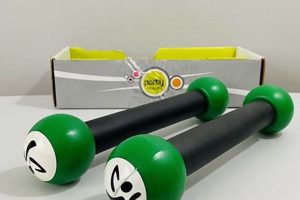
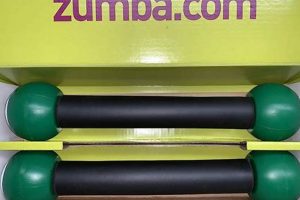
Handheld fitness implements, typically ranging from 0.5 to 2.5 kilograms, are incorporated into Zumba routines to augment the cardiovascular workout and enhance muscle engagement. These weighted implements add resistance to arm movements, thereby increasing the intensity of the dance-fitness activity. For example, a participant might use light dumbbells during a Zumba session to further activate biceps, triceps, and shoulder muscles while performing rhythmic steps.
The integration of resistance training within a cardio-based program offers several advantages, including improved muscular endurance, increased caloric expenditure, and enhanced bone density. The added weight helps to tone and sculpt the arms and upper body while simultaneously elevating the heart rate, contributing to improved cardiovascular health. Their usage has evolved from simple free-weight exercises to more dynamic and choreographed movements aligned with the Zumba philosophy.
The subsequent sections will address specific considerations for selecting appropriate weights, safe usage techniques during a session, and the potential fitness gains derived from their consistent integration within a Zumba workout regimen. These aspects are essential for optimizing the experience and achieving desired fitness outcomes.
Practical Guidance for Utilizing Weighted Implements in Zumba
The following are guidelines intended to facilitate the effective and safe incorporation of fitness implements into Zumba routines, promoting enhanced results and injury prevention.
Tip 1: Selection of Appropriate Resistance: Begin with lighter weights to establish proper form and technique. Gradually increase the weight as strength and endurance improve. Utilizing excessive resistance can compromise form, increasing the risk of injury.
Tip 2: Emphasis on Proper Form: Prioritize controlled movements and correct posture throughout the routine. The added weight can exacerbate poor form, potentially leading to muscle strain or joint stress. Maintain a stable core and avoid overextension of joints.
Tip 3: Gradual Integration into Routine: Introduce weighted movements incrementally into the session. Avoid immediately performing the entire routine with weights. Allow the body to adapt to the added resistance over time.
Tip 4: Focused Muscle Engagement: Consciously engage the target muscle groups during each repetition. Focus on contracting the biceps, triceps, or shoulders, depending on the specific exercise. This maximizes muscle activation and promotes strength gains.
Tip 5: Controlled Tempo and Range of Motion: Maintain a consistent tempo and full range of motion throughout the exercise. Avoid rushing the movements or limiting the range of motion, as this can reduce the effectiveness of the workout and increase the risk of injury.
Tip 6: Prioritize Warm-up and Cool-down: Dedicate sufficient time to pre-activity muscle preparation and post-activity recovery. Warming up increases blood flow and muscle elasticity, while cooling down aids in reducing muscle soreness and stiffness. This is particularly important when adding extra resistance.
Tip 7: Listen to the Body’s Signals: Discontinue weight usage immediately if pain or discomfort is experienced. Ignoring pain signals can lead to more serious injuries. Consult with a healthcare professional or certified fitness instructor if concerns arise.
Adhering to these tips enables a safe and effective implementation of weighted implements into Zumba, maximizing the benefits of this exercise modality.
The subsequent section will address further benefits when doing zumba weights.
1. Resistance Calibration

Resistance calibration represents a critical aspect of integrating weighted implements into Zumba routines, directly influencing both the safety and effectiveness of the workout. Selecting the appropriate weight load relative to an individual’s fitness level and exercise technique is paramount.
- Initial Strength Assessment
Resistance calibration commences with an accurate evaluation of the participant’s existing strength and endurance capabilities. This involves assessing their ability to perform basic movements with varying levels of external resistance. The aim is to identify a baseline weight that challenges the muscles without compromising form or causing undue strain. For example, a novice might begin with 0.5 kg weights, whereas a more experienced individual could commence with 1 kg or 1.5 kg. Ignoring this assessment can lead to immediate and potential injuries.
- Progressive Overload Implementation
Effective resistance calibration involves a gradual increase in the weight load as the participant’s strength and endurance improve. This principle of progressive overload ensures that the muscles are continually challenged, promoting ongoing adaptation and development. The increment of weight increase should be relatively small, typically 0.25 kg to 0.5 kg at a time, to avoid overstressing the muscles and joints. For instance, once a participant can comfortably complete a full Zumba routine with 1 kg weights, they can progressively increase the weight to 1.25 kg or 1.5 kg over several sessions.
- Movement-Specific Adjustments
Resistance calibration may require adjustments based on the specific movements incorporated into the Zumba routine. Certain exercises, such as lateral raises or overhead presses, may necessitate a lighter weight load compared to bicep curls or triceps extensions due to the biomechanical demands placed on the shoulder joint. Participants should be mindful of their body’s response to each exercise and adjust the weight accordingly to maintain proper form and avoid injury.
- Pain Threshold Monitoring
A crucial component of resistance calibration involves constant monitoring of the participant’s pain threshold. Any indication of sharp or persistent pain during exercise should prompt an immediate reduction in weight or cessation of the exercise. Pain is a signal that the muscles or joints are being subjected to excessive stress, and ignoring this signal can lead to chronic injuries. Emphasizing pain management during each activity is a step towards sustainability.
The facets of initial strength assessment, progressive overload implementation, movement-specific adjustments, and pain threshold monitoring are interconnected and essential for safe and effective weight usage. Adhering to these principles allows participants to maximize the benefits of incorporating weighted implements into Zumba routines while minimizing the risk of injury.
2. Form Integrity

Form integrity represents a fundamental element in the safe and effective utilization of weights during Zumba exercises. The addition of external resistance, even in seemingly light increments, amplifies the potential for injury when proper biomechanics are not maintained. The relationship between form and added weight is causative; compromised form directly increases stress on joints, ligaments, and muscles, thereby elevating the risk of strains, sprains, and more severe injuries. Form integrity is not merely a desirable aspect of a Zumba weights routine but rather an essential component that dictates the safety and efficacy of the activity.
For example, executing a bicep curl with even a 1 kg weight while allowing the back to arch or the elbows to drift forward compromises form. This deviation shifts the load away from the biceps, distributing it unevenly across the lower back and shoulder joints. Over time, this incorrect execution can lead to chronic lower back pain or shoulder impingement. Similarly, maintaining a stable core and neutral spine during lateral arm raises is crucial. If the core muscles are not properly engaged, the torso may sway, leading to imbalances and potential strain on the spinal erectors. Instructors often emphasize controlled movements and correct posture throughout the routine, and participants are often recommended to use mirrors to monitor and correct their form.
In conclusion, understanding and prioritizing form integrity is paramount for individuals participating in Zumba routines involving weights. Challenges arise in maintaining correct form due to fatigue, the dynamic nature of Zumba movements, and individual variations in physical capabilities. However, the practical significance of this understanding lies in preventing injuries, optimizing muscle engagement, and ensuring a sustainable and beneficial fitness practice. By focusing on proper technique and gradually increasing weight resistance, participants can maximize the benefits of Zumba weights while minimizing the associated risks. The adherence to the above suggestions are essential.
3. Incremental Integration

The principle of incremental integration is paramount when incorporating external resistance into Zumba routines. This approach mitigates the risk of injury and promotes sustainable fitness gains. A measured introduction of weights allows the musculoskeletal system to adapt progressively to the increased load, optimizing results without overstressing tissues.
- Gradual Weight Progression
Begin with minimal or no external weight to establish proper movement patterns and core stability. Progress to lighter weights (0.5-1 kg) once the Zumba steps are mastered. Subsequent increments should be small (0.25-0.5 kg), ensuring that each addition does not compromise technique. For instance, a participant might spend several weeks using 0.5 kg weights before increasing to 0.75 kg, continually monitoring their form and comfort level.
- Staged Introduction of Weighted Exercises
Do not immediately perform an entire Zumba routine with weights. Introduce weighted exercises selectively, focusing on specific muscle groups during each session. For example, begin by incorporating weights only during arm-focused segments, such as bicep curls or triceps extensions, while performing the remainder of the routine without added resistance. Over time, weighted exercises can be expanded to include additional segments of the routine.
- Progressive Duration of Weight Usage
Gradually increase the duration of weight usage within a single Zumba session. Start by using weights for only 10-15 minutes and incrementally extend this period as fitness improves. This approach allows the muscles to adapt to the sustained load, minimizing the risk of fatigue-related injuries. A participant may add five minutes to the weighted portion of their routine each week, contingent on their ability to maintain proper form and control.
- Adaptation-Based Advancement
Progression should be contingent upon the participant’s adaptation to the current weight and exercise duration. Do not increase the weight or duration simply because a predetermined timeframe has elapsed. Monitor indicators of adaptation, such as improved muscle endurance, reduced muscle soreness, and enhanced ability to maintain proper form. If a participant experiences persistent muscle soreness or finds it difficult to maintain form, delay further progression.
The systematic application of incremental integration enables individuals to safely and effectively enhance the intensity of their Zumba workouts. Adherence to these principles allows for sustained progress and long-term engagement with the activity, maximizing the benefits of weights while minimizing potential risks.
4. Targeted Engagement

Targeted engagement, in the context of Zumba routines incorporating weights, signifies the strategic activation and isolation of specific muscle groups to maximize strength development and muscular definition. This approach necessitates a conscious effort to focus on the contraction and relaxation of intended muscles during each movement, optimizing the effectiveness of the added resistance.
- Conscious Muscle Activation
Conscious muscle activation involves intentionally focusing on the specific muscles intended to perform the exercise. For instance, when executing a bicep curl with weights during a Zumba routine, the participant should concentrate on contracting the biceps muscle throughout the movement. This focused activation enhances muscle fiber recruitment and promotes greater strength gains. An example is mentally visualizing the biceps contracting as the weight is lifted and released.
- Movement Precision and Control
Targeted engagement requires precise execution of movements to ensure the targeted muscle groups are effectively isolated. This involves maintaining proper form and controlling the tempo of the exercise. Rapid or uncontrolled movements can distribute the load unevenly, reducing the activation of the intended muscles. In a lateral raise, a controlled tempo ensures the deltoids are primarily engaged, preventing the trapezius from compensating and reducing the exercise’s effectiveness.
- Neuromuscular Connection Optimization
Regularly practicing targeted engagement strengthens the neuromuscular connection between the brain and the targeted muscles. This improved connection enhances the efficiency of muscle activation and increases overall strength. Over time, the participant develops a greater awareness of their body and the ability to activate specific muscles at will. For example, after several weeks of focused training, individuals often report an increased “feel” for the working muscle during exercise.
- Synergistic Muscle Stabilization
Effective targeted engagement includes the synergistic activation of stabilizing muscles to support the primary movers. For example, when performing shoulder presses, engaging the core muscles is crucial to maintain spinal stability and prevent lower back strain. Stabilizing muscles ensure proper joint alignment and optimize the efficiency of the targeted muscles, enhancing overall exercise performance.
The interconnectedness of conscious muscle activation, movement precision, neuromuscular connection optimization, and synergistic muscle stabilization provides a comprehensive framework for effective targeted engagement in Zumba routines utilizing weights. This approach enhances the physical benefits of the workout and promotes a greater awareness of body mechanics, fostering improved movement efficiency and reducing the risk of injury. Thus, implementing targeted engagement helps to maximize the physical results while minimizing any safety concerns from the implementation of extra weight.
5. Motion Control

Motion control, within the context of Zumba routines incorporating weighted implements, is a crucial determinant of safety and efficacy. The addition of even relatively light weights amplifies the consequences of uncontrolled movements, potentially leading to joint stress, muscle strain, and diminished exercise benefits.
- Tempo Regulation
Maintaining a consistent and controlled tempo is essential for optimizing muscle engagement and minimizing the risk of injury. Rapid, jerky movements increase momentum, reducing the load placed on the target muscles and increasing the likelihood of improper form. Controlled movements allow for optimal muscle fiber recruitment and sustained tension. For instance, during a bicep curl with weights, a slow, deliberate tempo ensures that the biceps muscle is actively engaged throughout the exercise, maximizing its effectiveness. Any fast movement would possibly strain the muscles.
- Range of Motion Management
Exercising with an appropriate range of motion is critical for joint health and muscle development. Full range of motion maximizes muscle fiber activation and promotes joint mobility. However, exceeding the safe range of motion can lead to joint impingement or instability, increasing the risk of injury. Individuals should strive to move through a full, comfortable range of motion, avoiding any movements that cause pain or discomfort. Therefore, the degree of motion depends on the capacity of joints involved.
- Postural Stability Maintenance
Maintaining proper posture throughout the Zumba routine is essential for supporting the spine and distributing the load evenly across the musculoskeletal system. Poor posture can compromise core stability and increase stress on the joints, particularly in the lower back. Engaging the core muscles and maintaining a neutral spine helps to stabilize the body and reduce the risk of injury. This is particularly important during dynamic movements, such as twists or lunges, that require significant core strength. The more the muscles are tensed, the better.
- Force Dissipation and Impact Absorption
Effective motion control includes the ability to dissipate forces and absorb impact to minimize stress on the joints. This is particularly important during high-impact Zumba steps that involve jumping or landing. Proper technique involves bending the knees and ankles to absorb the force of impact, reducing stress on the knees and hips. Participants should also pay attention to their foot placement and ensure that they land softly on the balls of their feet. As much as possible, force should be lessened by reducing intensity.
The principles of tempo regulation, range of motion management, postural stability maintenance, and force dissipation collectively contribute to effective motion control during Zumba routines incorporating weights. By adhering to these guidelines, participants can maximize the benefits of the exercise while minimizing the risk of injury, fostering a safe and sustainable fitness practice. In addition, effective motion control helps to enhance coordination, balance, and overall movement efficiency, further contributing to the effectiveness of the workout.
6. Safety Awareness

Safety awareness is a paramount consideration when integrating weighted implements into Zumba routines. The addition of external resistance inherently amplifies the potential for injury if proper precautions are not observed. Understanding and adhering to safety guidelines is essential for maximizing the benefits of this exercise modality while mitigating the associated risks.
- Pre-Exercise Health Assessment
A comprehensive health assessment prior to commencing a Zumba program involving weights is crucial. Individuals with pre-existing musculoskeletal conditions, cardiovascular issues, or other health concerns should consult with a physician or qualified healthcare professional. This assessment identifies potential contraindications and allows for modifications to the exercise program to ensure safety. Ignoring underlying health conditions can increase the risk of adverse events during exercise. Medical clearance ensures that an individual is physically capable of safely participating in the activity.
- Proper Weight Selection and Progression
Selecting an appropriate weight and progressing gradually are fundamental safety measures. Novice participants should begin with lighter weights (0.5-1 kg) and progressively increase the load as strength and endurance improve. Using excessive weight can compromise form and increase the risk of muscle strain or joint injury. A measured progression allows the body to adapt to the added resistance, minimizing the potential for overuse injuries. Sudden increases in weight should be avoided. Over time, the participants can adjust accordingly.
- Awareness of Environmental Factors
Consideration of environmental factors, such as adequate space, appropriate flooring, and proper ventilation, is essential for preventing accidents and injuries. A clear and unobstructed workout area minimizes the risk of collisions or falls. Supportive flooring provides cushioning and reduces impact on the joints. Proper ventilation helps to regulate body temperature and prevent overheating. Environmental awareness contributes to a safe and comfortable workout environment. In addition, temperature and noise should also be considered.
- Recognition of Warning Signs and Symptoms
Participants should be educated on the warning signs and symptoms of exercise-related injuries, such as pain, swelling, dizziness, or shortness of breath. Immediate cessation of exercise and seeking medical attention are warranted if any of these symptoms occur. Ignoring warning signs can lead to more serious injuries or complications. Prompt recognition and response to these signs are essential for preventing adverse events. Do not take signs lightly to prevent more complications.
The aforementioned facets of pre-exercise health assessment, appropriate weight selection, environmental awareness, and symptom recognition are integral components of a comprehensive safety awareness strategy. By prioritizing these considerations, participants can engage in Zumba routines involving weights safely and effectively, maximizing the fitness benefits while minimizing potential risks. Ignoring these aspects may cause problems or injuries in the long run. Furthermore, ongoing education and reinforcement of safety principles are essential for maintaining a culture of safety within the Zumba community.
Frequently Asked Questions
The following elucidates common inquiries regarding the implementation of fitness implements within Zumba routines, providing concise and evidence-based responses.
Question 1: What is the recommended weight range for fitness implements used in Zumba?
The typical range spans from 0.5 kilograms to 2.5 kilograms. Selection should align with individual fitness levels and exercise experience. Commencing with lighter weights and progressively increasing resistance is advisable.
Question 2: How frequently should fitness implements be incorporated into Zumba sessions?
Integration frequency depends on individual tolerance and recovery capacity. Initially, fitness implements may be used during select portions of a Zumba session, gradually increasing the duration as adaptation occurs. Rest days are essential for muscle recuperation.
Question 3: Are there specific Zumba movements that are contraindicated when using fitness implements?
Movements involving ballistic motions, excessive joint extension, or compromised postural control may be contraindicated. Prioritizing controlled movements and maintaining proper form is essential to minimize injury risk.
Question 4: What are the potential benefits of using fitness implements during Zumba?
Potential benefits include increased caloric expenditure, enhanced muscular endurance, and improved upper body toning. The addition of resistance can augment the intensity of the cardiovascular workout.
Question 5: How does the use of fitness implements affect the Zumba participant’s heart rate?
The incorporation of resistance typically elevates the heart rate compared to unweighted Zumba sessions. Monitoring heart rate during exercise ensures the intensity remains within a safe and effective range.
Question 6: What precautions should individuals with pre-existing joint conditions take when using fitness implements in Zumba?
Individuals with joint conditions, such as arthritis or tendinitis, should consult with a healthcare professional prior to using fitness implements. Modifying exercises, reducing weight, or avoiding specific movements may be necessary to prevent exacerbation of symptoms.
These responses offer guidance on the judicious application of fitness implements within Zumba routines. Adherence to these principles fosters a safe and productive exercise experience.
The subsequent section delves into a summary of key considerations for the implementation of weighted implements into Zumba workout routines.
Zumba Weights
This exploration of zumba weights underscores several crucial elements for their safe and effective implementation. The appropriate selection of resistance, the maintenance of impeccable form, and the gradual integration of weighted movements are paramount. A focused engagement of target muscle groups, combined with controlled motion, contributes to maximizing fitness gains. Equally significant is the adherence to safety awareness principles, including pre-exercise health assessments and recognition of warning signs.
The responsible and informed integration of zumba weights into fitness regimens promises enhanced muscular endurance and improved cardiovascular output. Ongoing adherence to established safety protocols remains a critical aspect of participation. Future research may further refine the optimal application of resistance within dance-fitness modalities, thereby enhancing the efficacy and safety of Zumba programs. Therefore, careful and gradual steps must be taken to ensure safety of implementation and prevent injuries and other complications.