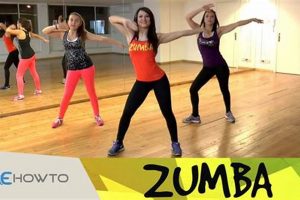
A motion-controlled video game designed for the Xbox 360, this interactive experience combines the popular Zumba dance fitness program with the capabilities of the Kinect sensor. Players follow on-screen instructors through a variety of dance routines set to energetic music, with the Kinect tracking their movements and providing feedback on their performance. This allows for an engaging and immersive workout within the home environment.
The integration of fitness and gaming offers several potential advantages. Individuals can participate in a structured exercise program without the need for a gym membership or scheduled classes. The interactive nature of the gameplay can increase motivation and adherence to a fitness regimen. Furthermore, the game provides a personalized experience, adapting to the player’s fitness level and progress over time. The combination of dance, music, and technology provides a novel approach to exercise.
The following sections will delve deeper into the game mechanics, available content, and the impact it has had on the fitness gaming market. A comparative analysis with similar fitness titles and an exploration of the technological underpinnings that contribute to its functionality will also be provided.
Enhancing the Experience
Maximizing the effectiveness and enjoyment of engaging with the interactive fitness program requires attention to detail and a strategic approach.
Tip 1: Calibrate the Kinect Sensor. Accurate motion tracking is crucial. Before commencing any routines, ensure the Kinect sensor is properly calibrated to the player’s environment and height. This prevents inaccurate movement recognition and ensures a more responsive experience.
Tip 2: Optimize Play Area. Clear the designated playing area of any obstructions. Sufficient space is necessary for unrestricted movement. A minimum of six feet between the player and the sensor is recommended to allow for full body tracking.
Tip 3: Familiarize with Basic Movements. Before attempting advanced routines, practice fundamental Zumba steps. Understanding core movements, such as the Merengue, Salsa, and Reggaeton, improves overall performance and reduces the risk of injury.
Tip 4: Utilize the Tutorial Mode. Take advantage of the game’s tutorial mode to learn new routines and refine existing skills. The tutorial provides step-by-step instructions and visual demonstrations of each movement.
Tip 5: Adjust Difficulty Settings. The game offers varying difficulty levels. Begin at a comfortable level and gradually increase the intensity as fitness improves. Pushing too hard initially can lead to fatigue and discouragement.
Tip 6: Maintain Consistent Gameplay. Regular engagement is key to achieving fitness goals. Schedule dedicated workout sessions and adhere to a consistent routine. Consistency fosters muscle memory and enhances cardiovascular health.
Tip 7: Hydrate Adequately. Proper hydration is essential before, during, and after each session. Dehydration can impair performance and increase the risk of muscle cramps. Keep a water bottle readily available.
Adherence to these guidelines contributes to a more effective and enjoyable workout, promoting both physical well-being and sustained engagement with the program.
The concluding section will summarize the overall impact of this interactive fitness program and its place within the broader context of exergaming.
1. Motion-sensor integration

Motion-sensor integration forms the core technological foundation upon which the entire experience of Zumba Fitness Rush Kinect is built. Without the Kinect’s ability to accurately track and interpret player movements, the game would be rendered non-functional. The game relies on the Kinect sensor to capture a player’s actions in real-time, translating those actions into in-game responses and feedback. This is a cause-and-effect relationship: the player’s movement is the cause, and the Kinect’s interpretation and the resulting in-game action is the effect. For example, if a player correctly performs a Salsa step, the Kinect registers this and awards points, visually displayed on screen. Conversely, incorrect movements result in lower scores or visual cues prompting correction. Thus, motion-sensor integration is not merely an added feature but an absolutely necessary component, impacting the overall playability and effectiveness of the fitness program.
The significance of this integration extends beyond basic functionality. The accuracy of the motion tracking directly influences the perceived effectiveness of the workout. A highly responsive system ensures that players receive immediate feedback, allowing them to refine their technique and maximize the benefits of each routine. For instance, the game’s ability to recognize subtle shifts in weight distribution during a Merengue can encourage proper form and prevent potential injuries. Furthermore, motion-sensor integration facilitates a personalized experience. The Kinect can adapt to individual body types and fitness levels, modifying the intensity and complexity of the routines accordingly. This adaptability enhances engagement and promotes sustained participation.
In summary, motion-sensor integration is not just a technical feature of Zumba Fitness Rush Kinect; it is the essential element that enables the interactive fitness experience. Its accuracy, responsiveness, and adaptability directly determine the game’s functionality, effectiveness, and overall appeal. Challenges in motion tracking, such as lag or misinterpretation of movements, can significantly detract from the experience. Therefore, a clear understanding of this connection is crucial for appreciating the technological underpinnings and potential benefits of the game.
2. Dance-based workout

The core principle upon which Zumba Fitness Rush Kinect operates is the dance-based workout. Its not simply a peripheral element; its the central activity around which all other game mechanics revolve. The game leverages the inherent appeal of dance to motivate users towards physical activity. The selection of musical genres and choreography styles directly shapes the user’s experience and the potential fitness benefits derived.
- Choreography Variety
The game features a diverse range of dance styles, including Salsa, Merengue, Reggaeton, and Cumbia. This variety aims to cater to different preferences and target various muscle groups. Each style incorporates unique movements and rhythms, providing a well-rounded workout that enhances coordination, agility, and cardiovascular fitness. For example, Salsa incorporates fast footwork and hip movements, improving lower body strength and flexibility, while Merengue emphasizes upper body movements, engaging the core and arms.
- Intensity Levels
Dance routines within Zumba Fitness Rush Kinect are structured to accommodate varying fitness levels. Beginner routines focus on fundamental steps and slower tempos, while advanced routines introduce complex choreography and higher-intensity movements. This allows individuals to gradually progress, building endurance and improving their skills over time. The game provides options to modify routines, enabling players to customize the intensity and duration of their workouts based on their individual needs and capabilities.
- Music Integration
The selection of music is integral to the dance-based workout experience. The game features a soundtrack comprised of both original Zumba music and licensed tracks from popular artists. The upbeat rhythms and catchy melodies are designed to motivate players and make the workout more enjoyable. The synchronization of dance moves with the music creates a sense of flow and immersion, enhancing the overall engagement and encouraging sustained participation. The selection of licensed tracks increases the reach and appeal of the program.
- Fitness Benefits
The dance-based workout offers multiple physical benefits. Regular participation can improve cardiovascular health, increase muscular endurance, enhance flexibility, and promote weight loss. The combination of aerobic exercise and muscle engagement contributes to overall fitness and well-being. The game’s structure, which combines interval training with rhythmic movement, is effective for burning calories and toning muscles.
The dance-based workout within Zumba Fitness Rush Kinect represents more than mere entertainment; it’s a structured exercise program delivered through an engaging and accessible medium. The game’s effectiveness hinges on the successful integration of choreography, music, and intensity levels to provide a balanced and motivating fitness experience. This interactive fitness program effectively brings the Zumba class experience into the home, offering a convenient and engaging alternative to traditional gym workouts.
3. Interactive gameplay
Interactive gameplay is a central mechanism driving the user experience of Zumba Fitness Rush Kinect. Its integration goes beyond simple responsiveness; it defines how players engage with the fitness program, affecting motivation, adherence, and the overall effectiveness of the workout. The connection between interactive gameplay and Zumba Fitness Rush Kinect manifests as a cause-and-effect relationship. A user’s physical movements are registered by the Kinect sensor, which then translates these actions into on-screen responses. For example, a correctly executed Salsa step results in the accumulation of points, visual feedback through avatar movements, and audible cues indicating success. Conversely, inaccurate or poorly timed movements lead to fewer points, prompting the player to adjust their technique. This immediate feedback loop is essential for learning the dance routines and maintaining engagement.
The importance of interactive gameplay lies in its ability to transform a potentially monotonous workout into an engaging and enjoyable activity. The game responds dynamically to the player’s performance, creating a sense of immersion and control. For instance, successful completion of a series of dance moves might unlock new songs, difficulty levels, or customizable avatar options. This progression system incentivizes continued participation and provides a sense of accomplishment. In practical terms, this means that users are more likely to stick to their fitness goals if they find the process intrinsically motivating. By incorporating elements of challenge, reward, and personalized feedback, the interactive gameplay in Zumba Fitness Rush Kinect enhances user retention and contributes to improved fitness outcomes.
In summary, interactive gameplay constitutes a fundamental aspect of Zumba Fitness Rush Kinect, influencing both the user’s immediate experience and their long-term adherence to the fitness program. The continuous feedback loop, the incorporation of challenges and rewards, and the overall sense of control contribute to a more engaging and effective workout. While technological limitations can occasionally impede the accuracy of motion tracking, the core principles of interactive design remain crucial for maximizing the game’s potential as a fitness tool. The successful integration of these elements provides insights into the broader applications of interactive gameplay within the context of fitness and exercise.
4. Home fitness solution

Zumba Fitness Rush Kinect functions as a readily accessible home fitness solution, removing the need for external gym memberships or structured class schedules. The game provides structured exercise routines, transforming the living room into a personal fitness space. This accessibility lowers barriers to entry for individuals with time constraints, geographic limitations, or a preference for exercising in a private environment. Its structure provides access to structured exercise routines, removing the need to travel to a gym. For individuals with schedule or access to fitness classes, Zumba Fitness Rush Kinect offers a convenient method to maintain physical activity. The game’s design promotes exercise habits at the users own pace.
The adaptability of this approach allows it to address the diverse needs of a broad user base. Individuals can adjust the duration and intensity of the workouts to align with their fitness level and available time. The Kinect sensor monitors movements, offering real-time feedback on technique and progress. Integration of motion-sensing technology, dance-based exercises and interactive gameplay contribute to its application as a home fitness program. The incorporation of customizable settings creates a adaptable fitness approach. It also facilitates a method for regular exercise sessions without the necessity of external resources.
In essence, Zumba Fitness Rush Kinect exemplifies a functional and flexible home fitness solution. By combining interactive technology with an engaging exercise format, it addresses common barriers to physical activity and promotes a healthier lifestyle. The game is successful at transforming fitness into a home-based, engaging experience. While not a replacement for personalized training, it offers a viable option for those seeking to establish or maintain a regular fitness routine within their own living space.
5. Exergaming experience
The exergaming experience is a defining characteristic of Zumba Fitness Rush Kinect. It represents the fusion of video game elements with physical exercise, transforming a traditional workout into an interactive and engaging activity. In this context, Zumba Fitness Rush Kinect utilizes the Kinect sensor to track player movements, converting those actions into in-game responses. The accuracy and responsiveness of this tracking directly impact the quality of the exergaming experience. For example, when a player accurately executes a Zumba routine, the game provides positive feedback through visual cues, points accumulation, and the unlocking of new content. Conversely, incorrect movements result in fewer points and prompts for correction, incentivizing the player to improve their technique. The game transforms fitness activities into a game of skill, creating an incentive to play.
The importance of the exergaming experience as a component of Zumba Fitness Rush Kinect is evident in its ability to increase user motivation and adherence. By incorporating elements of challenge, reward, and personalized feedback, the game aims to make exercise more enjoyable and less like a chore. For instance, the game may offer virtual rewards for achieving fitness goals, such as unlocking new dance routines or customizing the player’s avatar. Real-life examples include individuals who report increased levels of physical activity and improved fitness outcomes after incorporating the game into their daily routines. The interaction of entertainment is what keeps users engaged.
In summary, the exergaming experience forms a central aspect of Zumba Fitness Rush Kinect, influencing the player’s motivation, engagement, and ultimately, their fitness outcomes. The practical significance of understanding this connection lies in recognizing the potential of exergaming to promote healthier lifestyles and combat sedentary behavior. While challenges remain in optimizing the accuracy and responsiveness of motion-tracking technology, the core principles of exergaming hold promise for revolutionizing the way individuals approach physical exercise. The game utilizes exergaming as a tool to help users workout.
6. Kinect technology

Kinect technology serves as the foundational sensor input mechanism for Zumba Fitness Rush Kinect. Its role is not merely peripheral; the Kinect’s capabilities in motion capture directly enable the game’s interactive fitness experience. The cause-and-effect relationship is readily apparent: the user’s physical actions are captured by the Kinect, and these actions then drive the game’s progress, score, and feedback mechanisms. The Kinect’s accuracy in discerning and interpreting bodily movements dictates the overall quality and effectiveness of the fitness program. A clear example includes the sensor’s ability to differentiate between correct and incorrect Zumba steps; this determination triggers either positive reinforcement or corrective guidance within the game. Without this real-time motion tracking, the game would devolve into a passive viewing experience, devoid of interaction.
The Kinect technology within Zumba Fitness Rush Kinect has several practical applications that enhance the user’s fitness experience. First, the sensor facilitates personalized feedback on form and technique, which can improve the effectiveness of the workout and reduce the risk of injury. Second, the Kinect tracks the user’s progress over time, providing data on calories burned, time spent exercising, and overall improvement. This data can be used to set goals, monitor progress, and maintain motivation. The Kinect also allows for multiplayer functionality, enabling users to exercise with friends and family in the same physical space. This social aspect can increase motivation and adherence to a fitness routine. However, limitations with the technology exist; the Kinect’s performance can be affected by lighting conditions, room size, and the user’s distance from the sensor. The technology limitations can sometime prevent the user to exercise correctly.
In summary, Kinect technology is an indispensable component of Zumba Fitness Rush Kinect, enabling the game’s core functionality and enhancing its fitness benefits. The technology enhances its ability to provide users an immersive at-home workout routine and exercise. Addressing issues with accuracy, responsiveness, and environmental factors are necessary for optimizing user experience. The integration of Kinect technology is essential for understanding the game’s potential and its contribution to the broader field of interactive fitness.
7. Xbox 360 platform
The Xbox 360 platform provides the foundational hardware and software infrastructure upon which Zumba Fitness Rush Kinect operates. Its role is more than simply providing a means to play the game; the Xbox 360’s processing power, storage capacity, and connectivity options directly influence the functionality, accessibility, and overall experience of the interactive fitness program. The relationship between the platform and the game can be seen through the Kinect. The Zumba motion data is processed and presented to the user through the XBox 360. Without the XBox, the motion data can’t be presented to the user. The capabilities and limitations of the Xbox 360 directly affect the gameplay, graphics, and level of interaction.
The Xbox 360 allowed for the distribution of Zumba Fitness Rush Kinect as a retail product, bringing motion-controlled fitness into the home. Furthermore, the Xbox Live service, integral to the Xbox 360 platform, enabled features such as downloadable content, online leaderboards, and social interaction, enhancing the long-term engagement with the game. For example, players could download new dance routines, track their progress against friends, and share their achievements online, contributing to a sense of community and motivation. A practical application is the use of downloadable content, such as new music tracks and dance routines, which allows users to continually update their fitness programs without needing to purchase an entirely new game. The Xbox’s online service expands the life cycle of the product.
In summary, the Xbox 360 platform plays a vital role in enabling and shaping the Zumba Fitness Rush Kinect experience. The platform’s hardware capabilities, software features, and online services all contribute to the game’s functionality, accessibility, and long-term appeal. While the Xbox 360 has been succeeded by newer consoles, understanding its contribution to the interactive fitness market is essential for appreciating the evolution of exergaming and its potential to promote healthier lifestyles. While the software is great, it needs the hardware to run. It’s a package deal.
Frequently Asked Questions
The following questions address common inquiries regarding Zumba Fitness Rush Kinect, offering clarity on its features, functionality, and intended use.
Question 1: What specific hardware is required to play Zumba Fitness Rush Kinect?
Zumba Fitness Rush Kinect necessitates the Xbox 360 gaming console and the Kinect motion sensor. The game is not compatible with other gaming platforms or motion-sensing devices.
Question 2: Does Zumba Fitness Rush Kinect offer a customizable workout experience?
The game allows users to adjust workout intensity, duration, and music selection to accommodate individual fitness levels and preferences. Pre-set routines and custom playlists provide further personalization options.
Question 3: How does the Kinect sensor track player movements in Zumba Fitness Rush Kinect?
The Kinect sensor employs infrared technology and depth sensors to capture and interpret player movements in three dimensions. This data is then translated into in-game actions, providing real-time feedback on performance.
Question 4: Is an internet connection required to play Zumba Fitness Rush Kinect?
An internet connection is not required for the core gameplay of Zumba Fitness Rush Kinect. However, an internet connection is required to download additional content such as new routines or features.
Question 5: What fitness benefits can be expected from consistent engagement with Zumba Fitness Rush Kinect?
Consistent engagement with Zumba Fitness Rush Kinect may result in improved cardiovascular health, increased muscular endurance, enhanced coordination, and potential weight loss, contingent on individual effort and dietary habits.
Question 6: Are there any specific physical limitations or pre-existing conditions that would preclude participation in Zumba Fitness Rush Kinect?
Individuals with pre-existing musculoskeletal conditions, cardiovascular issues, or other health concerns should consult with a medical professional prior to engaging in Zumba Fitness Rush Kinect to determine its suitability.
These responses provide a foundational understanding of the game, enabling informed decisions regarding its adoption and integration into a fitness regimen.
The subsequent section will present a comparative analysis of Zumba Fitness Rush Kinect against other fitness games, evaluating its strengths and weaknesses within the competitive landscape.
Conclusion
This exploration has detailed the various facets of Zumba Fitness Rush Kinect, examining its core mechanics, technological underpinnings, and potential impact on fitness engagement. Key points include the reliance on Kinect technology for motion tracking, the incorporation of dance-based workouts for cardiovascular benefit, and the interactive gameplay designed to enhance motivation. Understanding these elements provides a comprehensive perspective on the game’s functionality and its role within the exergaming landscape.
While Zumba Fitness Rush Kinect offers a compelling alternative to traditional exercise, a measured approach to its integration is advised. A recognition of both its capabilities and limitations is essential for maximizing its benefits. Further research into the long-term effects of exergaming and its adaptability to diverse populations remains a critical area of investigation.