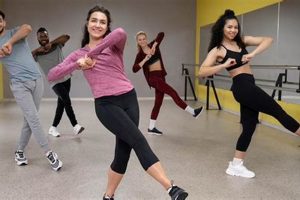
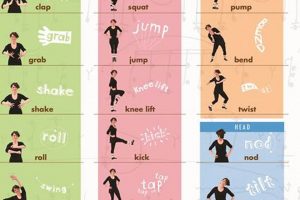
Zumba, a fitness program inspired by Latin dance, integrates aerobic exercise with dance movements. These routines, often performed to energetic music, involve a blend of salsa, merengue, and other international rhythms. Modifications to these routines may focus on core engagement and calorie expenditure, aiming to contribute to abdominal definition. For example, routines might emphasize oblique twists and abdominal contractions during specific dance sequences.
The appeal of this approach lies in its potential to provide a fun and engaging way to increase physical activity. Regular participation can lead to improved cardiovascular health, increased muscle tone, and calorie burning. While spot reduction of fat in one specific area is not physiologically possible, consistent overall fat loss combined with targeted muscle strengthening exercises can contribute to a more toned midsection. Zumba’s roots trace back to the mid-1990s, quickly gaining popularity as an accessible and enjoyable fitness format.
The subsequent sections will delve into the specific movement types incorporated within modified Zumba programs, the role of nutrition in achieving abdominal toning, and the importance of consulting healthcare professionals before initiating any new fitness regimen.
Guidance on Optimized Zumba Routines
The following recommendations aim to refine Zumba practice towards enhanced physical conditioning. These suggestions are predicated on the understanding that consistent effort and informed execution yield the most favorable outcomes.
Tip 1: Emphasize Core Engagement: Actively contract abdominal muscles throughout the duration of the routine. This involves pulling the navel towards the spine during each movement, promoting deeper muscle activation.
Tip 2: Incorporate Interval Training: Alternate between high-intensity bursts and periods of moderate activity. This strategy elevates metabolic rate and promotes efficient calorie expenditure.
Tip 3: Increase Routine Frequency: Aim for a minimum of three sessions per week, allowing for adequate recovery periods between workouts. Consistent application of effort is crucial for observable progress.
Tip 4: Diversify Movement Selection: Incorporate variations that specifically target oblique muscles, such as twisting motions and side bends. A well-rounded approach is more effective than focusing solely on frontal plane movements.
Tip 5: Refine Posture Alignment: Maintain proper posture throughout each exercise. A neutral spine and engaged core support efficient movement patterns and minimize risk of injury.
Tip 6: Prioritize Nutrition: Integrate a balanced dietary regimen alongside the exercise routine. A calorie deficit, achieved through sensible eating habits, is a prerequisite for fat reduction.
Tip 7: Monitor Progress Consistently: Track changes in body composition using objective measures, such as circumference measurements or body fat percentage. Regular assessment allows for informed adjustments to the training plan.
Adherence to these guidelines, in conjunction with consistent physical activity, may contribute to improved physical conditioning and overall well-being.
The concluding section will summarize the core principles discussed and offer final considerations for incorporating Zumba into a comprehensive fitness strategy.
1. Core Engagement

Core engagement constitutes a fundamental element within Zumba routines designed to contribute to abdominal toning. It signifies the conscious activation and sustained contraction of the abdominal muscles during dance movements. This deliberate muscle action functions as the mechanism by which Zumba exercises transition from general aerobic activity to a targeted core workout. Without intentional core engagement, the benefits of Zumba, in terms of abdominal definition, are significantly diminished. For instance, performing a twisting Zumba step without engaging the oblique muscles primarily targets cardiovascular fitness; however, actively contracting those muscles during the same step transforms it into an exercise directly impacting core strength and stability.
The practical implications of understanding this connection are substantial. Participants must learn to differentiate between passively executing movements and actively engaging their core throughout the Zumba routine. Instruction should explicitly emphasize techniques for identifying and maintaining core activation. This might involve cues such as pulling the navel towards the spine, bracing the abdominal muscles as if preparing for impact, or focusing on maintaining a stable torso during dynamic movements. Furthermore, incorporating variations that inherently demand core stabilization, such as single-leg balances or movements with an emphasis on controlled rotation, further intensifies the impact on abdominal musculature.
In summary, core engagement is not merely an optional addendum to Zumba; it is a crucial prerequisite for realizing the potential benefits regarding abdominal toning. While Zumba offers a fun and effective means of cardiovascular exercise, its effectiveness for shaping the midsection is contingent upon the consistent and deliberate activation of the core muscles throughout the entire routine. A lack of attention to this element reduces the exercise to a general cardio workout, failing to capitalize on its potential for targeted core strengthening. Overcoming this challenge requires education, mindful practice, and a consistent focus on proper form and muscle activation.
2. Calorie Deficit

A calorie deficit represents a state in which energy expenditure surpasses energy intake. Achieving this state is fundamental for reducing overall body fat, a necessary step in attaining a more defined abdominal appearance. While Zumba contributes to energy expenditure through physical activity, its effectiveness in achieving abdominal toning is intrinsically linked to the presence of a concurrent calorie deficit. The body preferentially stores excess energy as fat. Without a negative energy balance, the body does not readily mobilize these fat reserves, regardless of the intensity or frequency of exercise. For example, an individual engaging in regular Zumba sessions but consuming more calories than they expend will likely not experience significant fat reduction, thereby limiting the visibility of underlying abdominal muscle definition.
The relationship between Zumba and calorie deficit is synergistic. Zumba increases energy expenditure, thereby contributing to the establishment of a calorie deficit. However, the magnitude of this contribution varies depending on factors such as exercise intensity, duration, and individual metabolic rate. Therefore, relying solely on Zumba to create a sufficient calorie deficit may not be adequate for all individuals. Complementary strategies, such as mindful dietary adjustments and portion control, are typically required to ensure a sustainable negative energy balance. Consider an individual who reduces their daily caloric intake by 300 calories and simultaneously burns an additional 200 calories through a Zumba class. This combined approach creates a 500-calorie deficit per day, accelerating the rate of fat loss compared to relying solely on exercise.
In summary, Zumba serves as a valuable tool for increasing energy expenditure and contributing to a calorie deficit. However, its efficacy in achieving abdominal toning is contingent upon the establishment and maintenance of an overall negative energy balance through both exercise and dietary modifications. Without a concurrent calorie deficit, the potential benefits of Zumba in terms of abdominal definition are substantially diminished. Therefore, a holistic approach encompassing both physical activity and dietary discipline is essential for realizing the desired outcome.
3. Routine Frequency

Routine frequency, representing the number of Zumba sessions per week, significantly influences the achievement of abdominal definition. Consistent participation is essential for realizing the potential benefits of this fitness modality, requiring a structured approach for optimal results.
- Metabolic Adaptation
Infrequent participation hinders metabolic adaptation. The body requires consistent stimulation to adapt to the demands of exercise. Sporadic Zumba sessions provide insufficient stimulus for sustained metabolic changes that support fat reduction, impacting abdominal definition. For example, attending a class once a week is less effective than attending three times a week, due to the lack of consistent metabolic demand.
- Muscle Endurance and Strength Development
Abdominal muscle endurance and strength development require consistent activation. Routine frequency dictates the degree to which abdominal muscles are engaged and strengthened. Infrequent sessions impede muscle adaptation and limit improvements in core stability. Consider a comparison: individuals participating in Zumba three times weekly exhibit demonstrably better core strength compared to those attending only once a week.
- Habit Formation and Adherence
Frequency promotes habit formation and program adherence. Regular Zumba sessions become integrated into a weekly schedule, increasing the likelihood of long-term participation. Adherence is critical for sustaining progress towards improved abdominal tone. An individual who consistently attends classes establishes a routine, making it less likely they will abandon the program.
- Cumulative Calorie Expenditure
Increased frequency contributes to higher cumulative calorie expenditure. Each Zumba session burns calories, contributing to an overall calorie deficit. A higher session frequency increases the magnitude of this calorie deficit, accelerating fat loss and promoting abdominal definition. For instance, three sessions per week result in a significantly higher calorie expenditure compared to a single session.
In summary, routine frequency serves as a crucial determinant in the efficacy of Zumba programs designed for abdominal toning. Consistent participation fosters metabolic adaptation, muscle development, habit formation, and increased calorie expenditure, all of which contribute to achieving desired outcomes. An appropriately structured routine, integrating sufficient frequency, is essential for maximizing the potential benefits of Zumba regarding abdominal definition.
4. Muscle Activation

Muscle activation, specifically within Zumba routines, plays a crucial role in realizing the objective of abdominal toning. It refers to the degree to which specific muscles, particularly those in the core region, are engaged and utilized during dance movements. Effective muscle activation transforms a general cardiovascular workout into a targeted exercise for abdominal musculature.
- Oblique Engagement
Oblique engagement is critical for targeting the muscles along the sides of the abdomen. Zumba routines incorporating twisting motions and lateral movements directly activate the internal and external obliques. For instance, a side-to-side salsa step, when performed with conscious engagement of the oblique muscles, contributes to their development and definition. Failure to activate these muscles during such movements results in a less effective workout for abdominal toning.
- Rectus Abdominis Recruitment
The rectus abdominis, the muscle running vertically along the front of the abdomen, is engaged through movements that involve spinal flexion. In Zumba, these movements can include variations of crunches or pelvic tilts integrated into the dance routine. For example, a modified Zumba move incorporating a slight forward bend and abdominal contraction can actively recruit the rectus abdominis. The extent to which this muscle is activated directly impacts its strength and definition.
- Transversus Abdominis Stabilization
The transversus abdominis, the deepest abdominal muscle, functions as a stabilizer for the spine and core. It is activated through isometric contractions and postural control during Zumba movements. Maintaining proper form and engaging the core muscles to stabilize the torso during dynamic steps activates the transversus abdominis. This activation contributes to core stability and improved posture, indirectly supporting abdominal toning.
- Gluteal Involvement
Gluteal muscle activation influences pelvic stability and, consequently, core engagement. Zumba routines incorporating squats, lunges, and hip movements simultaneously engage the gluteal muscles and the core. Strong glutes provide a stable base for core engagement, enhancing the effectiveness of abdominal exercises within the routine. For example, a Zumba step involving a deep squat requires both gluteal and core activation for proper form and stability.
In conclusion, achieving abdominal definition through Zumba necessitates deliberate and effective muscle activation. Targeting specific muscles within the core region, including the obliques, rectus abdominis, and transversus abdominis, in conjunction with gluteal involvement, is crucial for maximizing the benefits of Zumba routines. Properly executed movements, emphasizing muscle engagement, transform Zumba from a general fitness activity into a targeted workout for abdominal toning.
5. Dietary Discipline

Dietary discipline represents a critical, and often underestimated, component in the pursuit of abdominal definition through Zumba. While Zumba provides a means for increasing energy expenditure and targeting core musculature, achieving visible results necessitates a complementary approach to dietary intake.
- Calorie Control
Calorie control dictates the overall energy balance within the body. A calorie deficit, achieved through dietary adjustments, is essential for fat reduction, which reveals underlying abdominal muscle definition. For example, limiting processed foods and sugary drinks, while increasing consumption of fruits, vegetables, and lean proteins, supports a negative energy balance. Without adequate calorie control, the potential benefits of Zumba are diminished, as the body may not be compelled to utilize stored fat reserves.
- Macronutrient Balance
Macronutrient balance, referring to the proportional intake of protein, carbohydrates, and fats, influences muscle growth, recovery, and satiety. Adequate protein intake is crucial for muscle repair and growth following Zumba sessions. Complex carbohydrates provide sustained energy for workouts, while healthy fats support hormone production and overall well-being. An example of proper macronutrient balance involves consuming a post-Zumba meal containing lean protein (e.g., chicken breast), complex carbohydrates (e.g., brown rice), and healthy fats (e.g., avocado). Imbalances in macronutrient intake can hinder muscle development and impede fat loss.
- Micronutrient Sufficiency
Micronutrient sufficiency, encompassing vitamins and minerals, supports various metabolic processes involved in energy production and muscle function. Deficiencies in certain micronutrients can impair exercise performance and hinder recovery. For example, adequate intake of vitamin D supports muscle function, while iron is essential for oxygen transport to working muscles. Dietary discipline involves prioritizing nutrient-dense foods to ensure sufficient micronutrient intake. Failure to address micronutrient deficiencies can compromise the effectiveness of Zumba and impede progress toward abdominal toning.
- Hydration Management
Hydration management is essential for optimizing performance, supporting metabolic functions, and regulating appetite. Adequate water intake is crucial for maintaining blood volume, transporting nutrients, and regulating body temperature during Zumba workouts. Dehydration can lead to decreased performance, fatigue, and increased risk of injury. For example, consuming water before, during, and after Zumba sessions helps maintain optimal hydration levels. Disciplined hydration practices enhance exercise performance and support overall well-being.
The aforementioned facets of dietary discipline underscore its integral role in the pursuit of abdominal definition through Zumba. While Zumba provides the physical stimulus for muscle development and calorie expenditure, dietary adherence creates the physiological environment conducive to fat reduction and muscle growth. Thus, a synergistic approach combining regular Zumba participation with meticulous dietary control is essential for achieving optimal results.
Frequently Asked Questions
The following questions address common inquiries and misconceptions regarding the use of Zumba as a method for achieving a toned abdominal region. The information presented is intended to provide clarity and facilitate informed decision-making.
Question 1: Can Zumba alone guarantee a flat abdomen?
Zumba contributes to overall fitness and calorie expenditure, factors influencing body composition. Achieving a visibly toned abdomen necessitates a holistic approach encompassing dietary control and consistent exercise. Sole reliance on Zumba may not guarantee desired results.
Question 2: How frequently should Zumba be performed to target abdominal muscles effectively?
Optimal results typically require a minimum of three Zumba sessions per week. Consistent participation facilitates muscle adaptation, increases calorie expenditure, and promotes habit formation, thereby maximizing potential benefits.
Question 3: What role does core engagement play in Zumba’s effectiveness for abdominal toning?
Core engagement is critical. Actively contracting abdominal muscles during Zumba routines transforms a general cardiovascular workout into a targeted exercise for the core. Absence of core engagement reduces the effectiveness of Zumba in shaping the midsection.
Question 4: Is Zumba effective for reducing abdominal fat specifically?
Zumba contributes to overall fat reduction, not spot reduction in a specific area. Reduced body fat percentage, achieved through calorie deficit and exercise, enhances the visibility of abdominal muscle definition.
Question 5: What dietary considerations are crucial when using Zumba to achieve abdominal toning?
Dietary discipline is paramount. Maintaining a calorie deficit through mindful food choices is essential for fat loss. Adequate protein intake supports muscle repair and growth, while balanced macronutrient consumption optimizes energy levels and satiety.
Question 6: Does Zumba provide the same results as traditional abdominal exercises?
Zumba offers a different approach compared to traditional exercises. While both modalities can contribute to abdominal toning, Zumba integrates cardiovascular fitness with muscle activation. The choice between Zumba and traditional exercises depends on individual preferences and fitness goals.
In summary, abdominal toning through Zumba is a multifaceted process. Optimal outcomes are contingent upon consistent participation, core engagement, dietary discipline, and a comprehensive understanding of individual fitness needs.
The succeeding section will offer guidance on customizing Zumba routines for enhanced abdominal targeting.
Zumba Dance for Flat Belly
The preceding analysis elucidates the nuanced relationship between Zumba, a vibrant form of dance fitness, and the attainment of a toned abdominal region. Key determinants include consistent core engagement, a disciplined approach to dietary intake to achieve a sustained calorie deficit, and regular participation to facilitate metabolic adaptation and muscle strengthening. The effectiveness of Zumba as a modality for sculpting the midsection is demonstrably contingent upon the integrated application of these principles.
Therefore, individuals seeking to leverage Zumba dance for flat belly aspirations should adopt a strategic perspective. Prioritizing proper form and core activation, coupled with diligent nutritional practices, is essential for realizing tangible progress. While Zumba offers an engaging pathway to enhanced fitness, a commitment to holistic lifestyle modifications is paramount for achieving enduring and aesthetically significant results. The incorporation of these strategies will contribute to optimized outcomes and sustained well-being.