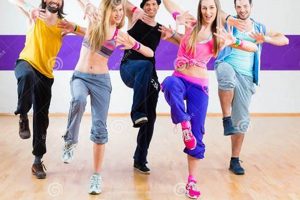
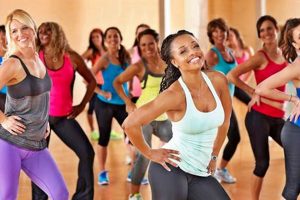
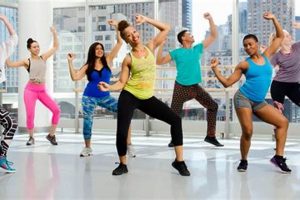
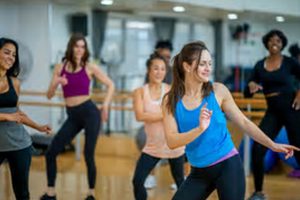
This fusion fitness activity blends the energetic choreography of Zumba with the fluid, core-centric movements of belly dance. It incorporates elements like shimmies, hip drops, and undulating motions, set to upbeat music to create a dynamic and engaging workout. The workout is typically structured as a class format, led by a certified instructor.
This exercise method provides several advantages. It strengthens core muscles, improves coordination and flexibility, and offers a cardiovascular workout. Furthermore, it promotes body awareness and can enhance self-esteem through expressive movement. The fusion concept is relatively recent, building on the popularity of both Zumba and traditional Middle Eastern dance forms, and is now offered in many fitness centers and dance studios.
Further discussion will delve into specific techniques utilized, explore variations within the practice, and provide guidance on finding qualified instruction. Considerations regarding appropriate attire and safety precautions will also be addressed.
Guidance for Optimal Engagement
The following are suggestions designed to maximize effectiveness and minimize risk when participating in this dance-fitness format. Adherence to these points can enhance the overall experience and contribute to physical well-being.
Tip 1: Prioritize Proper Warm-Up. A comprehensive warm-up is essential to prepare muscles for the demands of the activity. Incorporate dynamic stretches, such as arm circles and torso twists, to increase blood flow and range of motion. Neglecting this stage can elevate the risk of injury.
Tip 2: Master Fundamental Movements. Focus on accurately executing core belly dance movements before attempting complex combinations. Correct posture and technique are paramount. Consider seeking personalized instruction to ensure proper form.
Tip 3: Maintain Hydration. Drink water before, during, and after participation to prevent dehydration. Dehydration can lead to muscle cramps and reduced performance.
Tip 4: Select Appropriate Footwear. Opt for shoes that provide adequate support and cushioning. Bare feet or socks may increase the risk of slips or injuries. Dance sneakers or cross-training shoes are generally suitable.
Tip 5: Listen to the Body. Pay attention to physical signals and avoid pushing beyond comfortable limits. Rest is crucial for muscle recovery and injury prevention. Modify movements as needed to accommodate individual limitations.
Tip 6: Cool Down and Stretch. Incorporate static stretches, holding each pose for at least 30 seconds, to improve flexibility and reduce muscle soreness. Focus on major muscle groups engaged during the workout.
Tip 7: Seek Qualified Instruction. Participate in classes led by certified instructors who possess expertise in both Zumba and belly dance techniques. A knowledgeable instructor can provide guidance and ensure safe and effective instruction.
Adopting these recommendations helps in achieving a safe and enriching fitness experience. Consistency and mindful execution are crucial for realizing the full spectrum of benefits.
The subsequent section will provide information about finding suitable classes and instructors.
1. Core Engagement

Core engagement constitutes a fundamental element within the practice of “zumba belly dance”. It serves as the foundational support for executing movements accurately and safely, influencing both performance and injury prevention.
- Spinal Stabilization
Core muscles, including the rectus abdominis, obliques, and transverse abdominis, stabilize the spine during the dynamic movements inherent in “zumba belly dance”. This stabilization protects the vertebral column from excessive stress and reduces the risk of lower back injuries. Without proper core engagement, the spine is more vulnerable to compression and misalignment during high-impact steps and torso undulations.
- Power Generation
A strong and engaged core serves as the center of power for many “zumba belly dance” movements. Hip drops, shimmies, and other isolations originate from the core and radiate outwards. Proper engagement allows for more controlled and powerful execution of these movements, enhancing both the aesthetic and the physical benefits of the dance.
- Postural Alignment
Core engagement directly impacts postural alignment. Activating the core muscles helps maintain an upright posture, preventing slouching or excessive curvature of the spine. This improved posture not only enhances the visual presentation of the dance but also promotes optimal breathing and reduces strain on other muscle groups.
- Balance and Coordination
Maintaining balance and coordination during “zumba belly dance” relies heavily on core strength and stability. The core muscles act as a counterweight, allowing for smooth transitions between movements and preventing loss of balance, especially during fast-paced sequences or challenging isolations. A weak core can lead to instability and increased risk of falls.
These interrelated facets of core engagement are crucial for maximizing the benefits and minimizing the risks associated with “zumba belly dance.” Consistent and conscious activation of the core muscles enhances performance, improves posture, and safeguards against potential injuries, thus underscoring the importance of proper technique and training in this fitness style.
2. Fluidity of Movement

Fluidity of movement is an indispensable attribute of “zumba belly dance,” directly influencing its aesthetic appeal and physical efficacy. This aspect involves the seamless transition between distinct motions, fostering a continuous and graceful performance. Without fluidity, movements appear disjointed, reducing both the visual impact and the intended physical conditioning benefits. In practical terms, a hip circle, when executed with fluidity, transforms from a series of isolated points into a continuous, wave-like motion that effectively engages core muscles and improves joint mobility.
The attainment of fluid movement necessitates a combination of muscle control, coordination, and spatial awareness. It requires practitioners to actively engage stabilizing muscles to maintain balance and posture while simultaneously executing intricate movements. For example, a transition from a chest circle to a hip drop demands precise timing and controlled release of muscle tension to ensure a smooth, unbroken flow. This coordination not only enhances the visual grace of the dance but also maximizes the engagement of targeted muscle groups, contributing to improved core strength and flexibility. Failure to cultivate fluidity can lead to jerky, inefficient movements, increasing the risk of strain or injury.
In summary, fluidity of movement is fundamental to the “zumba belly dance” form. It directly impacts the aesthetic quality, physical effectiveness, and safety of the practice. The cultivation of this attribute necessitates diligent practice, focusing on muscle control, coordination, and spatial awareness. This ensures that the motions are performed in a continuous and graceful manner, yielding maximum benefits.
3. Rhythmic Synchronization

Rhythmic synchronization constitutes a cornerstone of the “zumba belly dance” experience, directly influencing its effectiveness as a fitness regimen and its artistic expression. This alignment between movement and music dictates the energy, intensity, and overall cohesion of the dance form. When movements are precisely synchronized with the rhythm, the workout becomes more efficient, engaging more muscle groups and enhancing cardiovascular benefits. For instance, matching a hip shimmy to a fast-paced drum beat amplifies core muscle engagement and promotes a heightened sense of coordination. Conversely, a lack of rhythmic synchronization can diminish the impact of the workout and lead to a disjointed, less aesthetically pleasing performance.
Furthermore, rhythmic synchronization contributes significantly to the cultural authenticity of “zumba belly dance.” The musicality of belly dance originates from Middle Eastern and North African traditions, where intricate rhythms and melodic structures are deeply interwoven with the dance movements. By accurately synchronizing steps and isolations with these rhythms, practitioners demonstrate a level of respect and understanding for the cultural roots of the dance form. Practical applications of this understanding extend to choreography, where instructors strategically select music to complement specific movements, creating a dynamic and culturally sensitive fitness experience. The precision can influence both physical engagement and cultural understanding of participants.
In summary, rhythmic synchronization is not merely a superficial element but an essential component that underpins the efficacy and cultural integrity of “zumba belly dance.” Achieving precise synchronization requires focused practice, attentiveness to musical cues, and a deep understanding of the relationship between rhythm and movement. Overcoming challenges such as complex polyrhythms or unfamiliar musical styles can enhance both the fitness and artistic dimensions of the dance form, fostering a more enriching and holistic experience for practitioners.
4. Cultural Appreciation

Cultural appreciation forms a crucial ethical dimension within the practice of “zumba belly dance.” Unlike mere appropriation, genuine appreciation involves understanding and respecting the historical, social, and artistic contexts from which belly dance originates. This respect translates into informed choices in movement, music selection, and costuming, avoiding perpetuation of stereotypes or misrepresentations. Failure to engage in cultural appreciation can lead to the trivialization of a rich art form and the potential offense of communities whose traditions are being borrowed. A clear example arises when instructors use stereotypical “exotic” imagery or music without acknowledging the cultural significance, thereby reducing a complex dance to a caricature.
Integrating cultural sensitivity into “zumba belly dance” requires both education and conscious effort. Instructors should actively research the origins of belly dance movements, rhythms, and attire, acknowledging the diverse influences within Middle Eastern and North African dance traditions. Practical applications include incorporating authentic musical styles, teaching the historical context of specific movements, and avoiding the use of generic or culturally insensitive terminology. Furthermore, the promotion of inclusivity and diversity within classes, ensuring respect for all participants cultural backgrounds, contributes to a more positive and respectful learning environment. Such efforts elevate the class beyond a simple workout, transforming it into an opportunity for cross-cultural understanding and respect.
In conclusion, cultural appreciation is not an optional add-on but an integral element of responsible “zumba belly dance” instruction. By prioritizing understanding, respect, and authentic representation, practitioners can avoid the pitfalls of cultural appropriation and create a more enriching and meaningful experience for both themselves and their students. The challenges lie in the ongoing education required and the conscious effort to combat ingrained biases or stereotypes, ensuring that the essence of belly dance is honored, not diminished. This careful approach leads to a fitness format that promotes both physical well-being and cross-cultural respect.
5. Fitness Integration

Fitness integration in “zumba belly dance” signifies the deliberate combination of various fitness components to create a comprehensive workout. This integration transcends the simple juxtaposition of Zumba steps and belly dance movements; it involves strategically blending elements of cardiovascular fitness, strength training, flexibility enhancement, and core stabilization to optimize the physical benefits. The effect of this integration is a workout that is more balanced and targets a wider range of physiological systems than either Zumba or belly dance performed in isolation. For instance, a “zumba belly dance” routine may incorporate high-intensity Zumba intervals to elevate the heart rate, followed by belly dance sequences that emphasize core engagement and muscle endurance. This planned synergy ensures that participants experience both aerobic conditioning and muscular development within a single session.
The importance of fitness integration within this specific form lies in its potential to enhance overall physical well-being and adherence to fitness goals. By addressing multiple fitness components simultaneously, practitioners are more likely to see improvements in cardiovascular health, muscle strength, flexibility, and body composition. Consider a sedentary individual seeking to improve their fitness levels. A well-integrated “zumba belly dance” program provides a less daunting and more engaging entry point than traditional gym workouts. The combination of lively music, social interaction, and diverse movements makes the activity more enjoyable, increasing the likelihood of sustained participation. The integration allows for adaptation; instructors can modify intensity and complexity, catering to different fitness levels, further promoting accessibility.
In summary, fitness integration is an essential element of successful “zumba belly dance” programs. Its practical significance extends to enhancing workout effectiveness, promoting adherence, and fostering inclusivity. Challenges involve ensuring instructors possess adequate knowledge of both Zumba and belly dance techniques, as well as a sound understanding of exercise physiology. Effective integration demands careful planning and attention to detail, but the rewards are substantial, yielding a fitness experience that is both enjoyable and physically beneficial.
Frequently Asked Questions about Zumba Belly Dance
The following addresses common inquiries regarding Zumba Belly Dance, providing factual and unbiased information for potential participants.
Question 1: Is Zumba Belly Dance a suitable workout for all fitness levels?
Zumba Belly Dance classes frequently offer modifications to accommodate diverse fitness capabilities. While some dance experience might be beneficial, it is not universally mandatory. Individuals should consult instructors about adapting movements to align with their personal limitations.
Question 2: Does Zumba Belly Dance require specific attire or equipment?
Comfortable athletic wear that allows for a full range of motion is appropriate. Footwear should provide adequate support, such as cross-training shoes or dance sneakers. While some classes may encourage optional accessories like hip scarves, these are not essential for participation.
Question 3: What are the primary physical benefits of Zumba Belly Dance?
The benefits typically encompass improved cardiovascular health, enhanced core strength, increased flexibility, and better coordination. The specific magnitude of these benefits depends on individual effort, class intensity, and consistency of participation.
Question 4: How does Zumba Belly Dance differ from traditional Belly Dance?
Zumba Belly Dance incorporates elements of both Zumba and traditional belly dance, but prioritizes a high-energy, fitness-focused approach. It may include simpler movements and less emphasis on intricate technique compared to traditional belly dance training.
Question 5: Are there any potential risks associated with Zumba Belly Dance?
As with any physical activity, the risk of injury exists. Common risks include muscle strains, sprains, and potential joint problems. Proper warm-up, cool-down, and adherence to instructed techniques can minimize these risks.
Question 6: Where can one find qualified Zumba Belly Dance instructors?
Certified Zumba instructors who have supplementary training or experience in belly dance are preferable. Resources for locating instructors include fitness centers, dance studios, and online instructor directories.
The responses above are intended to provide general information and should not substitute professional medical advice. Consult a healthcare provider before starting any new fitness program.
The subsequent segment explores the historical context of both Zumba and Belly Dance and their impact on the fusion of fitness routines.
Concluding Observations
This exploration has detailed the multidimensional nature of Zumba Belly Dance, emphasizing its unique blend of fitness elements and cultural considerations. Key aspects examined included core engagement, fluidity of movement, rhythmic synchronization, cultural appreciation, and fitness integration. The intention was to illuminate the complexities inherent in this fusion discipline and to offer practical guidance for informed participation.
As this exercise form continues to evolve, participants and instructors are encouraged to prioritize both physical well-being and cultural sensitivity. A thoughtful and educated approach ensures that the practice remains a beneficial and respectful activity, fostering a holistic understanding of fitness and cultural expression. The future of this fusion relies on an ongoing commitment to learning, adaptation, and the mindful honoring of diverse traditions.