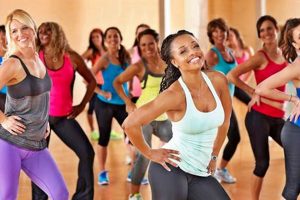
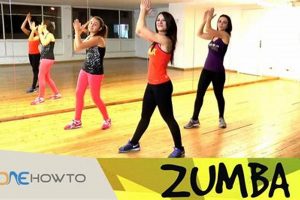
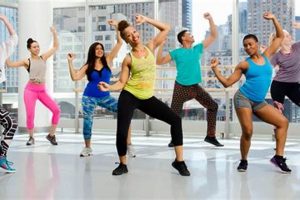
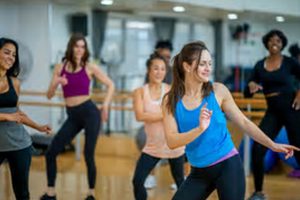
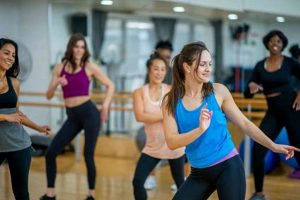
It is an exercise fitness program that combines Latin and international music with dance moves. The routines incorporate interval training, alternating fast and slow rhythms, and resistance training. The combination creates a workout purportedly designed to improve cardiovascular fitness, muscle toning, balance, and coordination. As an example, one might experience a mix of salsa, merengue, and cumbia steps performed to upbeat music, interspersed with squats and lunges.
The significance of this type of exercise lies in its holistic approach to well-being. Benefits can include enhanced cardiovascular health, increased energy levels, and improved mood. From a historical context, it evolved from a dance fitness class during the mid-1990s and has since gained global popularity due to its accessible and enjoyable nature. Its ability to blend fitness with an engaging cultural experience is central to its widespread appeal.
The following sections will delve deeper into the specifics of its various movements, the recommended frequency for participation, and the potential modifications for diverse fitness levels, enabling individuals to tailor their experience to personal needs and goals.
Guidance for Participation
The subsequent recommendations are designed to maximize the benefits while mitigating potential risks associated with participation in this activity. Following these guidelines can contribute to a more effective and safe exercise experience.
Tip 1: Prioritize Proper Footwear: Appropriate athletic shoes with good support are essential to minimize the risk of ankle or foot injuries. Select shoes designed for lateral movements and impact absorption.
Tip 2: Hydrate Adequately: Consume water before, during, and after the session to maintain optimal hydration levels. Dehydration can lead to fatigue and muscle cramps.
Tip 3: Master Basic Steps: Familiarize yourself with fundamental steps from various Latin dances, such as salsa, merengue, and reggaeton. This foundational knowledge enhances coordination and confidence.
Tip 4: Listen to the Body: Pay attention to physical signals and adjust the intensity as needed. Rest when necessary, and avoid pushing through pain to prevent injuries.
Tip 5: Maintain Proper Form: Focus on engaging core muscles and maintaining correct posture throughout the routines. This improves effectiveness and reduces the risk of back strain.
Tip 6: Modify Movements as Required: Adapt movements to suit individual fitness levels and physical limitations. Lower-impact variations are available for many routines.
Tip 7: Warm-Up Thoroughly: Prioritize a dynamic warm-up that includes joint mobilization and light cardio exercises. Preparing the muscles and joints can reduce the risk of injury.
By adhering to these recommendations, individuals can enhance their engagement, optimize physical benefits, and minimize potential adverse effects. Consistent and informed participation can contribute to a more enjoyable and effective exercise experience.
The subsequent sections will explore advanced techniques and specific routine modifications for experienced participants seeking to further optimize their outcomes.
1. Latin-inspired dance

The influence of Latin-inspired dance is foundational to the structure and appeal of this program. Its integration is not merely aesthetic; it defines the movement vocabulary, rhythmic structure, and overall energetic profile of the fitness activity. Latin rhythms, steps, and cultural expressions are the core components around which fitness elements are integrated. As an effect, this fusion makes workouts more engaging and less like traditional, repetitive exercise routines. The cause-and-effect relationship is clear: Latin dance provides the enjoyable framework, which in turn motivates sustained participation and consistent physical activity.
Consider the incorporation of salsa, merengue, cumbia, and reggaeton steps. Each of these dance forms brings distinct movement patterns, tempos, and cultural nuances to the activity. This diversity enhances the workout experience, providing variety and preventing monotony. More significantly, the requirement to learn and execute these steps improves coordination, balance, and proprioception. Instructors routinely adapt these dances for a group fitness setting, carefully blending authentic steps with modifications to enhance accessibility for various fitness levels. The practical application of this understanding involves recognizing that the effectiveness is directly correlated with the authenticity and skillful adaptation of Latin dance elements.
In summary, Latin-inspired dance is not simply a thematic element; it is an integral component that shapes the experience, impacts the physical outcomes, and drives the widespread popularity of this fitness program. Understanding this fundamental connection is critical for both instructors and participants seeking to maximize the benefits. One should approach this program with a respect for, and awareness of, its cultural roots, enabling a more enriching and effective fitness journey.
2. Interval training rhythms

Interval training rhythms are integral to its structure, creating fluctuations in intensity that contribute significantly to its effectiveness as a cardiovascular workout. The alternation between high-energy bursts and periods of active recovery mirrors the principles of interval training. This method challenges the body to adapt to varying demands, leading to enhanced calorie expenditure and improved cardiovascular fitness. The importance of this rhythmic variation lies in its ability to push participants beyond their aerobic threshold during high-intensity segments, followed by recovery periods that allow for sustained participation over the duration of the class. For instance, a routine might transition from a fast-paced salsa sequence to a slower, controlled cumbia segment, creating the interval effect. Understanding this rhythm is crucial for both instructors and participants, enabling them to gauge effort levels and personalize intensity.
Practical applications of interval training rhythms extend beyond mere calorie burn. The cyclical nature of the activity promotes improved endurance, as the body becomes more efficient at utilizing oxygen and clearing metabolic waste products. Instructors often strategically design routines to maximize these effects, incorporating segments of varied difficulty levels. For example, routines may integrate high-intensity intervals with resistance exercises such as squats and lunges, thus creating a full-body workout that targets both cardiovascular and muscular systems. The application of scientific training principles in the choreography ensures that the activity is not just a fun dance experience but also a structured and effective fitness program. This approach distinguishes it from purely recreational dance forms.
In summary, interval training rhythms are fundamental to achieving the stated benefits of this fitness approach. Recognizing and understanding these rhythms is crucial for optimizing its impact and preventing overexertion. While the dance component makes it enjoyable, the strategic incorporation of interval training elevates it to a robust and efficient workout modality. The ongoing challenge lies in maintaining the balance between dance expression and structured interval training to maximize participant engagement and fitness outcomes.
3. Cardiovascular improvement

Cardiovascular improvement is a direct physiological outcome of consistent participation in the exercise program. The repetitive and sustained movements elevate heart rate and increase blood flow, thereby challenging the cardiovascular system. The rhythmic dance steps, combined with variations in intensity, serve to strengthen the heart muscle and improve the efficiency of oxygen delivery to tissues. This, in turn, enhances overall aerobic capacity. For example, extended periods of continuous movement, as often incorporated during routines, create an elevated heart rate zone that directly contributes to improved cardiovascular function. The practical significance lies in the reduced risk of cardiovascular diseases, such as hypertension and coronary artery disease.
The interval nature of the program also plays a crucial role in promoting cardiovascular health. Periods of high-intensity activity, followed by periods of active recovery, train the heart to adapt to varying demands. This improves its ability to pump blood effectively, even during periods of stress. Specifically, the alternating rhythm of fast-paced dance sequences interspersed with slower, more controlled movements creates a dynamic stimulus for the cardiovascular system. This stimulus promotes improved vascular function, reduces blood pressure, and increases the body’s ability to utilize oxygen efficiently. These adaptations have broad implications for overall health and physical performance.
In summary, cardiovascular improvement is an essential and measurable benefit derived from regular participation. The dance elements, combined with the principles of interval training, create a powerful stimulus for the cardiovascular system. This promotes increased aerobic capacity, improved vascular function, and reduced risk of cardiovascular disease. The challenge lies in maintaining the intensity and frequency of participation necessary to achieve and sustain these improvements. Ongoing engagement, coupled with appropriate intensity levels, will optimize the beneficial impact on cardiovascular health.
4. Muscle toning

Muscle toning is a recognized physical outcome often associated with regular participation in this fitness dance activity. The exercise routines engage multiple muscle groups, promoting increased muscle definition and strength. While not primarily a resistance training program, the dynamic movements and bodyweight exercises incorporated contribute to enhanced muscle tone.
- Full-Body Engagement
The routines inherently involve a wide range of muscles throughout the body. Core stabilization is required for maintaining balance and executing dance steps, engaging abdominal and back muscles. The leg muscles, including quadriceps, hamstrings, and calves, are continuously active through steps, lunges, and squats integrated into the choreography. Upper body muscles, such as shoulders, arms, and chest, are engaged through arm movements and dynamic gestures. The coordinated involvement of these various muscle groups contributes to balanced muscle toning across the body.
- Bodyweight Resistance
Many routines utilize bodyweight exercises within the dance sequences. Squats, lunges, and variations of push-ups are often incorporated to increase resistance and enhance muscle activation. These bodyweight elements contribute to building strength and definition in the legs, glutes, and upper body. The integration of these exercises within the dance format can make resistance training more accessible and enjoyable for participants, encouraging consistent engagement.
- Increased Caloric Expenditure
The heightened caloric expenditure associated with the routines can contribute to fat loss, further accentuating muscle definition. As body fat decreases, the underlying muscles become more visible, enhancing the appearance of muscle tone. The combination of cardiovascular exercise and muscle engagement can lead to a more sculpted physique. This is particularly effective when combined with a healthy diet.
- Core Stabilization and Posture
Maintaining correct posture and core engagement is essential for executing dance movements effectively. This constant focus on core stability helps to strengthen abdominal and back muscles, contributing to improved posture and core definition. The engagement of these core muscles throughout the routines can lead to a more toned and defined midsection.
In conclusion, while muscle toning may not be the primary objective, it is a tangible benefit derived from regular participation. The full-body engagement, bodyweight resistance, caloric expenditure, and emphasis on core stabilization work synergistically to enhance muscle definition and overall physique.
5. Coordination enhancement

The integration of diverse dance movements within this fitness program inherently fosters the development of enhanced coordination. The necessity to synchronize body movements with musical rhythms and spatial awareness requires continuous refinement of motor skills and neuromuscular pathways.
- Neuromuscular Adaptation
The repeated execution of dance steps necessitates the establishment of efficient neural pathways between the brain and the muscles. This process of neuromuscular adaptation enhances the speed and accuracy of movements, improving overall motor control. For instance, mastering complex salsa steps involves precise timing and coordination of footwork, arm movements, and body posture, fostering neural pathways that facilitate efficient motor execution.
- Spatial Awareness
Navigating the physical space while maintaining proper form and synchronizing with others demands heightened spatial awareness. Participants must be cognizant of their positioning relative to other individuals and obstacles to prevent collisions and maintain a coherent group dynamic. An example of this is performing intricate routines that involve changes in direction and formation, requiring participants to constantly recalibrate their spatial awareness to maintain their position within the group.
- Rhythm and Timing
The ability to internalize and synchronize movements with musical rhythms is fundamental to successful participation. The capacity to anticipate and execute dance steps in time with the music enhances rhythmic accuracy and improves temporal awareness. This translates to improved coordination in other areas of life, such as playing a musical instrument or participating in team sports.
- Motor Sequencing
Executing complex dance routines requires the seamless sequencing of individual movements into a fluid and continuous flow. The ability to smoothly transition between different steps and patterns enhances motor coordination and improves the ability to perform complex tasks. For example, transitioning from a merengue step to a cumbia step requires coordinated movement of the feet, hips, and torso, necessitating precise motor sequencing to maintain rhythm and balance.
These facets, interconnected and mutually reinforcing, underscore the significant role it plays in enhancing overall coordination skills. The integration of music, movement, and spatial awareness provides a comprehensive and engaging approach to motor skill development. The continued challenge lies in refining choreography and instruction to further optimize coordination-enhancing elements.
6. Calorie expenditure
Calorie expenditure is a notable consequence of participation in the Zumba fitness dance program. The elevated metabolic demands of the continuous and varied movements characteristic of the activity necessitate increased energy consumption, resulting in a measurable caloric deficit. The intensity and duration of a session, in conjunction with individual factors such as body weight and fitness level, directly influence the total calories burned. The effect is an energy imbalance favoring expenditure over intake, assuming dietary intake remains consistent. This calorie burn is important to its effectiveness as a weight management strategy and contributes to the observed improvements in body composition.
The incorporation of interval training rhythms within the activity contributes significantly to heightened calorie expenditure. Alternating between high-intensity dance segments and periods of active recovery challenges the body to adapt to fluctuating energy demands. A practical example is the transition from a fast-paced salsa routine, demanding rapid movements and high energy output, to a slower, more controlled cumbia sequence, allowing for partial recovery while maintaining a moderate level of caloric burn. Moreover, the full-body engagement inherent in its choreography, involving large muscle groups such as the legs, core, and arms, further increases energy expenditure. The integration of bodyweight exercises, such as squats and lunges, within the dance sequences adds a resistance element that promotes additional caloric burn and muscle activation.
In summary, calorie expenditure is an integral component contributing to the overall fitness benefits of the program. Understanding this relationship is significant for both participants and instructors, enabling them to gauge intensity levels, personalize routines, and optimize results. Continued engagement, coupled with balanced nutritional intake, will maximize the potential for sustainable weight management and improved body composition. The ongoing challenge lies in maintaining consistent participation and adjusting intensity levels to accommodate individual progress and limitations.
Frequently Asked Questions
The following questions address common inquiries and clarify key aspects of this specific fitness program, providing factual information for a comprehensive understanding.
Question 1: What constitutes a typical Zumba Fitness Dance class?
A typical class incorporates a variety of Latin and international music genres, such as salsa, merengue, cumbia, and reggaeton. Participants follow the instructor’s lead in performing dance-based routines that blend aerobic and fitness elements. A warm-up and cool-down period bookend the main workout session.
Question 2: Is prior dance experience required to participate effectively?
No prior dance experience is required. The routines are designed to be accessible to individuals of all fitness levels and backgrounds. The focus is on enjoying the music and movement, rather than achieving perfect technical execution.
Question 3: What are the primary physical benefits one can expect?
Regular participation can contribute to improved cardiovascular fitness, increased energy levels, enhanced muscle toning, improved coordination, and significant calorie expenditure. The specific benefits may vary based on individual fitness levels and adherence to a consistent exercise schedule.
Question 4: How does Zumba Fitness Dance differ from traditional aerobics?
It distinguishes itself through its emphasis on Latin and international music and dance styles, providing a more engaging and culturally rich experience compared to traditional aerobics, which often relies on repetitive movements and generic music selections.
Question 5: Are there any specific risks or precautions to consider?
As with any physical activity, there is a risk of injury, particularly if proper form is not maintained or pre-existing conditions are not taken into account. Individuals should consult with a healthcare professional before beginning any new exercise program. Hydration is crucial, and participants should listen to their bodies to avoid overexertion.
Question 6: Can the routines be modified for individuals with physical limitations?
Yes, many routines can be modified to accommodate individual needs and limitations. Lower-impact variations are often available for participants with joint pain or mobility issues. It is advisable to communicate with the instructor regarding any specific concerns or modifications required.
This overview clarifies common concerns regarding this fitness regimen. The core principles are accessibility, enjoyment, and a combination of dance and fitness elements.
The subsequent sections will explore advanced techniques and considerations for maximizing the benefits and minimizing potential risks associated with this activity.
Conclusion
This exploration of what is zumba fitness dance has elucidated its key components: the integration of Latin-inspired dance, interval training rhythms, cardiovascular improvement, muscle toning, coordination enhancement, and calorie expenditure. The program’s effectiveness stems from its unique blend of cultural expression, structured exercise principles, and accessibility across fitness levels.
As a structured physical activity, engagement necessitates a careful consideration of individual capabilities, adherence to proper form, and awareness of potential risks. Individuals seeking to maximize benefits and mitigate risks are encouraged to approach participation with informed diligence. Further research into individual components and consultation with healthcare professionals may provide additional insights for optimizing the experience and ensuring long-term well-being.