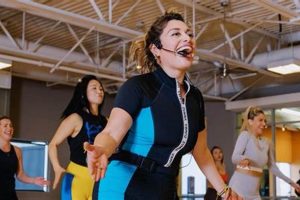
The ability to effectively lead a Zumba class is a multifaceted skill encompassing fitness expertise, musicality, and strong communication capabilities. A capable instructor motivates participants, ensures their safety, and fosters an enjoyable exercise environment.
Developing proficiency in this area offers personal and professional rewards. Individuals experience enhanced fitness levels and self-confidence. Furthermore, competent leadership within this discipline contributes to increased class attendance, positive community engagement, and potential career advancement in the fitness industry.
The subsequent sections will detail specific strategies and techniques for cultivating these essential attributes, covering aspects such as choreography mastery, effective cueing practices, music selection principles, and techniques for fostering a welcoming and inclusive atmosphere.
Essential Strategies for Zumba Instruction Excellence
The following guidance highlights core practices necessary for impactful Zumba instruction.
Tip 1: Master Foundational Choreography: Possessing a thorough understanding of core Zumba steps allows for seamless transitions and confident leadership. Regularly review and practice basic routines to ensure fluidity and accuracy.
Tip 2: Prioritize Clear Cueing: Effective verbal and non-verbal cues are paramount for guiding participants. Employ distinct signals to indicate upcoming moves, ensuring that all class members can follow along, regardless of experience level.
Tip 3: Cultivate Engaging Music Selection: Zumba relies heavily on motivating music. Curate playlists that feature a diverse range of rhythms and styles, maintaining a balance between familiar favorites and fresh tracks to sustain participant interest.
Tip 4: Emphasize Proper Form: Observance and correction of incorrect posture is crucial to injury prevention. Monitor participant movements and offer constructive feedback to ensure proper technique and alignment.
Tip 5: Foster an Inclusive Environment: All participants should feel welcome and supported. Encourage a non-judgmental atmosphere where individuals of all fitness levels feel comfortable participating and progressing at their own pace.
Tip 6: Maintain Energy and Enthusiasm: Instructor energy is contagious. Display genuine enthusiasm throughout the class to motivate participants and create a positive and uplifting experience.
Tip 7: Continuously Seek Professional Development: The fitness landscape is dynamic. Participate in ongoing training and workshops to stay current with industry trends and refine instructional skills.
Adherence to these guidelines contributes significantly to the development of a competent and respected Zumba instructor.
The next segment addresses strategies for managing class dynamics and dealing with common challenges encountered during instruction.
1. Choreography Mastery

Choreography mastery constitutes a foundational element in effective Zumba instruction. Proficiency in this area directly influences an instructor’s ability to lead a class confidently and maintain participant engagement. Weak command of steps and transitions leads to hesitations, unclear guidance, and a diminished perception of instructor competence. Conversely, confident execution of Zumba routines establishes credibility and inspires trust among participants. For example, an instructor capable of seamlessly transitioning between salsa, reggaeton, and cumbia steps provides a smoother, more enjoyable, and more effective workout for participants.
The influence extends beyond technical execution. A deep understanding of Zumba choreography allows for improvisation and adaptation to different skill levels within a class. Instructors can modify steps to accommodate beginners or offer variations for more advanced participants, promoting inclusivity and maximizing engagement. Furthermore, choreography mastery allows the instructor to focus on other critical aspects of instruction, such as observing participant form and providing personalized feedback. When instructors are confident in their knowledge of choreography, they can efficiently guide their class. A lack of preparation forces the focus to shift to the instructor, disrupting the flow of the exercise and negatively impacting the workout experience.
In summary, choreography mastery is not merely a technical skill but a critical component of overall instructor effectiveness. It promotes confidence, ensures smooth class flow, and enables adaptation to participant needs. A lack of proficiency in this area undermines instructor credibility, limits adaptability, and detracts from the overall participant experience. Therefore, dedicated effort toward developing and maintaining choreography mastery is essential for aspiring and established Zumba instructors alike, aligning directly with providing the best Zumba exercise for the participants.
2. Effective Cueing

Effective cueing represents a crucial component of skilled Zumba instruction, directly influencing participant comprehension, coordination, and overall class experience. Clear and concise signals, both verbal and non-verbal, enable participants to anticipate upcoming movements, maintain proper form, and stay synchronized with the instructor.
- Clarity of Verbal Cues
Verbal cues must be unambiguous and delivered with precision. Instructions such as “step to the right” or “arms overhead” should be articulated clearly and timed appropriately, preceding the actual movement to allow participants adequate preparation. Ambiguous or delayed cues lead to confusion and hinder participants’ ability to follow the choreography effectively. For example, instead of saying “now this move,” a proficient instructor would say “in four counts, grapevine right,” providing precise timing and direction. The use of consistent terminology throughout a class further reinforces understanding and predictability, reducing cognitive load and enabling participants to focus on the physical aspects of the workout.
- Use of Visual Demonstrations
Visual demonstrations complement verbal cues by providing a visual representation of the intended movement. Instructors demonstrate each step clearly and deliberately, ensuring that participants can accurately mimic the proper form and technique. Effective visual cues involve facing participants directly, using exaggerated movements, and maintaining consistent eye contact. These techniques amplify the impact of verbal cues, particularly for individuals who learn best through visual means. Furthermore, demonstrations offer opportunities to present modified versions of steps, adapting them to accommodate participants with varying levels of fitness or physical limitations.
- Non-Verbal Communication Strategies
Non-verbal communication encompasses body language, facial expressions, and hand gestures, all of which play a pivotal role in conveying information and motivating participants. Instructors employ positive and encouraging body language to create a welcoming and supportive atmosphere. Smiling, maintaining eye contact, and using hand gestures to emphasize key movements enhance engagement and convey enthusiasm. For instance, an instructor using a thumbs-up gesture to acknowledge correct form provides positive reinforcement and encourages participants to maintain proper technique. Conversely, a disengaged or disinterested demeanor undermines motivation and detracts from the overall class experience.
- Anticipation and Timing of Cues
Proficient instructors anticipate upcoming movements and provide cues in advance, allowing participants ample time to react and prepare. The timing of cues is crucial; they should be delivered neither too early nor too late. Providing cues too early may confuse participants, while delaying cues hinders their ability to execute movements correctly. Mastering the timing of cues requires a deep understanding of the choreography and an ability to anticipate the needs of participants. For example, when transitioning from a salsa step to a cha-cha-cha, an instructor should provide a clear and timely cue several counts before the transition, allowing participants to adjust their movements accordingly. Anticipation and timing are skills that develop with practice, honed through observation, self-reflection, and feedback from participants.
The aforementioned facets, when implemented effectively, converge to elevate the quality of Zumba instruction. Clear verbal cues, coupled with impactful visual demonstrations, supportive non-verbal communication, and precise timing, facilitate participant engagement, promote proper technique, and ultimately contribute to a more enjoyable and effective workout experience. Competence in cueing is not merely a technical skill but a key determinant of instructional effectiveness, directly impacting participants’ success and satisfaction and affirming proficiency in Zumba instruction.
3. Music Selection

Music selection constitutes a cornerstone of effective Zumba instruction, significantly influencing participant motivation, energy levels, and overall class satisfaction. Strategic music choices enhance the workout experience, transforming a routine exercise session into an engaging and enjoyable activity. Consequently, understanding and applying sound music selection principles are critical for any instructor aiming for excellence.
- Rhythmic Variety and Pacing
The effective Zumba class integrates a diverse range of rhythms and tempos. A well-structured playlist includes songs with varying beats per minute (BPM) to target different energy levels and muscle groups. High-energy tracks are suitable for cardio bursts, while slower rhythms facilitate cool-down periods and stretching exercises. A playlist lacking rhythmic variety can lead to participant fatigue and boredom, diminishing the effectiveness of the workout and negatively impacting their adherence to fitness goals. For instance, a sequence transitioning from a fast-paced merengue to a slower cumbia provides a balanced and engaging workout.
- Genre Diversity and Cultural Representation
Zumba, by its nature, incorporates a wide range of musical genres, reflecting diverse cultures and traditions. Successful instructors select music that represents this diversity, introducing participants to various styles like salsa, reggaeton, cumbia, soca, and hip-hop. Exposure to different musical forms not only enhances the workout experience but also provides an opportunity for cultural appreciation. Monotonous playlists lacking genre diversity alienate participants with varied musical preferences and limit the overall appeal of the class. Authenticity in musical selection enhances the cultural experience. The class is a reflection of the cultures and styles in which zumba is inspired.
- Song Familiarity and Innovation
Effective playlists strike a balance between familiar favorites and new, innovative tracks. Incorporating well-known songs allows participants to connect with the music on an emotional level, fostering a sense of comfort and familiarity. Introducing new songs keeps the class fresh and exciting, preventing monotony and maintaining participant interest. A playlist consisting solely of unfamiliar songs can be overwhelming and discouraging for participants, while a playlist composed entirely of well-known tracks becomes predictable and lacks the element of surprise. The key is to seamlessly interweave the familiar with the new.
- Music Quality and Sound System Optimization
The quality of the music and the effectiveness of the sound system are paramount to delivering an impactful Zumba class. High-fidelity audio ensures that the music sounds crisp and clear, enhancing the overall listening experience. A well-balanced sound system distributes the music evenly throughout the room, ensuring that all participants can hear the music clearly regardless of their location. Poor audio quality or an inadequate sound system detracts from the workout experience, making it difficult for participants to follow the rhythm and diminishing their overall enjoyment. The audio quality must be as high as possible.
Strategic music selection plays an integral role in shaping the Zumba experience, influencing participant motivation, energy levels, and overall satisfaction. Thoughtful integration of rhythmic variety, genre diversity, song familiarity, and optimal audio quality differentiates proficient instructors from those who fail to recognize the profound impact of music on the effectiveness and enjoyment of the class. An excellent instructor curates playlists carefully, optimizing the connection between music and movement.
4. Form Correction

Form correction represents a critical responsibility for proficient Zumba instructors. Its implementation safeguards participant well-being, enhances workout effectiveness, and cultivates a positive learning environment. Neglecting proper form increases the risk of injuries and diminishes the potential benefits of the exercise. Thus, expertise in this area is essential for any instructor aspiring to excel in their role.
- Observational Acuity
Effective form correction necessitates keen observational skills. The instructor must possess the ability to quickly identify deviations from correct posture and movement patterns across a diverse group of participants. This involves scanning the class regularly, paying attention to individual body mechanics during various steps, and recognizing common errors associated with specific routines. For instance, an instructor should be able to detect incorrect knee alignment during squats, improper spinal curvature during torso twists, or insufficient core engagement during abdominal exercises. Failure to observe these deviations leads to the perpetuation of incorrect habits and increases the likelihood of injury.
- Constructive Feedback Delivery
Once an error is identified, the instructor must deliver constructive feedback in a manner that is both informative and encouraging. Feedback should be specific, focusing on the particular aspect of form that needs correction. General statements such as “try harder” are ineffective and unhelpful. Instead, an instructor should provide targeted guidance, such as “engage your core to stabilize your spine” or “ensure your knees track directly over your toes.” Furthermore, feedback should be delivered in a positive and supportive tone, avoiding criticism or discouragement. A proficient instructor creates a learning environment where participants feel comfortable receiving feedback and actively working to improve their technique.
- Verbal and Non-Verbal Communication
Form correction relies on a combination of verbal cues and non-verbal demonstrations. Verbal cues provide participants with specific instructions on how to adjust their posture or movement, while non-verbal demonstrations offer a visual model of the correct form. The instructor should use clear and concise language, avoiding jargon or overly technical terms that participants may not understand. Additionally, the instructor’s body language should convey confidence and support, encouraging participants to emulate the correct form. An instructor demonstrating proper spinal alignment while simultaneously saying, “imagine a straight line from your head to your tailbone,” effectively combines verbal and non-verbal communication to reinforce correct technique.
- Adaptation to Individual Needs
A competent instructor recognizes that participants possess varying levels of fitness, experience, and physical limitations. Therefore, form correction must be adapted to accommodate individual needs and abilities. The instructor should be prepared to offer modifications to exercises, providing alternative versions of steps that are less challenging or more suitable for participants with specific conditions. For example, an instructor might suggest a shallower squat for individuals with knee pain or a modified push-up on the knees for those lacking upper body strength. Adapting form correction to individual needs ensures that all participants can safely and effectively participate in the class, maximizing their fitness gains while minimizing the risk of injury.
Form correction stands as an indispensable skill for Zumba instructors, directly impacting participant safety and workout effectiveness. Through keen observation, constructive feedback, effective communication, and adaptation to individual needs, instructors cultivate an environment of continuous improvement. Ultimately, dedication to proper form correction underscores an instructor’s commitment to the well-being and progress of their participants, thus improving fitness and reducing potential injuries within any Zumba class.
5. Inclusive Atmosphere

The establishment of an inclusive atmosphere is paramount to effective Zumba instruction. It transcends mere tolerance, actively fostering a welcoming environment where participants of all backgrounds, fitness levels, and abilities feel comfortable engaging and progressing. This facet directly impacts participant retention, motivation, and overall class success. A failure to cultivate such an environment undermines the potential benefits of Zumba and diminishes the instructor’s effectiveness.
- Non-Judgmental Environment
A non-judgmental atmosphere is characterized by the absence of criticism or ridicule based on fitness level, coordination, or appearance. Participants must feel secure in exploring their physical capabilities without fear of negative evaluation. An instructor fosters this by refraining from making comparative statements, emphasizing individual progress rather than competition, and promoting a culture of mutual support. For instance, celebrating a participant’s first successful grapevine step, regardless of how imperfect it may appear, reinforces a non-judgmental ethos and encourages continued participation. Lack of such promotes fear and isolation.
- Adaptability and Modification
Inclusivity necessitates the ability to adapt exercises and routines to accommodate diverse needs. Instructors should offer modifications for participants with physical limitations, injuries, or varying fitness levels. This ensures that all individuals can participate safely and effectively, experiencing the benefits of Zumba regardless of their starting point. Providing options such as low-impact alternatives, simplified steps, or chair-based modifications demonstrates a commitment to inclusivity and promotes a sense of belonging. For example, replacing a high-impact jump with a step-touch allows participants with joint issues to remain engaged without compromising their well-being.
- Respect for Diversity
An inclusive Zumba class celebrates diversity in all its forms. Instructors should acknowledge and respect the unique backgrounds, cultures, and identities of their participants. This may involve incorporating music and dance styles from various cultural traditions, using inclusive language, and avoiding stereotypes or assumptions. Demonstrating genuine interest in participants’ backgrounds fosters a sense of connection and belonging, creating a richer and more engaging class experience. For example, incorporating a brief explanation of the cultural origins of a particular dance style enhances understanding and appreciation. Lack of respect leads to conflict and disengagement.
- Positive Reinforcement and Encouragement
Positive reinforcement and encouragement are crucial for fostering a supportive and inclusive environment. Instructors should consistently offer positive feedback, celebrating participants’ efforts and progress, regardless of how small. This may involve verbal praise, non-verbal cues such as smiles and thumbs-up gestures, or personalized encouragement. Positive reinforcement builds confidence, motivates participants to persevere, and fosters a sense of community. For instance, acknowledging a participant’s improved coordination or increased endurance reinforces their efforts and motivates them to continue striving for improvement. Lack of encouragement and support discourages effort.
These facets, when integrated effectively, contribute significantly to the creation of an inclusive Zumba environment. The consequence is increased participation, improved participant satisfaction, and enhanced fitness outcomes. An instructor who prioritizes inclusivity not only cultivates a successful class but also fosters a community where individuals feel valued, supported, and empowered to achieve their fitness goals, ensuring high Zumba engagement.
6. Instructor Enthusiasm

Instructor enthusiasm serves as a vital catalyst in a successful Zumba class, impacting participant motivation, energy levels, and overall class atmosphere. It’s a tangible manifestation of passion for the discipline and a commitment to fostering a positive fitness experience. Instructor enthusiasm directly influences engagement and adherence.
- Contagious Energy Transference
Enthusiasm is inherently contagious. An instructor displaying genuine excitement for the music, choreography, and the overall fitness experience can effectively transfer this energy to participants. This infectious enthusiasm elevates the class atmosphere, transforming a routine workout into an engaging and uplifting event. Conversely, a lackluster or disengaged instructor diminishes participant motivation and renders the class less effective. As an example, an instructor who enthusiastically executes a high-energy salsa routine, visibly enjoying the music and movement, inspires participants to immerse themselves fully in the experience.
- Motivation and Encouragement Amplification
Enthusiastic instructors naturally provide more effective motivation and encouragement. Their genuine passion for Zumba translates into a more supportive and inspiring teaching style. Participants are more likely to push themselves, try new steps, and persevere through challenges when guided by an enthusiastic instructor. Consider an instructor who, with a beaming smile and encouraging words, motivates a participant to attempt a challenging hip-hop routine, fostering a sense of accomplishment and boosting their confidence.
- Creation of a Positive and Supportive Environment
Instructor enthusiasm contributes significantly to creating a positive and supportive class environment. When instructors are genuinely excited about teaching and interacting with participants, it fosters a sense of community and camaraderie. Participants feel valued, supported, and more comfortable taking risks and challenging themselves. An instructor who greets participants warmly, remembers their names, and offers personalized encouragement creates a more welcoming and inclusive atmosphere.
- Enhanced Choreography Delivery and Engagement
Enthusiasm positively influences choreography delivery. An instructor who is passionate about the choreography demonstrates it with greater energy, precision, and expressiveness, making it easier for participants to follow along and engage with the routine. This heightened engagement leads to a more effective workout and a more enjoyable experience for all. This is especially true for complex choreography. A complex dance that is taught enthusiastically makes the dance more accessible and easier to learn than a mundane delivery.
These facets underscore the direct correlation between instructor enthusiasm and effective Zumba instruction. Enthusiasm is not merely a desirable trait, but a fundamental requirement for fostering a motivating, engaging, and supportive class environment, ultimately leading to improved participant outcomes and adherence.
7. Continuous Learning
The pursuit of knowledge and skill refinement constitutes an indispensable element in the trajectory of a competent Zumba instructor. It extends beyond initial certification, encompassing ongoing engagement with evolving fitness trends, choreography innovations, and pedagogical advancements. Failure to prioritize continuous learning limits instructional effectiveness and diminishes the value provided to participants. The impact of continuous learning is observed directly in the quality of classes delivered. An instructor who remains stagnant in their knowledge base delivers repetitive and outdated routines, diminishing participant engagement and potentially increasing the risk of injury due to a lack of awareness regarding current best practices.
Continuous learning manifests through diverse avenues, including attendance at workshops, participation in advanced training programs, and engagement with industry publications and online resources. These experiences provide opportunities to acquire new choreography, refine cueing techniques, and enhance understanding of anatomy, physiology, and injury prevention. For example, an instructor attending a Zumba convention might learn new choreography variations, gain insights into effective motivational strategies, and discover innovative ways to adapt exercises to accommodate participants with diverse needs. Furthermore, continuous learning promotes adaptability, enabling instructors to cater to changing participant preferences and address emerging health concerns. A real-world manifestation is the integration of hybrid dance styles and appropriate modifications into Zumba classes to accommodate specific age groups or health profiles.
In summary, continuous learning represents a cornerstone of instructional excellence. Its absence directly hinders the ability to deliver engaging, effective, and safe Zumba classes. By actively pursuing ongoing professional development, instructors demonstrate a commitment to providing participants with the highest quality fitness experience, fostering long-term engagement and maximizing the potential for positive health outcomes. Challenges of maintaining a continuous learning regimen include finding the time and resources. It requires commitment from the instructor to provide Zumba engagement.
Frequently Asked Questions
This section addresses common inquiries and clarifies misconceptions regarding the development of effective Zumba instruction techniques. The information provided serves to guide aspiring and current instructors towards best practices.
Question 1: Is formal certification absolutely necessary to instruct Zumba classes?
Yes, formal certification is a prerequisite for legally and ethically instructing Zumba classes. Certification ensures a baseline understanding of choreography, cueing, safety protocols, and program philosophy. Uncertified individuals lack this foundational knowledge, potentially jeopardizing participant well-being and infringing on Zumba Fitness, LLC’s intellectual property.
Question 2: How much emphasis should be placed on verbal cueing versus visual demonstration during instruction?
Both verbal cueing and visual demonstration are crucial and complementary. Verbal cues provide specific instructions and timing, while visual demonstrations offer a clear model of the intended movement. The ideal balance depends on the complexity of the choreography and the learning styles of the participants. A best practice is to utilize both concurrently, reinforcing each other for optimal comprehension.
Question 3: How frequently should a Zumba instructor update their music playlists and choreography?
Regular updates are essential for maintaining participant engagement and preventing monotony. The frequency of updates depends on participant feedback and class dynamics, but generally, introducing new songs and routines every 4-6 weeks is advisable. This keeps the class fresh, exciting, and aligned with current musical trends.
Question 4: What steps should an instructor take to address participants with varying fitness levels within the same class?
Adaptation and modification are key to accommodating diverse fitness levels. Instructors should provide variations for each step, offering both low-impact and high-intensity options. Encourage participants to work at their own pace, emphasizing the importance of listening to their bodies and prioritizing safety.
Question 5: How can an instructor effectively manage disruptive or uncooperative participants in a Zumba class?
Address disruptive behavior promptly and professionally. Initially, a private conversation can resolve minor issues. If the behavior persists, a more direct approach may be necessary, potentially involving a request for the participant to leave the class. The goal is to maintain a positive and respectful environment for all participants.
Question 6: Beyond the technical aspects, what are the most critical interpersonal skills for a Zumba instructor?
Empathy, patience, and effective communication are paramount. An instructor must be able to connect with participants on a personal level, understand their challenges, and provide encouragement and support. Strong interpersonal skills foster a positive and inclusive class environment, promoting participant retention and overall satisfaction.
Proficiency in Zumba instruction involves a combination of technical expertise and interpersonal skills. Ongoing professional development and a commitment to creating a positive and inclusive environment are essential for sustained success.
The following section will present strategies for effectively marketing and promoting Zumba classes to attract and retain participants.
How to Be a Good Zumba Instructor
This discourse has explored the multifaceted nature of the subject phrase, outlining essential competencies ranging from choreography mastery and cueing proficiency to music selection acumen and the cultivation of an inclusive atmosphere. Emphasis has been placed on continuous learning and the integral role of instructor enthusiasm in maximizing participant engagement and fitness outcomes. The outlined competencies, when diligently cultivated, contribute to the delivery of impactful and rewarding classes.
Consistent application of these principles leads to improved participant retention and a greater positive impact on the broader community. As the fitness landscape continues to evolve, a commitment to excellence in the domains outlined will be essential for sustained professional success and will help participants to develop and maintain a long-lasting, healthy lifestyle.