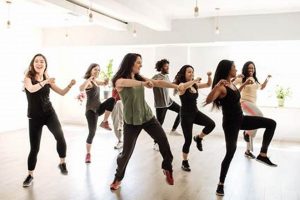
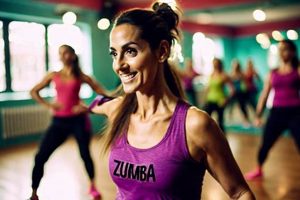
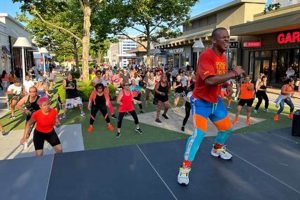
Introductory Zumba sessions cater to individuals with little to no prior experience in the Zumba fitness program. These sessions focus on fundamental steps and rhythms found in various Latin dance styles such as salsa, merengue, and cumbia. A typical session structure includes a warm-up, instruction and practice of basic steps, a series of simple routines incorporating those steps, and a cool-down period.
Participation offers numerous advantages, including enhanced cardiovascular health, improved coordination, and increased caloric expenditure. The program’s popularity stems from its accessible nature and enjoyable format, making fitness feel less like a chore and more like a social activity. Originating in the late 1990s, it has become a global phenomenon, adapted and modified for diverse fitness levels and age groups.
The subsequent sections will delve into specific aspects relevant to commencing with such a program, including what to expect in a typical class, how to prepare, modifications for different fitness levels, and advice on selecting a suitable instructor.
Guidance for Newcomers to Zumba Fitness
This section presents essential guidance designed to ensure a positive and effective introduction to the Zumba program. Adherence to these suggestions will contribute to maximizing benefits and minimizing potential challenges.
Tip 1: Prioritize Appropriate Attire. Comfortable workout clothing that allows for a full range of motion is crucial. Breathable fabrics are recommended to manage perspiration effectively. Consider moisture-wicking materials for optimal comfort.
Tip 2: Invest in Supportive Footwear. Cross-training shoes with adequate cushioning and lateral support are advisable. Avoid running shoes, as their design emphasizes forward motion and may not provide sufficient stability for the side-to-side movements characteristic of Zumba.
Tip 3: Arrive Prepared to Hydrate. A water bottle is essential to maintain adequate hydration throughout the session. Dehydration can lead to decreased performance and increased risk of injury. Water intake should be continuous and consistent.
Tip 4: Initially Focus on Fundamentals. Mastery of basic steps is paramount before attempting more complex routines. Pay close attention to the instructor’s demonstrations and prioritize proper form over speed. Precision in execution reduces the likelihood of strain or injury.
Tip 5: Monitor Physical Limits. Individuals should be aware of their physical capabilities and limitations. Do not hesitate to modify exercises or take breaks as needed. Pushing beyond one’s comfort zone prematurely can lead to adverse consequences.
Tip 6: Communicate with the Instructor. Open communication with the instructor regarding any pre-existing conditions, concerns, or modifications is essential. The instructor can provide tailored guidance and adjustments to accommodate individual needs.
Tip 7: Cultivate Patience and Persistence. Proficiency in Zumba, as with any skill, requires time and consistent effort. Do not become discouraged by initial challenges. Regular attendance and dedicated practice will yield progressive improvement.
Incorporating these guidelines will support a secure and rewarding introduction to Zumba. Gradual progression and attentive self-assessment are vital for sustainable engagement.
The subsequent section will address common FAQs, reinforcing key concepts and providing additional clarity.
1. Basic steps

The acquisition and mastery of basic steps represent a critical foundation for successful participation in beginner-level Zumba classes. These fundamental movements, typically derived from Latin dance styles like salsa, merengue, and cumbia, serve as the building blocks upon which more complex routines are constructed. A lack of proficiency in these foundational steps directly impedes a participant’s ability to follow choreographic sequences, maintain rhythm, and ultimately derive the intended cardiovascular and coordination benefits. For instance, a new participant struggling with the basic salsa step may find it difficult to transition smoothly into a salsa-based Zumba routine, leading to frustration and potential discouragement.
The connection between mastering these simple steps and successful participation exemplifies a clear cause-and-effect relationship: competent execution leads to enhanced engagement and increased physical benefit, while inadequate understanding results in reduced efficacy and potential injury. The practical significance lies in the structured progression commonly adopted by instructors. Introductory sessions typically prioritize the teaching and reinforcement of these core movements before advancing to more intricate combinations. This methodical approach ensures that participants progressively develop the necessary skills to navigate the evolving complexity of the class without feeling overwhelmed. Real-world examples abound, with experienced Zumba participants often attributing their ongoing enjoyment and fitness improvements to a solid initial grounding in the fundamentals.
In summary, the emphasis on basic steps within introductory Zumba settings is not merely a pedagogical choice but a practical imperative. It establishes the groundwork for sustainable engagement, maximizes physical advantages, and minimizes potential risks. By prioritizing this foundational element, beginning Zumba classes empower individuals to confidently progress, fostering a sense of accomplishment and promoting long-term adherence to the program. Neglecting this foundational aspect can significantly limit the positive outcomes and overall experience for new participants.
2. Instructor guidance

Effective instructor guidance constitutes a critical determinant of success within introductory Zumba classes. The correlation between competent instruction and positive participant outcomes is demonstrable and multifaceted. A qualified instructor provides essential demonstrations of fundamental steps, corrections of improper form, and modifications tailored to individual fitness levels, thereby mitigating the risk of injury and enhancing the learning experience. Without informed guidance, participants may adopt incorrect techniques, leading to muscle strain, joint discomfort, and a reduced capacity to derive the intended cardiovascular benefits. Consider, for example, a novice attempting a complex hip movement without proper instruction; the likelihood of lower back strain is significantly elevated.
The practical significance of instructor guidance extends beyond the purely physical aspects. A skilled instructor also cultivates a supportive and encouraging environment, fostering a sense of community and motivating participants to persevere through initial challenges. This psychosocial component is crucial for promoting long-term adherence to the Zumba program. Moreover, effective instructors are adept at recognizing and addressing diverse learning styles, ensuring that all participants comprehend the choreography and feel comfortable progressing at their own pace. This personalized approach contrasts sharply with a generic, one-size-fits-all instruction model, which can lead to feelings of inadequacy and ultimately, attrition. Real-world observation consistently reveals that participants in classes led by attentive and knowledgeable instructors report higher levels of satisfaction and sustained engagement.
In summation, instructor guidance is not merely a supplementary element but an integral component of successful beginner Zumba classes. It addresses both the physical and psychological dimensions of learning, ensuring safe and effective participation. The absence of competent instruction can undermine the potential benefits of the program, increasing the risk of injury and diminishing the likelihood of long-term engagement. Prioritizing experienced and qualified instructors represents a fundamental investment in the well-being and success of new Zumba participants, contributing to a positive and sustainable fitness journey.
3. Low impact

The low impact characteristic of introductory Zumba classes serves as a foundational element in their accessibility and broad appeal. Low-impact exercises, by definition, minimize stress on joints and skeletal structures, reducing the risk of acute injuries and mitigating the exacerbation of pre-existing conditions. The incorporation of such modifications within beginning Zumba programs establishes a safer entry point for individuals with varying fitness levels, including those with limited mobility, joint pain, or those returning to exercise after a period of inactivity. For example, modifications of jumping jacks into step-outs eliminate the high-impact element, making the exercise more tolerable for individuals with knee issues. This deliberate reduction in stress enables a wider demographic to participate and experience the cardiovascular benefits associated with Zumba without undue physical strain.
The significance of low-impact adaptations extends beyond injury prevention. It fosters increased confidence and sustained engagement among participants who might otherwise be intimidated by higher-intensity fitness programs. By offering accessible variations of standard Zumba routines, instructors can cater to the specific needs and limitations of each individual, ensuring that the workout remains challenging yet attainable. For instance, individuals may initially perform modified versions of the grapevine step, gradually increasing the range of motion as their strength and coordination improve. This progressive approach allows participants to build a solid foundation of fitness while minimizing the potential for discouragement or injury. Practical applications include dedicated low-impact Zumba classes specifically designed for older adults or individuals recovering from injuries, illustrating the adaptability and inclusiveness fostered by this approach.
In conclusion, the deliberate integration of low-impact modifications within introductory Zumba classes is not merely a peripheral feature but a defining attribute that enhances accessibility, promotes inclusivity, and reduces the risk of injury. By prioritizing low-impact techniques, these programs broaden their appeal and contribute to a more sustainable fitness journey for a diverse range of individuals. Understanding this aspect is crucial for both participants seeking a safe and effective workout and instructors aiming to create an inclusive and welcoming class environment.
4. Safe environment
The presence of a safe environment constitutes a fundamental prerequisite for effective participation in beginning Zumba classes. This extends beyond the purely physical realm to encompass psychological and emotional security. A physically safe setting minimizes the risk of injury, providing adequate space for movement, a non-slip surface, and appropriate temperature control. Psychologically, a safe environment fosters inclusivity, encourages participation without fear of judgment, and allows individuals to explore their physical capabilities without apprehension. The absence of a safe environment undermines the potential benefits of the program, inhibiting engagement and potentially leading to adverse physical or emotional outcomes. For example, a crowded studio with a slippery floor poses an immediate physical risk, while an environment characterized by critical or judgmental attitudes can discourage participation, especially among those new to exercise.
The establishment of a safe environment is directly linked to both instructor competence and institutional policies. Instructors bear the responsibility of ensuring adequate space, providing clear instructions, offering modifications for varying fitness levels, and intervening in situations where safety is compromised. Institutions, such as fitness centers, must implement protocols for emergency preparedness, equipment maintenance, and member screening to identify potential health risks. Practical application manifests in instructor training programs emphasizing risk management, the implementation of facility safety audits, and the establishment of clear communication channels for participants to report concerns. A class with an instructor adept at identifying and addressing individual needs, coupled with a facility that prioritizes cleanliness and accessibility, exemplifies the tangible benefits of a safe environment.
In summary, a safe environment is not merely a desirable feature of beginning Zumba classes but an essential component that underpins participation, promotes well-being, and maximizes the potential for positive outcomes. Its absence can impede engagement, increase the risk of injury, and undermine the overall effectiveness of the program. Prioritizing safety, both physical and psychological, represents a fundamental investment in the health and enjoyment of new Zumba participants, fostering a supportive and sustainable fitness experience. Challenges remain in consistently implementing safety protocols across diverse settings, highlighting the need for ongoing training and vigilance.
5. Rhythm adaptation

Rhythm adaptation represents a critical cognitive and motor skill cultivated within introductory Zumba classes. Its development directly impacts a participant’s ability to synchronize movements with the music, thereby enhancing both physical coordination and the overall enjoyment derived from the activity. Individuals entering the program often possess varying degrees of pre-existing rhythmic proficiency; therefore, the initial phase necessitates focused attention on internalizing fundamental musical patterns. Successful rhythm adaptation allows a participant to seamlessly transition between dance steps, maintaining a consistent tempo and aligning physical expression with the underlying musical structure. Conversely, a failure to adapt to the rhythm can lead to disjointed movements, frustration, and a diminished capacity to achieve the intended cardiovascular benefits. The cause-and-effect relationship is demonstrable: enhanced rhythmic awareness translates to improved physical execution and increased engagement, whereas rhythmic deficiencies hinder both performance and motivation. A common example involves mastering the timing of a basic salsa step; accurate footwork in accordance with the musical count distinguishes a competent participant from one struggling to keep pace.
Practical application of rhythm adaptation extends beyond the confines of the Zumba class. The skills acquired through rhythmic training can positively influence other areas of physical activity, such as dance, sports, and even everyday tasks requiring coordination. Moreover, engaging with music and rhythm has been shown to have positive effects on cognitive function, including memory and attention span. Instructors commonly employ strategies such as verbal cues, visual demonstrations, and repetition to facilitate rhythm adaptation. They may break down complex musical phrases into simpler components, gradually increasing the tempo as participants become more comfortable. Furthermore, encouraging active listening to the music and providing opportunities for independent practice outside of the class setting can significantly enhance rhythmic proficiency. Consider the impact of regular attendance; consistent exposure to various rhythms and musical styles accelerates the learning process, leading to a more intuitive understanding of musical timing.
In summary, rhythm adaptation is not merely a peripheral skill but a central component of successful participation in beginning Zumba classes. It underpins physical coordination, enhances the overall experience, and offers potential cognitive benefits. While challenges may arise from individual variations in rhythmic aptitude, structured instruction and consistent practice can effectively facilitate adaptation and unlock the full potential of the program. Continuous emphasis on rhythm adaptation is crucial for instructors and participants alike to maximize the positive outcomes and cultivate a sustainable engagement with Zumba. The challenges inherent in teaching rhythm necessitate instructors flexibility and the use of varied methods catering to individual learning styles.
6. Fun atmosphere

The presence of a fun atmosphere within beginning Zumba classes directly impacts participant engagement, motivation, and long-term adherence. This positive emotional context fosters a sense of enjoyment, reducing inhibitions and encouraging active participation, even among those with limited prior experience. The correlation between enjoyment and sustained physical activity is well-established; individuals are more likely to adhere to a fitness regimen when it is perceived as pleasurable rather than a chore. Within the Zumba context, a fun atmosphere mitigates the potential anxiety associated with learning new dance steps and performing in a group setting. The effect is demonstrable: participants in classes characterized by laughter, encouragement, and positive reinforcement exhibit higher levels of energy, reduced self-consciousness, and increased willingness to attempt challenging movements. An example involves instructors incorporating themed classes or playful routines, injecting an element of lightheartedness that transcends the purely physical aspects of the workout.
The cultivation of a fun atmosphere is a deliberate and strategic undertaking. Instructors play a crucial role in setting the tone by displaying enthusiasm, incorporating engaging music, and creating opportunities for social interaction among participants. This may involve organizing group activities, celebrating individual achievements, or simply fostering a supportive and non-judgmental environment. Practical applications extend to the music selection process, where instructors choose upbeat and familiar songs that resonate with the target audience. Furthermore, the use of positive reinforcement, such as verbal praise and encouraging gestures, can significantly enhance the overall experience. The impact of a skillful instructor is evident: participants in classes led by charismatic and engaging instructors are more likely to report higher levels of satisfaction and sustained commitment to the Zumba program.
In summary, the presence of a fun atmosphere is not merely a cosmetic addition but a fundamental component of successful beginning Zumba classes. It enhances participant engagement, promotes motivation, and fosters long-term adherence. While challenges may arise in consistently maintaining a fun atmosphere across diverse groups and individual personalities, deliberate strategies implemented by instructors can effectively mitigate these challenges. The emphasis on enjoyment aligns with the broader theme of promoting sustainable fitness habits, recognizing that physical activity is most effective when integrated into a positive and rewarding lifestyle. Future considerations should focus on exploring innovative methods for enhancing the fun factor within Zumba classes, thereby maximizing participant satisfaction and health outcomes.
7. Consistency

The consistent participation in beginning Zumba classes directly influences the development of fundamental skills, cardiovascular fitness, and overall adherence to the program. Sporadic attendance impedes the acquisition of rhythmic proficiency, muscular endurance, and the coordination required to execute Zumba routines effectively. The consistent application of effort over time yields a compounding effect, progressively enhancing physical capabilities and building confidence. Conversely, inconsistent participation results in a plateauing or regression of progress, diminishing the perceived benefits and increasing the likelihood of dropout. An example includes the gradual improvement in cardiovascular endurance observed among regular attendees compared to the stagnation experienced by those with irregular attendance patterns. The impact is demonstrable: measurable improvements in heart rate recovery and perceived exertion correlate directly with consistent participation in structured Zumba sessions.
The practical significance of consistent participation extends beyond the purely physical domain, impacting psychological well-being and social engagement. Regular attendance fosters a sense of community, providing opportunities for social interaction and mutual support. This social dimension can significantly enhance motivation and create a positive feedback loop, further reinforcing consistent participation. Furthermore, establishing a consistent routine promotes discipline and time management skills, which can positively influence other areas of life. Instructors often emphasize the importance of establishing a regular schedule, encouraging participants to view Zumba as an integral part of their weekly routine. The impact of a structured schedule is evident in the reduced likelihood of missed classes and the sustained engagement observed among participants who prioritize consistent attendance.
In summary, consistent participation is not merely a desirable attribute but a fundamental determinant of success in beginning Zumba classes. It underpins skill development, enhances physical fitness, and promotes psychological well-being. While challenges may arise in maintaining consistent attendance due to scheduling conflicts or motivational fluctuations, the benefits of consistent effort far outweigh the temporary inconveniences. Future initiatives should focus on developing strategies to enhance adherence, such as flexible scheduling options, personalized goal setting, and community-building activities, to maximize the long-term benefits of Zumba for all participants. The challenge remains in translating the inherent benefits of consistency into tangible motivations for individuals facing time constraints or fluctuating levels of enthusiasm, requiring a nuanced approach that addresses both practical and psychological factors.
Frequently Asked Questions Regarding Beginning Zumba Classes
The following questions address common inquiries and misconceptions surrounding participation in introductory Zumba programs. These answers aim to provide clarity and promote informed decision-making.
Question 1: Are prior dance skills a prerequisite for enrolling in beginning Zumba classes?
No, prior dance experience is not necessary. Introductory classes are specifically designed for individuals with limited or no background in dance. The focus is on learning fundamental steps and rhythms gradually.
Question 2: What is the appropriate attire for attending beginning Zumba classes?
Comfortable workout clothing that allows for a full range of motion is recommended. Breathable fabrics are preferred. Supportive athletic shoes, specifically cross-trainers, are essential to prevent injuries.
Question 3: Is it necessary to possess a high level of cardiovascular fitness prior to participating?
No, a high level of fitness is not required. The intensity of introductory classes is typically modified to accommodate individuals with varying fitness levels. Participants are encouraged to work at their own pace and take breaks as needed.
Question 4: What if an individual is unable to keep up with the choreography in beginning Zumba classes?
It is common for beginners to experience difficulty with the choreography initially. Instructors typically provide modifications and guidance to assist participants. Focus on mastering the basic steps and gradually increasing proficiency over time.
Question 5: Are there any potential health risks associated with participating in beginning Zumba classes?
As with any form of physical activity, there is a potential risk of injury. However, this risk can be minimized by adhering to proper form, wearing appropriate footwear, and heeding the instructor’s guidance. Individuals with pre-existing health conditions should consult with a physician prior to participation.
Question 6: How frequently should an individual attend beginning Zumba classes to experience noticeable benefits?
Attending classes two to three times per week is generally recommended to experience tangible improvements in cardiovascular fitness, coordination, and overall well-being. Consistency is key to achieving sustainable results.
The information provided above is intended for general guidance and should not be interpreted as medical advice. Consultation with a healthcare professional is recommended for personalized recommendations.
The subsequent section will delve into strategies for maximizing the benefits derived from beginning Zumba classes, emphasizing both physical and psychological factors.
Conclusion
The preceding discussion has explored the fundamental aspects of “beginning zumba classes,” highlighting critical elements such as the acquisition of basic steps, the significance of instructor guidance, the benefits of low-impact modifications, and the importance of fostering a safe and engaging environment. Emphasis has been placed on rhythm adaptation and consistent participation as key determinants of successful engagement and positive outcomes.
The information presented aims to provide a comprehensive understanding of what to expect from introductory Zumba programs, empowering potential participants to make informed decisions and approach their fitness journey with confidence. Further exploration into individualized approaches and long-term sustainability strategies remain crucial for maximizing the impact of “beginning zumba classes” on overall well-being.