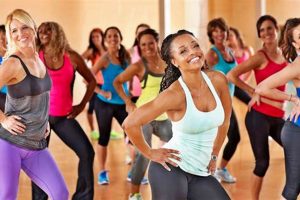
Personalized dance fitness instruction tailored to individual or small group needs characterizes this form of exercise. Sessions are conducted separately from larger, scheduled group offerings, allowing for focused attention and customized routines. For example, an individual with specific fitness goals or physical limitations might benefit from this dedicated approach.
This individualized setting offers several advantages, including heightened instructor focus, customized choreography, and the opportunity to progress at a self-determined pace. The absence of a larger group environment can reduce self-consciousness and promote a more comfortable learning experience. Historically, personalized fitness training has demonstrated efficacy in achieving specific health and wellness objectives.
The following sections will delve into the benefits of one-on-one dance fitness training, explore typical session structures, and address considerations for selecting a qualified instructor. Furthermore, it will examine the potential cost factors and compare this approach to traditional group fitness formats.
Guidance for Optimal Individualized Dance Fitness Sessions
The following recommendations aim to maximize the benefits derived from personalized dance-based exercise instruction. Careful consideration of these points will contribute to a more effective and rewarding experience.
Tip 1: Define Specific Objectives: Prior to commencing instruction, clearly articulate fitness goals. This enables the instructor to tailor the program to address individual needs, such as improving cardiovascular health, enhancing flexibility, or increasing muscle tone. Specific, measurable, achievable, relevant, and time-bound (SMART) goals are highly recommended.
Tip 2: Verify Instructor Credentials: Confirm the instructor’s qualifications and certifications. A reputable instructor will possess relevant certifications from accredited fitness organizations and have demonstrable experience in dance-based fitness methodologies.
Tip 3: Communicate Physical Limitations: Openly disclose any pre-existing medical conditions, injuries, or physical limitations. This ensures the program is modified appropriately to avoid exacerbating existing issues and prevent new injuries.
Tip 4: Ensure a Suitable Environment: The training space should be adequately sized, well-ventilated, and equipped with appropriate flooring to minimize the risk of injury. Mirrors are beneficial for self-assessment of form and technique.
Tip 5: Maintain Consistent Attendance: Adherence to a regular schedule is crucial for achieving sustainable results. Consistency promotes gradual improvement and reinforces learned movement patterns. Scheduled appointments can enhance commitment.
Tip 6: Monitor Progress and Adjust: Regularly evaluate progress toward established goals. If necessary, the program should be adjusted to maintain challenge and prevent plateaus. Objective measures, such as weight, body composition, or functional fitness tests, can aid in this assessment.
Tip 7: Prioritize Proper Hydration and Nutrition: Adequate hydration and a balanced dietary intake are essential for optimizing performance and recovery. Consultation with a registered dietitian is advisable for personalized nutritional guidance.
By implementing these strategies, individuals can enhance the effectiveness and safety of their personalized dance fitness training. The emphasis on clear communication, qualified instruction, and a supportive environment will contribute to a positive and productive fitness journey.
The subsequent section will explore the practical aspects of scheduling and payment structures associated with individualized dance-based exercise programs.
1. Personalized choreography

Personalized choreography represents a core differentiator in dedicated dance fitness instruction. Unlike standardized group classes, instruction tailored to the individual incorporates modifications and routines specifically designed to align with their fitness level, physical limitations, and personal preferences. The connection to dedicated dance fitness manifests as a direct response to the participant’s unique needs, with program design predicated on a pre-assessment of their capabilities and objectives. For example, a client recovering from a knee injury would receive modified routines that minimize stress on the joint, while an advanced participant might be challenged with more complex and high-intensity choreography.
The importance of choreography in dedicated dance fitness lies in its ability to enhance safety, engagement, and efficacy. Generic group routines may present risks for individuals with specific physical conditions or varying levels of fitness. Tailored choreography addresses this concern by optimizing movement patterns to prevent injury and promote proper biomechanics. Furthermore, personalized routines that incorporate the client’s preferred music genres or dance styles can increase motivation and adherence. Consider a participant who enjoys Latin music; incorporating Salsa and Merengue elements into their sessions can significantly boost their enjoyment and commitment to the program.
In summary, personalized choreography is not merely an added feature of one-on-one dance fitness instruction but rather a foundational component that directly impacts the participant’s safety, engagement, and overall results. Understanding this relationship is essential for both instructors and clients to maximize the benefits of this tailored fitness approach. While challenges may exist in creating and implementing individualized routines, the advantages in terms of personalized progress and enjoyment outweigh the effort.
2. Individualized Attention

Individualized attention forms a cornerstone of personalized dance fitness instruction. In the context of dedicated dance fitness, it signifies a level of instructor focus unattainable in larger group settings. This heightened attentiveness directly influences the quality and effectiveness of each session.
- Form Correction and Technique Refinement
Close monitoring allows the instructor to identify and correct subtle errors in posture and movement. This reduces the risk of injury and optimizes exercise efficacy. For instance, an instructor can immediately adjust a client’s hip alignment during a Zumba step, preventing potential strain on the lower back.
- Personalized Motivation and Encouragement
Dedicated attention enables instructors to tailor their motivational techniques to suit individual needs and personality types. An introverted client may respond better to subtle encouragement, while an extroverted client may thrive on more enthusiastic praise. This fosters a more positive and productive training environment.
- Real-time Adaptation to Client Needs
The instructor can adjust the intensity and complexity of routines based on the client’s immediate feedback and observed performance. If a client appears fatigued, the instructor can modify the choreography or incorporate rest periods. This adaptive approach ensures safety and prevents overexertion.
- Addressing Specific Physical Limitations
Individualized attention allows for the proactive management of pre-existing injuries or physical limitations. An instructor can carefully modify exercises to accommodate knee pain, lower back issues, or other specific conditions, ensuring a safe and effective workout experience.
In essence, individualized attention elevates dedicated dance fitness beyond a simple workout. It transforms it into a highly personalized and effective fitness experience, optimizing results while minimizing the risk of injury. By prioritizing focused instructor engagement, dedicated dance fitness offers a unique opportunity to achieve fitness goals in a safe and supportive environment.
3. Flexible scheduling

The availability of flexible scheduling significantly enhances the accessibility and appeal of personalized dance fitness sessions. This adaptability addresses a common barrier to exercise adherence by accommodating diverse lifestyle demands and individual time constraints.
- Accommodation of Variable Work Schedules
Shift workers, individuals with irregular hours, or those with unpredictable professional commitments benefit from the ability to schedule sessions at unconventional times. For example, a healthcare professional working rotating shifts may arrange sessions before or after shifts, mitigating conflicts with standard group fitness class times.
- Integration with Personal Commitments
Flexible scheduling permits integration of exercise into already busy schedules, aligning with family responsibilities, appointments, or other personal obligations. A parent with young children might schedule a session during naptime or while the children are engaged in other activities.
- Customization of Session Duration
Beyond time of day, flexibility extends to session length. Individuals can opt for shorter, more frequent sessions or longer, less frequent ones, aligning with their fitness goals and available time. A busy executive might choose three 30-minute sessions per week over one longer 90-minute session.
- Adaptation to Energy Levels and Physical Condition
Scheduling can be adjusted to accommodate fluctuations in energy levels or unforeseen physical discomfort. A client experiencing fatigue due to travel or illness may reschedule a session for a later date or time when they are better able to participate fully.
The provision of flexible scheduling, therefore, represents a critical element in optimizing participation in, and adherence to, personalized dance fitness programs. It addresses the practical challenges of integrating exercise into diverse and demanding lifestyles, thereby increasing the likelihood of achieving sustained fitness benefits. This benefit is a key differentiator when comparing individualized training against rigid group class schedules.
4. Specific goal focus
The efficacy of personalized dance fitness is inextricably linked to a specific goal focus. Without clearly defined objectives, the program lacks direction, and the instructor cannot effectively tailor the sessions to meet individual needs. This component of individualized training transforms a generic workout into a targeted intervention, enhancing motivation and optimizing outcomes.
The importance of a specific goal focus manifests in several ways. Firstly, it enables precise program design. For example, if the goal is to improve cardiovascular health, the instructor will prioritize high-intensity routines that elevate heart rate and enhance endurance. Conversely, a goal focused on improving flexibility would emphasize stretching and range-of-motion exercises. Secondly, a well-defined objective provides a benchmark against which progress can be measured. This allows for adjustments to the program as needed, ensuring the individual remains challenged and engaged. A real-life example could be an individual aiming to improve their coordination for ballroom dancing. The instructor will then focus on routines that specifically address rhythm, footwork, and partner work, offering targeted exercises that contribute directly to the stated goal.
Ultimately, the commitment to a specific goal is the foundation upon which successful personalized dance fitness is built. The clear articulation of objectives ensures that the program is tailored, measurable, and effective. This, in turn, maximizes the investment of time and resources while contributing to a higher likelihood of achieving desired outcomes. The practical significance lies in the transformative power of a program designed to address individual needs effectively, rather than a generic fitness approach. The challenge, however, remains in helping clients define realistic and achievable goals at the outset.
5. Controlled environment

The concept of a controlled environment holds significant implications for the efficacy and appeal of private dance fitness instruction. It refers to the ability to manipulate and optimize various factors within the training setting to enhance the learning and exercise experience. This contrasts with the inherent variability and potential distractions of group fitness environments.
- Minimized Distractions
A controlled environment limits external interruptions, allowing for greater focus on instruction and personal form. Reduced noise levels, absence of onlookers, and elimination of competing stimuli all contribute to an atmosphere conducive to concentration and improved performance. For example, a studio dedicated solely to a one-on-one session avoids the distractions inherent in a shared gym space, allowing the participant to fully engage with the instructor and the routine.
- Customized Ambient Conditions
Environmental factors such as lighting, temperature, and music can be tailored to individual preferences and specific training needs. This allows for optimal comfort and performance. For instance, the lighting can be dimmed to reduce glare during floor exercises, or the temperature adjusted to prevent overheating during high-intensity routines. Music selection, tailored to the individual’s taste, enhances motivation and enjoyment, without the constraints of group preferences.
- Enhanced Privacy and Confidentiality
A controlled environment offers a heightened level of privacy, creating a safe and comfortable space for individuals who may feel self-conscious in group settings. This fosters a sense of trust and allows participants to express themselves more freely, ultimately enhancing their learning experience. For some, the assurance of confidentiality regarding their fitness progress or physical limitations is a critical factor in choosing private instruction.
- Optimized Equipment and Resources
The instructor can ensure that the necessary equipment and resources are readily available and properly configured for the individual’s needs. This eliminates the potential for delays or compromises due to shared equipment or limited space. For example, specific weights, resistance bands, or assistive devices can be prepared in advance, streamlining the workout and maximizing its effectiveness.
The facets of a controlled environment converge to create a superior training experience in dedicated dance fitness instruction. By mitigating distractions, customizing ambient conditions, ensuring privacy, and optimizing resources, instructors can foster an environment conducive to focus, comfort, and ultimately, enhanced fitness outcomes. The advantages stemming from a controlled setting directly address common barriers to participation in traditional group fitness classes, emphasizing the value proposition of personalized instruction.
6. Accelerated progress
The potential for accelerated progress constitutes a significant advantage of private zumba instruction. The direct correlation between personalized attention and expedited results stems from several factors inherent in the individualized training environment. Specifically, the focused instruction, tailored choreography, and consistent monitoring facilitate more rapid skill acquisition and fitness improvements compared to group classes. The instructor’s ability to identify and correct subtle errors in technique early on prevents the development of bad habits, leading to more efficient movement patterns and reduced risk of injury. The customization of routines to match individual fitness levels and goals ensures optimal challenge without overexertion, further promoting sustained progress.
As an example, a novice participant in group classes may struggle to keep pace with the established choreography, leading to frustration and inconsistent effort. In contrast, a private zumba instructor can break down the steps, provide modifications, and offer continuous feedback, enabling the novice to master the fundamentals at an accelerated rate. Furthermore, the ability to schedule sessions according to individual availability and energy levels reduces the likelihood of missed workouts and promotes consistent participation, a crucial element for sustained progress. Another instance would be to look at an individual with a background in dance, the instructor is able to provide advanced routines that will allow this individual to reach an optimized state.
In summary, accelerated progress represents a tangible benefit of private zumba instruction, driven by the synergistic effects of personalized attention, tailored routines, and consistent monitoring. While the cost of private instruction is typically higher than group classes, the potential for faster results and reduced risk of injury can represent a worthwhile investment for individuals seeking efficient and effective fitness solutions. The challenge lies in setting realistic expectations and ensuring that the instructor possesses the necessary qualifications and experience to deliver on the promise of accelerated progress.
7. Enhanced privacy

Enhanced privacy represents a significant, often understated, benefit of individual dance fitness instruction. This feature caters to individuals who may experience discomfort or self-consciousness in group exercise settings. The provision of a private environment allows participants to explore movement and build confidence without the perceived scrutiny of others. For those with body image concerns, anxiety related to coordination, or a desire to maintain discretion regarding their fitness journey, the assurance of privacy is a crucial element in choosing individualized instruction. The cause and effect relationship is clear: the private setting reduces inhibitions, leading to greater engagement and ultimately, improved fitness outcomes. The importance of this aspect cannot be overstated, particularly for individuals seeking a safe and supportive space to prioritize their well-being.
The practical significance of enhanced privacy extends beyond mere comfort. It facilitates a more open and honest dialogue between the participant and the instructor. Individuals may feel more comfortable discussing personal health concerns, fitness goals, or limitations in a one-on-one setting, enabling the instructor to tailor the program with greater precision. This, in turn, leads to more effective and targeted training. For example, an individual with a history of body dysmorphia may feel more secure discussing their concerns with a private instructor, allowing the instructor to address these issues through positive reinforcement and customized exercise plans. Similarly, someone recovering from an injury might be more willing to share the full extent of their limitations in a private environment, ensuring the instructor designs a safe and appropriate rehabilitation program. This open communication is paramount to building trust and fostering a productive training relationship.
In conclusion, the provision of enhanced privacy is a core differentiator in personalized dance fitness instruction. While fitness progress is the primary objective, the value of feeling safe, comfortable, and respected cannot be dismissed. Recognizing and prioritizing this aspect contributes to a more positive and sustainable fitness journey. The challenge, however, remains in effectively communicating the benefits of enhanced privacy to potential clients who may not fully appreciate its significance until they experience the difference firsthand. Understanding the cause-and-effect relationship between privacy and participation is a crucial step in promoting the value of this personalized approach.
Frequently Asked Questions
The following addresses common inquiries and misconceptions regarding private dance-based exercise programs. This information is intended to provide clarity and informed decision-making regarding fitness options.
Question 1: What are the primary differences between individualized dance fitness and group classes?
Individualized sessions feature personalized instruction tailored to specific fitness goals, while group classes offer a standardized routine for a larger audience. This distinction influences the level of instructor attention, pace of progression, and customization of choreography.
Question 2: How is the cost of individual dance fitness instruction determined?
Pricing is typically based on instructor experience, session duration, and package deals. Geographic location may also influence rates, reflecting local market conditions.
Question 3: What qualifications should an individual seek in a dance fitness instructor?
Relevant certifications from accredited fitness organizations and demonstrable experience in dance-based methodologies are essential. Background checks and client testimonials can further validate an instructor’s credentials.
Question 4: How are exercise routines modified to accommodate pre-existing injuries or physical limitations?
Instructors assess individual limitations and adapt movements to minimize stress and prevent exacerbation of existing conditions. Open communication regarding medical history is crucial for safe and effective program design.
Question 5: What measures are taken to ensure privacy and confidentiality during private dance fitness sessions?
Sessions are conducted in private studios or designated areas, minimizing exposure to external observers. Instructors adhere to professional ethics regarding client confidentiality.
Question 6: What role does nutrition play in maximizing the benefits of individual dance fitness training?
A balanced dietary intake complements exercise by providing the necessary energy and nutrients for optimal performance and recovery. Consultation with a registered dietitian is advisable for personalized nutritional guidance.
In summary, personalized dance fitness offers a tailored approach to exercise, with considerations for cost, instructor qualifications, physical limitations, privacy, and nutrition. A well-informed decision will contribute to a more effective and rewarding fitness experience.
The subsequent section will delve into specific examples of successful individualized dance fitness programs and the key factors contributing to their efficacy.
Concluding Insights on Private Zumba Classes
The preceding analysis has illuminated the multifaceted nature of personalized Zumba instruction. Key benefits, including individualized attention, flexible scheduling, and enhanced privacy, have been explored in detail. The importance of specific goal setting, a controlled environment, and qualified instructors were also underscored as critical determinants of program efficacy. Private Zumba classes, when structured thoughtfully, offers a distinct pathway toward achieving fitness objectives.
The exploration of this dedicated fitness methodology reveals a significant trend toward personalized wellness solutions. Further investigation into long-term outcomes and broader accessibility is warranted. The ultimate value of private Zumba classes lies in its potential to empower individuals seeking targeted and supportive avenues for physical well-being. It encourages a proactive approach to health and embraces the synergy between personalized instruction and personal commitment.