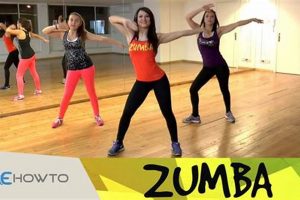
This interactive exercise program combines the popular Zumba dance fitness style with the motion-sensing capabilities of the Kinect for Xbox 360. It allows users to participate in virtual Zumba classes within their homes, mirroring the movements of on-screen instructors. The software tracks player movements using the Kinect sensor, providing feedback and scoring based on accuracy and synchronization.
Its appeal lies in providing a fun and engaging way to exercise, making fitness more accessible and less intimidating. The program offers a variety of dance styles and difficulty levels, catering to a broad range of fitness enthusiasts. By gamifying the workout experience, it encourages consistent participation and can contribute to improved cardiovascular health, coordination, and overall fitness. Prior to the widespread adoption of streaming fitness services, it represented an innovative approach to home-based exercise leveraging gaming technology.
The following sections will delve into the various aspects of the software, including its features, gameplay mechanics, and the broader impact of motion-controlled fitness games on the health and entertainment industries.
Tips for Effective Use
This section offers guidance on maximizing the potential benefits of incorporating the software into a fitness regimen.
Tip 1: Optimize Kinect Setup. Proper positioning of the Kinect sensor is critical for accurate motion tracking. Ensure adequate space and lighting within the play area to facilitate optimal performance.
Tip 2: Calibrate Regularly. Recalibrate the Kinect sensor periodically to maintain accurate tracking. Changes in furniture arrangement or lighting conditions may necessitate recalibration.
Tip 3: Begin with Beginner Routines. Start with lower-intensity routines to build stamina and coordination before progressing to more challenging levels. This approach minimizes the risk of injury.
Tip 4: Focus on Form. Prioritize accuracy of movements over speed, especially when learning new routines. Proper form enhances workout effectiveness and reduces the likelihood of strain.
Tip 5: Utilize Warm-up and Cool-down Sessions. Always engage in the warm-up and cool-down routines provided within the program. These sessions prepare the body for exercise and aid in recovery.
Tip 6: Maintain Hydration. Drink water before, during, and after exercising to prevent dehydration and support optimal performance.
Tip 7: Listen to the Body. Pay attention to physical cues and adjust the intensity or duration of workouts as needed. Avoid pushing through pain or discomfort.
Consistent adherence to these guidelines promotes a safer and more rewarding exercise experience.
The subsequent sections will explore additional strategies for integrating the software into a comprehensive fitness plan.
1. Motion Tracking Accuracy

Motion tracking accuracy is fundamental to the efficacy and user experience of interactive fitness programs, particularly those relying on motion-sensing technology such as the Kinect for Xbox 360. In the context of a Zumba fitness game, precision in tracking user movements directly translates to accurate scoring, effective instruction, and ultimately, the realization of fitness goals.
- Scoring and Feedback Mechanisms
Accurate motion tracking allows the software to assess how closely a user’s movements align with the on-screen instructor’s. This assessment forms the basis of the scoring system, providing real-time feedback to the user. Higher accuracy in movement replication should result in higher scores, incentivizing correct form and technique. Conversely, imprecise tracking could lead to inaccurate scores, discouraging users and hindering learning.
- Instructional Guidance
Motion tracking informs the adaptive learning systems, if present, within the software. The system might adjust the pace of the workout, provide targeted feedback on specific movements, or offer modifications based on the user’s performance. Inaccurate tracking could lead to inappropriate guidance, potentially increasing the risk of injury or hindering progress.
- User Engagement and Motivation
The feeling of being accurately recognized and rewarded by the system is a key motivator for continued engagement. When movements are correctly interpreted, users feel a sense of accomplishment and are more likely to remain invested in the program. Inaccurate tracking, resulting in a perceived disconnect between effort and reward, can diminish motivation and lead to abandonment of the fitness routine.
- Hardware and Environmental Dependencies
Motion tracking quality is not solely dependent on the software. The capabilities of the Kinect sensor itself, the lighting conditions in the room, and the user’s distance from the sensor all play significant roles. Suboptimal conditions can degrade tracking accuracy, necessitating adjustments to the environment or hardware setup. This reliance on external factors can create accessibility challenges for some users.
In summary, precise motion tracking is not merely a technical feature but a cornerstone of the user experience and the effectiveness of an interactive fitness program such as this one. The accuracy with which the system interprets user movements directly impacts scoring, feedback, learning, and engagement. External factors like sensor capabilities and the physical environment also impose real-world constraints on the level of achievable motion tracking accuracy, shaping the overall success of the program.
2. Dance Styles Variety
The breadth of dance styles significantly enriches the interactive fitness experience, contributing to user engagement and long-term adherence to workout routines. This program incorporates a diverse selection of dance genres to cater to varied preferences and fitness goals. The availability of these varied styles directly impacts the software’s appeal and overall effectiveness.
- Cardiovascular Engagement
Different dance styles inherently offer varying levels of cardiovascular intensity. For instance, a high-energy salsa routine will typically elevate heart rate more rapidly than a slower-paced cumbia. The presence of multiple styles allows users to select workouts that align with their current fitness level and target heart rate zones for optimal cardiovascular conditioning. Real-world examples include selecting merengue for a high-intensity burst or opting for reggaeton to engage core muscles more effectively.
- Muscle Group Targeting
Certain dance styles emphasize specific muscle groups. Hip-hop routines frequently engage lower body muscles, while samba can provide a more comprehensive workout involving legs, core, and arms. This variability enables users to diversify their workouts and prevent muscular imbalances. The software’s inclusion of diverse styles enables users to tailor their exercise regimens to achieve holistic muscle development.
- Skill Development and Coordination
Each dance style presents unique movement patterns and coordination challenges. Learning and mastering different styles contributes to enhanced motor skills, improved balance, and greater body awareness. The program’s range of options creates a dynamic learning environment, fostering both physical and cognitive development. For example, mastering the intricate footwork of flamenco translates to improved coordination in other physical activities.
- Reduced Workout Monotony
The variety of dance styles helps combat workout monotony, a significant factor contributing to exercise dropout rates. By offering a range of musical genres and movement patterns, the software maintains user interest and encourages continued participation. Users can alternate between styles to avoid boredom and maintain a high level of motivation. This continuous engagement leads to sustained fitness improvements over time.
The integration of numerous dance styles serves as a core element of the fitness software’s design. Its capacity to provide differentiated intensity levels, muscle group emphasis, skill-building exercises, and decreased workout monotony results in a program designed to improve user engagement and attain sustained fitness results.
3. Fitness Level Scaling

Fitness level scaling is a crucial element in interactive fitness programs, including the Zumba fitness offering for the Kinect Xbox 360. Its presence allows the software to accommodate users with varying degrees of physical ability, promoting accessibility and preventing discouragement. The adjustment of difficulty is a vital aspect of engaging a broad audience.
- Progressive Difficulty Curves
The software should incorporate progressive difficulty curves, starting with basic movements and gradually introducing more complex steps and routines. This approach prevents novice users from being overwhelmed and allows them to build a foundation of skill and endurance. This progression mirrors that of real-world Zumba classes, where instructors offer modifications for beginners while challenging more advanced participants. The absence of such a curve could lead to early abandonment of the program.
- Customizable Workout Intensity
Users should be able to customize the intensity of their workouts, adjusting factors such as tempo, number of repetitions, and the complexity of dance combinations. This customization ensures that individuals can tailor the program to their specific fitness goals and limitations. For example, a user recovering from an injury might reduce the tempo and opt for routines with lower impact movements. Pre-set difficulty levels, while convenient, may not fully address individual needs.
- Adaptive Feedback and Modification
Ideally, the Kinect integration would facilitate adaptive feedback, where the system analyzes user movements and provides real-time suggestions for improvement or modifications. This feature requires sophisticated motion tracking and AI algorithms. For example, if the software detects that a user is struggling with a particular step, it could offer a simplified version or recommend an alternative exercise. Such adaptation enhances the personalized learning experience and minimizes the risk of injury.
- Structured Training Programs
The incorporation of structured training programs, designed to progressively increase in difficulty and complexity, provides a roadmap for users to achieve their fitness goals. These programs might include specific routines targeting different muscle groups or fitness aspects, such as cardiovascular endurance or flexibility. The structure should consider prior fitness programs and capabilities. The availability of pre-designed programs simplifies the process of creating an effective and balanced workout regimen.
These considerations are paramount in the design of a fitness program aimed at promoting sustainable user engagement. A system lacking an adaptive scaling mechanism might find its user base restricted to those with pre-existing fitness levels, which can severely narrow the program’s potential reach.
4. Calorie Burn Estimation

Calorie burn estimation is a significant feature in interactive fitness programs, providing users with quantifiable feedback on their workout intensity and progress. Its integration is intended to improve the user experience and motivation levels, which is especially relevant when using the Zumba fitness program on the Kinect Xbox 360.
- Algorithm Complexity and Accuracy
The accuracy of calorie burn estimation hinges on the complexity of the underlying algorithm. Factors considered include the user’s weight, height, age, gender, and the intensity and duration of the exercise. More sophisticated algorithms leverage motion tracking data to further refine estimations based on detected movement patterns. In the context of Zumba fitness, algorithms must account for the varied movements and intensities associated with different dance styles. Inaccurate estimation may lead to a false sense of accomplishment or discourage continued participation.
- Hardware Limitations and Sensor Data
The precision of calorie burn estimations is constrained by the capabilities of the hardware. The Kinect sensor primarily captures movement data, and its accuracy in tracking subtle changes in body position directly influences the precision of estimation. Limitations in sensor resolution or tracking sensitivity can lead to inaccurate readings, particularly during rapid or complex movements. This inaccuracy introduces a degree of uncertainty into the reported calorie burn values.
- User Input and Calibration
The software typically requires users to input personal data, such as weight and height, to personalize calorie burn estimations. Accuracy is highly dependent on the user providing truthful and current data. Incorrect or outdated information will skew the results. Some systems incorporate calibration routines to refine the motion tracking based on the user’s unique body dimensions and movement patterns. The absence of proper calibration further diminishes accuracy.
- Motivational Impact and Goal Setting
Calorie burn estimations are often used to motivate users and facilitate goal setting. The feedback reinforces positive behaviors and provides a tangible measure of progress. However, reliance on potentially inaccurate estimates can also have negative consequences. Users may become overly focused on the numbers and neglect other important aspects of fitness, such as proper form and injury prevention. A balanced approach that emphasizes overall well-being is crucial.
The effectiveness of incorporating calorie burn estimation within the Zumba fitness program relies on a complex interplay of algorithmic precision, hardware capabilities, user input, and motivational psychology. The feature, while intended to enhance the user experience, must be carefully implemented to ensure accuracy and prevent potential negative impacts on user behavior and perception of fitness.
5. User Interface Design

The user interface design directly influences the accessibility, usability, and overall enjoyment of any interactive software. In the context of “Zumba Fitness Rush Kinect Xbox 360”, the user interface serves as the primary point of interaction, mediating the experience between the user, the Kinect sensor, and the fitness program. An effective design facilitates intuitive navigation, clear presentation of workout information, and seamless integration with the motion-tracking capabilities of the Kinect, ultimately affecting user engagement and adherence to the fitness routine. Conversely, a poorly designed interface can lead to frustration, confusion, and ultimately, abandonment of the program, regardless of the quality of the underlying fitness content. Consider the impact of menu structures, visual cues, and feedback mechanisms on the user’s ability to select workouts, track progress, and understand their performance.
Practical implications of user interface design choices are evident in several areas. The ease with which a user can navigate through workout selections, filtering by intensity, duration, or dance style, directly impacts the program’s ability to cater to individual preferences and fitness levels. The clarity of on-screen instructions and visual prompts, synchronized with the Kinect’s motion-tracking, influences the user’s ability to accurately replicate movements and maximize the effectiveness of the workout. The effectiveness of performance feedback, whether through visual scoring, calorie burn estimations, or progress tracking, motivates users to continue engaging with the program and achieve their fitness goals. For example, a well-designed interface provides real-time visual cues to correct posture, improving the workout and decreasing risk of injury. All these factors create a more effective, intuitive program.
In summary, the user interface design is a critical component of the “Zumba Fitness Rush Kinect Xbox 360” experience. It directly impacts usability, accessibility, and user engagement. A well-designed interface supports intuitive navigation, clear feedback, and seamless interaction with the Kinect sensor, enhancing the overall effectiveness and enjoyment of the fitness program. Challenges in this area include balancing simplicity and functionality, providing adequate visual guidance for complex movements, and ensuring responsiveness across a range of user skill levels. Ultimately, an understanding of user interface design principles is essential for maximizing the potential of interactive fitness programs and promoting long-term adherence to healthy exercise habits.
6. Kinect Sensor Dependency

The functionality of “Zumba Fitness Rush” is inextricably linked to the Kinect sensor for Xbox 360. The game’s core mechanic, which involves tracking a player’s movements and comparing them to those of on-screen instructors, is entirely dependent on the sensor’s ability to accurately capture and interpret body movements. Without the Kinect sensor, the game is rendered unplayable, as the system lacks an alternative method of receiving player input. The game’s design makes the Kinect an essential component, without which no exercise, scoring, or player interaction can occur. For instance, a user without a Kinect cannot even access the main menu or select a dance routine.
The reliance on the Kinect sensor presents both advantages and disadvantages. The sensor’s ability to track full-body movements allows for a more immersive and engaging workout experience compared to traditional exercise videos. The sensor provides real-time feedback on the player’s form, allowing for corrections and improvements. However, this dependency also introduces potential points of failure and limitations. The sensor’s performance can be affected by factors such as lighting conditions, room size, and the presence of obstacles. In scenarios with limited space or poor lighting, the sensor may struggle to accurately track movements, leading to a degraded gameplay experience. Furthermore, the reliance on a specific piece of hardware creates a barrier to entry for potential users who do not already own a Kinect sensor.
Understanding the Kinect sensor dependency is crucial for troubleshooting issues and optimizing the gameplay experience. When users encounter problems with motion tracking or scoring, the first step is often to ensure that the Kinect sensor is properly calibrated and positioned. The Kinect dependency is also a reminder of the technological constraints inherent in motion-based gaming. Despite the immersive potential, the sensor’s limitations must be considered to manage user expectations and mitigate potential frustrations, helping users understand the interplay between the software and hardware. The game’s value hinges on the quality and availability of the Kinect peripheral, and potential buyers should acknowledge this constraint before purchasing.
Frequently Asked Questions
This section addresses common inquiries regarding the operation and capabilities of the “Zumba Fitness Rush Kinect Xbox 360” software.
Question 1: Does the software require additional accessories beyond the Kinect sensor and Xbox 360 console?
No. The software functions solely with the standard Kinect sensor and Xbox 360 console. Additional peripherals are not required for gameplay.
Question 2: What are the minimum space requirements for optimal Kinect sensor performance?
A minimum of six feet of unobstructed space between the player and the Kinect sensor is recommended. Lighting conditions should be adequate to ensure accurate motion tracking.
Question 3: Can progress be tracked across multiple user profiles?
Yes. The software supports multiple user profiles, allowing individual progress tracking for each player.
Question 4: Is an internet connection required to play the game?
An internet connection is not required for the core gameplay. However, it may be necessary for downloading updates or accessing online features, if available.
Question 5: Does the software offer difficulty levels for varying fitness abilities?
Yes. The software typically includes a range of difficulty levels, allowing users to select routines that align with their fitness capabilities.
Question 6: Is it possible to create custom playlists or routines within the software?
The availability of custom playlist or routine creation varies. The software’s manual should be consulted for definitive information on this feature.
Understanding these fundamental aspects of the software can enhance the user experience and ensure proper utilization of the program’s features.
The subsequent section will provide troubleshooting tips for common issues encountered while using “Zumba Fitness Rush Kinect Xbox 360”.
Conclusion
The exploration of “Zumba Fitness Rush Kinect Xbox 360” reveals a system leveraging motion-sensing technology to gamify exercise. Key aspects include motion tracking accuracy, dance style variety, fitness level scaling, and the inherent Kinect sensor dependency. This combination provides a potentially engaging home fitness experience, contingent upon hardware availability and environmental conditions. The preceding analysis provides an overview of its features, capabilities, and limitations.
The adoption of interactive fitness programs, such as this one, reflects a broader trend toward technology-enhanced wellness solutions. The potential for future development lies in refining motion tracking algorithms, expanding content libraries, and improving user interface designs. Continued innovation in this domain may further blur the lines between entertainment and exercise, making fitness more accessible and engaging for a wider audience.