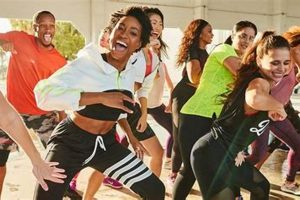
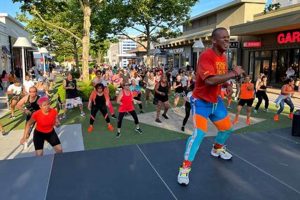
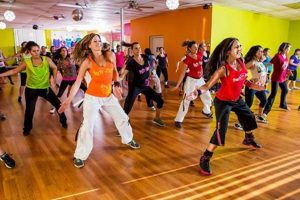
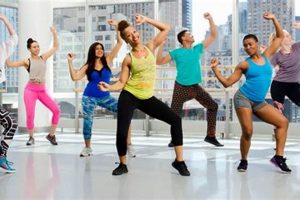
Zumba, a dance fitness program that combines Latin and international music with dance moves, is adapted to cater to the fitness levels and needs of individuals beyond their 50th birthday. These modified sessions often incorporate lower-impact movements and prioritize joint protection, making them a suitable form of exercise. The adaptations ensure accessibility and safety for a demographic often seeking to maintain or improve their physical well-being.
Engaging in regular physical activity, such as this adapted dance program, can provide numerous advantages for the mature adult. These advantages encompass cardiovascular health improvement, muscle strength and endurance enhancement, increased bone density, and improved balance and coordination, crucial factors in reducing the risk of falls. The social interaction inherent in group fitness settings can also combat feelings of isolation and contribute to enhanced mental and emotional well-being. The historical context of modified fitness programs demonstrates a growing recognition of the importance of age-appropriate physical activity.
The subsequent sections will delve into the specific benefits and considerations related to participation in these fitness activities, exploring aspects such as modifications for common physical limitations, the role of qualified instructors, and strategies for maximizing the positive impact on health and quality of life. Further discussion will encompass precautions, optimal class formats, and long-term sustainability for physical wellness.
Essential Considerations for Zumba Participation After Fifty
The following recommendations are designed to optimize participation in adapted dance fitness programs for individuals in the specified age group, focusing on safety and effectiveness.
Tip 1: Consultation with a Healthcare Professional: Prior to commencing any new exercise regimen, consultation with a physician is advisable. This consultation should assess individual health status and identify any potential limitations or contraindications.
Tip 2: Qualified Instructor Selection: Seek out instructors certified in senior fitness or with specific training in adapting Zumba for older adults. A qualified instructor understands the physiological changes associated with aging and can modify exercises accordingly.
Tip 3: Gradual Progression of Intensity: Commence with lower-impact variations and progressively increase the intensity and duration of workouts. Avoid sudden, strenuous movements that could lead to injury.
Tip 4: Proper Footwear and Attire: Wear supportive athletic shoes with adequate cushioning and ankle support. Choose comfortable, breathable clothing that allows for a full range of motion.
Tip 5: Hydration and Nutrition: Maintain adequate hydration by drinking water before, during, and after class. Consume a balanced diet that supports energy levels and muscle recovery.
Tip 6: Focus on Proper Form: Prioritize correct posture and technique over speed and repetitions. Maintaining proper form reduces the risk of injury and maximizes the effectiveness of each movement.
Tip 7: Listen to the Body: Pay attention to any pain or discomfort. Modify or stop any exercise that causes pain. It is crucial to differentiate between muscle fatigue and potential injury.
Consistent adherence to these guidelines promotes a safe and rewarding experience, contributing to long-term health and fitness goals. This approach is essential for maintaining physical well-being while minimizing the potential for adverse effects.
The subsequent section will explore specific modifications and adaptations to the fundamental dance movements to accommodate common age-related physical limitations.
1. Lower-impact choreography

Lower-impact choreography constitutes a fundamental adaptation within dance fitness programs designed for individuals over fifty. The connection stems from the increased prevalence of joint pain, arthritis, and reduced bone density within this demographic. Standard dance fitness routines often incorporate high-impact movements such as jumping, plyometrics, and rapid directional changes, which can exacerbate pre-existing conditions or increase the risk of injury. Lower-impact choreography, conversely, replaces these movements with modified variations that minimize stress on weight-bearing joints. A cause-and-effect relationship exists: higher-impact movements can lead to injury in susceptible individuals, while lower-impact alternatives mitigate this risk.
The practical significance of understanding this connection lies in the ability to design and participate in safe and effective exercise programs. For instance, instead of a jumping jack, a lower-impact modification might involve stepping each foot out to the side, one at a time. Similarly, high-impact leaps can be replaced with controlled, smaller steps. These modifications allow participants to maintain an elevated heart rate and engage major muscle groups while minimizing the potential for joint strain. Dance fitness sessions that have been adapted in this way provide a sustainable format for those wishing to improve their cardiovascular fitness.
In summary, lower-impact choreography serves as a vital component of dance fitness options targeted toward individuals over fifty. Challenges remain in ensuring that such modifications are not only safe but also maintain the energetic and engaging nature of the original program. However, the adoption of this approach represents a crucial step in making exercise accessible and beneficial to a wider range of participants. By recognizing and prioritizing the unique needs of this demographic, fitness professionals contribute to promoting overall health and well-being.
2. Joint-friendly modifications

Joint-friendly modifications are integral to the accessibility and safety of dance fitness programs for individuals over fifty. These modifications address the heightened prevalence of joint-related conditions, such as osteoarthritis and reduced cartilage integrity, common within this demographic, thereby enabling participation without exacerbating pre-existing conditions or increasing the risk of injury.
- Range of Motion Adjustments
Adjustments to range of motion involve reducing the extent of joint movement during exercises. For example, deep squats are replaced with shallower knee bends, limiting stress on the knees. Wide, sweeping arm movements are minimized to prevent shoulder impingement. These modifications facilitate participation by those with limited mobility or joint pain.
- Impact Reduction
Impact reduction involves replacing high-impact movements, such as jumping and running, with lower-impact alternatives. Instead of jumping jacks, participants may perform step-outs. Running in place can be substituted with brisk walking. These changes decrease compressive forces on joints, mitigating the risk of cartilage damage and pain.
- Postural Alignment Emphasis
Postural alignment emphasis focuses on maintaining correct body positioning throughout exercises. Proper alignment reduces stress on joints by distributing weight evenly and minimizing abnormal biomechanical forces. Instructors provide cues and corrections to ensure that participants maintain neutral spine alignment, avoid hyperextension, and engage core muscles for stability.
- Proprioceptive Enhancement
Proprioceptive enhancement involves exercises that improve balance and coordination, crucial for joint stability. Activities such as single-leg stands and controlled weight shifts challenge balance and activate stabilizing muscles around joints. Improved proprioception reduces the likelihood of falls and associated joint injuries.
The integration of these joint-friendly modifications within dance fitness programs transforms potentially high-risk activities into sustainable forms of exercise for individuals over fifty. These adaptations address specific physical limitations, promote safer movement patterns, and contribute to long-term joint health, maximizing benefits while minimizing risks. Ongoing research and refinement of these modifications are essential for continuous improvement of program efficacy and safety.
3. Balance and stability
Balance and stability constitute fundamental components of physical fitness, particularly crucial for individuals participating in structured exercise programs after the age of fifty. The integration of balance and stability exercises within dance fitness activities is often necessitated by age-related physiological changes, including decreased muscle mass, reduced sensory function, and impaired proprioception. These changes inherently elevate the risk of falls, a major cause of morbidity and mortality in older adults. Dance fitness, while providing cardiovascular benefits, also presents inherent challenges to balance due to its dynamic nature and complex movement patterns. An effective program must incorporate exercises that specifically target balance and stability to mitigate these risks and maximize functional capacity.
The practical application of this understanding translates into specific modifications within classes. For example, instructors may incorporate exercises that involve single-leg stance, weight shifting, or controlled movements on unstable surfaces. Additionally, the tempo of the routines may be adjusted to allow participants sufficient time to react and maintain their equilibrium. Real-world examples include chair-supported variations of dance steps or the use of visual cues to aid in spatial orientation. The inclusion of these elements transforms the program into a multifaceted intervention, addressing both cardiovascular health and fall prevention. These features should be prioritized.
In summary, the link between balance and stability and structured dance fitness activities designed for mature adults is a critical consideration. Addressing balance impairments not only enhances safety but also contributes to improved functional independence and overall quality of life. Ensuring that programs prioritize these aspects through appropriate modifications and targeted exercises is essential for optimizing the benefits and mitigating the risks associated with participation. The challenge lies in adapting routines to maintain engagement while effectively addressing the unique needs of this population. Further research into specific exercise protocols and their impact on balance performance is warranted to refine and improve current practices, as well as better inform the best-practices.
4. Cardiovascular health

The relationship between cardiovascular health and structured dance fitness programs for individuals over fifty is fundamentally significant. Cardiovascular health encompasses the efficient functioning of the heart and blood vessels, essential for oxygen and nutrient delivery throughout the body. Age-related physiological changes, such as decreased cardiac output and increased arterial stiffness, can compromise cardiovascular function. Engagement in regular, moderate-intensity physical activity, such as dance fitness, can mitigate these effects. The cause-and-effect relationship is evident: sedentary behavior can lead to cardiovascular decline, while consistent physical activity can improve cardiovascular parameters. Dance fitness, specifically tailored for this demographic, represents a practical approach to maintaining and enhancing cardiovascular well-being.
The importance of cardiovascular health as a component of appropriately modified dance fitness activities is reflected in numerous physiological benefits. Regular participation can lead to reductions in resting heart rate, blood pressure, and LDL cholesterol levels, all established risk factors for cardiovascular disease. For example, a study involving mature adults participating in a modified Zumba program demonstrated significant improvements in VO2 max, a measure of cardiorespiratory fitness. Practical applications include designing routines that incorporate sustained aerobic activity, monitoring heart rate responses, and modifying intensity levels based on individual fitness assessments. These measures ensure that participants achieve the intended cardiovascular benefits while minimizing the risk of adverse events.
In summary, the connection between cardiovascular health and dance fitness participation after fifty is undeniable. Addressing cardiovascular function through structured, modified programs can significantly improve overall health outcomes and reduce the risk of age-related diseases. Challenges remain in ensuring program accessibility and adherence, as well as tailoring routines to individual needs and limitations. However, the potential benefits warrant the continued promotion and refinement of these activities as a valuable component of healthy aging. Further research is needed to optimize exercise protocols and evaluate the long-term impact of dance fitness on cardiovascular health outcomes in this population.
5. Social engagement

Social engagement represents a critical, often overlooked, component of dance fitness activities tailored for individuals over fifty. This engagement extends beyond the physical benefits of exercise, encompassing the psychological and social well-being of participants. Its importance is underscored by the potential for dance fitness environments to foster connections, reduce isolation, and enhance overall quality of life for this demographic.
- Reduced Social Isolation
Structured exercise classes provide opportunities for regular social interaction, mitigating feelings of loneliness and isolation common among older adults. Consistent attendance allows for the formation of friendships and support networks. For instance, participants often arrange to meet before or after class, extending the social interaction beyond the scheduled activity. This regular contact contributes to a sense of belonging and community, crucial for maintaining mental and emotional health.
- Enhanced Mental Well-being
Social interaction stimulates cognitive function and can improve mood. Engaging in group activities releases endorphins, which have mood-boosting effects. Sharing experiences and laughter with others can reduce stress and anxiety. These positive psychological effects contribute to an overall sense of well-being. A participant who consistently attends Zumba classes is more likely to report elevated mood and reduced feelings of stress compared to someone who remains socially isolated.
- Increased Motivation and Adherence
The social aspect of group fitness classes enhances motivation and adherence to exercise programs. Participants are more likely to attend classes regularly when they feel a sense of accountability to their peers. The camaraderie and encouragement from fellow participants can overcome feelings of fatigue or discouragement. The formation of social bonds provides an added incentive to maintain consistent attendance and achieve fitness goals.
- Shared Experiences and Support
Group fitness environments offer opportunities for sharing experiences, providing mutual support, and celebrating achievements. Participants can relate to one another’s challenges and successes, creating a sense of empathy and understanding. This shared experience fosters a supportive atmosphere where individuals feel comfortable seeking advice or encouragement from their peers. The collective celebration of fitness milestones reinforces positive behaviors and strengthens social bonds.
The aspects of social engagement inherent in appropriate dance fitness programs enhance the overall benefits derived from participation. This social connectivity can improve program adherence, boost emotional wellness, and contribute to an enhanced quality of life for the mature adults who engage in these sessions regularly. The creation of a supportive, interactive environment ensures greater longevity and success with fitness objectives.
6. Qualified Instruction

Qualified instruction constitutes a non-negotiable element within dance fitness programs designed for individuals over fifty. This is because the safety, efficacy, and sustainability of these activities hinge directly on the expertise and competence of the instructor. This is a demographic characterized by a higher prevalence of age-related physical limitations and chronic health conditions. Consequently, the role of a qualified instructor extends beyond simply leading a dance routine. It encompasses risk mitigation, exercise modification, and individualized support.
- Anatomical and Physiological Understanding
A qualified instructor possesses in-depth knowledge of age-related anatomical and physiological changes, encompassing musculoskeletal, cardiovascular, and neurological systems. This understanding informs the selection of appropriate exercises and the modification of movements to accommodate specific limitations, such as arthritis, osteoporosis, or balance impairments. For example, an instructor familiar with the biomechanics of the aging spine can modify twisting movements to avoid exacerbating pre-existing back pain. The lack of such knowledge could lead to inappropriate exercise prescription and an increased risk of injury.
- Exercise Modification and Adaptation Skills
The ability to modify and adapt exercises is paramount in a dance fitness setting for mature adults. Qualified instructors can provide lower-impact alternatives, adjust range of motion, and offer variations for individuals with varying levels of fitness and mobility. This skill is critical for ensuring that all participants can engage in the activity safely and effectively. For instance, an instructor can modify a jumping jack by offering a step-out variation or provide chair support for participants with balance issues. In contrast, an unqualified instructor may deliver a standardized routine, potentially excluding or endangering individuals with physical limitations.
- Emergency Response Preparedness
Qualified instructors are trained in basic first aid and CPR, equipping them to respond effectively to medical emergencies that may arise during class. They possess the ability to recognize signs and symptoms of common medical conditions, such as cardiac events or hypoglycemic reactions, and to initiate appropriate interventions. Emergency preparedness also includes having a pre-established emergency action plan and communication protocols. The presence of a qualified instructor with these skills provides a crucial safety net for participants, particularly those with pre-existing health conditions.
- Effective Communication and Motivation Techniques
Beyond technical expertise, effective communication and motivational skills are essential for fostering a positive and supportive exercise environment. Qualified instructors can provide clear and concise instructions, offer individualized feedback, and create a sense of camaraderie among participants. They can also address concerns and anxieties, promoting adherence and encouraging long-term participation. For example, a skilled instructor can use positive reinforcement to motivate hesitant participants or adapt their communication style to accommodate individuals with cognitive impairments. This supportive environment enhances the overall experience and contributes to improved health outcomes.
In conclusion, the competency and qualifications of the instructor are central to the success and safety of dance fitness programs for mature adults. A qualified instructor possesses the knowledge, skills, and experience necessary to adapt exercises, mitigate risks, respond to emergencies, and create a supportive learning environment. Choosing a qualified instructor should be a primary consideration for individuals seeking to participate in these activities. The effectiveness, safety, and long-term benefit of these programs is entirely dependent on the skill of qualified instructors.
Frequently Asked Questions
The following addresses common inquiries and clarifies misconceptions regarding participation in modified dance fitness programs specifically designed for individuals beyond their 50th birthday.
Question 1: Are dance fitness programs safe for individuals with pre-existing joint conditions, such as arthritis?
Modified dance fitness programs prioritize joint-friendly modifications, including reduced impact and adjusted range of motion, to mitigate the risk of exacerbating pre-existing joint conditions. Consultation with a healthcare professional is recommended prior to commencing any new exercise regimen.
Question 2: What qualifications should an instructor possess to effectively lead classes for mature adults?
Instructors should hold certifications in senior fitness or possess specialized training in adapting dance fitness programs for older adults. Knowledge of age-related physiological changes and exercise modification techniques is essential.
Question 3: How can balance and stability be improved through dance fitness?
Modified dance fitness programs incorporate balance exercises, such as single-leg stances and weight shifting, to enhance proprioception and improve stability, reducing the risk of falls.
Question 4: What is the intensity level of a typical modified dance fitness class?
Intensity levels are typically moderate, focusing on sustained aerobic activity without excessive strain. Instructors should monitor heart rate responses and adjust intensity levels based on individual fitness assessments.
Question 5: How does social engagement contribute to the benefits of dance fitness?
Group fitness settings foster social interaction, reducing isolation and enhancing mental well-being. The shared experience of exercise and the formation of social bonds can improve motivation and adherence to the program.
Question 6: Are modifications limited to physical activity?
The adaptations go beyond mere physical activities. Modifications are also there for participants to effectively handle some limitations and some medical conditions that are part of their life.
Participation in these programs, when undertaken with appropriate precautions and qualified instruction, can contribute to improved physical and mental well-being in later life.
The subsequent section will present a conclusion summarizing the benefits, considerations, and future directions related to modified dance fitness activities for individuals over fifty.
Conclusion
The preceding analysis has explored the critical considerations surrounding dance fitness participation for individuals beyond their 50th birthday. Emphasis has been placed on the necessity of modified choreography, joint-friendly adaptations, balance and stability enhancement, cardiovascular health promotion, and social engagement opportunities. A foundational element underpinning the safety and effectiveness of these programs is the presence of qualified instructors possessing the requisite anatomical knowledge, exercise modification skills, and emergency preparedness training.
The potential benefits of zumba classes for over 50 extend beyond mere physical fitness, encompassing improved mental well-being, reduced social isolation, and enhanced overall quality of life. Individuals considering participation in these activities are strongly encouraged to prioritize consultation with healthcare professionals and seek out qualified instructors to maximize the positive impact and minimize potential risks. The continued advancement and refinement of modified exercise programs will play a crucial role in promoting healthy aging and fostering a more active and engaged senior population.