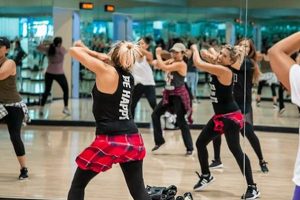
The organized arrangement of elements within a Zumba session facilitates an effective fitness experience. This encompasses the sequence of musical rhythms, the variety of dance steps, and the overall flow from warm-up to cool-down. For example, a typical session commences with a gentle warm-up, progresses to higher-intensity routines focusing on different Latin-inspired dance styles, and concludes with stretching and relaxation.
The deliberate framework of each session is crucial for maximizing participant engagement and achieving desired physical outcomes. A well-planned session can enhance cardiovascular health, improve coordination, and boost overall mood. Historically, this framework evolved from instructor preferences and participant feedback, gradually solidifying into recognizable patterns and best practices within the fitness industry.
Understanding these core components allows for a deeper appreciation of the effort and expertise involved in creating a dynamic and effective fitness program. Subsequent sections will delve into the specific elements that constitute a typical session, examining variations and adaptations that accommodate different fitness levels and preferences.
Optimizing a Zumba Session’s Framework
The subsequent guidelines outline strategies for maximizing the effectiveness of a Zumba fitness class, based on its structural arrangement.
Tip 1: Prioritize Progressive Warm-Up. A gradual increase in intensity at the session’s commencement prepares muscles and joints, minimizing the risk of injury. For example, incorporate light marching and gentle stretching before transitioning to faster-paced movements.
Tip 2: Emphasize Rhythmic Variety. Incorporate different Latin dance styles, such as salsa, merengue, cumbia, and reggaeton, to engage various muscle groups and maintain participant interest. A session might alternate between a high-energy salsa routine and a more flowing merengue segment.
Tip 3: Maintain Balanced Intensity. Alternate between high-impact and low-impact segments to cater to diverse fitness levels and prevent overexertion. For instance, a sequence of energetic jumps can be followed by steps that are gentler.
Tip 4: Focus on Cueing and Transitions. Provide clear and concise verbal and visual cues to guide participants through the routines. Smooth transitions between dance styles and movements enhance the session’s flow.
Tip 5: Incorporate Core Engagement. Integrate movements that engage the core muscles throughout the session. This can be achieved through specific routines or by emphasizing core activation during various dance steps.
Tip 6: Implement a Gradual Cool-Down. Conclude the session with stretching and relaxation exercises to reduce muscle soreness and promote recovery. Static stretches held for 20-30 seconds are beneficial.
Tip 7: Consider Music Selection. Carefully curate the playlist to maintain a high energy level and align with the intended dance styles. Select songs with clear, consistent beats to facilitate synchronized movement.
Adherence to these principles contributes to a well-rounded Zumba experience, improving participant satisfaction and promoting positive physical outcomes.
The following sections will expand upon these individual components, offering further insight into the best practices for designing and delivering effective Zumba fitness sessions.
1. Warm-up progression

The initial phase of a Zumba fitness session, characterized by a structured increase in intensity, holds paramount importance in preparing participants for subsequent physical exertion. This “Warm-up progression” directly influences the overall effectiveness and safety of the entire session.
- Cardiovascular Priming
The gradual elevation of heart rate and respiratory rate is a fundamental goal. This prepares the cardiovascular system for the increased demands of the workout. An example includes starting with gentle marching in place, followed by side-to-side steps, progressively increasing the range of motion and tempo. Inadequate priming can lead to premature fatigue or even cardiovascular strain during more vigorous segments.
- Musculoskeletal Activation
Warm-up routines should engage major muscle groups and joints to improve flexibility and reduce the risk of injury. Examples includes dynamic stretches such as arm circles, leg swings, and torso twists. The aim is to increase blood flow to the muscles and improve joint lubrication. Insufficient activation increases susceptibility to sprains, strains, and other musculoskeletal injuries.
- Neuromuscular Coordination
The warm-up provides an opportunity to activate neural pathways responsible for coordination and balance. Simple dance steps performed at a slow tempo enhance body awareness and prepare participants for more complex movements. For instance, practicing basic salsa steps at a reduced speed allows participants to focus on form and coordination. Neglecting this component can impair movement efficiency and increase the risk of falls.
- Psychological Preparation
The warm-up period also serves to mentally prepare participants for the upcoming workout. It provides a transition from daily activities to the fitness session, fostering a sense of focus and engagement. Instructors can use this time to explain the session’s objectives and provide encouragement. Failing to mentally prepare participants can reduce motivation and hinder overall performance.
The elements of “Warm-up progression” are intrinsically linked to the broader framework. The warm-up sets the stage for a safe and effective workout, influencing participant engagement, performance, and overall session outcomes. A well-executed warm-up is not merely a perfunctory exercise, but an integral component of responsible fitness instruction.
2. Rhythmic variation

Rhythmic variation, a core element within the structured framework of a Zumba class, is critical for maintaining participant engagement and promoting a diverse range of physical benefits. The deliberate incorporation of different rhythmic patterns directly impacts the overall experience and effectiveness of each session.
- Muscle Group Engagement
Different rhythms naturally emphasize distinct muscle groups. Salsa, for example, requires rapid hip movements and core stabilization, while Cumbia typically involves a more grounded, lateral step pattern. This variety ensures that a broader spectrum of muscles is activated during the class, contributing to a more balanced and comprehensive workout. A session devoid of rhythmic diversity risks focusing solely on a limited set of muscles, potentially leading to imbalances and increased risk of overuse injuries.
- Cognitive Stimulation
Adapting to changes in rhythm requires participants to constantly adjust their movements and coordination. This cognitive engagement can improve focus and enhance overall mental acuity. A session incorporating a blend of fast-paced Merengue followed by a slower, more deliberate Bachata routine demands continuous adaptation, keeping participants mentally stimulated. Monotonous rhythm can lead to boredom and a reduced cognitive demand, diminishing the overall value of the experience.
- Cultural Exposure
Each rhythm is often tied to a specific cultural dance tradition. Zumba provides a unique opportunity to expose participants to a variety of these cultural expressions, enriching their understanding and appreciation of diverse dance forms. A class might incorporate elements of Reggaeton, Samba, and Afro-Caribbean rhythms, each with its distinct history and cultural significance. Conversely, a session lacking rhythmic diversity would limit cultural exposure and potentially diminish the educational aspect of the class.
- Endurance Training
Strategic incorporation of differing tempos within rhythmic patterns effectively manipulates exertion levels, allowing for interval-style training and promoting enhanced cardiovascular endurance. The interplay of high-energy routines and periods of relative recovery inherent in contrasting rhythms facilitates increased stamina. Without this variation, consistent high-intensity routines can quickly lead to fatigue, potentially reducing duration and effectiveness of the workout.
The successful integration of rhythmic variation is thus not merely an aesthetic choice but a fundamental element of effective Zumba class design. It is a crucial factor in delivering a well-rounded fitness experience that engages the body, stimulates the mind, and promotes cultural awareness.
3. Intensity balance

Intensity balance, within a Zumba session, represents the strategic manipulation of exertion levels to optimize fitness benefits and minimize the risk of injury. Its careful consideration is paramount to ensure a safe and effective fitness experience within the class structure.
- Cardiovascular Health and Recovery
Alternating periods of high-intensity activity with periods of lower intensity allows the cardiovascular system to be challenged and then recover. For example, a high-energy salsa segment may be followed by a merengue segment incorporating marching steps, allowing heart rate to moderately decrease. This approach enhances endurance and prevents overexertion. A lack of such balance may lead to premature fatigue or cardiovascular strain.
- Musculoskeletal Stress Management
High-impact movements, such as jumps and leaps, can place significant stress on joints. Alternating these with low-impact movements reduces the cumulative stress, minimizing the risk of injuries, especially for participants with pre-existing conditions. A sequence featuring squats and lunges can be followed by a segment primarily engaging upper body movement, reducing stress on lower body joints. The absence of this consideration can result in joint pain or injuries, particularly among those with knee or ankle issues.
- Participant Engagement and Motivation
A session with consistently high intensity can be discouraging for some participants, particularly beginners. Varying the intensity levels maintains engagement by providing manageable challenges interspersed with opportunities for recovery. A Zumba session may incorporate simpler, more repetitive routines between more complex and demanding segments. This approach keeps participants motivated without feeling overwhelmed. Lack of balance between challenge and recovery risks participant discouragement and dropout.
- Adaptation to Fitness Levels
A Zumba class often comprises individuals with varied fitness levels. By varying intensities, instructors can enable participants to adjust their exertion level to meet their own capabilities. Experienced participants may amplify their movements during lower-intensity segments, while beginners can scale back during high-intensity segments. Therefore, an instructor can ensure that all fitness levels and needs are met effectively. Without adaptive structure, intensity requirements that are too rigid may discourage newcomers or prevent more experienced individuals from maximizing their workout.
In conclusion, intensity balance, as an integral component of Zumba class structure, serves to optimize physical outcomes, manage musculoskeletal stress, and sustain participant engagement. Strategic manipulation of exertion levels, through the structured integration of high- and low-intensity segments, contributes significantly to the overall effectiveness and safety of the Zumba experience.
4. Cueing precision

Cueing precision, the clarity and timeliness of instructions provided by a Zumba instructor, is inextricably linked to a properly executed session. It forms a cornerstone of the structure, influencing participant comprehension, movement synchronization, and overall safety. The cause-and-effect relationship is direct: ambiguous or delayed cues lead to confusion, incorrect execution of steps, and potential for injury. For example, if an instructor transitions from a salsa step to a cumbia step without clearly indicating the change in rhythm and footwork, participants may struggle to maintain the correct form, reducing effectiveness and potentially leading to missteps.
The importance of precise cues becomes evident when considering the dynamics of a Zumba class. Participants rely heavily on instructor guidance to navigate complex choreography, often at a fast pace. Cues that are both verbal and non-verbal are best. Verbal cues might include counting down beats or clearly stating the next move. Non-verbal cues can involve hand gestures or changes in the instructor’s body language that telegraph the upcoming transition. The practical significance of understanding this connection lies in the ability to both train effective instructors and educate participants about the value of attentive listening and observation. A well-structured class places emphasis on these cues.
Effective cueing, therefore, enhances not only the immediate performance within the session but also contributes to the long-term retention of choreography and improved coordination skills among participants. It is a critical factor in creating a positive and inclusive environment where individuals of varying skill levels can participate confidently and safely. Challenges often arise from the need to adapt cueing techniques to accommodate diverse learning styles and potential language barriers within a class. In conclusion, the relationship between cueing precision and is a critical element, as it amplifies the Zumba experience.
5. Core integration
Core integration, the engagement and strengthening of the muscles surrounding the torso, forms a crucial, yet often understated, aspect of a Zumba class structure. This is vital for stability, posture, and the safe execution of various dance movements characteristic of the fitness program.
- Postural Alignment and Stability
A strong core facilitates proper spinal alignment, providing a stable base for dynamic movements. For example, engaging the abdominal muscles during salsa steps helps to maintain an upright posture and prevents excessive strain on the lower back. Inadequate core engagement can lead to poor posture, increasing the risk of back pain and injury during high-impact movements.
- Power Transfer and Movement Efficiency
The core acts as a central link between the upper and lower body, enabling efficient transfer of power during dance movements. Activating the core muscles during a Zumba routine enhances the force generated by the legs and arms, contributing to a more powerful and coordinated performance. Insufficient core strength can result in inefficient movement patterns and diminished power output.
- Spinal Protection and Injury Prevention
The core muscles play a critical role in protecting the spine from injury by providing support and stability. Engaging the core during twisting and bending movements, common in many Latin dance styles, reduces the risk of spinal compression and disc injury. Lack of core activation can leave the spine vulnerable to injury, particularly during rapid or uncontrolled movements.
- Balance and Coordination
A strong core is essential for maintaining balance and coordination, particularly during fast-paced and complex Zumba routines. Engaging the core muscles helps to stabilize the body and improve proprioception, the awareness of one’s body position in space. Weak core muscles can compromise balance and coordination, increasing the risk of falls and injuries.
Integrating core-focused exercises and emphasizing core engagement throughout a Zumba session significantly enhances its overall effectiveness and safety. Instructors who prioritize core integration contribute to improved participant posture, movement efficiency, and injury prevention, thereby optimizing the benefits derived from the class structure.
6. Cool-down protocol
The cool-down protocol, an essential element within a well-defined Zumba class structure, serves as a crucial transition phase following the high-intensity activity. Its primary function is to gradually return the body to a resting state, mitigating the risks associated with abrupt cessation of exercise. Implementation directly impacts physiological processes, influencing factors such as heart rate, blood pressure, and muscle recovery. For example, abruptly stopping a high-energy Zumba routine can lead to blood pooling in the extremities, potentially causing dizziness or lightheadedness. A structured cool-down, conversely, allows for a gradual reduction in cardiovascular demand, promoting venous return and maintaining blood pressure stability.
The cool-down typically incorporates low-intensity movements and static stretching, focusing on major muscle groups engaged during the session. A practical application involves transitioning from dance routines to slower, controlled movements such as gentle swaying or walking in place, followed by sustained stretches targeting the hamstrings, quadriceps, and calves. This sequence aids in reducing muscle soreness and promoting flexibility, contributing to long-term physical well-being. Understanding this connection allows instructors to design classes that prioritize both immediate and long-term health outcomes for participants.
In summary, the cool-down protocol is not merely an optional addendum to a Zumba class but an integral component of its structural design. Its proper execution minimizes physiological risks, promotes muscle recovery, and enhances flexibility. Challenges may arise in ensuring consistent adherence to the cool-down protocol, particularly in group fitness settings with time constraints. However, prioritizing this element remains essential for responsible fitness instruction and maximizing the overall benefits of Zumba participation.
7. Music selection

The selection of music is inextricably linked to the structure of a Zumba class, dictating the intensity, rhythm, and overall flow of the session. Musical choices are not arbitrary; they fundamentally determine the dance styles employed, the exercise intensity levels, and the emotional engagement of participants. For example, a playlist dominated by high-tempo reggaeton tracks will naturally lead to a high-energy, high-impact workout, whereas a selection of cumbia and salsa songs may offer a more varied intensity profile with opportunities for recovery. The conscious consideration of tempo, beat, and genre is, therefore, essential for constructing a Zumba class that achieves its intended fitness goals.
The practical significance of this understanding extends to instructor training and class design. An effective Zumba instructor carefully curates a playlist that balances different rhythms and tempos, ensuring that the class provides a comprehensive workout while remaining enjoyable and accessible to participants of varying fitness levels. For example, an instructor may strategically place a slower bachata song between two high-energy salsa routines to provide a brief period of active recovery and to introduce variety in movement patterns. Failure to recognize the impact of musical choices can result in a class that is either too challenging for beginners or too monotonous for experienced participants.
In summary, music selection represents a critical component of the Zumba class structure, influencing everything from exercise intensity to participant motivation. Instructors who prioritize thoughtful musical curation are better equipped to deliver effective, engaging, and well-balanced fitness experiences. Challenges may arise from the need to cater to diverse musical tastes within a class, but the underlying principle remains: the music must complement and enhance the intended structure and objectives of the Zumba session.
Frequently Asked Questions
The following section addresses common inquiries regarding the construction and components of a typical Zumba fitness class.
Question 1: What constitutes the fundamental framework of a Zumba session?
A standard Zumba session comprises a warm-up, a high-intensity workout segment incorporating various Latin dance styles, a cool-down, and stretching exercises. The precise arrangement and duration of each segment may vary depending on instructor preferences and class format.
Question 2: Why is a warm-up considered essential?
The warm-up phase prepares the body for physical exertion by gradually increasing heart rate and blood flow to the muscles. This reduces the risk of injury and enhances overall performance during the workout.
Question 3: What is the significance of rhythmic variety within a class?
Incorporating different Latin dance styles and rhythms engages diverse muscle groups, maintains participant interest, and provides exposure to various cultural dance traditions.
Question 4: How is intensity balance achieved during a typical session?
Intensity balance is achieved through alternating high-impact and low-impact movements, allowing for cardiovascular challenge and periods of active recovery. This caters to various fitness levels and minimizes the risk of overexertion.
Question 5: Why are clear and concise verbal cues deemed important?
Effective cueing guides participants through complex choreography, facilitates movement synchronization, and contributes to a safe and inclusive learning environment.
Question 6: What is the purpose of the cool-down segment?
The cool-down phase gradually returns the body to a resting state, reduces muscle soreness, and promotes flexibility. It helps to prevent blood pooling and dizziness following a high-intensity workout.
In summary, the deliberate framework, coupled with consideration of rhythm, intensity, cueing, and recovery protocols, contributes to the overall effectiveness of the Zumba fitness session.
The subsequent section will explore modifications to the overall structure, accommodating various fitness levels and special populations.
Conclusion
This exploration has underscored the critical components that constitute the Zumba class structure. From the progressive warm-up to the deliberate cool-down, each element plays a vital role in optimizing the fitness experience. Intensity balance, rhythmic variation, and precise cueing have been identified as fundamental aspects that contribute to participant engagement and the achievement of physical benefits.
A comprehensive understanding of Zumba class structure is essential for both instructors and participants. Continued investigation and refinement of session design are encouraged to maximize effectiveness and safety across diverse fitness levels and populations. Adherence to these principles will ensure the continued evolution and positive impact of this fitness modality.