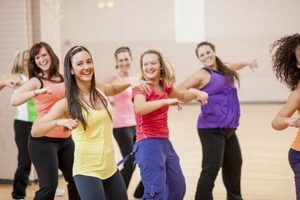
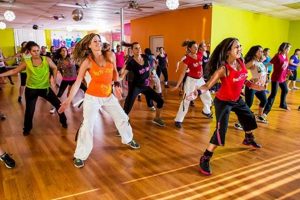
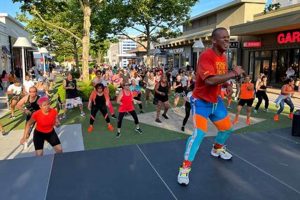
The instruction of Zumba, a fitness program that combines Latin and international music with dance moves, involves specific skills and knowledge. This includes understanding rhythmic patterns, choreographic techniques, and effective communication strategies to lead participants through a safe and engaging workout. For example, a licensed instructor may guide a class through various steps like the Merengue, Salsa, and Cumbia, ensuring proper form and modifications for different fitness levels.
Providing this type of exercise is beneficial for communities by promoting physical activity and fostering social interaction. Historically, Zumba gained popularity as an accessible and enjoyable way to improve cardiovascular health, coordination, and overall well-being. Its impact extends to creating opportunities for individuals to become certified instructors, contributing to the growth of the fitness industry and promoting healthier lifestyles.
The following sections will delve into aspects such as the certification process, effective teaching methodologies, marketing strategies for building a successful practice, and considerations for ensuring participant safety and program accessibility. These elements are crucial for anyone aspiring to lead and develop impactful Zumba programs.
Essential Guidelines for Zumba Instruction
The following guidelines are designed to enhance the quality and effectiveness of Zumba instruction, ensuring a positive and impactful experience for all participants.
Tip 1: Obtain and Maintain Proper Certification: Completion of a recognized Zumba instructor training program is paramount. Maintaining up-to-date certification ensures adherence to the latest safety protocols and instructional techniques.
Tip 2: Master Rhythmic Variation: Possessing a strong command of diverse rhythmic patterns is essential. Instructors must skillfully blend rhythms like salsa, merengue, and cumbia to maintain participant engagement and challenge.
Tip 3: Prioritize Cueing Proficiency: Clear and concise verbal and non-verbal cues are critical for guiding participants. Effective cueing allows individuals to anticipate transitions and execute movements correctly, minimizing potential for injury.
Tip 4: Incorporate Movement Modification: Adaptations for varying fitness levels and physical limitations should be readily available. Demonstrating modifications ensures inclusivity and allows individuals to participate comfortably and safely.
Tip 5: Emphasize Progressive Choreography: Class choreography should follow a logical progression, gradually increasing in intensity and complexity. This approach helps build participant confidence and prevents overexertion.
Tip 6: Cultivate Energetic Engagement: Maintaining a high level of energy and enthusiasm is vital. A motivated instructor inspires participants and fosters a positive and engaging class atmosphere.
Tip 7: Structure a Comprehensive Warm-up and Cool-down: A well-structured warm-up prepares muscles for activity and a thorough cool-down promotes recovery. Integrating dynamic stretching and static stretching reduces the risk of injury.
Adhering to these guidelines contributes to the delivery of safe, effective, and enjoyable Zumba sessions, fostering participant well-being and long-term program success.
The subsequent sections will explore strategies for marketing Zumba programs and addressing participant feedback to further refine instructional practices.
1. Choreography Proficiency

Choreography proficiency is a foundational pillar supporting effective Zumba instruction. Its mastery dictates the quality, safety, and engagement level of each class, influencing participant satisfaction and long-term program viability.
- Movement Sequencing and Flow
Skillful choreography ensures a seamless transition between different dance styles and fitness elements. The sequence must consider muscle groups being engaged, gradually increasing intensity to prevent injury, and effectively distributing focus across upper body, lower body, and core. Inadequate sequencing may result in participant discomfort or a decline in class effectiveness.
- Musicality and Rhythm Interpretation
Choreography proficiency extends to an in-depth understanding of musical structures and rhythmic patterns. Movements should synchronize precisely with the music, reflecting nuances in tempo, instrumentation, and cultural style. This alignment enhances participant enjoyment and reinforces the connection between movement and sound, which is core to the Zumba experience. Failure to align movement with music diminishes the intended physical and emotional impact.
- Originality and Adaptation
While adhering to the core Zumba principles, instructors must demonstrate originality in choreographic design. The incorporation of unique variations, adaptations, and personal touches enhances engagement and distinguishes the instructor’s style. At the same time, adaptation allows the choreography to cater to varying fitness levels, physical limitations, and participant preferences. Over-reliance on prescribed routines without adaptation may limit the class’s appeal to a diverse audience.
- Progression and Regression Strategies
A proficient instructor plans choreography with built-in options for both progression and regression. Progression allows advanced participants to increase the challenge, while regression enables those with limitations to participate safely and effectively. These strategies promote inclusivity and cater to a wide range of fitness abilities. Neglecting progression and regression can lead to participant discouragement or injury.
The synergy between movement sequencing, musicality, originality, and adaptation underlines the importance of choreography proficiency for those involved in Zumba instruction. Mastering these aspects contributes to the delivery of high-quality fitness experiences that benefit participants physically, mentally, and socially. It’s the foundation upon which a Zumba class’s success is built.
2. Rhythmic Accuracy

Rhythmic accuracy constitutes a foundational element within the effective instruction of Zumba. It directly impacts the participant’s ability to synchronize movements with the musical beat, influencing both the physical benefits derived and the overall enjoyment of the activity. When an instructor maintains precise rhythmic timing, participants can more easily follow the choreography, leading to better muscle engagement and cardiovascular exertion. Conversely, a lack of rhythmic accuracy introduces confusion and disrupts the intended flow of the routine. For instance, if an instructor consistently misses the beat during a salsa sequence, participants may struggle to execute the steps correctly, potentially resulting in reduced fitness gains and increased frustration.
The practical significance of rhythmic accuracy extends beyond mere adherence to the beat. It enables the instructor to effectively communicate the nuances of different dance styles incorporated within Zumba. Each Latin or international rhythm, such as Merengue, Cumbia, or Reggaeton, possesses unique rhythmic characteristics. An instructor who accurately embodies these rhythms can convey their distinct qualities to participants, fostering a deeper appreciation for the cultural origins of the music and movements. Furthermore, rhythmic precision facilitates the incorporation of layered choreography, where complex movements are broken down into smaller, rhythmically aligned segments. This approach allows participants of varying skill levels to gradually master challenging routines, enhancing their sense of accomplishment and encouraging continued participation.
In summary, rhythmic accuracy serves as a cornerstone of effective Zumba instruction. Its absence undermines the fitness benefits, disrupts the flow of the class, and detracts from the overall participant experience. While choreography and enthusiasm are important, rhythmic mastery allows the class to become an effective dance-fitness workout and a celebratory, authentic experience. Instructors must therefore prioritize rhythmic training and awareness to ensure the delivery of high-quality Zumba sessions that are both physically beneficial and culturally enriching. The challenge lies in not only understanding rhythm intellectually, but also embodying it physically and conveying it effectively to others.
3. Cueing Clarity

Effective Zumba instruction is predicated on the ability to clearly and concisely communicate movement transitions and rhythmic changes. Cueing clarity directly influences participant safety, engagement, and the overall effectiveness of the class. Ambiguous or delayed cues can lead to incorrect execution, potential injuries, and a diminished sense of accomplishment.
- Verbal Precision
Verbal cues must be concise, unambiguous, and timed appropriately to precede the intended movement. For example, instead of saying “Okay, next we’re going to do something different,” a more precise cue would be, “In four counts, transition to a grapevine step to the right.” The specificity of the verbal cue allows participants to anticipate the movement and execute it correctly, minimizing confusion and maximizing engagement. Delayed or vague verbal instructions impede the flow of the class and can lead to frustration.
- Non-Verbal Reinforcement
Non-verbal cues, such as hand gestures, facial expressions, and directional pointing, serve to reinforce and amplify verbal instructions. Demonstrating the upcoming movement while simultaneously providing a verbal cue enhances understanding, particularly for visual learners. For instance, when introducing a new step, an instructor might point in the direction of the movement with their hand while verbally indicating “Step to the left.” Inconsistent or unclear non-verbal cues contradict verbal instructions, resulting in confusion and hindering participants’ ability to follow along effectively.
- Anticipatory Cueing
Effective instructors utilize anticipatory cueing to prepare participants for upcoming transitions and changes in intensity. Providing advance warning allows individuals to mentally and physically prepare for the next movement, preventing abrupt changes that could lead to muscle strain or loss of balance. For instance, an instructor might say, “In eight counts, we’ll increase the tempo and transition to a faster merengue.” This proactive approach enhances participant confidence and promotes a smoother, more engaging class experience.
- Modification Signaling
Cueing clarity also encompasses the ability to clearly communicate modifications for participants with varying fitness levels or physical limitations. An instructor must explicitly demonstrate and verbally explain alternative movements to accommodate individual needs. For example, when performing squats, the instructor might say, “For a low-impact option, reduce the depth of your squat or perform a modified chair pose.” Providing clear modification signals ensures inclusivity and allows all participants to engage safely and effectively, regardless of their physical capabilities.
The ability to deliver precise, anticipatory, and adaptable cues is paramount in Zumba instruction. The effective combination of verbal and non-verbal cueing, combined with the ability to communicate modification options, transforms the class from a collection of movements into a unified and inclusive fitness experience. Consistent attention to cueing clarity enhances participant safety, maximizes engagement, and promotes a positive and rewarding learning environment.
4. Adaptation Expertise

Adaptation expertise forms a cornerstone of effective Zumba instruction, directly influencing inclusivity, safety, and participant satisfaction. Its absence leads to a homogenous class experience, potentially excluding individuals with physical limitations, varying fitness levels, or diverse cultural backgrounds. A direct correlation exists between adaptation expertise and program accessibility; instructors possessing this expertise can modify movements and choreography to accommodate a broader range of participants. For example, individuals with joint pain benefit from low-impact variations, while pregnant participants require modified core exercises. Conversely, failing to adapt routines results in increased risk of injury and diminished engagement from those unable to execute standard movements comfortably.
The practical significance of adaptation expertise extends to building a diverse and loyal clientele. Consider a Zumba class incorporating complex salsa footwork; an instructor lacking adaptation skills might struggle to simplify these steps for beginners or those with coordination challenges. In contrast, an instructor skilled in adaptation can offer alternative movements, such as modified grapevine steps or simplified turns, enabling all participants to experience success and enjoyment. Moreover, adaptation goes beyond physical modifications to encompass cultural sensitivity. Incorporating music and movements representative of diverse cultural backgrounds fosters a sense of belonging and enhances the overall appeal of the class. Instructors with adaptation expertise are better equipped to create a welcoming and inclusive environment for all.
In summary, adaptation expertise is not merely an ancillary skill but a fundamental component of successful Zumba instruction. Its presence dictates the program’s accessibility, safety, and cultural relevance. Challenges include the need for continuous learning and a deep understanding of anatomy, kinesiology, and diverse cultural movement styles. Addressing these challenges through ongoing professional development enhances an instructor’s ability to cater to individual needs and create a Zumba experience that is both physically beneficial and culturally enriching. Adaptation expertise, therefore, directly influences both the program’s impact and its long-term sustainability.
5. Energetic Delivery
Energetic delivery, within the framework of Zumba instruction, transcends mere enthusiasm. It is a multifaceted communication strategy directly impacting participant motivation, adherence, and the overall efficacy of the program. Its significance lies in its capacity to transform a structured exercise routine into an engaging and immersive experience.
- Verbal Projection and Modulation
Verbal projection and modulation constitute essential components of energetic delivery. Projecting the voice ensures audibility throughout the class space, enabling participants to clearly hear instructions and motivational cues. Modulation, or varying the tone and inflection of the voice, prevents monotony and enhances the emotional impact of the communication. For example, an instructor might raise their voice during a high-energy segment to amplify excitement or lower it during a cool-down to promote relaxation. Inadequate vocal projection or monotonous delivery can diminish participant engagement and reduce the overall effectiveness of the instructions.
- Physical Expression and Movement Dynamism
Physical expression involves the utilization of dynamic movements, expressive gestures, and animated facial expressions to convey enthusiasm and inspire participants. Mirroring the intensity and energy of the music through physical expression enhances the immersive quality of the class. For instance, an instructor might incorporate large arm movements, exaggerated hip swings, and spontaneous leaps during a high-energy dance sequence. Conversely, restrained or monotonous physical expression can diminish the perceived energy of the class and reduce participant motivation.
- Enthusiastic Engagement and Positive Reinforcement
Enthusiastic engagement involves actively interacting with participants, providing positive reinforcement, and fostering a supportive class environment. An instructor might offer specific praise for correct execution, acknowledge individual achievements, or encourage participants to challenge themselves. Furthermore, demonstrating genuine enthusiasm for the music and movements inspires participants and promotes a sense of community. Conversely, a lack of enthusiasm or failure to provide positive reinforcement can create a demotivating atmosphere and reduce participant adherence.
- Eye Contact and Connection
Maintaining consistent eye contact with participants establishes a personal connection and fosters a sense of engagement. Eye contact signals attentiveness and conveys encouragement, creating a more supportive and inclusive class environment. An instructor might circulate throughout the class space, making brief eye contact with individual participants while delivering instructions or offering praise. Avoiding eye contact or appearing distracted can diminish the sense of connection and reduce participant motivation.
The synergy between verbal projection, physical expression, enthusiastic engagement, and eye contact defines energetic delivery within the context of Zumba instruction. Its consistent application transforms a basic fitness routine into a dynamic and motivating experience, contributing to enhanced participant adherence, improved physical outcomes, and a heightened sense of enjoyment. While technical proficiency in choreography and rhythmic accuracy remain essential, the impactful communication of energy significantly amplifies the overall effectiveness of the program.
Frequently Asked Questions Regarding Zumba Instruction
This section addresses common inquiries pertaining to the practice of Zumba instruction, providing clarity on essential aspects of the profession.
Question 1: What specific qualifications are mandatory for instructing Zumba classes?
Mandatory qualifications encompass the completion of a recognized Zumba instructor training program. This certification ensures adherence to established safety protocols and pedagogical techniques. Further specialized training may be required depending on the specific type of Zumba class offered (e.g., Zumba Kids, Zumba Gold).
Question 2: How frequently should a Zumba instructor renew their certification?
Certification renewal frequency varies depending on the specific Zumba program. Typically, instructors are required to maintain an active membership with Zumba and participate in continuing education courses or workshops to stay current with the latest techniques and safety guidelines. Failing to renew certification may result in the inability to legally instruct Zumba classes under the Zumba Fitness, LLC brand.
Question 3: What are the potential legal liabilities associated with teaching Zumba classes?
Legal liabilities can arise from participant injuries, inadequate safety precautions, or failure to obtain appropriate insurance coverage. Instructors should secure liability insurance to protect against potential claims resulting from accidents or injuries sustained during classes. Adherence to established safety protocols and comprehensive participant screening can mitigate potential legal risks.
Question 4: How does one effectively manage a Zumba class comprising participants with diverse fitness levels?
Managing a class with diverse fitness levels necessitates the implementation of adaptable choreography and the provision of clear modification options. Instructors should demonstrate variations for both advanced and beginner participants, allowing individuals to tailor the intensity of the workout to their specific capabilities. Regular assessment of participant progress and feedback is crucial for ensuring a safe and effective class environment.
Question 5: What are the key marketing strategies for attracting and retaining participants in Zumba classes?
Effective marketing strategies include leveraging social media platforms, offering introductory discounts or promotions, and cultivating partnerships with local community organizations. Building a strong reputation through positive word-of-mouth referrals is also essential for sustained program growth. Providing a consistently high-quality class experience and fostering a sense of community among participants contribute significantly to participant retention.
Question 6: How does an instructor address participant concerns or complaints regarding the class structure or choreography?
Addressing participant concerns requires active listening, empathy, and a willingness to adapt the class structure or choreography to accommodate reasonable requests. Establishing a feedback mechanism, such as anonymous surveys or suggestion boxes, allows participants to voice their opinions without fear of reprisal. Prompt and professional responses to complaints are crucial for maintaining participant satisfaction and program integrity.
Understanding these aspects is vital for those involved in Zumba instruction, contributing to both professional integrity and participant well-being.
The subsequent section will explore advanced training techniques for becoming a top-tier Zumba instructor.
Conclusion
This exploration of teaching Zumba classes has underscored the diverse skill set and continuous learning required for effective instruction. From mastering choreography and rhythmic accuracy to implementing cueing clarity and adaptation expertise, a successful Zumba instructor must embody a comprehensive understanding of both fitness principles and pedagogical techniques. Energetic delivery, while often perceived as a natural trait, also requires conscious effort and refinement to maximize participant engagement and motivation.
The ability to lead safe, inclusive, and engaging Zumba classes represents a valuable contribution to community health and well-being. Aspiring and current instructors should prioritize ongoing professional development and embrace a commitment to continuous improvement. By upholding the highest standards of instruction, individuals contribute to the positive impact and sustained growth of Zumba as a global fitness phenomenon.