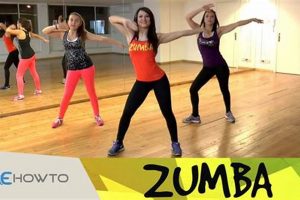
Zumba, a fitness program blending Latin and international music with dance movements, presents a high-energy workout experience. Its choreography integrates interval training, alternating between fast and slow rhythms, potentially enhancing cardiovascular health and calorie expenditure. The appeal of Zumba lies in its accessible format, making exercise feel less like a chore and more like an enjoyable activity.
The effectiveness of Zumba as a fitness regimen stems from its comprehensive approach to physical well-being. Participants may experience improvements in cardiovascular endurance, muscular strength, and flexibility. The group dynamic often fosters motivation and adherence, which are critical for long-term fitness success. Historically, dance-based fitness programs have demonstrated positive impacts on mental and emotional health, contributing to a holistic sense of wellness.
Further examination will explore specific aspects of Zumba, including its potential benefits for weight management, its impact on different muscle groups, and considerations for individuals with varying fitness levels. Additionally, modifications for exercise intensity and safety precautions will be addressed to ensure a well-rounded understanding of this popular fitness modality.
Zumba Fitness Guidance
The following recommendations are designed to maximize the potential benefits of Zumba participation while mitigating potential risks. Adherence to these guidelines may contribute to a more effective and safer exercise experience.
Tip 1: Hydration is Critical: Adequate fluid intake before, during, and after a Zumba session is essential for maintaining optimal performance and preventing dehydration. Water is generally sufficient, but electrolyte replacement may be considered for longer or more intense workouts.
Tip 2: Proper Footwear Selection: Choose athletic shoes that provide adequate support and cushioning. Cross-training shoes are often suitable, but dedicated dance shoes may be preferred for individuals prioritizing mobility and reduced impact.
Tip 3: Gradual Progression of Intensity: Begin with lower-intensity modifications of the Zumba routines and gradually increase the difficulty as fitness improves. This approach minimizes the risk of injury and allows the body to adapt progressively.
Tip 4: Listen to Bodily Signals: Pay close attention to any pain or discomfort experienced during the workout. Modify movements or take breaks as needed to avoid overexertion or potential injury.
Tip 5: Warm-Up and Cool-Down Integration: A thorough warm-up prior to Zumba is crucial for preparing muscles and joints for exercise. Similarly, a cool-down period allows the body to gradually return to its resting state, reducing muscle soreness.
Tip 6: Environmental Awareness: Ensure adequate space for movement and a safe environment free from obstacles. Proper ventilation is also important, especially in enclosed spaces.
These guidelines emphasize the importance of preparation, awareness, and moderation in maximizing the benefits of Zumba as a fitness modality. Consistent application of these tips can contribute to a safer and more rewarding exercise experience.
The subsequent section will delve into specific modifications and considerations for individuals with pre-existing health conditions, providing further guidance for safe and effective Zumba participation.
1. Cardiovascular Enhancement

Cardiovascular enhancement represents a critical metric in evaluating the potential benefits of any exercise program. In the context of Zumba, its rhythmic movements and varied intensity levels directly influence heart rate and circulatory system function. Therefore, assessing the cardiovascular impact is crucial in determining if Zumba constitutes a worthwhile fitness activity.
- Elevated Heart Rate Zones
Zumba routines frequently incorporate interval training principles, alternating between periods of high-intensity movement and active recovery. This fluctuation in intensity prompts the heart rate to enter targeted zones conducive to cardiovascular conditioning. Achieving and maintaining these elevated heart rate zones, even intermittently, contributes to improved cardiovascular endurance over time.
- Increased Stroke Volume
Consistent participation in Zumba can lead to increased stroke volume, which is the amount of blood pumped by the heart with each beat. As stroke volume increases, the heart becomes more efficient at delivering oxygen to working muscles, thereby reducing strain on the cardiovascular system during both exercise and rest.
- Improved VO2 Max
VO2 max, representing the maximum amount of oxygen the body can utilize during exercise, is a key indicator of cardiovascular fitness. While Zumba may not elicit the same VO2 max improvements as high-intensity endurance activities, it can still contribute to a measurable increase in VO2 max, particularly for individuals new to exercise or those seeking a more enjoyable alternative to traditional cardiovascular workouts.
- Reduced Resting Heart Rate
A lower resting heart rate generally signifies improved cardiovascular health. Regular engagement in Zumba can contribute to a reduction in resting heart rate as the heart becomes stronger and more efficient. This reduction reflects the heart’s ability to pump sufficient blood with fewer beats per minute, indicating enhanced cardiovascular function.
The cumulative effect of these cardiovascular adaptations underscores the potential of Zumba as a valuable tool for improving heart health and overall fitness. While individual results may vary, the evidence suggests that Zumba can contribute meaningfully to cardiovascular enhancement, particularly when practiced consistently and in conjunction with other healthy lifestyle choices.
2. Calorie Expenditure

Calorie expenditure, the energy expended by the body through physical activity, is intrinsically linked to the efficacy of any fitness program. Regarding Zumba, the potential for significant calorie expenditure is a primary determinant of its value as a fitness modality. Zumba’s combination of aerobic exercise and dance movements contributes to a measurable increase in metabolic rate during and after the activity, directly impacting total energy consumption. For example, a person of average weight might expend between 300 and 600 calories in a one-hour Zumba class, depending on intensity and individual metabolism. The ability to burn a substantial number of calories makes Zumba a relevant option for individuals seeking weight management or overall fitness improvement. Understanding the relationship between Zumba and calorie expenditure provides a quantifiable measure of its effectiveness.
The practical significance of understanding Zumba’s effect on calorie expenditure extends beyond mere weight loss. It informs the development of tailored fitness plans where individuals can estimate the exercise time required to achieve specific calorie deficits, which are essential for fat reduction. Furthermore, knowing the expected calorie burn allows for dietary adjustments to maintain energy balance, supporting both weight management and sustained physical activity. In real-world scenarios, participants often use wearable fitness trackers to monitor their calorie expenditure during Zumba classes, providing real-time feedback and motivation to maintain consistent participation. This data-driven approach enables individuals to fine-tune their fitness routines, ensuring optimal results based on their individual metabolic characteristics.
In summary, the calorie expenditure associated with Zumba plays a pivotal role in its overall fitness benefits. While the precise number of calories burned varies based on individual factors and class intensity, the potential for significant energy expenditure makes Zumba a valuable tool for weight management, cardiovascular improvement, and overall fitness enhancement. Recognizing the practical implications of this calorie expenditure helps participants tailor their fitness routines and dietary habits for optimal results. Potential challenges in accurately measuring calorie expenditure necessitate the use of reliable tracking devices and a comprehensive understanding of individual metabolic rates.
3. Muscle Engagement

Muscle engagement is a critical component in evaluating Zumba’s efficacy as a fitness activity. Zumba, characterized by its dynamic dance movements, necessitates the activation of various muscle groups throughout the body. The degree of muscle engagement directly influences strength development, muscular endurance, and overall body composition. For instance, routines incorporating squats, lunges, and core-stabilizing movements require activation of the quadriceps, hamstrings, glutes, and abdominal muscles, respectively. This multi-muscle group activation contributes to a more comprehensive workout compared to exercises targeting isolated muscle groups. Regular and consistent Zumba participation results in enhanced muscle tone and improved functional fitness. The diverse range of movements within Zumba necessitates coordination and balance, further engaging stabilizing muscles which may not be targeted in traditional strength-training exercises.
The practical significance of muscle engagement in Zumba extends beyond aesthetic improvements. Enhanced muscle strength supports daily activities, reduces the risk of injury, and improves metabolic health. Stronger core muscles contribute to better posture and reduced back pain. Improved lower body strength enhances mobility and balance, which are crucial for maintaining independence and quality of life, especially in older adults. Specific Zumba routines are modifiable to accommodate different fitness levels and physical limitations. For example, individuals with knee problems can reduce the depth of squats and lunges or modify movements to be less impactful, thereby mitigating potential risks while still maintaining significant muscle activation. This adaptability makes Zumba a potentially beneficial option for a wide range of populations. In contrast, insufficient attention to proper form and technique can increase the risk of muscle strain or injury, highlighting the importance of qualified instructors and mindful participation.
In summary, muscle engagement is a vital determinant of Zumba’s fitness value. Its ability to engage multiple muscle groups simultaneously contributes to improved strength, endurance, and overall functional fitness. Recognizing the significance of muscle engagement allows participants to optimize their Zumba experience by focusing on proper form and technique, thereby maximizing the benefits and minimizing potential risks. Further research into the specific muscle activation patterns during various Zumba routines may provide even more detailed guidance for optimizing muscle engagement and enhancing the program’s overall effectiveness.
4. Improved Coordination

Coordination, the ability to execute smooth, accurate, and controlled movements, represents a significant aspect of physical fitness. Its enhancement through activities like Zumba suggests potential benefits within a holistic fitness framework. The following points delineate specific facets of how improved coordination contributes to overall fitness.
- Neural Pathway Enhancement
Zumba necessitates the learning and repetition of complex dance steps, stimulating the creation and strengthening of neural pathways associated with motor skills. These newly formed or reinforced pathways allow for more efficient communication between the brain and muscles, resulting in improved reaction time and movement precision. This enhanced neurological function translates to improved performance in other physical activities and daily tasks. For instance, quicker reflexes developed in Zumba could improve reaction time while driving, or enhanced balance could reduce the risk of falls.
- Proprioceptive Awareness
Proprioception, or kinesthesia, refers to the body’s ability to sense its position and movement in space. Zumba inherently promotes proprioceptive awareness by requiring participants to be conscious of their body’s orientation and movement patterns. This heightened awareness allows for better body control, leading to improved posture, balance, and reduced risk of injuries. Improved proprioceptive abilities are useful for injury prevention by allowing the body to react more effectively to imbalances or unexpected movements.
- Bilateral Coordination
Zumba routines often incorporate movements that require the simultaneous use of both sides of the body, promoting bilateral coordination. This type of coordination enhances communication between the left and right hemispheres of the brain, which can improve cognitive function and overall motor control. Improving bilateral coordination can enhance skills in activities requiring the integration of both sides of the body, such as swimming or playing a musical instrument.
- Rhythm and Timing
Zumba’s foundation in rhythmic music and dance movements cultivates a refined sense of rhythm and timing. This enhanced rhythmic awareness contributes to better motor timing and coordination. Improvements in rhythm and timing can greatly assist other physical activities such as running, swimming, and martial arts and have been linked to cognitive benefits, such as improved memory and attention.
The interconnectedness of neural pathway enhancement, proprioceptive awareness, bilateral coordination, and rhythmic acuity highlights the multifaceted contribution of improved coordination to a comprehensive fitness profile. When assessed through the lens of these factors, the potential fitness value of Zumba becomes clearer. Individuals may find that improved coordination learned through Zumba enhances their performance and reduces injury risk in a variety of physical activities, thus supporting its claim as a beneficial fitness practice.
5. Enjoyable Motivation
The connection between enjoyment and sustained participation in fitness activities is well-established. Enjoyable motivation serves as a critical catalyst for adherence, directly influencing the long-term effectiveness of any fitness program. When considering Zumba’s value as a fitness modality, its capacity to generate enjoyment is paramount. The integration of music, dance, and a social environment cultivates a positive exercise experience, transforming what might otherwise be perceived as a chore into a welcomed activity. This positive association leads to increased consistency and a greater likelihood of individuals maintaining their fitness regimen over time. Failure to sustain motivation often leads to decreased participation, thereby negating any potential fitness benefits, regardless of the program’s inherent merits.
Examples of this dynamic abound. Individuals who find traditional gym workouts monotonous may find Zumba engaging due to its dynamic nature and social interaction. This increased engagement leads to more frequent participation, resulting in tangible fitness improvements. Conversely, individuals who find Zumba’s dance-oriented format unappealing are less likely to participate consistently, thereby diminishing its fitness benefits for them. The practical significance lies in recognizing that the most effective fitness program is the one an individual is most likely to adhere to consistently. Tailoring fitness choices to align with individual preferences and enjoyment levels maximizes the likelihood of long-term success.
In summary, enjoyable motivation is an indispensable component of a successful fitness endeavor, with Zumba serving as a prime illustration. Its ability to foster enjoyment directly contributes to sustained participation and, consequently, the realization of fitness benefits. A potential challenge involves objectively measuring and quantifying the degree of enjoyment, as subjective experiences vary significantly. However, observing participation rates and individual testimonies provides valuable insights into the motivating power of Zumba, reinforcing its potential as a worthwhile and sustainable fitness activity for many.
Frequently Asked Questions
This section addresses common inquiries regarding Zumba’s efficacy as a fitness modality. It aims to provide clear and concise answers based on available information.
Question 1: Is Zumba effective for weight loss?
Zumba’s calorie-burning potential, coupled with its ability to promote increased physical activity, can contribute to weight loss when integrated with a balanced diet. The extent of weight loss varies depending on individual factors such as metabolism, intensity, and frequency of participation.
Question 2: Can individuals with limited dance experience participate in Zumba?
Zumba routines are designed to be accessible to individuals with varying levels of dance experience. Modifications are often provided to accommodate different fitness levels and physical limitations. Prior dance experience is not a prerequisite for participation.
Question 3: What muscle groups does Zumba primarily target?
Zumba engages multiple muscle groups, including the core, legs, glutes, and arms. The specific muscle activation patterns depend on the particular routines and movements incorporated within the class.
Question 4: How frequently should one participate in Zumba to experience fitness benefits?
Consistent participation is essential for realizing fitness benefits. Participating in Zumba two to three times per week can contribute to improved cardiovascular health, muscular endurance, and overall fitness levels.
Question 5: Are there any specific safety precautions to consider when participating in Zumba?
Proper hydration, appropriate footwear, and gradual progression of intensity are important safety considerations. Individuals should also be mindful of their physical limitations and modify movements as needed to avoid injury. Consulting with a healthcare professional prior to starting any new fitness program is advisable.
Question 6: Can Zumba be a substitute for other forms of exercise?
Zumba can complement other forms of exercise or serve as a primary fitness activity. However, it is recommended to incorporate a variety of exercises to ensure a well-rounded fitness regimen. Strength training and flexibility exercises are also important components of overall fitness.
In summary, Zumba offers a variety of potential fitness benefits, including weight loss, cardiovascular enhancement, and muscle engagement. Consistent participation and adherence to safety precautions are crucial for maximizing these benefits.
The subsequent section will provide additional insights and concluding remarks concerning Zumba’s role within the landscape of fitness options.
Conclusion
The analysis presented demonstrates that Zumba possesses notable potential within a comprehensive fitness strategy. Cardiovascular benefits, calorie expenditure, muscle engagement, enhanced coordination, and the motivational aspects derived from an enjoyable workout environment collectively contribute to its value. Its effectiveness, however, is contingent upon consistent participation, proper execution of movements, and individual adaptation to personal fitness levels and any pre-existing health considerations.
Ultimately, the suitability of Zumba as a fitness modality is determined by individual preferences and goals. While it presents a viable option for many, a well-rounded fitness program should incorporate diverse activities to ensure comprehensive physical conditioning. Continued research and individual experiences will further refine understanding of Zumba’s specific contributions to overall health and well-being.