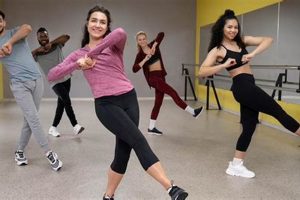
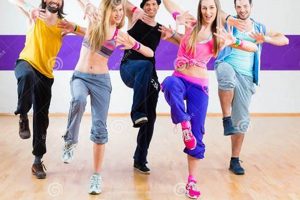
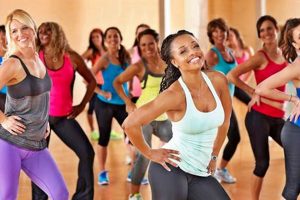
Zumba is a fitness program that combines Latin and international music with dance movements. It incorporates elements of aerobic exercise and dance routines designed to improve cardiovascular health and coordination. As a structured fitness class, it introduces participants to various rhythms and dance styles, such as salsa, merengue, and cumbia.
Participation in Zumba offers numerous benefits, including increased physical activity, improved cardiovascular fitness, and enhanced motor skills. The repetitive nature of the routines aids in memory development and coordination. Furthermore, the social aspect of group classes can positively impact mental well-being. While Zumba’s primary focus is fitness, the exposure to different dance styles can serve as an introductory platform for exploring more structured dance training.
The subsequent discussion will explore the extent to which Zumba instruction provides a foundation for learning more formal dance techniques. Topics will include the limitations of Zumba as a sole source of dance education, the potential for skill transfer to other dance forms, and the role of supplemental instruction in developing comprehensive dance proficiency.
Guidance on Maximizing Dance Skill Acquisition Through Zumba
The following recommendations offer strategic advice for individuals seeking to augment dance capabilities via Zumba participation. These tips emphasize leveraging the program’s benefits while addressing its inherent limitations in formal dance training.
Tip 1: Focus on Rhythm and Timing. Zumba emphasizes musicality. Consciously attend to the beat and rhythm of each song. Improved timing translates to various dance styles.
Tip 2: Pay Attention to Footwork. Zumba incorporates basic steps from various dances. Refine footwork within routines to develop a solid foundation for more complex choreography.
Tip 3: Observe Instructors’ Technique. Analyze the instructor’s movements carefully. Note posture, arm placement, and overall body mechanics to enhance understanding.
Tip 4: Record and Review Sessions. If feasible, record Zumba sessions and review them. Identify areas for improvement in execution, form, and stylistic interpretation.
Tip 5: Supplement with Formal Dance Classes. Zumba serves as an introductory platform. Complement participation with formal classes in specific styles like salsa, merengue, or hip-hop.
Tip 6: Practice Independently. Dedicate time outside of class to practice steps and routines. Consistent independent practice solidifies muscle memory and improves overall skill.
Tip 7: Seek Constructive Criticism. Request feedback from instructors or experienced dancers. External input provides valuable insights and accelerates learning.
Adherence to these guidelines optimizes the potential of Zumba as a catalyst for dance skill development. The combination of structured fitness and focused practice fosters a greater understanding of dance principles.
The subsequent section will address misconceptions surrounding Zumba’s role in dance education and explore realistic expectations for skill acquisition.
1. Fundamentals

The ability of Zumba to impart dance proficiency hinges significantly on the transmission of fundamental movement skills. Zumba classes introduce basic steps and patterns derived from various dance styles, such as salsa, merengue, and cumbia. While not comprehensive, this exposure provides a foundational awareness of rhythm, coordination, and weight transfer. For example, a Zumba participant might learn the basic side-to-side step of a salsa, establishing a preliminary understanding of the dance’s rhythmic structure. This initial exposure serves as a gateway, potentially sparking interest and providing a rudimentary familiarity with dance movements.
However, it is crucial to recognize the limitations of Zumba concerning fundamental dance instruction. The primary objective of Zumba is fitness, not dance mastery. As such, the emphasis often resides on energetic execution and calorie expenditure rather than precise technique and stylistic nuance. For instance, a Zumba instructor may prioritize maintaining a high tempo over ensuring proper foot placement or arm styling in a salsa routine. Consequently, participants may develop a general sense of rhythm and movement but lack the detailed technical understanding necessary for advanced dance performance. These foundational skills are crucial elements, but without additional focused training, one cannot master complete dance proficiency.
In conclusion, Zumba can contribute to foundational dance skills by introducing basic steps, rhythms, and coordination. However, it does not provide the comprehensive technical instruction necessary to teach how to dance. Its utility lies in sparking initial interest and providing a physical introduction to movement, but supplemental instruction is essential for those seeking to develop a more thorough understanding of dance fundamentals and achieve genuine dance proficiency. Zumba offers a starting point, but further dedicated study and practice are required to truly learn to dance.
2. Coordination

Coordination is an essential element in dance and a significant outcome of participation in Zumba. Understanding how Zumba contributes to and develops coordination is crucial in evaluating its potential as a pathway to dance proficiency.
- Gross Motor Coordination Enhancement
Zumba routines involve large muscle group movements, such as steps, jumps, and arm extensions, performed in rhythmic sequences. Regular participation necessitates and improves the coordination between different body parts, thereby enhancing gross motor skills. This improvement is fundamental for executing more complex dance choreography.
- Rhythmic Synchronization
A core component of Zumba is synchronizing movements with music. Participants must coordinate their steps and gestures to match the beat and tempo of various musical genres. This process of rhythmic synchronization refines temporal awareness and the ability to align body movements with external auditory cues, skills directly transferable to dance.
- Spatial Awareness Development
Zumba involves moving within a defined space, often in relation to other participants. Participants develop spatial awareness as they navigate the class and maintain appropriate distances while executing choreographed routines. This awareness is critical in partner dances and group performances, where precise positioning is essential.
- Limitations in Fine Motor Coordination
While Zumba effectively develops gross motor coordination, its impact on fine motor coordination is limited. Many dance styles require intricate hand and wrist movements, subtle shifts in posture, and precise footwork that are not extensively addressed in typical Zumba classes. For instance, the intricate hand movements in flamenco or the nuanced footwork in ballet require a level of fine motor control that Zumba does not typically cultivate.
In summary, Zumba enhances coordination primarily through gross motor movements, rhythmic synchronization, and spatial awareness. While it provides a beneficial foundation, its limitations in developing fine motor skills necessitate supplemental training for individuals seeking to achieve advanced dance proficiency. The coordinated movements learned in Zumba serve as a stepping stone, but focused dance instruction is required to refine and expand these skills.
3. Rhythm

Rhythm serves as a cornerstone in dance and fitness activities, including Zumba. Its significance in relation to the question of whether Zumba provides dance instruction lies in its role as the foundational element upon which movement and coordination are built. Zumbas ability to cultivate an understanding and embodiment of rhythm directly influences its effectiveness as a dance learning tool.
- Musical Synchronization
Zumba classes inherently emphasize synchronizing physical movements with musical beats. This requires participants to internalize the tempo and rhythmic patterns of diverse musical genres, from Latin to international rhythms. For example, a participant learning the “salsa” routine must align their steps with the specific rhythmic structure of the salsa music, thus developing a practical understanding of its characteristic beat patterns. This synchronization cultivates a heightened sense of musicality, transferable to various dance forms.
- Tempo Variation Adaptation
Zumba routines typically incorporate songs with varying tempos, requiring participants to adapt their movements accordingly. This adaptability enhances rhythmic versatility. For example, transitioning from a fast-paced “merengue” to a slower “cumbia” routine demands a rapid adjustment to the underlying rhythm, improving the participant’s ability to recognize and respond to changes in musical speed. This skill is beneficial in social dancing and choreographed performances, where tempo shifts are common.
- Pattern Recognition
Dance often involves recurring rhythmic patterns. Zumba can aid in recognizing and memorizing these patterns through repetitive routines. For example, a typical Zumba class may incorporate several sequences that utilize a consistent eight-count structure, allowing participants to subconsciously learn and internalize this fundamental rhythmic framework. This pattern recognition skill accelerates the learning process in more structured dance environments.
- Limitations in Rhythmic Complexity
While Zumba effectively teaches basic rhythmic synchronization, its approach often simplifies complex rhythmic structures. The focus on maintaining a high-energy, accessible class can result in the omission of subtle rhythmic nuances and syncopations present in certain dance styles. For example, the complex polyrhythms found in Afro-Cuban dances are often reduced to simpler, more easily digestible patterns in Zumba. Consequently, participants may develop a fundamental sense of rhythm but lack the capacity to fully appreciate and execute more intricate rhythmic variations.
The development of rhythmic understanding through Zumba directly contributes to one’s ability to learn and execute dance movements. While Zumba provides a foundation in musical synchronization, tempo adaptation, and pattern recognition, its limitations in addressing rhythmic complexity necessitate supplemental training for individuals seeking comprehensive dance proficiency. The rhythmic skills acquired in Zumba serve as a valuable starting point, but further focused study and practice are essential to master the nuances of dance rhythms.
4. Musicality

Musicality, the capacity to express and interpret music through movement, occupies a central position in the consideration of whether Zumba can effectively impart dance skills. Its presence or absence significantly affects the quality and depth of dance execution, and its cultivation is a key determinant of dance proficiency.
- Rhythm Embodiment
Musicality involves more than simply moving in time with the music; it encompasses embodying the rhythm and feeling its pulse throughout the body. In the context of Zumba, this translates to participants not just stepping on the beat but also expressing the inherent character of the rhythm through their movements. For example, in a Zumba routine featuring a Latin rhythm, embodying the musicality would involve incorporating hip movements and shoulder isolations that reflect the music’s vibrancy and energy. The development of this embodiment is crucial for conveying the intended emotion and style of the dance.
- Dynamic Variation
Musicality encompasses responding to dynamic variations in the music, such as changes in volume, tempo, and instrumentation. A musically attuned dancer modulates their movements to reflect these shifts, creating a visually engaging performance. In Zumba, this might involve intensifying movements during a crescendo or softening them during a quieter passage. The ability to adapt movements to the dynamic nuances of the music adds depth and expressiveness to the dance, moving beyond rote execution of steps.
- Stylistic Interpretation
Different dance styles carry distinct musical aesthetics, and musicality involves interpreting and conveying these styles appropriately. A skilled dancer understands the nuances of different genres and adjusts their movements to align with the music’s stylistic characteristics. In Zumba, where diverse musical styles are often incorporated, this requires participants to adapt their movements to the specific qualities of each genre. For instance, the fluid, graceful movements of a “cumbia” routine differ significantly from the sharp, energetic movements of a “salsa” routine, and a musically sensitive dancer adapts accordingly.
- Emotional Expression
Ultimately, musicality serves as a conduit for emotional expression, allowing dancers to communicate feelings and narratives through their movements. This involves connecting with the music on an emotional level and translating that connection into physical expression. While Zumba primarily focuses on fitness and enjoyment, the potential for emotional expression remains. A participant who truly embodies the music can convey joy, energy, and passion through their movements, enhancing both their own experience and the audience’s engagement.
The extent to which Zumba fosters musicality directly influences its effectiveness as a dance training tool. While Zumba classes provide exposure to diverse rhythms and musical styles, the emphasis on fitness and energetic execution can sometimes overshadow the development of nuanced musical interpretation. Therefore, supplemental instruction that specifically cultivates musicality is often necessary for individuals seeking to translate their Zumba experience into genuine dance proficiency. The ability to embody, interpret, and express music through movement is a hallmark of a skilled dancer, and its development is a crucial component of dance education.
5. Technique Limitations

Technique limitations are a critical factor in evaluating Zumba’s capacity to serve as comprehensive dance instruction. While Zumba offers exposure to various rhythms and movement styles, its approach often lacks the technical rigor required for proficiency in specific dance forms. The following points detail specific technique limitations inherent in Zumba and their implications regarding its ability to “teach how to dance.”
- Incomplete Footwork Training
Zumba classes typically focus on gross motor movements and energetic execution rather than precise footwork. This can result in a lack of attention to essential elements such as heel leads, proper weight distribution, and nuanced foot placements crucial for specific dance styles. For instance, in a salsa routine, the basic steps might be taught, but the subtle foot articulations and weight shifts that differentiate a skilled salsa dancer from a beginner are often omitted. Consequently, participants may acquire a general understanding of the rhythm but lack the technical foundation for executing intricate footwork patterns accurately.
- Absence of Posture and Alignment Correction
Correct posture and body alignment are fundamental to efficient and injury-free movement in dance. Zumba instructors, often lacking formal dance training, may not possess the expertise to identify and correct postural misalignments. Improper posture not only hinders technique but can also increase the risk of injury. For example, a rounded back or misaligned pelvis can impede the execution of turns and balances, compromising both performance quality and physical safety. This absence of postural correction limits Zumba’s effectiveness as a comprehensive dance training system.
- Limited Arm Styling and Hand Articulation
Expressive arm styling and precise hand articulation are integral components of many dance forms, contributing significantly to the overall aesthetic and communication. Zumba routines tend to prioritize large, energetic arm movements over the refinement of hand gestures and arm placements. This can result in a lack of awareness regarding the nuanced hand articulations that characterize styles such as ballet or the stylized arm movements of Bollywood dance. The limited attention to arm styling and hand articulation restricts Zumba’s capacity to develop well-rounded dance skills.
- Insufficient Emphasis on Core Engagement
Core engagement is essential for stability, balance, and efficient movement in dance. Zumba routines often engage the core muscles but may not provide specific instruction on proper core activation techniques. A lack of core engagement can lead to instability, reduced power, and increased risk of injury. For instance, in a turn, insufficient core stabilization can result in a loss of balance and a compromised execution. The insufficient emphasis on core engagement in Zumba hinders the development of fundamental dance skills and limits the potential for advanced movement.
These technique limitations collectively suggest that Zumba, while offering a fun and accessible introduction to movement and rhythm, does not provide the comprehensive technical instruction necessary to “teach how to dance” in a substantive way. Individuals seeking to develop proficiency in specific dance styles must supplement their Zumba experience with formal dance training that addresses these technical deficiencies. Zumba may serve as a gateway to dance, but it is not a substitute for rigorous technical instruction.
6. Style Breadth

The breadth of dance styles incorporated within Zumba directly influences its capacity to provide comprehensive dance education. Zumba integrates elements from various genres, including salsa, merengue, cumbia, reggaeton, and hip-hop, exposing participants to a diverse range of rhythmic and movement patterns. This eclecticism can spark interest in dance and provide a rudimentary understanding of different cultural expressions. However, the cursory nature of this exposure inherently limits the depth of knowledge and skill acquisition within each individual style. For example, a Zumba routine might include a brief segment incorporating salsa steps, but it will not delve into the intricate footwork, partner work, or musical interpretation characteristic of authentic salsa dancing. This breadth prioritizes variety over mastery.
The emphasis on fitness within Zumba classes further affects the depth of style-specific instruction. Instructors prioritize maintaining a high-energy, accessible workout, which often results in the simplification of complex dance movements and the omission of nuanced technical details. While participants may become familiar with the basic rhythms and steps of various dance styles, they may not develop the refined technique, stylistic understanding, or performance quality necessary for proficiency. Consequently, Zumba’s style breadth, while beneficial for exposure, often serves as a starting point rather than a comprehensive dance education. Participants interested in pursuing a specific dance style at a higher level typically require supplemental training focused on the technical and artistic aspects of that genre.
In summary, Zumba’s stylistic breadth offers a superficial introduction to a range of dance forms, promoting rhythmic awareness and physical activity. However, its inherent limitations prevent it from providing the focused, in-depth instruction necessary to develop genuine dance proficiency. The diverse range of styles acts more as a sampler platter than a complete course in any single discipline. Individuals should view Zumba as a potential catalyst for exploring dance, recognizing that focused, style-specific training is essential for achieving meaningful dance skills.
7. Fitness Emphasis

The primary objective of Zumba is to provide a cardiovascular workout, influencing its ability to impart comprehensive dance skills. The fitness-centric approach shapes the instruction, choreography, and overall emphasis, impacting the extent to which participants acquire genuine dance proficiency.
- Prioritization of Calorie Expenditure
Zumba classes prioritize calorie expenditure and cardiovascular fitness. Instructors often focus on maintaining a high-intensity, continuous workout, leading to the simplification of complex dance movements. For example, intricate footwork patterns might be modified to accommodate a wider range of fitness levels, sacrificing technical precision for accessibility. This emphasis on fitness over technique can limit the development of nuanced dance skills.
- Simplification of Choreography
Zumba routines are often choreographed to be easily learned and executed by individuals with varying levels of dance experience. This necessitates the simplification of complex dance sequences, potentially omitting challenging steps, transitions, and stylistic nuances. For instance, a salsa routine in Zumba might focus on basic steps and turns, omitting the intricate partner work and improvisational elements characteristic of authentic salsa dancing. This simplification caters to the fitness goals of the class but compromises the development of advanced dance skills.
- Limited Technical Instruction
Due to the fitness-oriented nature of Zumba, technical instruction is often minimal or absent. Instructors may lack the formal dance training necessary to provide detailed guidance on posture, alignment, footwork, and arm styling. This absence of technical instruction can hinder the development of proper dance technique and increase the risk of injury. For example, participants may execute turns without proper core engagement or alignment, compromising their balance and increasing the potential for strains. The lack of technical precision limits the ability of Zumba to “teach how to dance” effectively.
- Focus on Repetition and Memorization
Zumba instruction often relies on repetitive movements and memorized routines. While repetition can aid in developing coordination and rhythm, it does not necessarily foster a deep understanding of dance principles or the ability to improvise and adapt to different musical styles. For example, a Zumba participant might memorize a specific sequence of steps for a merengue routine but lack the ability to create variations or respond spontaneously to changes in the music. The reliance on rote memorization, at the expense of improvisation and stylistic understanding, limits the comprehensive dance education.
The emphasis on fitness within Zumba classes shapes the instruction, choreography, and overall experience, influencing the extent to which participants acquire genuine dance skills. While Zumba provides a fun and accessible introduction to movement and rhythm, its fitness-centric approach inherently limits its ability to provide comprehensive dance education. Individuals seeking to develop proficiency in specific dance styles must supplement their Zumba experience with formal dance training that addresses these limitations.
Frequently Asked Questions Regarding Zumba’s Capacity for Dance Instruction
The following questions address common inquiries concerning Zumba’s effectiveness as a tool for dance education. These responses aim to provide clarity and realistic expectations.
Question 1: Can Zumba replace formal dance classes?
Zumba cannot fully substitute for structured dance instruction. While it introduces participants to various rhythms and movements, it lacks the technical depth and individual attention provided in formal dance settings. Supplemental training is typically necessary for skill mastery.
Question 2: Does Zumba teach proper dance technique?
Zumba primarily emphasizes fitness and calorie expenditure, leading to a focus on energetic execution rather than precise technique. Detailed instruction on posture, alignment, and nuanced movements is often omitted. Therefore, comprehensive technical dance training is not a primary outcome of Zumba participation.
Question 3: Can Zumba prepare individuals for partner dancing?
Zumba primarily focuses on individual movements and routines. While it can enhance rhythm and coordination, it does not provide the partner work skills and communication techniques essential for partner dance styles.
Question 4: Is Zumba suitable for aspiring professional dancers?
Zumba can serve as a supplementary fitness activity for aspiring dancers, enhancing cardiovascular health and coordination. However, its limitations in technical instruction and stylistic depth necessitate formal training in specific dance genres for professional development.
Question 5: Does Zumba offer certification as a dance instructor?
Zumba offers instructor training and certification specifically for teaching Zumba classes. This certification does not qualify individuals as dance instructors in general, as it does not encompass the broader knowledge and skills required for teaching diverse dance styles and techniques.
Question 6: Can Zumba enhance musicality and rhythm?
Zumba can improve musicality and rhythm through repetitive routines and exposure to diverse musical genres. However, it may not delve into the theoretical or analytical aspects of music, limiting the development of a comprehensive understanding of musicality and rhythm.
In summation, Zumba offers a beneficial introduction to movement and music, but it should not be considered a complete or comprehensive dance education. Supplemental training is generally needed to achieve advanced dance skills.
The subsequent section will explore alternative approaches to comprehensive dance instruction.
Can Zumba Teach You How to Dance
This exploration has critically analyzed Zumba’s capacity as a comprehensive dance education tool. While participation cultivates rhythm, coordination, and exposure to diverse musical styles, its limitations are evident. The program’s emphasis on fitness, simplified choreography, and lack of in-depth technical instruction prevent it from being a singular source of dance proficiency. Participants seeking genuine dance expertise must supplement their Zumba experience with formal training in specific dance genres.
Ultimately, individuals should approach Zumba as a potential gateway to the world of dance, recognizing that dedicated study and practice are indispensable for achieving substantive dance skills. A realistic perspective on Zumba’s capabilities allows for informed decisions regarding dance education pathways.