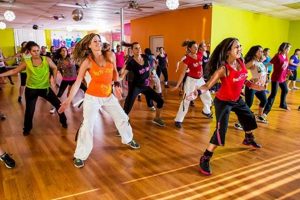
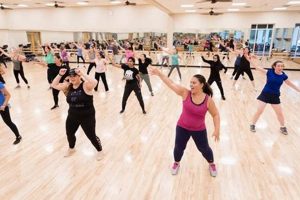
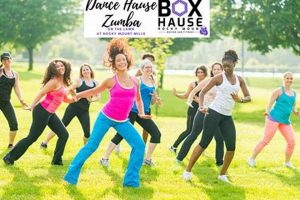
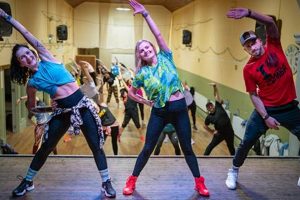
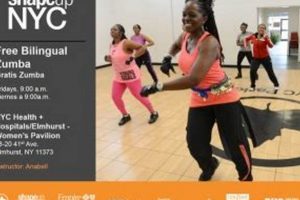
A fitness program that combines Latin-inspired dance movements with aerobic exercise constitutes a dynamic and engaging workout. Participants follow choreographed routines set to upbeat music, creating an atmosphere of fun and energetic physical activity. These sessions typically incorporate elements of salsa, merengue, cumbia, and reggaeton, providing a diverse and stimulating exercise experience.
The value of this exercise format lies in its ability to improve cardiovascular health, enhance muscle tone, and promote weight loss. Beyond the physical advantages, this activity also offers mental and social benefits. Participants often experience reduced stress levels, improved mood, and increased self-esteem. The origin of this workout traces back to the mid-1990s, evolving into a globally recognized and popular fitness trend.
The subsequent sections will delve into specific aspects of this exercise regimen, including the typical structure of a session, the recommended attire and equipment, and the potential adaptations for individuals with varying fitness levels. Furthermore, information on finding certified instructors and assessing the suitability of this exercise for different health conditions will be presented.
Guidance for Optimal Engagement in Zumba Aerobics Classes
The following are recommendations intended to enhance participation and maximize the benefits derived from engagement in rhythmic exercise routines.
Tip 1: Hydration is Paramount: Prior to, during, and following each session, maintain adequate hydration. Dehydration can negatively impact performance and overall well-being. Water is generally sufficient, but electrolyte-enhanced beverages may be considered for longer or more intense sessions.
Tip 2: Proper Footwear is Essential: Select athletic shoes designed for lateral movement and impact absorption. Shoes with excessive tread may impede necessary dance-like motions and elevate the risk of ankle injury. Cross-training shoes are typically a suitable choice.
Tip 3: Attire for Comfort and Functionality: Choose breathable, moisture-wicking clothing that allows for a full range of motion. Restrictive garments can hinder movement and increase the risk of overheating. Layered clothing options can accommodate changes in body temperature.
Tip 4: Gradual Progression is Recommended: Begin with introductory or beginner-level classes to acquire foundational movements and build endurance. Attempting advanced routines prematurely can increase the likelihood of injury and discouragement. Progress to more challenging sessions as fitness levels improve.
Tip 5: Modify Movements as Needed: Adjustments to the choreography are acceptable and encouraged to accommodate individual limitations or fitness levels. Lower-impact variations can be employed to reduce stress on joints. Consult with the instructor for modification options.
Tip 6: Listen to the Body: Pay attention to physiological signals and discontinue exercise if experiencing pain, dizziness, or shortness of breath. Pushing through discomfort can exacerbate existing conditions or lead to new injuries. Prioritize safety and well-being.
Tip 7: Arrive Prepared and Punctual: Ensure adequate rest and nutrition prior to each session. Arriving on time allows for proper warm-up and minimizes disruption to the class. Preparation contributes to a more effective and enjoyable exercise experience.
Adherence to these guidelines will contribute to a safer and more effective engagement with this physical activity format, maximizing the potential for positive health outcomes.
The subsequent section will address common questions and concerns related to this form of physical exercise, offering clarity and guidance to prospective participants.
1. Choreography and Rhythm

The effectiveness of a Latin-inspired dance fitness program is fundamentally dependent on the interplay between choreography and rhythm. Choreography provides the structural framework for the movements, determining the sequence and transitions. Rhythm, derived from the music, dictates the tempo and style of these movements. Without a coherent choreographic design, the movements lack purpose, becoming disjointed and ineffective. Conversely, a poorly defined rhythmic interpretation can render even well-structured choreography monotonous and unengaging. For example, a routine intended to simulate a salsa dance must adhere to the characteristic eight-count rhythmic pattern to be authentic and effective. Any deviation from this rhythm undermines the exercise’s intended benefits.
The integration of choreography and rhythm directly impacts participant engagement and physical outcomes. Complex choreography, synchronized with a fast tempo, may enhance cardiovascular benefits but also pose a higher risk of injury, especially for beginners. Conversely, simpler choreography combined with a slower, more deliberate rhythm may be more accessible to a wider range of fitness levels, promoting inclusivity and adherence. A practical example involves adapting advanced choreography by reducing the range of motion or slowing the tempo, thereby making it accessible to individuals with joint limitations or those new to the fitness program. The choreography must also consider transition from a rhythm to another with transition step.
In summary, the success of this fitness activity is intrinsically linked to the synergistic relationship between choreography and rhythm. The precision and authenticity of choreography, combined with a well-defined rhythmic interpretation, influence engagement, physical exertion, and the overall experience. The ability to adapt and modify both choreography and rhythm based on participant needs is crucial for instructors to maximize benefits and minimize potential risks. Understanding this dynamic is essential for both designing effective classes and participating in them safely and effectively.
2. Cardiovascular Enhancement

Cardiovascular enhancement represents a primary physiological benefit derived from regular participation in Zumba aerobics classes. This enhancement stems from the sustained elevation of heart rate and increased oxygen consumption inherent in the activity, leading to improvements in overall circulatory function and reduced risk factors associated with cardiovascular disease.
- Elevated Heart Rate Training
During a typical class, participants maintain their heart rate within a target zone conducive to cardiovascular conditioning. This sustained elevation strengthens the heart muscle, improving its efficiency in pumping blood. The rhythmic nature of the activity encourages consistent effort, maximizing the cardiovascular stimulus. An individual with a resting heart rate of 75 bpm might experience an average heart rate of 130-150 bpm during the activity, depending on intensity and fitness level.
- Increased Oxygen Uptake
The combination of aerobic movements and Latin-inspired dance steps necessitates an increased demand for oxygen by the working muscles. This enhanced oxygen uptake stimulates the respiratory system, improving lung capacity and efficiency in extracting oxygen from the air. Over time, this leads to improved endurance and reduced breathlessness during physical exertion. For example, participants may notice an improvement in their ability to perform daily activities, such as climbing stairs, with less fatigue.
- Improved Blood Circulation
The dynamic movements involved in Zumba aerobics classes promote vasodilation, or the widening of blood vessels, which facilitates improved blood flow throughout the body. This enhanced circulation delivers oxygen and nutrients to the tissues more efficiently, while also removing waste products. Improved blood circulation can contribute to reduced blood pressure and improved overall vascular health. The action of major muscle groups, such as legs and core, is critical to this process.
- Reduced Cardiovascular Risk Factors
Consistent participation in these classes can contribute to a reduction in several key cardiovascular risk factors. These include lowering blood pressure, reducing LDL cholesterol (“bad” cholesterol), increasing HDL cholesterol (“good” cholesterol), and promoting weight management. These improvements collectively contribute to a decreased risk of developing cardiovascular diseases, such as coronary artery disease, stroke, and peripheral artery disease. For example, individuals with pre-existing hypertension may experience a reduction in their blood pressure readings with regular participation.
In conclusion, the cardiovascular benefits of Zumba aerobics classes are multifaceted, encompassing improvements in heart rate efficiency, oxygen uptake, blood circulation, and reduction in risk factors. These benefits are directly linked to the sustained, rhythmic, and engaging nature of the activity, making it a valuable component of a comprehensive cardiovascular health strategy.
3. Coordination Improvement

The augmentation of coordination skills is a notable outcome of consistent engagement in Latin dance-based aerobic fitness programs. These programs, characterized by intricate sequences of movements synchronized with music, demand precise control over bodily actions, leading to enhanced coordination capabilities.
- Neural Pathway Development
The repetition of complex movement patterns stimulates the formation and strengthening of neural pathways responsible for motor control. As individuals learn and execute new dance steps, the brain becomes more efficient at transmitting signals to the muscles, resulting in smoother and more coordinated movements. An example includes the increased ability to seamlessly transition between salsa and merengue steps, a skill requiring precise timing and body awareness.
- Spatial Awareness Enhancement
Navigating the space within a class setting while simultaneously performing choreographed movements necessitates heightened spatial awareness. Participants must constantly monitor their position relative to others and adjust their movements accordingly. This heightened awareness translates to improved balance and agility in everyday activities. This also benefits the ability to react to unexpected obstacles in a crowded environment.
- Proprioceptive Refinement
Proprioception, the body’s sense of its position and movement in space, is significantly challenged and refined during this activity. The dynamic nature of the movements requires individuals to constantly adjust their posture and balance to maintain stability. This enhanced proprioceptive feedback contributes to improved posture, balance, and reduced risk of falls. Consider the ability to maintain balance while executing a rapid turn, a direct consequence of enhanced proprioceptive abilities.
- Bilateral Coordination Improvement
Many steps in these programs necessitate the coordinated use of both sides of the body. Executing these movements effectively requires the brain to synchronize the actions of the left and right hemispheres, leading to improved bilateral coordination. An example can be observed in the ability to perform symmetrical arm movements while simultaneously executing footwork patterns, requiring seamless integration of both sides of the body.
The benefits of enhanced coordination extend beyond the studio. Improvements in neural pathway development, spatial awareness, proprioception, and bilateral coordination contribute to increased overall physical competence and a reduced risk of injury in daily life. This is why the activity serves as a valuable tool for promoting physical well-being across various age groups.
4. Calorie Expenditure

Calorie expenditure is a significant consideration for individuals engaging in any form of physical activity, and Latin dance-based aerobic programs are no exception. The intensity and duration of these classes result in a measurable energy output, contributing to weight management and overall metabolic health.
- Intensity and Metabolic Rate
The metabolic rate, the rate at which the body burns calories, increases proportionally with the intensity of the exercise. High-intensity dance sequences, characterized by rapid movements and large muscle group engagement, elevate the metabolic rate significantly. For instance, a person performing vigorous dance steps may burn more calories per minute than someone performing low-impact aerobics. The sustained elevation of the metabolic rate during and after the activity contributes to a higher daily calorie expenditure.
- Muscle Mass Engagement
The execution of dance steps requires the activation of various muscle groups, including the legs, core, and arms. Increased muscle mass is associated with a higher resting metabolic rate, meaning that individuals with more muscle mass burn more calories even when at rest. The strengthening and toning of muscles through regular participation in Latin dance-based aerobic programs contributes to a higher daily calorie expenditure. The engagement of core muscles is particularly important for maintaining stability and posture during dance movements.
- Duration of Activity
The total calorie expenditure is directly related to the duration of the physical activity. Longer class sessions result in a greater cumulative calorie burn. A 60-minute class, for example, will typically result in a higher calorie expenditure than a 30-minute session, assuming comparable intensity levels. Individuals seeking to maximize calorie expenditure may opt for longer classes or supplement their routine with additional physical activity.
- Individual Factors
Several individual factors influence calorie expenditure during exercise, including body weight, age, sex, and fitness level. Heavier individuals generally burn more calories than lighter individuals performing the same activity. Younger individuals often have a higher metabolic rate than older individuals. Males typically have more muscle mass than females, resulting in a higher resting metabolic rate. More fit individuals may be able to sustain higher intensity levels for longer durations, leading to increased calorie expenditure. These factors should be considered when estimating calorie expenditure and setting fitness goals.
The multifaceted nature of calorie expenditure in relation to Latin dance-based aerobic programs highlights the importance of understanding individual needs and tailoring exercise routines accordingly. While the intensity, muscle mass engagement, and duration of the activity are key determinants of calorie burn, individual factors also play a significant role. An awareness of these variables allows participants to optimize their calorie expenditure for weight management and improved metabolic health.
5. Social Interaction

Participation in group fitness activities fosters an environment conducive to social interaction, and Latin dance-based aerobic programs exemplify this dynamic. The structured yet informal setting facilitates connections among individuals, contributing to adherence and overall well-being.
- Community Building
Shared participation in a physically engaging activity cultivates a sense of community among participants. Individuals with similar interests and fitness goals interact regularly, fostering camaraderie and mutual support. For instance, members might organize social events outside of scheduled sessions, strengthening group cohesion. The shared experience of mastering dance steps or achieving fitness milestones enhances this sense of belonging.
- Motivational Support
The presence of fellow participants provides a source of motivation and encouragement. Individuals are more likely to maintain consistent attendance and effort when surrounded by others striving towards similar goals. Observing the progress of others and receiving positive feedback from instructors and peers can enhance self-efficacy and promote adherence. The collective energy of the group often exceeds that which can be achieved in solitary exercise.
- Reduced Social Isolation
For individuals experiencing social isolation, participation in these programs offers a structured opportunity for interaction and engagement. The group setting provides a safe and welcoming environment for individuals to connect with others and build relationships. Regular attendance can mitigate feelings of loneliness and promote a sense of social connectedness. This is particularly relevant for individuals who may lack other avenues for social interaction.
- Shared Learning and Skill Development
The group learning environment facilitates the exchange of knowledge and skills related to dance, fitness, and overall well-being. Participants can learn from one another’s experiences and provide constructive feedback. The shared pursuit of mastery in dance steps and fitness techniques fosters a sense of collective growth and accomplishment. This collaborative learning environment enhances the overall experience and promotes continuous improvement.
The interplay between social interaction and participation in Latin dance-based aerobic programs extends beyond mere physical activity. The community building, motivational support, reduced social isolation, and shared learning experiences contribute to a holistic sense of well-being. The social aspects of these programs often prove to be as valuable as the physical benefits, enhancing adherence and promoting long-term engagement.
Frequently Asked Questions
The subsequent section addresses common inquiries pertaining to Zumba aerobics classes, providing clear and concise information for prospective participants.
Question 1: What level of physical fitness is required to participate effectively?
While a baseline level of cardiovascular fitness is beneficial, modifications can be implemented to accommodate varying fitness levels. Introductory classes are often structured to cater to beginners, and instructors can provide alternative movements for individuals with physical limitations.
Question 2: What type of attire and footwear is most suitable for participation?
Comfortable, breathable athletic wear is recommended. Footwear should provide adequate support and cushioning, specifically designed for lateral movement. Cross-training shoes are often a suitable choice.
Question 3: How frequently should one participate to experience noticeable benefits?
A participation frequency of at least two to three times per week is generally recommended to observe improvements in cardiovascular fitness, muscle tone, and overall well-being. Consistency is a key factor in achieving desired results.
Question 4: Are there any potential risks or contraindications associated with participation?
Individuals with pre-existing cardiovascular conditions, musculoskeletal injuries, or other health concerns should consult with a healthcare professional prior to commencing participation. Proper warm-up and cool-down routines are essential to minimize risk of injury.
Question 5: How does this activity differ from other forms of aerobic exercise?
This format distinguishes itself through its incorporation of Latin-inspired dance movements, creating a unique and engaging workout experience. The musicality and choreography differentiate it from traditional aerobic exercises like running or cycling.
Question 6: Are qualified instructors necessary for a safe and effective experience?
Seeking instruction from certified and experienced professionals is highly advisable. Qualified instructors possess the knowledge and skills to guide participants through proper form, provide modifications, and ensure a safe and effective workout environment.
Key takeaways from this section emphasize the importance of preparedness, individual health considerations, and the role of qualified instruction in maximizing the benefits and minimizing the risks associated with Zumba aerobics classes.
The final section of this discussion will present a concluding overview of the information presented, reiterating the value of this physical activity format.
Zumba Aerobics Classes
This exploration has elucidated various facets of zumba aerobics classes, ranging from its core elements of choreography and rhythm to its impact on cardiovascular health, coordination, calorie expenditure, and social interaction. The activity’s capacity to enhance physical fitness while fostering a sense of community has been underscored, along with recommendations for optimal and safe engagement. The critical role of qualified instructors in mitigating risks and maximizing benefits has also been addressed.
The information presented serves as a resource for individuals considering this particular form of exercise and for professionals involved in fitness instruction. Continued adherence to safety guidelines and a commitment to qualified instruction will ensure the sustained efficacy and accessibility of zumba aerobics classes as a valuable component of a comprehensive wellness strategy. The ongoing evolution of this activity will likely see further integration of technology and adaptations to cater to diverse populations, solidifying its place within the landscape of fitness options.