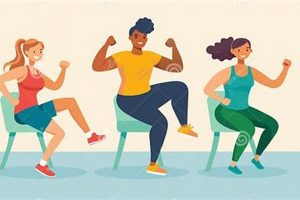
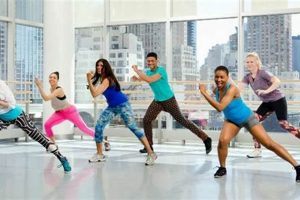
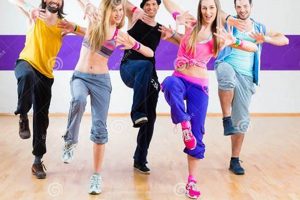
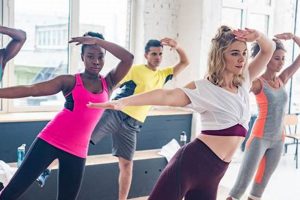
A modified fitness program combines the basic principles of Zumba with a focus on the needs and abilities of older adults. This activity adapts traditional Latin-inspired dance steps and rhythms to a lower-impact format. For example, movements are often slowed down, high-intensity jumps are removed, and modifications are offered to accommodate various mobility levels.
The significance of this adaptation lies in its potential to improve cardiovascular health, enhance balance and coordination, and boost mood through social interaction and enjoyable physical activity. Historically, the adaptation of fitness programs to cater to the aging population has become increasingly important as awareness of the benefits of physical activity at all ages grows. It allows older adults to maintain an active lifestyle while minimizing the risk of injury.
The following sections will delve into the specific health advantages, modifications for different fitness levels, safety considerations, and ways to find and participate in suitable classes.
Tips for Engaging in Modified Dance Fitness Programs
The following guidelines offer advice on how to approach a dance-based fitness program tailored for older adults effectively and safely. Adhering to these tips can maximize benefits and minimize potential risks.
Tip 1: Consult a Healthcare Professional: Prior to commencing any new fitness regimen, it is imperative to consult with a physician or qualified healthcare provider. This consultation allows for assessment of individual health conditions and potential limitations, ensuring the program is appropriate.
Tip 2: Seek Certified Instructors: Participation should be under the guidance of instructors certified in programs specifically designed for older adults. Certified instructors possess the knowledge to modify movements and provide safe and effective instruction.
Tip 3: Prioritize Proper Warm-Up and Cool-Down: Every session should include a thorough warm-up to prepare muscles and joints for activity, followed by a cool-down to gradually lower heart rate and prevent muscle soreness. These phases are critical for injury prevention.
Tip 4: Listen to the Body and Modify Accordingly: Participants must pay close attention to their body’s signals and adjust movements as needed. If pain or discomfort arises, activity should be stopped or modified to a less demanding variation.
Tip 5: Maintain Proper Hydration: Adequate hydration is essential. Water should be consumed before, during, and after each session to prevent dehydration and maintain optimal performance.
Tip 6: Wear Appropriate Footwear: Supportive athletic shoes with good traction are crucial for preventing falls and injuries. Avoid footwear with excessive cushioning or that restricts natural foot movement.
Tip 7: Focus on Proper Form: Maintaining correct posture and technique is essential for maximizing benefits and minimizing the risk of injury. Instructors can provide guidance on proper form throughout the activity.
Adherence to these recommendations will contribute to a safer and more rewarding experience, promoting the potential for improved physical and mental well-being.
The subsequent sections will explore additional safety precautions and resources for finding appropriate programs.
1. Accessibility

Accessibility, in the context of modified dance fitness programs, signifies the degree to which the program is inclusive and easily available to a diverse population of older adults, irrespective of their physical abilities, cognitive functions, or socioeconomic backgrounds. A program’s inaccessibility can directly impede participation and limit the widespread health benefits associated with physical activity. The absence of wheelchair accessibility, for example, excludes individuals with mobility impairments. Similarly, programs offered exclusively during daytime hours may not be feasible for those with caregiving responsibilities or other commitments.
The importance of this component is underscored by its direct influence on participation rates and health outcomes. When transportation options are limited or class fees are prohibitive, participation declines. Alternatively, accessible programs that offer transportation assistance, subsidized fees, and flexible scheduling tend to have higher enrollment and retention rates. A case in point is a community center that partnered with a local transportation service to provide free rides to and from dance fitness classes for seniors, resulting in a significant increase in attendance and improved participant satisfaction.
Therefore, addressing accessibility barriers is paramount for maximizing the reach and impact of dance fitness programs. Strategies for enhancing accessibility include offering classes at various times and locations, providing transportation assistance, reducing program costs, and ensuring that facilities are equipped to accommodate individuals with disabilities. Overcoming these barriers is essential for promoting health equity and enabling all older adults to reap the rewards of this exercise.
2. Modification

In the realm of dance fitness for older adults, modification represents the intentional adaptation of movements, intensity, and program structure to accommodate the physiological and cognitive needs of this specific demographic. It is not merely a simplification, but a deliberate adjustment to ensure safety, efficacy, and sustained engagement.
- Range of Motion Adjustments
Modifications to range of motion are crucial for individuals experiencing joint stiffness or arthritis. Large, sweeping arm movements may be replaced with smaller, controlled gestures. For example, instead of a full arm circle, a participant might perform a bicep curl or a shoulder raise. The rationale behind this adaptation is to prevent overextension and reduce the risk of joint pain and inflammation. In practical terms, an instructor might demonstrate a high-impact grapevine step, then offer a modified version involving a simple side step to avoid stress on knees and ankles.
- Impact Reduction Strategies
High-impact activities, such as jumping or running, are typically contraindicated for many older adults due to the increased risk of falls and joint injuries. Impact reduction strategies involve replacing these movements with low-impact alternatives. For instance, a jumping jack might be modified into a step-out jack, where one foot steps out to the side, followed by the other, without leaving the ground. Similarly, running in place can be replaced with marching in place. This minimizes stress on weight-bearing joints while still providing a cardiovascular workout. Such modifications are common in senior centers and retirement communities where participant safety is paramount.
- Pacing and Rest Intervals
Altered pacing and scheduled rest periods are essential for managing fatigue and preventing overexertion. Older adults may require more frequent rest breaks compared to younger populations due to reduced cardiovascular reserve and slower recovery times. Programs often incorporate shorter bursts of activity interspersed with longer rest periods. For example, a 30-second dance sequence may be followed by a 60-second rest period involving stretching or light stretching exercises. The adjustment prevents excessive strain and supports sustained participation without compromising heart rate or blood pressure levels. This consideration is particularly important for individuals with pre-existing cardiovascular conditions.
- Cognitive Adaptations
Modifying the complexity of choreography to suit varying cognitive abilities is crucial for engagement. Complex routines may be simplified, broken down into smaller segments, and repeated frequently. For instance, instead of introducing a new sequence of four steps, the program might focus on mastering two steps before adding complexity. The use of visual cues, verbal prompts, and repetition aids in memory and comprehension. In cases where individuals experience cognitive decline, programs are structured to minimize the need for remembering complicated patterns, focusing instead on simple, repetitive movements that promote enjoyment and a sense of accomplishment.
Collectively, these facets of modification ensure that dance fitness becomes a safe, enjoyable, and beneficial activity for older adults, enabling them to improve their physical and mental health without undue risk. By adapting movements, pace, and complexity, these programs promote sustained participation and contribute to improved health outcomes.
3. Socialization

Socialization, within the context of dance fitness adapted for older adults, constitutes a significant component impacting psychological and physiological well-being. Participation in group-based physical activities such as adapted dance fosters social interaction, diminishing feelings of isolation and loneliness, which are frequently observed among aging populations. The structured environment of a class setting facilitates the formation of interpersonal connections and support networks. A consequence of this interaction is an improvement in mental health, manifested as reduced symptoms of depression and anxiety.
The value of socialization is demonstrated through empirical observation. Instances of increased engagement among senior participants reveal a correlation between regular attendance and the development of strong friendships. These friendships extend beyond the class setting, often resulting in shared activities outside of scheduled fitness sessions. The collective nature of adapted dance encourages mutual support and encouragement, contributing to enhanced adherence to the exercise program. This sense of community further promotes self-esteem and a feeling of belonging, countering the negative effects of social isolation.
The benefits of socialization are interwoven with physical activity. Engagement with peers during an enjoyable activity has proven to be a reliable tool in encouraging motivation, lowering the likelihood of abandonment, and enhancing the sense of worth. It is imperative that future studies investigate the long-term advantages of such programs on general health and social cohesion in order to more successfully create treatments that address the numerous demands of a growing older population.
4. Coordination
Coordination, as a psychomotor skill, is fundamentally linked to the maintenance of functional independence in older adults. Its decline is associated with an increased risk of falls and a reduced ability to perform activities of daily living. Modified dance fitness programs, specifically designed for older adults, offer a structured approach to enhance and preserve this crucial ability.
- Spatial Awareness
Spatial awareness, the understanding of one’s body in relation to the surrounding environment, is critical for safe movement. Adapted dance routines, with clearly defined steps and patterns, necessitate participants to navigate their space effectively. Routines require participants to be aware of where their feet and body are in relation to other participants and the room’s boundaries. This practice improves spatial awareness, which translates to enhanced safety during everyday activities such as walking, navigating stairs, or avoiding obstacles. For example, learning to maintain a consistent distance from other dancers during a grapevine step increases awareness of personal space, reducing the likelihood of collisions in real-world scenarios.
- Motor Planning
Motor planning, the cognitive process of sequencing and executing movements, is actively engaged during dance fitness. Participants must anticipate and plan the upcoming steps in a routine. Dance routines that require participants to memorize and execute different moves can enhance motor planning. As routines evolve, the complexity of the steps forces older adults to engage their motor planning processes, thereby promoting neuroplasticity and cognitive function. This improved motor planning ability can improve tasks such as preparing meals or operating household appliances safely and efficiently.
- Balance and Postural Control
Balance and postural control are integral components of coordination, essential for preventing falls and maintaining stability. Dance routines frequently incorporate movements that challenge balance, such as single-leg stances, weight shifting, and controlled turns. These movements strengthen the muscles responsible for maintaining balance and improve the body’s ability to recover from unexpected disruptions to equilibrium. Individuals who practice these movements exhibit better postural stability and reduced sway, decreasing the risk of falls. The incorporation of chair-based modifications allows even those with significant balance deficits to participate and improve their stability gradually.
- Rhythm and Timing
Rhythm and timing are fundamental aspects of coordination, requiring the integration of auditory and motor systems. Dance fitness, by its nature, emphasizes moving in synchrony with music, which necessitates the ability to perceive and respond to rhythmic cues. The ability to stay synchronized with a musical beat or changing tempos strengthens the neural pathways involved in rhythm perception and motor timing. This enhancement translates to improved coordination in everyday activities requiring precise timing, such as driving, typing, or playing musical instruments.
These elements highlight the multifaceted benefits of coordination-focused dance fitness for older adults. The enhancement of spatial awareness, motor planning, balance, and rhythm not only improves physical function but also contributes to cognitive health and overall well-being. The structured and engaging nature of these programs offers a practical means of preserving and enhancing coordination, crucial for maintaining an active and independent lifestyle throughout the aging process. It ensures that dance fitness is accessible and impactful for individuals seeking to maintain or improve their coordination skills.
5. Cardiovascular

Cardiovascular health constitutes a critical aspect of overall well-being, particularly among the aging demographic. Modified dance fitness programs serve as a beneficial method for enhancing cardiovascular function in older adults. The structured movements and rhythmic patterns characteristic of these programs elevate heart rate and increase blood circulation. This increased activity directly strengthens the cardiac muscle, improving its efficiency in pumping blood throughout the body. Consistent participation can lead to a reduction in resting heart rate and blood pressure, key indicators of improved cardiovascular health.
The physiological mechanisms involved underscore the effectiveness of these programs. Rhythmic movements engage large muscle groups, prompting an increase in oxygen demand. This, in turn, stimulates the cardiovascular system to deliver oxygen-rich blood more efficiently. Over time, this process promotes angiogenesis, the formation of new blood vessels, further enhancing circulation. For example, regular participants in dance fitness programs often exhibit improved lipid profiles, with lower levels of LDL cholesterol and higher levels of HDL cholesterol, thereby reducing the risk of atherosclerosis and other cardiovascular diseases.
These adaptations contribute significantly to an improved quality of life. Enhanced cardiovascular function translates to increased stamina and reduced fatigue, enabling older adults to engage more actively in daily activities. The evidence supporting the cardiovascular benefits of dance fitness highlights the importance of incorporating such activities into health promotion strategies for older adults. As a result, it mitigates the risk of age-related cardiovascular decline, thereby promoting a healthier and more active lifestyle.
6. Injury Prevention

Injury prevention is an indispensable element of any dance fitness program designed for older adults. The aging process brings physiological changes, such as decreased bone density, reduced muscle mass, and impaired balance, which elevate the risk of injuries during physical activity. Improperly executed movements, excessive exertion, or inadequate warm-up routines can lead to sprains, strains, fractures, and other musculoskeletal injuries. The integration of injury prevention strategies directly mitigates these risks, ensuring that dance fitness remains a safe and beneficial activity for older adults. For example, the implementation of chair-based modifications can enable individuals with balance impairments to participate without the risk of falling.
Effective injury prevention encompasses several key components. A thorough warm-up routine prepares muscles and joints for activity, reducing the likelihood of strains and sprains. The selection of low-impact movements minimizes stress on weight-bearing joints, addressing the issue of reduced bone density. Qualified instructors, trained in geriatric fitness, can provide guidance on proper form and technique, preventing improper execution of movements. Furthermore, awareness of individual limitations and the willingness to modify movements as needed contributes to a safer exercise environment. A real-world example includes programs that incorporate pre-class assessments of participants’ physical capabilities, tailoring the routines accordingly.
The practical significance of understanding the connection between injury prevention and dance fitness for older adults lies in its ability to promote sustained participation and long-term health benefits. By prioritizing safety and minimizing the risk of injuries, these programs encourage older adults to remain active and engaged, leading to improved physical function, cognitive health, and overall well-being. Challenges remain in ensuring that all programs adhere to appropriate safety standards and that participants are fully informed about injury prevention strategies. However, the emphasis on safety underscores a commitment to providing older adults with accessible and beneficial fitness opportunities.
Frequently Asked Questions About Dance Fitness for Seniors
The following section addresses common inquiries regarding the implementation, safety, and benefits of modified dance fitness programs tailored for the aging demographic. These questions aim to provide clarity and promote informed participation.
Question 1: Is dance fitness safe for individuals with pre-existing medical conditions?
Participation is generally safe, provided appropriate modifications are implemented and clearance is obtained from a healthcare professional. Individuals with conditions such as arthritis, heart disease, or osteoporosis should consult their physician prior to engaging in a new fitness program. Certified instructors can adapt routines to accommodate specific limitations.
Question 2: What are the key differences between regular Zumba and dance fitness designed for older adults?
Modified programs emphasize lower-impact movements, reduced intensity, and simplified choreography. They also incorporate longer warm-up and cool-down periods. The focus is on promoting cardiovascular health, balance, and coordination while minimizing the risk of injury.
Question 3: How can individuals find qualified instructors experienced in working with older adults?
Inquiries can be directed to local senior centers, community recreation facilities, and fitness studios. Certifications specific to geriatric fitness, such as those offered by recognized organizations, indicate specialized training and expertise.
Question 4: What type of footwear is recommended for participation in dance fitness classes?
Supportive athletic shoes with good traction are recommended. Footwear should provide adequate cushioning and stability while allowing for freedom of movement. Shoes with excessive cushioning or high heels should be avoided.
Question 5: How frequently should older adults participate in dance fitness to experience benefits?
A frequency of two to three sessions per week is generally recommended. Consistency is crucial for achieving and maintaining improvements in cardiovascular health, balance, and coordination. Each session should last approximately 30 to 60 minutes.
Question 6: What modifications can be made to accommodate individuals with limited mobility or balance?
Chair-based modifications are an effective means of accommodating those with mobility limitations. Seated routines allow participants to engage in movements while minimizing the risk of falls. Instructors can also provide alternative movements and support as needed.
The benefits of engaging in dance fitness are wide ranging, including benefits related to physical health and mental well-being. Consistent engagement in dance fitness has been shown to provide numerous health benefits.
The subsequent section will provide resources for locating dance fitness programs tailored for older adults.
Conclusion
This exposition has elucidated the significance of Zumba dance for seniors as a structured form of exercise that offers multifaceted benefits. The adaptation of traditional Zumba principles to accommodate the physiological needs of older adults promotes enhanced cardiovascular health, coordination, socialization, and injury prevention. The strategies outlined, including accessibility considerations, movement modifications, and the importance of qualified instruction, underscore the potential of this activity to improve overall well-being.
The consistent and informed implementation of Zumba dance for seniors represents a proactive approach to maintaining functional independence and enhancing quality of life. Continued research and community support are essential for expanding access to these programs and maximizing their impact on the health and vitality of the aging population. Further investment in resources and infrastructure will ensure that the benefits of this activity are accessible to all who can benefit.