Guidance provided to individuals embarking on a career as Zumba instructors constitutes essential support. These recommendations and best practices aid in preparing instructors for the challenges and responsibilities associated with leading fitness classes centered on dance and movement.
Acquisition of effective instructional techniques, understanding of class management, and development of a personal teaching style all contribute to increased instructor confidence and participant satisfaction. This preparation can translate into improved class attendance, enhanced participant engagement, and a more positive overall fitness experience.
Subsequent sections will delve into specific strategies for acquiring necessary certifications, crafting engaging class routines, and cultivating a supportive and inclusive learning environment for all participants.
Essential Guidance for Zumba Instructors
The following recommendations serve to equip burgeoning Zumba instructors with the tools needed to conduct successful and engaging fitness classes.
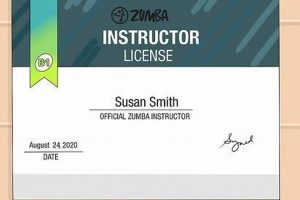
Tip 1: Obtain Recognized Certification: A valid Zumba Instructor Training certificate is paramount. Official certification ensures instructors possess fundamental knowledge of Zumba techniques, music, and safety protocols.
Tip 2: Master Choreography Foundations: Thorough understanding of basic Zumba steps and rhythms is crucial. This proficiency enables instructors to adapt routines and provide clear, concise instruction to participants of varying skill levels.
Tip 3: Prioritize Music Selection: Carefully curate a diverse playlist that maintains energy levels and aligns with the Zumba format. Varied tempos and rhythms cater to diverse participant preferences and fitness goals.
Tip 4: Structure Class Effectively: A well-structured class incorporates a warm-up, progressive intensity build-up, cool-down, and stretching. This structure promotes both physical safety and participant enjoyment.
Tip 5: Project Confidence and Enthusiasm: Instructor demeanor significantly influences participant engagement. Exuding confidence and genuine enthusiasm fosters a positive and motivating class atmosphere.
Tip 6: Provide Clear and Concise Cues: Effective communication is key. Use unambiguous verbal and non-verbal cues to guide participants through choreography, minimizing confusion and maximizing participation.
Tip 7: Adapt to Participant Needs: Be prepared to modify routines to accommodate participants with physical limitations or varying fitness levels. This adaptability ensures inclusivity and prevents injury.
Tip 8: Continuously Seek Improvement: Ongoing professional development is essential. Attend workshops, participate in online forums, and seek feedback to refine instructional techniques and stay abreast of industry trends.
Adherence to these suggestions can enhance instructor effectiveness, elevate participant experience, and foster a thriving Zumba community.
The following section will address common challenges faced by new instructors and propose solutions for overcoming these obstacles.
1. Certification and Training

The attainment of recognized Zumba certifications represents a foundational element within the broader spectrum of guidance for novice Zumba instructors. These credentials validate an instructor’s competency and adherence to established standards, directly impacting their preparedness and effectiveness in leading Zumba classes.
- Fundamentals of Zumba Methodology
Certification programs provide structured instruction in core Zumba principles, including basic steps, rhythm interpretation, and choreography construction. Mastery of these fundamentals is crucial for delivering authentic and effective Zumba experiences. For example, understanding the Merengue rhythm and its application in Zumba routines allows instructors to create engaging and technically correct dance fitness sessions. This translates to instructors demonstrating proper form and technique, thus reducing participant injury risk.
- Safety Protocols and Injury Prevention
A critical component of certification involves rigorous training in safety procedures and injury prevention techniques. Certified instructors learn how to assess participant fitness levels, modify exercises to accommodate individual needs, and respond appropriately to emergency situations. An example is recognizing signs of overexertion and implementing modifications to lower intensity, thereby safeguarding participant well-being.
- Class Management and Communication Skills
Certification extends beyond physical movements, encompassing essential skills in class management and effective communication. Instructors are trained in techniques for creating a positive and inclusive learning environment, providing clear and concise cues, and motivating participants to achieve their fitness goals. For instance, the ability to project energy and enthusiasm while providing specific verbal and non-verbal cues allows participants to understand the choreography and feel confident in their ability to execute the moves.
- Legal and Ethical Considerations
Certification programs often address legal and ethical considerations relevant to fitness instruction, including licensing requirements, liability insurance, and participant confidentiality. Understanding these considerations is crucial for operating a Zumba business responsibly and ethically. An example is ensuring appropriate music licensing and obtaining necessary insurance coverage, thereby protecting instructors from potential legal and financial liabilities.
These facets of certification underscore its integral role in equipping new Zumba instructors with the knowledge, skills, and ethical framework necessary to deliver safe, effective, and enjoyable fitness experiences, thereby enhancing their long-term success in the field.
2. Choreography Mastery

The ability to demonstrate exceptional choreography mastery represents a critical success factor for newly certified Zumba instructors. The guidance provided to neophyte instructors consistently underscores the importance of possessing a deep understanding of Zumbas core rhythms and movements, including Merengue, Salsa, Cumbia, and Reggaeton. Without proficiency in these foundational elements, the instructor risks delivering a substandard class experience, which can negatively impact participant retention and overall class effectiveness. For instance, an instructor unable to accurately execute and teach the fundamental “Basic Step” in Merengue will struggle to build more complex routines or provide adequate modifications for participants with varying skill levels. The absence of such expertise directly undermines the instructor’s credibility and the perceived value of the Zumba class.
Furthermore, choreography mastery extends beyond mere replication of pre-set routines. Successful instructors demonstrate the capacity to adapt choreography to accommodate diverse fitness levels, physical limitations, and age groups within their classes. This involves the strategic modification of steps, the incorporation of low-impact options, and the clear communication of these adaptations to participants. For example, an instructor leading a class with a significant number of senior citizens should be able to effectively modify high-impact jumps and turns into gentler variations, ensuring that all participants can engage safely and effectively. The mastery of choreography allows for real-time adjustment to participant feedback, ensuring the class remains engaging and beneficial for everyone.
In conclusion, choreography mastery is not merely a desirable attribute but rather an indispensable component of effective Zumba instruction. The guidance furnished to new instructors invariably emphasizes the need to develop this skill through diligent practice, continuing education, and ongoing self-assessment. A strong foundation in choreography equips instructors to deliver high-quality, engaging, and inclusive Zumba classes, thus maximizing participant satisfaction and fostering long-term success. Deficiencies in this area can lead to diminished class attendance, negative participant feedback, and ultimately, impede the instructor’s professional development. Therefore, prioritizing the acquisition and continuous refinement of choreography mastery is essential for those embarking on a career as a Zumba instructor.
3. Music Selection

The selection of music is inextricably linked to the success of Zumba classes; therefore, it represents a critical element of effective guidance for new Zumba instructors. Music dictates the pace, intensity, and overall atmosphere of the class. Inappropriate music choices can lead to diminished participant engagement and potentially compromise the fitness benefits derived from the workout. For example, a playlist dominated by songs with inconsistent tempos can disrupt the flow of the class and make it difficult for participants to maintain proper form and rhythm. Such disruptions may then lead to frustration and reduced participation, diminishing the effectiveness of the Zumba experience.
Effective music selection extends beyond simply choosing popular songs. It involves curating a playlist that incorporates a diverse range of rhythms and styles that are integral to Zumba, such as Merengue, Salsa, Cumbia, and Reggaeton. Furthermore, attention must be paid to the structure of the playlist. A well-structured playlist incorporates a warm-up phase with lower intensity music, a progressive build-up to higher intensity tracks, and a cool-down phase with slower tempos. This systematic approach helps ensure participant safety and maximizes the physiological benefits of the class. For instance, initiating a Zumba class with a high-energy, fast-paced song without an adequate warm-up can increase the risk of muscle strain or other injuries. Conversely, ending the class abruptly without a proper cool-down can hinder recovery and leave participants feeling uncomfortable. The thoughtful structuring of music enhances the overall fitness and enjoyment of the experience.
In conclusion, appropriate music selection is not merely an aesthetic consideration but a fundamental component of sound Zumba instruction. Guidance for new instructors must emphasize the importance of selecting music that is rhythmically appropriate, structurally sound, and culturally sensitive. By prioritizing these aspects, new instructors can create a Zumba class that is both enjoyable and effective, thereby contributing to participant satisfaction and long-term adherence to fitness goals. Failure to recognize and address the significance of music selection can significantly undermine an instructor’s ability to deliver a positive and impactful Zumba experience.
4. Class Structure
The effective organization and execution of a Zumba class are crucial determinants of participant engagement and the overall success of the fitness experience. For new Zumba instructors, understanding the fundamental components of class structure is a key aspect of effective instruction.
- Warm-up Phase
The initial segment of a Zumba class necessitates a carefully designed warm-up phase. This component prepares participants physically and mentally for the more demanding activities to follow. It involves light cardio and dynamic stretching to increase blood flow, raise muscle temperature, and improve joint mobility. Failing to implement a sufficient warm-up can elevate the risk of injury and hinder overall performance. An example of an appropriate warm-up activity includes marching in place combined with arm circles, progressively increasing the range of motion.
- Cardio and Dance Segment
The core of a Zumba class is comprised of cardio and dance routines featuring diverse rhythms and tempos. This segment requires instructors to effectively blend various dance styles, such as Salsa, Merengue, and Reggaeton, maintaining a consistent level of energy and motivation. Variations in intensity are essential to challenge participants while accommodating different fitness levels. Instructors should provide clear cues and demonstrate modifications to enable all participants to engage safely and effectively. For instance, an instructor might modify a high-impact jump into a low-impact step touch.
- Cool-down and Stretching
The concluding phase of a Zumba class focuses on gradually decreasing heart rate and promoting muscle recovery through a cool-down and stretching sequence. Static stretches are held for extended durations to improve flexibility and reduce muscle soreness. It is essential to target the major muscle groups worked during the class. An example includes holding a hamstring stretch or a quadriceps stretch for 30 seconds each. Omitting this segment can lead to muscle stiffness and increased risk of post-exercise discomfort.
- Class Pacing and Time Management
New Zumba instructors must develop effective time management skills to ensure each component of the class receives adequate attention. A balanced class structure includes appropriate time allocation for the warm-up, cardio routines, and cool-down, as well as for transitions between exercises and providing instruction. Rushing through any segment or failing to maintain consistent pacing can negatively impact participant experience. For example, abruptly transitioning from a high-intensity routine to the cool-down phase without allowing sufficient time for heart rate recovery can leave participants feeling breathless and uncomfortable.
Proficiency in these aspects of class structure is essential for new Zumba instructors to deliver engaging, effective, and safe fitness experiences. A well-structured class not only enhances participant enjoyment but also contributes to their long-term adherence to Zumba as a form of exercise. Therefore, focusing on these elements is a key recommendation within the broader context.
5. Participant Engagement

Effective participant engagement is a cornerstone of successful Zumba instruction and is directly influenced by the guidance and strategies new instructors employ. Maximizing participation ensures a positive and motivating atmosphere, which in turn contributes to participant retention and achievement of fitness goals. Therefore, understanding and implementing strategies to enhance engagement is a crucial aspect of recommendations for new instructors.
- Creating an Inclusive Environment
Fostering a welcoming and non-judgmental atmosphere is paramount for encouraging participation. New instructors are advised to promote inclusivity by accommodating individuals of all fitness levels, body types, and backgrounds. For example, this can involve offering modifications for exercises to accommodate physical limitations or avoiding language that could be perceived as shaming or exclusionary. An inclusive environment reduces barriers to entry and encourages hesitant individuals to actively participate.
- Clear and Effective Communication
Providing clear and concise cues, instructions, and demonstrations is essential for ensuring that participants can follow the choreography and understand the purpose of each movement. New instructors must develop the ability to communicate effectively using both verbal and non-verbal cues. For instance, providing visual cues alongside verbal instructions can help participants who are visual learners grasp the choreography more easily. Effective communication minimizes confusion and promotes confidence, encouraging participants to fully engage in the class.
- Motivational Techniques
Utilizing motivational techniques can significantly enhance participant engagement. This includes providing positive reinforcement, celebrating successes, and creating a sense of community within the class. New instructors are advised to use encouraging language and offer individual attention to participants who may be struggling. For example, acknowledging a participant’s effort, even if they are not executing the choreography perfectly, can boost their confidence and encourage them to continue participating. Motivational techniques create a supportive environment where participants feel valued and encouraged to push themselves.
- Adapting to Participant Needs
Demonstrating flexibility and adapting the class to meet the needs and preferences of participants is crucial for maintaining engagement. New instructors should be observant and responsive to participant feedback, adjusting the intensity of the routines, the music selection, or the choreography as needed. For instance, if a significant portion of the class is struggling with a particular routine, the instructor should be prepared to simplify the choreography or offer an alternative. Adapting to participant needs demonstrates that the instructor values their input and is committed to providing a positive and personalized experience.
These interconnected facets highlight the significance of participant engagement in the context of recommendations for new Zumba instructors. By prioritizing inclusivity, communication, motivation, and adaptability, instructors can create a class environment where participants feel welcome, supported, and motivated to fully engage, thereby maximizing the benefits of the Zumba experience.
Frequently Asked Questions Regarding Guidance for New Zumba Instructors
The subsequent questions and answers address common inquiries and misconceptions encountered by individuals beginning their careers as Zumba instructors.
Question 1: What constitutes the most crucial certification for a prospective Zumba instructor?
The official Zumba Instructor Training certification, offered directly through Zumba Fitness, LLC, represents the foundational requirement. This certification ensures adherence to established Zumba methodologies and safety protocols.
Question 2: Is prior formal dance training a prerequisite for becoming a Zumba instructor?
Formal dance training is not a strict requirement. However, a strong sense of rhythm, coordination, and a passion for movement are beneficial. The Zumba Instructor Training program provides the necessary foundation in Zumba-specific steps and techniques.
Question 3: What strategies can be employed to cultivate a more inclusive Zumba class environment?
Inclusivity can be fostered by offering exercise modifications for varying fitness levels, using inclusive language, and celebrating the diversity of participants. Creating a non-judgmental atmosphere is paramount.
Question 4: How frequently should a Zumba instructor update their music playlist?
Regular playlist updates are recommended to maintain participant engagement and introduce fresh, dynamic routines. A suitable timeframe for playlist updates is approximately every four to six weeks.
Question 5: What are the legal considerations pertinent to teaching Zumba classes?
Legal considerations include obtaining appropriate music licensing, securing liability insurance, and adhering to any local regulations pertaining to fitness instruction. Consultation with legal professionals is advisable to ensure compliance.
Question 6: How can a new Zumba instructor effectively manage a class with participants of varying fitness levels?
Offering clear modifications for exercises, providing individualized attention, and encouraging participants to work at their own pace are effective strategies for managing classes with diverse fitness levels. Prioritizing safety and individual needs is essential.
The information provided clarifies key aspects of becoming a successful Zumba instructor, emphasizing the importance of formal training, inclusive practices, and adherence to professional standards.
The next section will explore advanced techniques for enhancing Zumba class instruction and maximizing participant outcomes.
Concluding Remarks on Guidance for New Zumba Instructors
The preceding discussion has illuminated fundamental strategies and considerations critical for individuals entering the field of Zumba instruction. From acquiring proper certification and mastering choreography to strategically selecting music and fostering inclusive class environments, these elements collectively contribute to instructor competence and participant satisfaction.
Continued professional development, ongoing self-assessment, and a commitment to adapting to evolving participant needs remain essential for sustained success. The effective implementation of these recommendations will ultimately enhance the quality and impact of Zumba programs, promoting both individual well-being and community engagement.