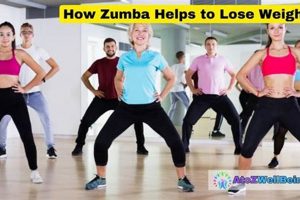
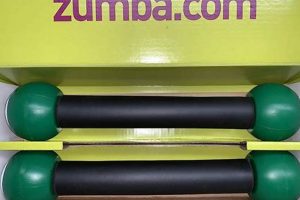
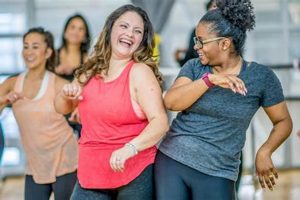
Zumba, a fitness program blending Latin rhythms and dance moves, can be effectively adapted for home-based exercise routines. This approach allows individuals to participate in energetic cardio workouts within the confines of their personal space, foregoing the need for gym memberships or structured classes. The core of the system involves following instructional videos or online tutorials that guide participants through a series of dance-inspired movements.
Engaging in regular physical activity plays a pivotal role in managing body weight and fostering overall well-being. The incorporation of music and dance elements can enhance enjoyment and adherence to fitness programs, potentially leading to more consistent participation and positive health outcomes. Furthermore, executing these routines in a familiar setting offers increased convenience and flexibility, which can be particularly beneficial for those with time constraints or location limitations.
The following sections will delve into the specific advantages of utilizing this method for physical fitness, exploring practical considerations for implementation, and providing guidance on selecting appropriate resources and structuring effective workout schedules to support individual fitness objectives.
Effective Strategies for Home-Based Dance Fitness
The subsequent recommendations provide guidance for maximizing the potential of dance-based fitness routines performed in a home environment.
Tip 1: Space Optimization. Ensure an adequate, unobstructed area is available for movement. Remove any potential hazards to prevent injury during dynamic activity.
Tip 2: Appropriate Attire. Wear comfortable, breathable clothing that allows for a full range of motion. Footwear should provide adequate support and traction on the chosen surface.
Tip 3: Hydration Protocol. Maintain consistent fluid intake before, during, and after the exercise session to prevent dehydration and optimize performance.
Tip 4: Music Selection. Utilize upbeat and motivating musical selections that align with personal preferences. Volume should be managed to avoid excessive auditory strain.
Tip 5: Gradual Progression. Commence with shorter durations and lower-intensity routines, gradually increasing the challenge as fitness levels improve. This minimizes risk of injury and promotes long-term adherence.
Tip 6: Routine Consistency. Establish a regular schedule to cultivate consistency and habit formation. Aim for at least three sessions per week to realize significant benefits.
Tip 7: Core Engagement. Maintain active engagement of core musculature throughout the exercises. This supports stability and optimizes posture, leading to more effective workouts.
Adhering to these recommendations can enhance the safety, effectiveness, and long-term sustainability of a dance-based fitness program, contributing to improved physical condition.
The following section will present information on selecting suitable resources for designing individualized home-based fitness programs.
1. Calorie Expenditure

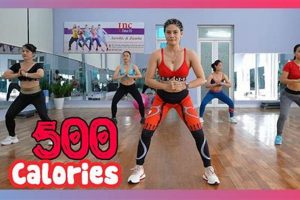
Calorie expenditure is a primary factor influencing weight management outcomes when engaging in dance-based fitness programs within a home setting. The effectiveness of these routines, relative to weight loss or maintenance, hinges directly on the energy consumed during the exercise.
- Movement Intensity and Metabolic Rate
The vigor of the dance movements executed directly impacts the metabolic rate. Higher-intensity routines, characterized by rapid tempos and extensive use of large muscle groups, elevate the body’s energy demands. This increased demand translates to a greater number of calories burned within a given timeframe. Examples include incorporating jumps, leaps, and rapid directional changes into the choreography.
- Workout Duration and Total Energy Consumption
The length of the exercise session significantly contributes to the total number of calories expended. Extended workouts allow for a sustained elevation in metabolic rate, resulting in a more substantial energy deficit. For instance, a 60-minute session will generally yield a higher calorie burn than a 30-minute session, assuming comparable movement intensity.
- Body Composition and Resting Metabolic Rate
Individual body composition influences the resting metabolic rate, which affects the overall calorie expenditure during exercise. Individuals with a higher proportion of muscle mass tend to have a higher resting metabolic rate, leading to increased calorie consumption both during and after the workout. It is important to note that increased muscle mass, combined with calorie expenditure through workouts, enhances the body’s ability to use energy more efficiently.
- Afterburn Effect (Excess Post-exercise Oxygen Consumption – EPOC)
The elevated metabolism that persists after cessation of physical activity, referred to as the afterburn effect, contributes to the overall calorie expenditure. High-intensity dance routines may induce a more pronounced afterburn effect, resulting in continued calorie burning for a period following the workout. This phenomenon plays a supportive role in achieving weight management objectives.
The optimization of calorie expenditure through appropriate selection of dance movements, workout duration, and attention to individual factors such as body composition directly influences the efficacy of home-based fitness programs. Careful consideration of these aspects is essential for realizing meaningful progress towards weight management goals.
2. Movement Intensity

Movement intensity represents a crucial variable in the effectiveness of dance-based fitness routines performed at home, directly influencing both calorie expenditure and cardiovascular conditioning. Its precise regulation is essential for optimizing physical outcomes and minimizing the risk of musculoskeletal strain.
- Heart Rate Elevation and Cardiovascular Demand
Elevating the heart rate to a specified target range constitutes a primary objective for enhancing cardiovascular fitness. Higher-intensity dance routines, characterized by faster tempos and more complex choreography, elicit a greater cardiovascular response. Examples include incorporating plyometric movements, such as jumps and leaps, which demand increased cardiac output and oxygen consumption. Sustained heart rate elevation within the target zone promotes improved cardiovascular efficiency and endurance.
- Muscular Engagement and Anaerobic Threshold
The degree of muscular engagement during dance-based movements directly impacts the body’s transition into the anaerobic threshold. High-intensity routines require the recruitment of a larger number of muscle fibers, leading to increased lactate production. Pushing past the anaerobic threshold can improve muscular endurance and tolerance to fatigue; however, excessive intensity can lead to premature exhaustion and potential injury. Appropriate scaling of movement complexity and resistance is essential to manage muscular demand effectively.
- Impact on Calorie Burn and Metabolic Rate
Movement intensity demonstrates a direct correlation with calorie burn and overall metabolic rate. Increased exertion necessitates greater energy expenditure, contributing to a larger calorie deficit. High-intensity interval training (HIIT) principles can be integrated into dance routines by alternating between periods of high-intensity movement and brief recovery periods. This approach maximizes calorie expenditure and promotes metabolic adaptation.
- Risk Mitigation and Gradual Progression
The potential for injury increases with heightened movement intensity. Proper warm-up procedures and a gradual progression in workout complexity are critical for minimizing this risk. Emphasis should be placed on maintaining correct form and technique throughout the exercise session. Individuals should listen to their bodies and adjust the intensity level accordingly to prevent overexertion and potential musculoskeletal issues.
In summary, careful regulation of movement intensity is paramount for maximizing the benefits and minimizing the risks associated with dance-based fitness at home. A balanced approach that considers individual fitness levels, proper technique, and gradual progression is essential for achieving sustainable and positive health outcomes. By strategically manipulating the intensity of the dance movements, individuals can effectively tailor their workouts to meet their specific fitness objectives.
3. Space Requirements

The availability of adequate space constitutes a foundational element for effective participation in dance-based fitness programs within domestic environments. Insufficient space directly impedes the ability to execute movements correctly and safely, thereby reducing the potential benefits derived from the exercise routine. The correlation between the dimensions of the workout area and the complexity of the choreography is linear; more intricate routines necessitate larger unobstructed areas. For example, lateral movements and full-body extensions, common in many dance-based fitness programs, demand sufficient clearance to prevent collisions with furniture or walls, thus mitigating the risk of injury and ensuring proper form.
The absence of adequate space can lead to compensatory movement patterns, where individuals unconsciously modify their technique to accommodate spatial limitations. This altered biomechanics not only diminishes the effectiveness of the workout but also increases the risk of developing musculoskeletal imbalances and injuries. Consider a scenario where a participant restricts the range of motion during a squat due to limited overhead clearance; this compromised form may place undue stress on the knees and lower back. Furthermore, the mental stress induced by spatial constraints can detract from the enjoyment and motivational aspects of the workout, leading to decreased adherence and overall effectiveness. Real-world applications involve carefully assessing the available space, removing potential obstacles, and selecting routines that align with the physical dimensions of the designated workout area.
In summary, adequate space is not merely a convenience but a prerequisite for safe and effective dance-based fitness programs. Understanding the spatial demands of various routines, coupled with proactive measures to optimize the workout environment, is paramount for realizing the full potential of home-based dance fitness and avoiding potential complications. The challenge lies in adapting exercise selections to the realities of individual living spaces, thereby promoting both safety and sustainability in the pursuit of fitness goals.
4. Routine Variety

In the context of dance-based fitness programs implemented within a home setting, routine variety directly impacts long-term adherence and sustained weight management. Monotony, a consequence of repetitive exercise protocols, often diminishes motivation and ultimately leads to decreased participation. The human body adapts to consistent stimuli; therefore, repeating the same movements indefinitely results in reduced physiological challenge and diminished calorie expenditure over time. Zumba, characterized by its inherent diversity of dance styles and rhythms, offers a framework for incorporating routine variety effectively. However, even within this framework, the consistent execution of the same routines can lead to adaptation and reduced effectiveness. For example, individuals initially experiencing significant weight loss from a fixed set of Zumba routines may find that progress plateaus after several weeks due to physiological adaptation. This necessitates the introduction of new routines, incorporating novel movements and increased intensity, to re-stimulate metabolic processes and maintain a consistent rate of progress.
The incorporation of variety extends beyond simply changing the music or dance style. It encompasses manipulating workout variables such as duration, intensity, and movement complexity. Introducing interval training, incorporating strength training segments, or altering the sequencing of movements can prevent plateaus and maintain engagement. A practical example involves transitioning from a 30-minute low-impact Zumba routine to a 45-minute session that integrates high-intensity bursts and bodyweight exercises. Such adjustments challenge the body in new ways, promoting continued calorie expenditure and muscle development. Furthermore, the psychological benefits of variety should not be underestimated. New routines can reignite enthusiasm and prevent feelings of boredom, fostering a more positive association with exercise.
Sustaining routine variety within home-based dance fitness programs requires a proactive approach. Individuals must actively seek out new resources, such as online tutorials, instructional videos, or virtual classes, to expand their repertoire of movements and routines. A structured approach to planning workouts, where new routines are introduced regularly, can help to mitigate the risk of adaptation and maintain consistent progress towards weight management goals. The challenge lies in finding a balance between familiarity and novelty, ensuring that the workouts remain enjoyable and accessible while still providing sufficient physiological challenge. Ultimately, the strategic implementation of routine variety is paramount for maximizing the long-term effectiveness and sustainability of dance-based fitness programs performed at home.
5. Sustained Adherence

Sustained adherence constitutes a critical determinant of success when integrating dance-based fitness regimens, such as Zumba, into a home-based weight management strategy. The potential for achieving tangible and lasting results from such programs is inextricably linked to the ability to maintain consistent participation over extended periods. Factors influencing adherence warrant detailed consideration to maximize program effectiveness.
- Enjoyment Factor and Intrinsic Motivation
The enjoyment derived from exercise serves as a significant predictor of long-term adherence. Dance-based fitness, particularly Zumba, often appeals to individuals who find traditional workout modalities monotonous. The fusion of music, movement, and social interaction can foster intrinsic motivation, which sustains engagement even when extrinsic rewards, such as immediate weight loss, are not readily apparent. If an individual genuinely enjoys the Zumba routines, they are more likely to continue participating regularly. The perception of exercise as an enjoyable activity, rather than a chore, can significantly improve long-term adherence rates.
- Convenience and Accessibility of Home-Based Programs
The accessibility and convenience afforded by home-based fitness programs represent a substantial advantage in promoting sustained adherence. Eliminating the need for travel to a gym or studio reduces time constraints and logistical barriers. The ability to exercise at any time, irrespective of external schedules, enhances flexibility and facilitates integration into daily routines. This convenience fosters a sense of control and ownership over the exercise schedule, which can positively impact adherence. For instance, an individual with a busy work schedule may find it easier to commit to a 30-minute Zumba routine at home than to attend a structured class at a specific time and location.
- Goal Setting and Progress Tracking
Establishing realistic and measurable goals, coupled with systematic progress tracking, plays a pivotal role in maintaining adherence. Specific, measurable, achievable, relevant, and time-bound (SMART) goals provide a clear framework for monitoring progress and reinforcing motivation. Tracking progress, whether through weight measurements, body composition analysis, or subjective assessments of fitness levels, provides tangible evidence of positive outcomes. This feedback loop reinforces the value of sustained participation and encourages continued adherence. An individual aiming to lose weight may set a goal of losing 1-2 pounds per week and track their progress using a weight scale and body measurements. Regular monitoring of progress provides motivation and helps adjust the exercise regimen as needed.
- Social Support and Virtual Communities
Social support, whether from friends, family, or online communities, can significantly enhance adherence. Sharing experiences, challenges, and successes with others creates a sense of accountability and camaraderie. Virtual communities, specifically designed for home-based fitness programs, provide a platform for individuals to connect, share tips, and offer encouragement. This social interaction fosters a sense of belonging and reduces feelings of isolation, which can contribute to decreased adherence. Participating in online forums or virtual Zumba classes provides opportunities for social interaction and peer support, which can bolster motivation and adherence.
The interplay between enjoyment, convenience, goal setting, and social support collectively influences sustained adherence to dance-based fitness programs such as Zumba, particularly when implemented in a home environment. A holistic approach that addresses these factors is essential for maximizing the potential for long-term weight management and improved overall health.
Frequently Asked Questions
The following section addresses common inquiries regarding the implementation of dance-based fitness routines, such as Zumba, within a home setting for the purpose of weight management. These responses are intended to provide clear and informative guidance.
Question 1: Is prior dance experience necessary to participate effectively in home-based dance fitness programs?
No, prior dance experience is not a prerequisite. Most programs are designed to accommodate individuals with varying levels of fitness and coordination. Routines typically involve simplified movements that can be easily learned through repetition and visual instruction.
Question 2: What is the recommended frequency and duration of home-based dance fitness sessions for optimal weight loss?
A minimum of three sessions per week, lasting between 30 and 60 minutes each, is generally recommended. However, individual needs and fitness levels should be considered. Gradual progression in frequency and duration is advisable to minimize the risk of injury and promote adherence.
Question 3: How can the intensity of home-based dance fitness workouts be adjusted to maximize calorie expenditure?
Intensity can be modulated by adjusting the tempo of the music, incorporating more dynamic movements, and increasing the range of motion. Interval training, alternating between high-intensity bursts and brief recovery periods, is an effective strategy for maximizing calorie burn.
Question 4: What safety precautions should be observed when engaging in home-based dance fitness activities?
A clear and unobstructed workout space is essential. Appropriate footwear, providing adequate support and traction, is recommended. Proper warm-up and cool-down procedures should be followed to prevent muscle strains and injuries. Hydration should be maintained throughout the exercise session.
Question 5: How can motivation be sustained when exercising at home without the structure of a formal class?
Establishing a regular workout schedule, setting realistic goals, and tracking progress are crucial for maintaining motivation. Engaging with virtual communities or online fitness groups can provide social support and accountability. Varying the routines and music selections can prevent monotony and enhance enjoyment.
Question 6: Are there any specific medical conditions that would preclude participation in home-based dance fitness programs?
Individuals with pre-existing cardiovascular conditions, musculoskeletal injuries, or other relevant medical concerns should consult with a healthcare professional before commencing any new exercise program. Modifications to the routines may be necessary to accommodate specific limitations.
Effective implementation of dance-based fitness requires careful consideration of individual needs, adherence to safety guidelines, and consistent effort. By addressing these factors, individuals can maximize the potential benefits of home-based exercise for weight management and overall well-being.
The subsequent section will provide information regarding the selection of appropriate resources and online platforms for accessing dance-based fitness content.
Conclusion
The exploration of “zumba workout at home for weight loss” reveals a multifaceted approach to physical fitness. Key considerations include calorie expenditure, movement intensity, space requirements, routine variety, and sustained adherence. The integration of these elements optimizes the potential for weight management and cardiovascular improvement within a domestic setting. Furthermore, the accessibility and adaptability of these routines make them a viable option for individuals seeking convenient and engaging exercise modalities.
Successful implementation necessitates a commitment to consistent participation, careful attention to safety protocols, and a strategic approach to program design. Ultimately, the realization of desired outcomes hinges upon informed decision-making and sustained effort. Further research and individual experimentation will continue to refine the understanding and application of this fitness method.