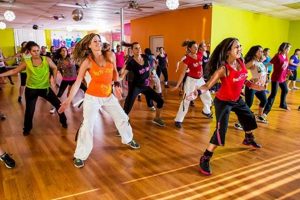
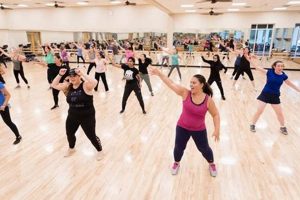
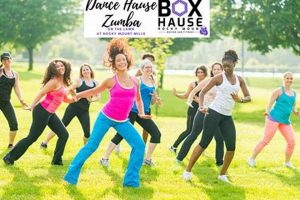
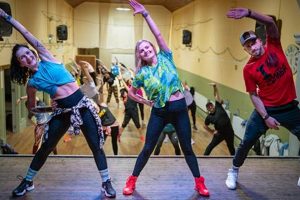
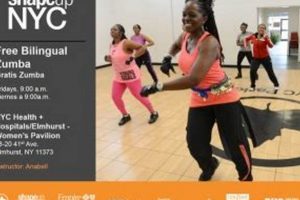
A complete session of Zumba integrates various Latin-inspired dance movements and rhythms into a fitness program. It typically includes a warm-up, a series of high-energy routines, and a cool-down period. For instance, a sixty-minute offering may encompass salsa, merengue, and cumbia steps blended with aerobic exercise principles.
The significance of participating in this type of dance fitness lies in its multifaceted advantages. These include enhanced cardiovascular health, improved muscle toning, increased coordination, and the opportunity to burn a substantial number of calories. Historically, the approach evolved from traditional aerobics by incorporating world music and dance to create a more engaging and accessible workout format.
The following sections will delve into the specifics of these workout’s structure, the diverse range of movements involved, and the techniques used to maximize individual participation and physical gains.
Enhancing the Zumba Fitness Experience
The subsequent guidelines aim to optimize participation in, and benefit from, a comprehensive Zumba session. Adherence to these recommendations can lead to improved physical outcomes and a more rewarding experience.
Tip 1: Prioritize Proper Hydration: Adequate fluid intake is essential before, during, and after physical activity. Dehydration can impede performance and increase the risk of muscle cramps. Consume water consistently throughout the workout.
Tip 2: Wear Appropriate Attire: Clothing should allow for a full range of motion and be breathable to facilitate sweat evaporation. Supportive athletic shoes are crucial to protect feet and ankles from injury. Consider cross-training shoes with lateral support.
Tip 3: Master Basic Steps: Familiarity with fundamental Zumba steps, such as the salsa basic, merengue march, and cumbia step, enables smoother transitions and maximizes calorie expenditure. Review instructional videos to solidify understanding.
Tip 4: Maintain Controlled Movements: Focus on executing each movement with precision rather than simply following along. Conscious engagement of core muscles enhances stability and minimizes the risk of strain.
Tip 5: Adjust Intensity as Needed: Modify movements to suit individual fitness levels. Lower-impact variations, such as stepping instead of jumping, can be employed to reduce stress on joints.
Tip 6: Listen Attentively to the Instructor: Pay close attention to the instructor’s cues and instructions regarding form and technique. Clarify any uncertainties to ensure proper execution of exercises.
Tip 7: Engage the Core: Consciously engaging the core muscles throughout the workout is critical for stability, balance, and injury prevention. A strong core supports the spine and facilitates efficient movement.
Consistently applying these recommendations fosters a safe and effective approach to dance fitness. They contribute to improved physical fitness, enhanced coordination, and the realization of individual fitness goals.
The final section provides a discussion on incorporating these methods into a sustainable fitness routine.
1. Cardiovascular Endurance

Cardiovascular endurance, also known as aerobic fitness, represents the ability of the heart, lungs, and vascular system to deliver oxygen-rich blood to working muscles for sustained periods. Participation in a complete session of Zumba places significant demands on this system. The continuous, rhythmic movements elevate heart rate and breathing, requiring the body to efficiently extract oxygen from inhaled air and transport it to active tissues. A direct effect of consistent engagement is an improvement in the body’s capacity to perform prolonged physical activity without undue fatigue.
The importance of cardiovascular endurance within the context of a complete dance fitness class is multifaceted. It serves as a primary indicator of overall physical health, contributing to reduced risk factors for chronic diseases such as heart disease, type 2 diabetes, and certain cancers. For example, individuals with higher levels of cardiovascular fitness are statistically less likely to experience cardiovascular events. Furthermore, enhanced cardiovascular function enables participants to sustain higher levels of intensity during the class, resulting in greater caloric expenditure and improved body composition. This fitness improvement is a direct result from regular participation.
In summary, cardiovascular endurance is a fundamental component of dance fitness, driving its health benefits and influencing performance outcomes. Understanding this relationship allows individuals to tailor their participation to maximize these benefits, ensuring a more effective and sustainable approach to physical fitness. While challenges may arise in maintaining consistent effort, the long-term rewards for cardiovascular health are substantial.
2. Choreography Complexity

Choreography complexity, in the context of a complete Zumba session, refers to the level of difficulty inherent in the sequences of dance movements. This factor significantly influences participant engagement, physical exertion, and the overall accessibility of the fitness routine.
- Movement Coordination
Movement coordination is the degree to which a participant must synchronize different body parts to execute dance steps correctly. Highly complex choreography necessitates precise timing and intricate limb movements. For example, integrating syncopated rhythms with arm isolations challenges even experienced dancers. Failure to coordinate effectively can lead to frustration and reduced exercise intensity. Therefore, the choreography complexity affects each participant.
- Cognitive Load
Cognitive load represents the mental effort required to learn and remember dance sequences. Complex routines with numerous steps and variations demand considerable mental processing. As an illustration, a routine incorporating multiple transitions between salsa, merengue, and cumbia styles requires swift adaptation and recall. Overwhelming cognitive load can hinder participation and decrease enjoyment, particularly for beginners. Cognitive abilities of the participant is vital when engage into an exercise.
- Progression and Adaptation
Progression and adaptation refer to the gradual increase in choreography complexity over time, allowing participants to build skills incrementally. Effective programs introduce simple steps initially, gradually incorporating more challenging movements as participants gain proficiency. An example is starting with basic side steps and eventually introducing turns and pivots. A poorly structured progression can lead to discouragement and potential injuries, while well-designed progress ensures continued engagement and skill development.
- Spatial Awareness
Spatial awareness involves understanding one’s position in relation to others and the surrounding environment. Complex choreography may require participants to navigate changing formations and execute movements within confined spaces. For example, routines that incorporate partner work or require participants to move across the floor in coordinated patterns demand enhanced spatial awareness. Insufficient spatial awareness can result in collisions and disruptions in the flow of the class. The skill of each participant will enhance its spatial awareness.
Ultimately, the level of choreography complexity is a critical determinant of the overall effectiveness and appeal of this dance workout. Balancing challenge with accessibility is essential to ensure that participants of varying skill levels can engage successfully and derive the intended physical and psychological benefits. The dance workouts can have an impact from the start till end of the session.
3. Instructor Expertise
Instructor expertise is a critical determinant of the quality and effectiveness of a Zumba session. It directly influences participant safety, engagement, and the realization of desired fitness outcomes. An instructor with comprehensive knowledge and skill can effectively structure the program, modify movements to accommodate varying fitness levels, and provide clear guidance on proper technique. For instance, a certified instructor will understand biomechanics and can correct a participant’s posture to prevent potential injuries during high-impact routines. Conversely, a lack of expertise may lead to increased risk of injury and suboptimal results.
The proficiency of the instructor is also instrumental in maintaining participant motivation and fostering a positive environment. An adept instructor can select music and choreograph routines that appeal to diverse preferences, encouraging consistent attendance and active participation. For example, a skilled instructor might incorporate variations on popular dance steps or introduce new rhythms to maintain interest. Furthermore, effective instructors are capable of providing constructive feedback and encouragement, empowering participants to push their limits while maintaining proper form. Consider the difference between a class where the instructor simply demonstrates the moves versus one where the instructor actively engages with participants, offering individualized guidance and support. The latter typically yields superior results and higher levels of satisfaction.
In summation, instructor expertise is not merely a supplemental element but an essential component of a Zumba session. Its presence or absence directly impacts the safety, efficacy, and overall enjoyment experienced by participants. Recognizing the practical significance of this relationship allows individuals to make informed decisions when choosing a class, prioritizing instructors with appropriate certifications and experience. Ultimately, the goal is to ensure a safe and rewarding experience that promotes long-term adherence and achievement of fitness goals.
4. Calorie Expenditure
Calorie expenditure, the energy expended through physical activity, is a primary outcome for many participating in a complete Zumba session. The intensity and duration of the workout, combined with individual factors such as body weight and metabolic rate, determine the number of calories burned. A higher-intensity class, characterized by rapid movements and minimal rest periods, generally results in greater calorie consumption than a lower-intensity session. The inclusion of varied dance styles, each engaging different muscle groups, further contributes to increased energy demand. For example, a 60-minute class can expend between 300 and 600 calories, dependent on these variables. This metabolic effect is a key driver of weight management and body composition improvements.
The understanding of calorie expenditure within the context of this dance workout has practical applications for individuals seeking to achieve specific fitness goals. By monitoring class intensity and duration, participants can estimate their caloric output and adjust their dietary intake accordingly. Moreover, the knowledge of the relationship between movement patterns and calorie burning allows for strategic modifications to the routine. For instance, incorporating more plyometric movements, such as jumps and leaps, can elevate the metabolic demand and lead to a greater caloric deficit. Real-world applications also extend to weight loss programs, where this dance is often integrated as a component of a comprehensive strategy involving diet and exercise. Calorie expenditure can be measure for accurate calculation of exercise results.
In summary, calorie expenditure represents a significant benefit associated with a complete dance workout. It serves as a measurable indicator of the workout’s effectiveness and plays a crucial role in achieving weight management and fitness objectives. While estimating exact caloric burn can be challenging due to individual variations, understanding the factors influencing calorie expenditure allows participants to optimize their workout strategy and enhance their overall results. The integration of these principles into a consistent exercise regimen can yield substantial long-term health benefits. The integration of those principles into calorie expenditure, will have good results over time.
5. Community Engagement

Community engagement within the context of a full session of Zumba significantly influences participation rates, adherence to the program, and the overall effectiveness of the fitness regimen. The social interaction fostered during the session generates a sense of belonging and mutual support, serving as a motivator for individuals to attend regularly. For example, group encouragement during challenging routines enhances individual effort and persistence. This effect arises from the shared experience and collective accountability, diminishing the likelihood of participants abandoning the program due to perceived difficulty or lack of personal progress. Shared goals and supportive communities are very important for everyone.
The practical significance of this social dynamic is evident in the higher retention rates observed in classes characterized by strong social bonds. Participants are more likely to continue attending when they perceive the session as a social outlet in addition to a fitness activity. Furthermore, community engagement often extends beyond the structured class time, with participants organizing social events or providing informal support to one another. This extended network reinforces the sense of belonging and provides additional opportunities for physical activity. For instance, members might organize impromptu dance sessions or participate in fitness-related events as a group. This also promotes the group to achieve the main goals.
In summary, community engagement acts as a crucial catalyst for the success of a full session of Zumba. By fostering social connections and shared experiences, it enhances motivation, promotes adherence, and ultimately contributes to improved fitness outcomes. While individual fitness goals remain a primary driver, the social element significantly augments the overall effectiveness and sustainability of this fitness approach. The social structure of this also promote to new upcoming generations.
Frequently Asked Questions about “Zumba Full Class”
The following section addresses common inquiries regarding participation in a complete Zumba session, providing clarity on various aspects of the program.
Question 1: What are the primary components of a typical session?
A standard session generally encompasses a warm-up phase to prepare muscles, a core section featuring various dance routines, and a cool-down period for gradual recovery.
Question 2: Is prior dance experience required to participate effectively?
No, prior dance experience is not mandatory. The routines are designed to be adaptable to diverse skill levels, with modifications offered to accommodate beginners.
Question 3: What type of attire and footwear is recommended?
Comfortable, breathable clothing that allows for a full range of motion is advised. Supportive athletic shoes, preferably cross-trainers, are essential for foot and ankle protection.
Question 4: How frequently should one attend to observe noticeable physical improvements?
Attending two to three sessions per week is generally sufficient to yield observable improvements in cardiovascular fitness, muscle tone, and coordination.
Question 5: Are there any potential risks or contraindications associated with participation?
Individuals with pre-existing musculoskeletal injuries, cardiovascular conditions, or other health concerns should consult with a physician prior to commencing participation.
Question 6: How does a Zumba session differ from a traditional aerobics class?
Sessions incorporate Latin-inspired dance movements and rhythms, emphasizing musicality and cultural elements, whereas traditional aerobics often focuses on repetitive, structured exercises.
This FAQ aims to provide foundational knowledge and address common concerns, enabling prospective participants to make informed decisions regarding their involvement.
The subsequent segment will explore specific variations and advanced techniques incorporated into the class.
Zumba Full Class
This exploration has delineated the integral facets of a complete dance fitness session, ranging from cardiovascular demands and choreographic considerations to instructor expertise, caloric expenditure, and the influence of community engagement. It is evident that participation yields multifaceted benefits, contingent upon consistent effort, informed engagement, and qualified instruction. The parameters outlined serve as benchmarks for assessing the potential value and impact of such a program.
The understanding of these dynamics empowers individuals to approach fitness with greater discernment, selecting classes that align with their specific objectives and maximizing their investment in physical well-being. Further research and application of these principles are vital for refining techniques and expanding access to effective fitness methodologies. The pursuit of optimal health necessitates informed action and a commitment to evidence-based practices.