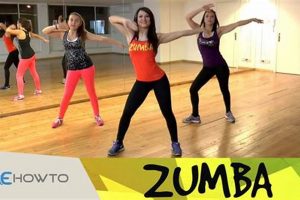
Zumba, a globally recognized fitness program, integrates dance and aerobic movements performed to energetic music. Within this framework, specific anatomical regions are emphasized to maximize the workout’s impact. These focal points are strategically engaged to enhance muscle activation and promote efficient calorie expenditure.
Strategic engagement of these areas provides a comprehensive workout experience. It promotes cardiovascular health through sustained aerobic activity while concurrently strengthening and toning key muscle groups. The incorporation of rhythmic movements contributes to improved coordination and balance. Historically, the development of this targeted approach reflects a desire to optimize physical benefits within an enjoyable, accessible fitness modality.
The following sections will elaborate on the various muscle groups engaged during a typical Zumba session, detailing how specific dance steps and rhythmic patterns contribute to their activation and strengthening. Further, this exploration will cover how individuals can modify movements to emphasize specific regions and achieve personalized fitness goals.
Maximizing Results
To optimize the effectiveness of a Zumba workout, a strategic approach to anatomical focus is essential. The following guidance outlines methods to enhance muscle engagement and improve overall fitness outcomes.
Tip 1: Core Engagement. Actively contract abdominal muscles throughout the workout. This strengthens the core, improves posture, and contributes to overall stability during dynamic movements. Visualizing drawing the navel towards the spine serves as a useful technique.
Tip 2: Lower Body Emphasis. Modify steps to increase the range of motion in squats and lunges. Deeper bends engage quadriceps, hamstrings, and gluteal muscles more effectively, leading to enhanced lower body strength and definition. Ensure proper form to avoid injury.
Tip 3: Upper Body Integration. Consciously incorporate arm movements that work the shoulders, back, and chest. Using light hand weights can further intensify upper body engagement, building strength and endurance.
Tip 4: Focus on Form. Prioritize correct posture and technique over speed. Maintaining proper alignment ensures that the targeted muscles are effectively engaged and minimizes the risk of strain or injury.
Tip 5: Modify Intensity. Adjust the intensity of movements to match fitness level and goals. Amplifying the impact of jumps and turns increases the cardiovascular challenge, while reducing the range of motion provides a lower-impact option.
Tip 6: Interval Training. Implement bursts of high-intensity movements followed by periods of active recovery. This enhances cardiovascular fitness and promotes efficient calorie burning.
Tip 7: Listen to Your Body. Be attuned to physical sensations and avoid pushing past the point of discomfort or pain. Adjustments to intensity and range of motion are critical for ensuring safety and preventing injuries.
Strategic targeting enhances muscular engagement, promotes efficient caloric expenditure, and contributes to improved overall fitness. Incorporating these tips into a Zumba routine can help individuals achieve specific fitness goals and maximize the benefits of this dynamic workout.
The next section will discuss tailoring Zumba workouts to individual fitness objectives, highlighting how modifications and adjustments can be implemented to meet specific needs.
1. Core muscle activation

Core muscle activation, an integral component of effective physical conditioning, assumes a foundational role within the structure of Zumba fitness programming. Its influence extends beyond mere aesthetic considerations, directly affecting postural integrity, spinal stability, and efficient force transfer during dynamic movements. The deliberate engagement of these muscles during a Zumba session maximizes the workout’s overall impact and contributes to injury prevention.
- Postural Stability Enhancement
Effective core engagement stabilizes the spine, preventing excessive curvature or rotation during Zumba’s high-energy steps. This reduces the risk of lower back pain and promotes a more upright and aligned posture. Examples include maintaining a neutral spine during salsa steps and actively engaging the transverse abdominis during hip movements. The implications are far-reaching, affecting both workout performance and long-term musculoskeletal health.
- Improved Balance and Coordination
The core muscles function as the body’s center of gravity. Activating these muscles enhances proprioception, the body’s awareness of its position in space. This, in turn, improves balance and coordination, allowing for more fluid and controlled execution of complex Zumba routines. For instance, engaging the obliques during side-to-side steps contributes to lateral stability. Improved balance reduces the risk of falls and enhances overall agility.
- Increased Power Generation
The core acts as a bridge between the upper and lower body, facilitating the transfer of force during movements. A strong and engaged core allows for more efficient power generation during jumps, turns, and kicks, thereby increasing the intensity and effectiveness of the workout. The rectus abdominis, for example, plays a crucial role in generating force during forward movements. Enhancing power generation translates to increased caloric expenditure and improved athletic performance.
- Reduced Risk of Injury
A well-activated core protects the spine from excessive stress and strain during high-impact movements. By stabilizing the torso and distributing forces evenly, core engagement minimizes the risk of injuries to the lower back, hips, and knees. For example, engaging the multifidus muscles provides segmental stability to the spine. Proactive core activation serves as a crucial preventative measure against common workout-related injuries.
These interconnected facets of core muscle activation collectively contribute to the overall effectiveness of Zumba. By consciously focusing on engaging these muscles, participants can enhance their workout’s benefits, improve their physical well-being, and mitigate the risk of injury, therefore optimizing their experience within the framework of Zumba fitness targets.
2. Lower body strengthening

Lower body strengthening constitutes a primary element within the comprehensive structure of Zumba programming. The engagement of major muscle groups, including quadriceps, hamstrings, gluteals, and calves, is directly influenced by the choreography and rhythmic movements inherent in Zumba routines. Consequently, the degree to which these muscle groups are activated during a session dictates the extent of lower body conditioning achieved.
The targeted strengthening of these areas contributes significantly to improved functional fitness. Real-life examples include enhanced stability during walking, increased power for climbing stairs, and improved balance, which is crucial for activities involving dynamic movements. The consistent execution of steps such as squats, lunges, and pivots, commonly incorporated into Zumba routines, directly stimulates muscle hypertrophy and enhances neuromuscular coordination. The understanding of this connection provides participants with a means to optimize their workout by focusing on form and intensity, maximizing benefits related to strength, endurance, and agility.
In summary, lower body strengthening is an indispensable component within the scope of Zumbas efficacy. The effective integration of strengthening movements results in tangible improvements in physical capacity and functional competence. Recognizing and emphasizing these movements enables participants to derive maximum benefits from this exercise modality, contributing to improved overall health and well-being.
3. Cardiovascular endurance

Cardiovascular endurance, defined as the ability of the heart and lungs to supply oxygen to working muscles over a sustained period, is fundamentally intertwined with Zumba’s core principles. The elevated heart rate and sustained physical exertion characteristic of Zumba sessions directly challenge and improve this critical aspect of fitness. The targeted movements and rhythmic patterns within Zumba inherently stimulate cardiovascular function, impacting oxygen uptake and delivery.
- Sustained Elevated Heart Rate
Zumba routines, by their nature, maintain an elevated heart rate for a considerable duration. This sustained exertion forces the cardiovascular system to adapt, increasing stroke volume and improving the efficiency of oxygen transport. An elevated heart rate zone is typically achieved through the continuous performance of dance-inspired movements. The physiological adaptation results in improved endurance and a reduced resting heart rate.
- Enhanced Oxygen Uptake
The intensity of Zumba requires increased oxygen uptake by the lungs and efficient delivery to working muscles. Over time, this demand stimulates improvements in lung capacity and the body’s ability to extract oxygen from the air. Routine execution of various aerobic steps increases demands on the respiratory system. Enhanced oxygen uptake is essential for sustaining physical activity and improving overall aerobic capacity.
- Improved Blood Circulation
The dynamic movements within Zumba promote improved blood circulation throughout the body. Increased blood flow delivers vital nutrients and oxygen to muscles while simultaneously removing metabolic waste products. Examples include the increased circulation to lower extremities during squatting exercises or to upper extremities during arm movements. Efficient circulation is critical for muscle function, recovery, and overall cardiovascular health.
- Reduced Risk of Cardiovascular Disease
Consistent participation in activities that enhance cardiovascular endurance, such as Zumba, is directly associated with a reduced risk of developing cardiovascular diseases. Regular exercise improves cholesterol levels, lowers blood pressure, and strengthens the heart muscle. The continuous movement characteristic of Zumba has proven beneficial for cardiovascular health. Engaging in Zumba provides a preventative measure against cardiovascular diseases.
These facets, working in concert, underscore the integral role of cardiovascular endurance within Zumba. The movements and intensity levels are designed to challenge and improve the efficiency of the cardiovascular system. This interplay results in enhanced physical fitness, reduced risk of chronic disease, and improved overall well-being, further solidifying Zumba’s position as a comprehensive fitness modality.
4. Upper body toning

While Zumba is often recognized for its lower body and core engagement, the integration of upper body movements plays a significant role in achieving comprehensive fitness. Upper body toning, as a component of these fitness goals, involves strengthening and defining muscles in the arms, shoulders, back, and chest. The incorporation of arm movements, both choreographed and improvised, contributes to the overall caloric expenditure and muscular development during a Zumba session. The impact of upper body toning is amplified when movements are performed with proper form and resistance, be it through bodyweight or the addition of light weights.
The effectiveness of upper body engagement in Zumba stems from several factors. First, consistent execution of movements like arm raises, punches, and rotations activates multiple muscle groups simultaneously. Second, these movements often incorporate isometric contractions, which help to build strength and endurance. For example, maintaining a specific arm position during a routine requires sustained muscular effort, leading to increased toning. Third, the rhythmic nature of Zumba encourages participants to engage their upper body muscles for extended periods, further promoting muscle fatigue and subsequent adaptation. The practical significance of this understanding lies in the ability to modify and intensify upper body movements to meet individual fitness goals, thereby optimizing workout benefits.
In summary, upper body toning constitutes an integral element within Zumba. Its contribution extends beyond mere aesthetic improvements, impacting overall strength, endurance, and caloric expenditure. By consciously incorporating and intensifying upper body movements, participants can maximize the benefits of Zumba, achieving a more comprehensive and balanced fitness outcome. Challenges in this area often relate to maintaining proper form and ensuring adequate muscle engagement throughout the duration of a routine. Addressing these challenges with focused awareness can lead to significant improvements in upper body strength and definition, enhancing the totality of the Zumba experience.
5. Flexibility enhancement

Flexibility enhancement, often an understated element of comprehensive fitness, plays a crucial role in optimizing the benefits derived from Zumba programming. Adequate flexibility improves range of motion, reduces the risk of injury, and contributes to efficient execution of Zumba routines. Therefore, the connection between flexibility and Zumba is intrinsically linked to achieving overall fitness efficacy.
- Improved Range of Motion
Enhanced flexibility allows for a greater range of motion in joints and muscles. This is particularly relevant in Zumba, which involves dynamic and varied movements. Greater flexibility enables participants to execute steps more fully, engaging targeted muscle groups more effectively. An example is an increased hip rotation during salsa steps or a deeper bend in squats. Improved range of motion facilitates more complete muscle activation.
- Reduced Risk of Injury
Stiff muscles and joints are more prone to injury, particularly during high-impact activities like Zumba. Increased flexibility reduces muscle tightness and improves joint mobility, thereby minimizing the risk of strains, sprains, and other injuries. Adequate hamstring flexibility, for instance, is crucial for preventing lower back pain and hamstring pulls during dynamic movements. Reduced injury risk allows for more consistent participation.
- Enhanced Muscle Activation
Flexibility directly influences the degree to which muscles can be activated during exercise. Increased flexibility allows for greater muscle fiber recruitment, leading to more effective muscle strengthening and toning. Enhanced hip flexibility, for example, allows for greater gluteal activation during squats. Improved muscle activation enhances both strength and endurance.
- Improved Posture and Balance
Flexibility contributes to improved posture and balance. Tight muscles can pull the body out of alignment, leading to poor posture and decreased balance. Regular stretching and flexibility exercises help to correct these imbalances, improving both posture and stability. Adequate flexibility in the chest and shoulder muscles, for example, helps to prevent rounded shoulders. Improved posture enhances both aesthetic appearance and functional movement.
In conclusion, flexibility enhancement is an essential, albeit often overlooked, aspect of Zumba fitness. Incorporating stretching and flexibility exercises into a Zumba routine not only improves range of motion and reduces the risk of injury but also enhances muscle activation and promotes improved posture and balance. Participants focusing on flexibility stand to maximize the benefits derived from Zumba, optimizing their overall fitness and well-being in alignment with the core aims of the program.
Frequently Asked Questions
The following section addresses common inquiries regarding the emphasis placed on specific anatomical regions during Zumba sessions. These responses aim to provide clarity and insight into the underlying principles of the program.
Question 1: Why is core engagement consistently emphasized within Zumba fitness programs?
Core engagement provides spinal stabilization, improves balance, and facilitates efficient transfer of power during dynamic movements. Consistent core activation minimizes the risk of injury and enhances the overall effectiveness of the workout.
Question 2: How does Zumba contribute to lower body strengthening?
Zumba incorporates a variety of steps, including squats, lunges, and pivots, that actively engage the quadriceps, hamstrings, gluteals, and calves. The repetitive nature of these movements promotes muscle hypertrophy and improved functional strength.
Question 3: To what extent does Zumba improve cardiovascular endurance?
Zumba routines maintain an elevated heart rate, stimulating the cardiovascular system and improving oxygen uptake and delivery. Regular participation in Zumba enhances cardiovascular endurance and reduces the risk of cardiovascular diseases.
Question 4: What is the role of upper body movements in a Zumba workout?
The incorporation of arm movements, such as raises, punches, and rotations, contributes to overall caloric expenditure and muscular development. Engaging upper body muscles promotes balanced fitness and enhances total body coordination.
Question 5: How does Zumba contribute to flexibility enhancement?
While not the primary focus, Zumba incorporates movements that promote flexibility. Increased flexibility improves range of motion, reduces the risk of injury, and contributes to efficient movement execution.
Question 6: Can Zumba workouts be modified to emphasize specific anatomical regions?
Yes, the intensity and range of motion of Zumba movements can be adjusted to emphasize specific muscle groups or fitness goals. This allows participants to tailor their workouts to meet individual needs and preferences.
In summary, Zumba encompasses a comprehensive approach to fitness, addressing multiple anatomical zones and fitness components. Understanding these principles allows participants to optimize their workouts and achieve their desired results.
The subsequent section will delve into practical strategies for optimizing Zumba participation.
Concluding Remarks
This exploration has clarified the strategic anatomical emphasis intrinsic to Zumba. The effective integration of core engagement, lower body strengthening, cardiovascular endurance, upper body toning, and flexibility enhancement defines the holistic nature of this exercise modality. The understanding of these key elements empowers participants to maximize the potential benefits of each Zumba session.
Continued research and informed practice will likely further refine Zumba’s application as a comprehensive fitness strategy. The careful consideration of individual fitness goals and personalized adaptations remains paramount for achieving optimal results and ensuring sustained engagement in this dynamic activity. A commitment to proper form and balanced muscle activation is crucial for realizing the full spectrum of advantages offered by targeted movement within Zumba.