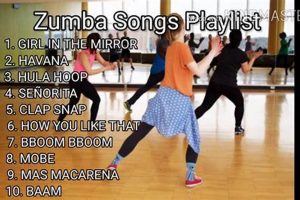
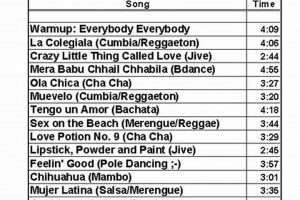
Musical selections integral to Zumba routines are characterized by their high-energy tempo, rhythmic complexity, and suitability for choreographed movement. These tracks typically span genres such as Latin rhythms (salsa, merengue, cumbia, reggaeton), pop, and international beats, fostering an environment conducive to physical activity and enjoyment. For example, a Zumba class might incorporate a salsa track with a strong percussion section followed by a reggaeton song with a driving bassline.
The role of music in Zumba extends beyond simple background accompaniment. It serves as a primary motivator, driving participants to maintain energy and coordination throughout the class. The selected tunes also contribute significantly to the overall cultural experience, exposing individuals to a diverse range of musical styles and fostering a sense of community. Historically, the incorporation of Latin-inspired rhythms has been a core element, distinguishing it from other forms of aerobic exercise.
The subsequent discussion will delve into the specific characteristics of effective musical choices for Zumba classes, considering factors such as tempo, rhythm, genre appropriateness, and licensing considerations. Furthermore, the influence of these sonic elements on participant engagement and overall fitness outcomes will be examined.
Effective Selection Strategies for Zumba-Appropriate Music
The following guidelines provide a framework for choosing musical compositions that maximize participant engagement and contribute to a successful Zumba experience.
Tip 1: Genre Diversification is Key: Avoid reliance on a single genre. Incorporate a spectrum of Latin rhythms, including salsa, merengue, cumbia, and reggaeton. Furthermore, integrate international beats and popular music to broaden appeal and maintain participant interest.
Tip 2: Tempo Consistency: Maintain a consistent tempo range throughout the class. Alternating between faster and slower rhythms allows for both high-intensity bursts and active recovery periods. Analyze the beats per minute (BPM) of each track and strategically arrange them to optimize the workout intensity.
Tip 3: Rhythmic Complexity Matters: Select songs with discernible rhythmic patterns. A strong, consistent beat facilitates synchronization and allows participants to follow choreography effectively. Avoid tracks with overly complex or unpredictable rhythmic structures, as these can lead to confusion and frustration.
Tip 4: Prioritize Energetic Intros: Choose compositions with engaging and immediate introductions. The initial seconds of a song are critical for capturing attention and setting the tone for the routine. Select tracks that begin with a strong, motivating beat.
Tip 5: Structural Variation for Engagement: Seek tracks with clear verse-chorus structures and dynamic transitions. This structural variety allows for more creative choreography and prevents monotony. Incorporate musical breaks and builds to maintain energy and excitement.
Tip 6: Cultural Authenticity: When utilizing Latin rhythms, ensure authenticity and respect for the cultural origins of the music. Research the specific genres and artists to gain a deeper understanding and appreciation for the musical traditions represented.
Tip 7: Licensing and Copyright Compliance: Adhere strictly to all copyright laws and licensing regulations. Secure the necessary permissions for public performance of copyrighted material to avoid legal ramifications. Explore royalty-free music options if budget constraints exist.
Strategic musical selection profoundly impacts the effectiveness and enjoyment of Zumba classes. By considering genre diversity, tempo consistency, rhythmic complexity, energetic introductions, structural variation, cultural authenticity, and licensing compliance, instructors can cultivate an optimal exercise environment.
The subsequent section will address the practical considerations of playlist creation and the integration of chosen musical tracks into a comprehensive Zumba curriculum.
1. Rhythmic Vitality

Rhythmic vitality, characterized by the strength, consistency, and drive of a musical beat, forms a cornerstone of effective Zumba routines. Within carefully selected musical selections for Zumba, rhythmic vitality dictates the ease with which participants can synchronize their movements and maintain energy levels. A strong, well-defined rhythmic foundation empowers individuals to follow the choreography, translating the instructor’s movements into a coordinated and engaging physical activity. In contrast, a weak or ambiguous rhythm can impede synchronization, lead to frustration, and reduce the overall effectiveness of the workout. A prime example is the pervasive use of Reggaeton within Zumba; its forceful percussive elements deliver a palpable pulse, encouraging energetic and coordinated participation.
The impact of rhythmic vitality extends beyond simple synchronization; it directly influences motivation and adherence to the exercise regime. Songs with a vigorous, pulsating rhythm stimulate the body and mind, encouraging participants to push their physical limits and maintain a high level of engagement. The auditory stimulation creates a positive feedback loop, where the energetic music reinforces the physical activity, fostering a sense of accomplishment and enjoyment. Consequently, individuals are more likely to adhere to the Zumba program and achieve their fitness goals. An example could be a Salsa track with an assertive clave rhythm; this inherently provides the basis for vigorous, high-energy movements.
Comprehending the connection between rhythmic vitality and Zumba underscores the significance of careful musical selection. Instructors must prioritize tracks with a clear, driving beat that encourages synchronization and maintains energy levels. Overlooking this critical element can diminish the workout’s effectiveness and undermine the positive impact. Challenges such as selecting tracks that cater to various skill levels and musical preferences necessitate careful planning. By acknowledging rhythmic vitality, Zumba instructors can create engaging and effective routines, thus fostering a positive and motivating exercise environment.
2. Genre Diversity

Genre diversity within musical selections for Zumba classes is not merely an aesthetic choice but a functional necessity that directly impacts participant engagement and exercise effectiveness. The inclusion of various musical styles, spanning Latin rhythms (salsa, merengue, cumbia, reggaeton), international beats, and popular music, serves to broaden the appeal of the program and cater to diverse musical preferences. This variation prevents monotony, maintaining participant interest over extended periods. Furthermore, exposure to different genres can introduce individuals to new cultural experiences, enhancing the overall educational value of the Zumba class. For instance, incorporating a Brazilian samba track alongside a Colombian cumbia creates a dynamic environment that both challenges and entertains participants.
The absence of genre diversity can lead to participant attrition and a reduction in the overall effectiveness of the workout. If a Zumba class relies solely on a narrow range of musical styles, it risks alienating individuals with different musical tastes. Moreover, consistent exposure to the same rhythms and tempos can lead to physical and mental fatigue, reducing the intensity and effectiveness of the exercise. A practical application of genre diversity is evident in the strategic sequencing of songs within a playlist. Transitioning from a high-energy reggaeton track to a more rhythmically complex salsa song provides both a physical and mental challenge, keeping participants engaged and preventing adaptation to a single stimulus.
In summation, genre diversity is a critical component of well-constructed musical tracks appropriate for Zumba routines. Instructors that neglect to carefully consider this element risk limiting their appeal and diminishing the effectiveness of their classes. By acknowledging genre diversity, Zumba professionals can create engaging and culturally stimulating experiences that maximize participant adherence and promote positive fitness outcomes. A potential challenge lies in balancing diverse musical preferences while maintaining the integrity and cultural authenticity of the featured genres. Ultimately, a mindful and nuanced approach to musical selection is essential for successful Zumba instruction.
3. Tempo Modulation

Tempo modulation, referring to the strategic variation of speed within a musical composition, is a critical element in the design and execution of effective Zumba routines. It directly influences participant engagement, physical exertion levels, and the prevention of physical strain. The judicious application of tempo changes throughout a Zumba class provides a dynamic workout experience, promoting cardiovascular health and muscular endurance.
- Interval Training Simulation
Tempo modulation effectively simulates interval training by alternating between high-tempo segments designed to elevate heart rate and lower-tempo segments that allow for active recovery. For example, a high-energy reggaeton song (130-140 BPM) might be followed by a more moderate cumbia track (100-110 BPM). This variation prevents cardiovascular overload and enhances endurance over time.
- Choreographic Variation
Varying the tempo of tracks enables the incorporation of diverse choreographic elements. Slower tempos facilitate intricate footwork and body isolations, improving coordination and balance. Conversely, faster tempos promote larger, more dynamic movements, enhancing cardiovascular fitness and calorie expenditure. A well-structured Zumba class will seamlessly transition between these different movement patterns, maximizing the physical benefits.
- Muscle Engagement and Fatigue Mitigation
Tempo modulation allows for the targeted engagement of different muscle groups. Slower tempos often incorporate resistance-based movements that build muscular strength, while faster tempos emphasize aerobic fitness. By strategically alternating between these tempos, instructors can mitigate muscle fatigue and prevent overuse injuries. A slow, controlled merengue track focusing on hip movements, followed by a fast salsa track emphasizing legwork, exemplifies this strategy.
- Participant Engagement and Motivation
Tempo modulation sustains participant engagement by preventing the monotony of a constant tempo. The dynamic shifts in speed keep the body and mind alert, encouraging participants to remain actively involved throughout the class. These changes in tempo can also align with the emotional arc of the workout, building excitement and culminating in a high-energy finale. This is exemplified by transitioning to the peak of the Zumba class to fast tracks.
In conclusion, tempo modulation is not merely an aesthetic consideration, but a functional component of effective Zumba musical selection. By thoughtfully manipulating the tempo of musical selections, instructors can create dynamic workouts that maximize cardiovascular benefits, prevent muscle fatigue, and enhance overall participant engagement. The successful integration of tempo modulation into a Zumba class requires a thorough understanding of both musical principles and exercise physiology.
4. Motivating Lyrics
Motivating lyrics within Zumba musical selections can directly influence participant engagement and adherence to the exercise routine. The effect stems from the lyrics’ capacity to stimulate emotional and psychological responses, thereby enhancing physical performance. Positive and encouraging lyrics often translate to increased energy levels and a heightened sense of self-efficacy. As a component of Zumba music, lyrics serve as a powerful tool to reinforce the positive effects of physical activity. Consider, for instance, a song that promotes self-confidence and body positivity; such a track can encourage participants to embrace their physical capabilities and persevere through challenging segments of the workout. A key factor in track selections are lyrics that are clean in nature.
Beyond mere encouragement, carefully chosen lyrics can also impart cultural context and authenticity to the Zumba experience. When the chosen musical tracks reflect the cultural origins and thematic concerns of the community from which they emerge, the exercise routine becomes more than just a physical workout. It evolves into a meaningful cultural exchange. As an example, a salsa song with lyrics celebrating resilience and community spirit can connect participants to the rich history and cultural heritage of Latin America, fostering a sense of shared experience. These lyrical themes act as an intangible link to the music’s origins and further motivate them to engage within Zumba.
However, challenges exist in selecting music with appropriately motivating lyrics. Language barriers, cultural sensitivities, and the potential for misinterpretation necessitate careful curation. Furthermore, the definition of “motivating” varies among individuals, underscoring the need for diversity in musical selections. Ultimately, recognizing the power of lyrics and considering these factors enables Zumba instructors to select music that not only encourages physical exertion but also cultivates a positive and inclusive environment.
5. Cultural Relevance

The incorporation of culturally relevant musical compositions is paramount to maintaining the authenticity and appeal of Zumba programs. It transcends mere musical preference and ventures into preserving and respecting the origins of the dance form and its associated genres. The success of a Zumba class hinges, in part, on its ability to accurately reflect and celebrate the traditions it draws upon.
- Authenticity of Rhythms and Melodies
The selection of musical pieces should prioritize genuine rhythmic patterns and melodic structures that are characteristic of specific cultural traditions. Employing standardized or generic interpretations of Latin or international music dilutes the cultural significance. Utilizing authentic recordings by artists recognized within their respective cultural communities reinforces the integrity of the Zumba experience.
- Linguistic Accuracy and Appropriateness
When lyrics are incorporated, linguistic accuracy and appropriateness become crucial considerations. Understanding the nuances of the language and ensuring that the lyrics are not offensive or culturally insensitive is essential. Translations or interpretations, if used, must accurately reflect the original meaning and context of the song.
- Respectful Choreography and Movement
The choreography developed for Zumba routines should complement and respect the cultural origins of the music. Movements should be inspired by traditional dance forms while adapting them to a fitness context. Avoiding inappropriate or disrespectful adaptations of traditional movements is vital for maintaining cultural sensitivity.
- Recognition of Cultural Contributions
Acknowledging the cultural contributions of the artists and communities whose music is featured enhances the overall learning experience for participants. Providing context about the origins of the music and the traditions it represents fosters a deeper appreciation and understanding of diverse cultures.
The incorporation of culturally relevant music in Zumba transcends a mere aesthetic choice. It is a necessary commitment to respecting the origins of the dance form and fostering a culturally sensitive and inclusive exercise environment. Thoughtful selection and implementation ensure that Zumba remains not only an effective workout but also a celebration of global diversity and musical heritage.
6. Copyright Compliance

Copyright compliance is a crucial legal and ethical consideration in the context of Zumba instruction and musical selection. Zumba classes, by their nature, involve the public performance of copyrighted musical works. Consequently, instructors and fitness facilities must secure the necessary licenses to legally utilize these sound recordings and musical compositions. Failure to comply with copyright law exposes instructors and facilities to potential legal action, including fines and injunctions. The unauthorized use of musical compositions represents a direct infringement of the rights of copyright holders, including songwriters, composers, and music publishers. This principle extends to both the digital and physical use of “zumba dance songs”, covering streaming, downloads, and the use of physical media.
Performing Rights Organizations (PROs), such as ASCAP, BMI, and SESAC in the United States, collect royalties on behalf of copyright holders for the public performance of their works. Zumba instructors typically require a blanket license from these PROs, granting them the right to play any song within the organization’s repertoire. Furthermore, the use of specific recorded versions of “zumba dance songs” may require additional synchronization licenses, especially when incorporating the music into choreographed routines. For example, if an instructor creates and distributes a Zumba instructional video using copyrighted music without obtaining the necessary synchronization licenses, it constitutes copyright infringement. It is also imperative to be aware of licensing considerations that differ among countries.
The practical significance of understanding copyright compliance for Zumba instructors cannot be overstated. Adhering to copyright law not only protects instructors from legal liability but also demonstrates respect for the creative work of musicians and songwriters. By obtaining the necessary licenses and permissions, instructors contribute to a sustainable ecosystem that supports the creation and distribution of music. Licensing ensures financial compensation to the artists that create the tracks that are integral to Zumba programs. This includes adhering to licensing for physical locations or via online mediums. The responsible use of “zumba dance songs” fosters a positive relationship between the fitness community and the music industry.
Frequently Asked Questions
This section addresses common inquiries regarding the selection, utilization, and legal aspects of musical tracks employed in Zumba routines. Clarity on these points is essential for both instructors and participants.
Question 1: What are the primary musical genres typically featured in Zumba classes?
Zumba playlists commonly encompass a diverse range of musical genres, including but not limited to Latin rhythms (salsa, merengue, cumbia, reggaeton), international beats, and popular music. Diversification is strategic, as it caters to various preferences and avoids monotony.
Question 2: Why is tempo modulation a significant factor in structuring a Zumba playlist?
Tempo modulation allows for the simulation of interval training, alternating between high-intensity bursts and active recovery periods. This variance prevents cardiovascular overload and enhances endurance. Moreover, it facilitates the incorporation of diverse choreographic elements.
Question 3: How do motivating lyrics contribute to the effectiveness of a Zumba workout?
Lyrics, when thoughtfully chosen, can stimulate emotional and psychological responses that enhance physical performance. Positive and encouraging lyrical content often translates to increased energy levels and a heightened sense of self-efficacy among participants.
Question 4: What considerations should be made to ensure cultural relevance in musical selections?
Cultural relevance is maintained through prioritizing authentic rhythmic patterns and melodic structures. Linguistic accuracy is paramount. Additionally, Zumba choreography should complement and respect the cultural origins of the music and avoid inappropriate adaptations.
Question 5: What are the fundamental copyright considerations for Zumba instructors?
Instructors must secure the necessary licenses from Performing Rights Organizations (PROs) to legally perform copyrighted musical works in public. This typically requires obtaining a blanket license, granting the right to play any song within the PRO’s repertoire.
Question 6: What are the potential consequences of copyright infringement in the context of Zumba instruction?
Failure to comply with copyright law exposes instructors and facilities to potential legal action, including fines and injunctions. It also represents a direct infringement of the rights of songwriters, composers, and music publishers. The unauthorized distribution of synchronized musical performances (e.g., online videos) intensifies these legal risks.
Understanding these facets is crucial for optimizing Zumba instruction. They promote more effective and culturally sensitive workouts.
The following section will address practical insights for integrating musical tracks into a comprehensive Zumba framework.
Conclusion
The preceding analysis underscores the multidimensional role of musical tracks within Zumba programming. Effective utilization requires a detailed understanding of genre diversity, tempo modulation, lyrical influence, cultural relevance, and strict adherence to copyright law. These facets are not independent elements but rather interconnected components that collectively shape the Zumba experience.
Given the proven impact of carefully selected “zumba dance songs” on participant engagement and fitness outcomes, instructors are urged to prioritize thoughtful and informed decision-making in their musical selections. Continued education and proactive engagement with copyright regulations are also paramount. The long-term success and integrity of Zumba as a fitness modality hinges on its ability to effectively integrate music while upholding ethical and legal standards.