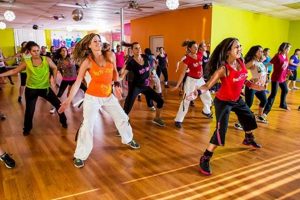
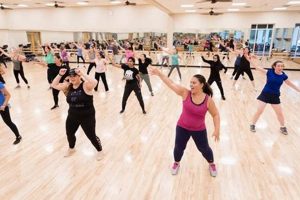
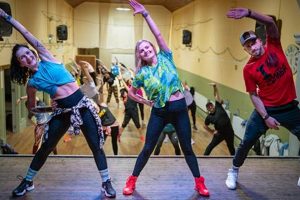
Specialized dance fitness programs adapting the Zumba format are increasingly available for individuals diagnosed with Parkinson’s disease. These sessions modify traditional Zumba steps and routines to accommodate the motor and non-motor symptoms associated with the condition, such as rigidity, bradykinesia, and balance impairment. For example, instructors incorporate seated variations, emphasize larger movements, and provide additional balance support to ensure participant safety and engagement.
Participation in adapted dance fitness, like this approach, offers potential benefits for those living with Parkinson’s. Research suggests that structured physical activity can improve motor skills, enhance balance and gait, increase functional mobility, and positively impact cognitive function and mood. Historically, exercise interventions for Parkinson’s have primarily focused on traditional therapies like physiotherapy and occupational therapy; however, the incorporation of dance-based activities presents an enjoyable and motivating alternative to these established methods.
The following sections will delve into the specific modifications made to the Zumba format, the evidence-based benefits for individuals with Parkinson’s disease, practical considerations for implementation, and resources for finding qualified instructors and programs.
Guidance for Participation in Adapted Dance Fitness Programs
This section provides practical advice for individuals with Parkinson’s disease considering participation in specialized dance fitness, emphasizing safety and maximizing benefits.
Tip 1: Consult a Healthcare Professional: Prior to commencing any new exercise program, including adapted dance fitness, individuals should seek advice from their physician or a qualified healthcare provider. This consultation ensures that the activity is appropriate and safe, considering individual health status and potential limitations.
Tip 2: Seek Qualified Instruction: It is crucial to select a class led by an instructor specifically trained in adapting dance fitness for individuals with Parkinson’s disease. These instructors possess the knowledge and skills to modify movements, provide appropriate support, and monitor participants for potential safety concerns.
Tip 3: Understand Class Modifications: Adapted dance fitness programs incorporate modifications to accommodate Parkinson’s-related motor impairments. Expect variations in pace, range of motion, and complexity of movements. Seated exercises and the use of assistive devices, such as chairs or walkers, may be incorporated.
Tip 4: Prioritize Safety and Balance: Maintaining balance is paramount. Utilize supportive aids, such as walls or chairs, as needed. Communicate any balance difficulties to the instructor immediately. Focus on controlled movements and avoid rapid changes in direction.
Tip 5: Hydrate and Pace Appropriately: Adequate hydration is essential. Drink water before, during, and after the session. Listen to the body and take breaks when needed. Avoid pushing beyond comfortable limits.
Tip 6: Communicate and Provide Feedback: Open communication with the instructor is vital. Share any concerns, limitations, or difficulties experienced during the session. Provide feedback regarding the program’s effectiveness and areas for improvement.
Tip 7: Wear Appropriate Attire: Comfortable clothing and supportive footwear are recommended. Avoid loose clothing that could pose a tripping hazard. Athletic shoes with good traction are ideal.
Adhering to these guidelines promotes a safe and effective experience, maximizing the potential physical and emotional benefits of participation in specialized dance fitness programs.
The following sections will provide detailed information about the scientific evidence supporting the efficacy of dance-based interventions for individuals with Parkinson’s disease.
1. Motor symptom management

Motor symptom management represents a central objective within specialized dance fitness programs designed for individuals diagnosed with Parkinson’s disease. These programs, which adapt elements of Zumba and other dance forms, strategically address the motor-related challenges inherent to the condition, seeking to mitigate their impact on functional abilities and overall quality of life.
- Rigidity Modification
Adaptations specifically target muscle stiffness and inflexibility through controlled, rhythmic movements. These exercises promote increased range of motion in affected joints and muscles. Example: A Zumba class may incorporate large, sweeping arm movements to counteract upper body rigidity commonly observed in Parkinson’s. This modification aids in improving posture and facilitates smoother execution of daily tasks.
- Bradykinesia Mitigation
Bradykinesia, or slowness of movement, is addressed through repetitive, amplified motions within the dance routines. The consistent rhythm and structure of the class encourage faster movement initiation and execution. Example: Instructors might use upbeat music and clear cues to prompt participants to increase their step frequency and coordination, combating the hesitations and delays often associated with bradykinesia.
- Tremor Reduction Strategies
While dance may not directly eliminate tremor, the focus on coordinated movement and mental engagement can indirectly reduce its impact. By concentrating on the dance steps and music, individuals may experience a temporary reduction in tremor amplitude. Example: The structured choreography of a dance class provides a distraction from tremor and can create a sense of control and accomplishment, positively influencing the participant’s emotional state.
- Postural Instability and Balance Improvement
Dance-based exercises can improve balance and stability by strengthening postural muscles and enhancing proprioceptive awareness. Specific dance steps and movements challenge balance and require weight shifting, improving overall stability. Example: Incorporating lateral steps and balance-focused routines helps to strengthen ankle and leg muscles, improving balance and reducing the risk of falls often associated with Parkinson’s.
The integration of these motor symptom management techniques within structured dance fitness classes offer a multifaceted approach to mitigating the debilitating effects of Parkinson’s. By strategically adapting Zumba and other dance forms, these programs provide a means to improve physical function, promote well-being, and enhance the overall quality of life for individuals living with this condition.
2. Balance & coordination focus

Balance and coordination constitute critical elements within specialized Zumba programs tailored for individuals with Parkinson’s disease. The progressive nature of Parkinson’s often leads to impaired balance and diminished coordination, significantly increasing the risk of falls and impeding mobility. Consequently, an emphasis on balance and coordination exercises is paramount to mitigating these challenges and enhancing functional independence among affected individuals. Within these specialized classes, the choreography undergoes meticulous modification to prioritize safety and effectiveness. This entails the incorporation of movements that explicitly target postural stability, weight shifting, and spatial awareness.
The connection between balance and coordination focus and the modified Zumba classes manifests as a cause-and-effect relationship. Implementing targeted exercises (cause) results in improvements in balance and coordination (effect). For instance, modified Zumba sessions might include slower tempos, wider stances, and the incorporation of support aids like chairs or poles. These adaptations allow participants to safely practice weight transfer, improve their reaction time to postural disturbances, and strengthen the muscles responsible for maintaining equilibrium. Furthermore, coordination exercises, such as rhythmic stepping patterns and arm movements, enhance the communication between the brain and the body, leading to improved motor control and fluidity.
Understanding the importance of balance and coordination focus within these dance fitness programs is practically significant for several reasons. First, it provides a framework for instructors to design and implement effective exercise routines. Second, it allows participants to recognize and appreciate the specific benefits they are receiving from the program. Finally, it underscores the necessity of specialized instruction and careful adaptation to ensure participant safety and maximize positive outcomes. The integration of these elements into specialized dance fitness, therefore, represents a targeted strategy to counter the debilitating effects of Parkinson’s on balance and coordination, thereby improving mobility, confidence, and overall quality of life.
3. Social engagement opportunities

Specialized dance fitness programs, adapted from Zumba for individuals with Parkinson’s disease, provide structured avenues for social interaction and engagement. These opportunities extend beyond mere physical exercise, addressing the social isolation often experienced by individuals with Parkinson’s.
- Reduced Isolation and Enhanced Connectedness
Participation in group classes fosters a sense of community and reduces feelings of isolation. Individuals connect with others facing similar challenges, creating a supportive and understanding environment. For example, attendees may share experiences, offer encouragement, and build friendships, countering the social withdrawal often associated with the disease.
- Improved Communication and Social Skills
The interactive nature of the classes promotes communication and social skills. Participants engage in verbal and non-verbal communication with instructors and fellow classmates, enhancing their ability to interact with others in a social setting. This can manifest as increased confidence in social situations and a greater willingness to participate in community activities.
- Emotional Support and Peer Learning
Group settings facilitate emotional support and peer learning. Individuals can learn coping strategies and share valuable information about managing their condition from others who have firsthand experience. Sharing stories and providing mutual encouragement can significantly improve emotional well-being and resilience.
- Increased Motivation and Adherence
The social aspect of group classes can increase motivation and adherence to the exercise program. The sense of accountability to the group and the enjoyment derived from social interaction can make exercise more appealing and sustainable. This enhanced adherence translates to improved physical and psychological outcomes over time.
These facets demonstrate that specialized dance fitness programs offer tangible social benefits that complement their physical advantages. These programs actively cultivate a sense of community, reduce isolation, enhance communication skills, and provide valuable emotional support. By addressing the social dimensions of Parkinson’s, these adapted Zumba classes contribute to a more holistic and effective approach to managing the condition and improving the overall quality of life for participants.
4. Mood elevation strategies

The integration of mood elevation strategies within adapted dance fitness programs for individuals with Parkinson’s disease represents a crucial element in addressing non-motor symptoms. Parkinson’s often correlates with an increased risk of depression, anxiety, and diminished overall well-being. Consequently, interventions incorporating components specifically designed to improve mood are essential for a holistic approach to managing the condition. The adapted Zumba classes serve as a platform for such mood elevation strategies, leveraging the inherent psychological benefits of dance, music, and social interaction.
The connection between these classes and mood improvement is multi-faceted. The physiological effects of exercise, such as the release of endorphins, contribute directly to feelings of well-being. Moreover, the engagement in rhythmic movement and music can be inherently enjoyable and promote a sense of accomplishment. The social interaction within the group setting provides a sense of belonging and reduces feelings of isolation, both of which are important for mitigating depression. For instance, structured routines emphasizing positive affirmations or celebratory movements can further enhance mood during class. Beyond the immediate effects, the improved physical function and increased confidence resulting from participation can have long-term positive impacts on mood and self-esteem.
Understanding the significance of these strategies is vital for instructors and participants. It allows instructors to intentionally design classes that maximize mood-boosting potential. Incorporating uplifting music, encouraging positive interactions, and celebrating individual progress are practical applications. Furthermore, participants become more aware of the potential mental health benefits and actively engage in the activities, maximizing the impact. The implementation of mood elevation strategies within adapted dance fitness reflects a comprehensive approach to addressing the multifaceted challenges associated with Parkinson’s disease, recognizing the interconnectedness of physical and mental well-being.
5. Cognitive stimulation inclusion

Cognitive stimulation inclusion within specialized dance fitness programs adapted for individuals with Parkinson’s disease represents a multifaceted approach to addressing cognitive decline, a prevalent non-motor symptom. The integration of elements designed to challenge and engage cognitive functions aims to provide benefits beyond purely physical improvements.
- Choreography and Sequencing
Learning and recalling dance sequences engages memory and executive functions. The requirement to remember steps, patterns, and transitions stimulates cognitive processes involved in encoding, storage, and retrieval of information. For example, participants may be asked to recall a sequence of steps after a brief demonstration, requiring active mental rehearsal and strengthening neural pathways associated with memory.
- Rhythmic Processing and Timing
Synchronizing movements to music necessitates precise timing and rhythm processing, cognitive functions known to be affected in Parkinson’s disease. Engaging with musical cues and maintaining a consistent tempo challenges auditory processing and sensorimotor integration. An example would be synchronizing steps with specific musical beats, thus enhancing timing and rhythm processing.
- Spatial Awareness and Body Coordination
Navigating the dance space and coordinating body movements in relation to others requires spatial awareness and cognitive control. Participants must be aware of their position in space and adjust their movements to avoid collisions and maintain proper formation. For instance, executing turns and changes in direction demands cognitive processing of spatial relationships and body position.
- Verbal Cues and Instruction Following
Understanding and responding to verbal cues from the instructor engages language comprehension and attention skills. Participants must listen to instructions, interpret their meaning, and translate them into physical actions. Example: Following verbal cues such as “step to the right” or “turn to face forward” challenges cognitive processing and attentional focus.
The integration of these cognitive stimulation elements within specialized dance fitness demonstrates a comprehensive strategy for addressing the multifaceted symptoms of Parkinson’s disease. By incorporating activities that challenge memory, timing, spatial awareness, and language comprehension, these programs aim to provide cognitive benefits alongside physical improvements, ultimately contributing to enhanced overall well-being.
6. Modified intensity levels

Adapted Zumba programs tailored for individuals with Parkinson’s disease necessitate carefully calibrated intensity levels to ensure participant safety and maximize therapeutic benefits. The progressive neurodegenerative nature of Parkinson’s frequently results in reduced physical capacity, impacting strength, endurance, and motor control. Consequently, unmodified Zumba routines, designed for a general population, often present an excessive physical demand for individuals with this condition. The reduction of the movement, pace and complexity of the workout ensures it’s both doable and enjoyable.
The connection between intensity modification and the effectiveness of Zumba for individuals with Parkinson’s manifests as a crucial causal relationship. High-intensity exercise poses risks of falls, injury, and exacerbated motor symptoms. Conversely, appropriately reduced intensity levels enable sustained participation, promoting improvements in motor function, balance, and overall fitness without exceeding physical limitations. Real-life adaptations include shortened class durations, incorporation of seated or supported exercises, slower tempos, reduced range of motion, and increased rest periods. For instance, a class might replace jumping jacks with step-outs or vigorous arm movements with gentle swaying motions. This understanding is practically significant as it informs the design and implementation of safe and effective programs, allowing instructors to tailor the intensity to individual needs and abilities.
In summary, modifying intensity levels is fundamental to making dance fitness accessible and beneficial for individuals with Parkinson’s disease. Adjustments made in this area reduce the risk of adverse events, optimize therapeutic outcomes, and promote long-term adherence to exercise programs. This requires a nuanced understanding of the disease’s impact on physical function and a commitment to creating inclusive and adaptable fitness opportunities.
Frequently Asked Questions
This section addresses common inquiries regarding specialized dance fitness, derived from the Zumba format, designed for individuals diagnosed with Parkinson’s disease.
Question 1: Are specialized dance fitness programs safe for individuals with Parkinson’s disease?
When conducted under the guidance of qualified instructors trained in adapting exercises for individuals with Parkinson’s, these programs can be considered safe. Modifications are implemented to address common symptoms like balance impairment and rigidity. However, consultation with a healthcare professional prior to participation is strongly recommended.
Question 2: What specific adaptations are made to standard Zumba routines?
Adaptations include reduced intensity, slower tempos, smaller ranges of motion, the incorporation of seated or supported exercises, and increased rest periods. These modifications aim to accommodate physical limitations and minimize the risk of falls or injuries.
Question 3: What are the potential benefits of participating in these programs?
Potential benefits include improvements in motor skills, balance, gait, functional mobility, cognitive function, mood, and social engagement. Research suggests that structured physical activity can positively impact various aspects of Parkinson’s disease.
Question 4: How does one find a qualified instructor or program?
Organizations dedicated to Parkinson’s disease often maintain directories of exercise programs and qualified instructors. Additionally, healthcare professionals specializing in Parkinson’s can provide referrals to local resources.
Question 5: Is prior dance experience necessary to participate?
Prior dance experience is not required. The programs are designed to be accessible to individuals of all fitness levels and abilities. Instructors provide modifications and support to accommodate varying levels of experience.
Question 6: Can these programs replace traditional therapies like physiotherapy?
Adapted dance fitness should be considered a complementary therapy rather than a replacement for traditional therapies like physiotherapy and occupational therapy. It can provide additional benefits in terms of enjoyment, social engagement, and motivation, but should not substitute for essential medical care.
Adapted dance fitness offers a promising avenue for enhancing the well-being of individuals with Parkinson’s disease. Careful consideration of safety, qualified instruction, and realistic expectations are crucial for maximizing the benefits.
The subsequent sections will delve into advanced modifications and provide case studies.
Conclusion
This exploration has detailed the nature, benefits, and critical considerations surrounding dance fitness programs adapted for individuals with Parkinson’s disease. It emphasized the specialized modifications employed to accommodate motor impairments and ensure participant safety. Analysis of exercise demonstrated the potential of adapted dance fitness to positively impact motor skills, balance, mood, and cognitive function.
The integration of adapted dance fitness represents a promising avenue for holistic care. Further research is warranted to quantify its long-term effects and refine program protocols. These modified Zumba classes should be pursued as a component of a comprehensive treatment plan, designed in consultation with healthcare professionals specializing in Parkinson’s disease.