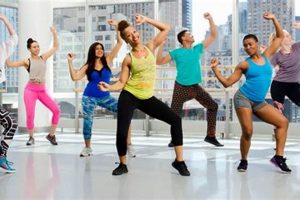
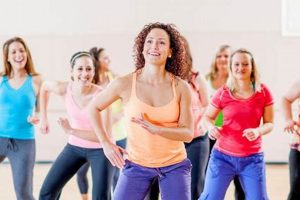
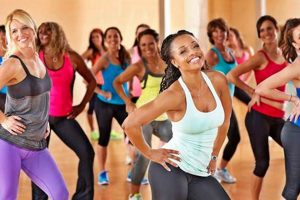
Zumba, a dance fitness program, can be adapted to accommodate individuals with various disabilities. These modified sessions integrate rhythmic movements and Latin-inspired music to promote physical activity. Adaptations may include chair-based routines, modified steps, and adjusted intensity levels to ensure accessibility and safety for participants.
Participation in adapted dance fitness offers multiple advantages, including improved cardiovascular health, enhanced muscle strength and endurance, and increased range of motion. Furthermore, it can foster social interaction, boost self-esteem, and provide a creative outlet for self-expression. Historically, inclusive fitness programs have emerged to address the need for accessible exercise options, recognizing the physical and mental well-being benefits of physical activity for all individuals, regardless of ability.
The following sections will explore the specific adaptations employed in dance fitness for individuals with disabilities, the qualifications and training of instructors, and the resources available for locating and participating in such programs.
Guidance for Accessible Dance Fitness Programs
The following recommendations are provided to ensure the safe and effective implementation of inclusive dance fitness programs. Consideration of these guidelines promotes a positive experience for all participants.
Tip 1: Program Customization: Adapt routines based on participants’ abilities. This could involve modifying movements, using chairs for support, or adjusting the pace of the session. Example: If a participant has limited mobility, provide seated versions of standing exercises.
Tip 2: Qualified Instructors: Seek instructors with specific training in adaptive fitness. Such training equips instructors to address diverse needs and ensure safe participation. Example: Look for certifications in adaptive fitness or experience working with individuals with disabilities.
Tip 3: Safety Assessment: Conduct a preliminary assessment of each participant’s physical capabilities and limitations. This informs appropriate modifications and ensures participant safety. Example: Gathering medical history information and observing movement patterns can help identify potential risks.
Tip 4: Clear Communication: Provide clear and concise instructions, using visual cues and verbal explanations. Repetition and demonstration are essential for comprehension. Example: Break down complex steps into smaller, manageable parts and demonstrate each step clearly.
Tip 5: Supportive Environment: Foster an inclusive and supportive atmosphere where participants feel comfortable and encouraged. Promote peer interaction and positive reinforcement. Example: Encourage participants to celebrate each other’s successes and offer assistance when needed.
Tip 6: Gradual Progression: Introduce new movements and increase intensity gradually to prevent overexertion and potential injuries. Monitor participants closely for signs of fatigue or discomfort. Example: Start with shorter sessions and gradually increase the duration as participants become more comfortable.
The successful implementation of these recommendations can contribute to enhanced physical well-being, increased social engagement, and improved quality of life for individuals participating in inclusive dance fitness initiatives.
Consideration of these guidelines will lead to a discussion of available resources and future directions in accessible dance fitness programming.
1. Adaptation

Adaptation forms a cornerstone of successful dance fitness programs for individuals with disabilities. Without tailored modifications, the physical demands and complexity of standard routines may present significant barriers to participation. Adaptation directly addresses individual needs by adjusting movements, pace, and intensity. For instance, seated dance fitness classes provide alternatives for individuals with limited mobility, enabling them to engage in rhythmic exercises from a chair. Similarly, simplifying complex choreography allows individuals with cognitive impairments to participate more effectively. The cause-and-effect relationship is clear: adaptation enables participation, fostering physical and mental well-being.
The implementation of adaptation principles in dance fitness extends beyond mere modification. It encompasses a holistic approach, involving instructor training, environmental adjustments, and individualized assessment. Instructors require specialized knowledge to identify and address the unique challenges faced by participants with various disabilities. Examples include: using visual cues and verbal instructions for participants with hearing impairments; employing tactile guidance for individuals with visual impairments; and adapting the duration and intensity of exercises based on individual stamina levels. These adjustments demonstrate the practical application of adaptation, ensuring inclusivity and safety.
In summary, adaptation is not merely a component, but a prerequisite for effective and inclusive dance fitness. Challenges remain in ensuring widespread availability of adequately trained instructors and accessible facilities. However, by prioritizing adaptation and promoting awareness of its importance, communities can provide accessible and empowering opportunities for individuals with disabilities to experience the physical, social, and emotional benefits of dance fitness. The practical significance lies in transforming potentially exclusionary activities into inclusive and beneficial experiences for all.
2. Inclusivity

Inclusivity is not merely a desirable attribute but a foundational requirement for effective dance fitness programs tailored for individuals with disabilities. These sessions cannot achieve their intended benefits without actively addressing barriers to participation and fostering a welcoming environment for all. The connection is one of direct causality; absence of inclusivity negates the potential positive impact of the fitness program. Inclusivity necessitates a proactive approach, requiring intentional consideration of diverse needs and preferences.
The practical application of inclusivity extends beyond simple accommodation. It demands deliberate efforts to dismantle systemic barriers and create equitable opportunities for engagement. For example, scheduling classes at accessible locations, providing transportation assistance, and offering financial aid can eliminate common obstacles. Furthermore, incorporating diverse music and movement styles reflects cultural sensitivity and encourages broader participation. Real-world examples include community centers partnering with disability organizations to co-create inclusive programs and fitness instructors undergoing specialized training to address specific needs and promote a sense of belonging.
In summary, inclusivity represents the cornerstone of successful and meaningful dance fitness initiatives for individuals with disabilities. While challenges persist in achieving universal accessibility and overcoming societal biases, prioritizing inclusivity is essential for maximizing the program’s positive impact on participants’ physical, emotional, and social well-being. The ultimate goal lies in transforming dance fitness into a truly inclusive activity, accessible and enjoyable for all, irrespective of ability. This broader perspective acknowledges the inherent worth and potential of every individual within the community.
3. Accessibility

Accessibility constitutes a fundamental prerequisite for the effective implementation of dance fitness programs tailored for individuals with disabilities. Without adequate attention to removing barriers and ensuring equitable participation, the potential benefits of such programs remain unrealized. Accessibility, in this context, encompasses physical, cognitive, and social dimensions, each contributing to a truly inclusive experience.
- Physical Accessibility
Physical accessibility refers to the removal of architectural and environmental barriers that impede participation. This includes features such as ramps, accessible restrooms, adequate space for wheelchairs or mobility aids, and appropriate flooring to minimize the risk of falls. An example involves retrofitting existing dance studios to comply with accessibility standards, ensuring individuals with mobility limitations can participate fully and safely. The implications are significant; failure to address physical accessibility effectively excludes a substantial portion of the target population.
- Communication Accessibility
Communication accessibility pertains to the provision of clear and understandable instructions and materials for individuals with diverse cognitive and sensory abilities. This may involve utilizing visual aids, sign language interpretation, simplified language, and alternative communication methods. Consider instructors providing demonstrations and verbal cues simultaneously, ensuring individuals with hearing impairments can follow the choreography. Neglecting communication accessibility can result in frustration, confusion, and ultimately, disengagement from the program.
- Programmatic Accessibility
Programmatic accessibility focuses on adapting the structure and content of dance fitness sessions to meet the specific needs of participants with disabilities. This includes modifying movements, adjusting the intensity and duration of activities, and providing individualized support. An example is offering chair-based adaptations of routines for individuals with limited mobility or incorporating sensory-friendly elements for individuals with sensory sensitivities. Absence of programmatic accessibility renders the program ineffective and potentially unsafe for participants with disabilities.
- Financial Accessibility
Financial accessibility addresses the economic barriers that may prevent individuals with disabilities from participating in dance fitness programs. This can involve offering subsidized rates, scholarships, or payment plans to ensure affordability. For example, a community center might partner with local organizations to secure funding for accessible fitness programs, making them available to low-income individuals with disabilities. Failure to address financial accessibility restricts access to a vital health and well-being resource for those who may benefit most.
Collectively, these facets of accessibility are essential for creating dance fitness programs that are truly inclusive and beneficial for individuals with disabilities. By proactively addressing physical, communication, programmatic, and financial barriers, communities can empower individuals of all abilities to experience the physical, social, and emotional benefits of dance and movement. Prioritizing accessibility is not merely a matter of compliance; it represents a fundamental commitment to equity and inclusion.
4. Modification
Modification, in the context of dance fitness programs designed for individuals with disabilities, represents a crucial element for ensuring both accessibility and safety. Alterations to standard Zumba routines are necessary to accommodate a spectrum of physical and cognitive abilities. The degree and nature of modification depend on the specific needs of the participants and the expertise of the instructors.
- Range of Motion Adjustments
This facet involves altering the amplitude and direction of movements to accommodate limitations in joint flexibility or muscle strength. For example, a wide arm swing might be reduced to a smaller, more controlled motion to prevent strain or discomfort. In Zumba classes, an instructor might offer a modified version of a step that minimizes impact on the knees or ankles. The consequence of neglecting range of motion adjustments is the potential for injury and reduced participation.
- Pace and Intensity Regulation
The tempo and exertion level of a dance fitness class must be carefully modulated to suit the stamina and cardiovascular capacity of participants with disabilities. Slower tempos and reduced impact exercises become essential. An instructor must adapt the rhythm to meet the participant’s capacity. Failure to adjust pace and intensity can lead to fatigue, breathlessness, and potential cardiovascular complications.
- Postural Support and Stability Enhancements
Modifications aimed at improving balance and stability are paramount for individuals with mobility impairments or neurological conditions. This may include the use of chairs for seated exercises, the provision of assistive devices (walkers, canes), and the incorporation of exercises that strengthen core muscles. An instance is a zumba class including modifications for participants use of chairs or walkers to ensure balance. A lack of adequate postural support increases the risk of falls and injuries.
- Cognitive Adaptations for Enhanced Comprehension
Dance fitness routines involve complex sequences of movements that can be challenging for individuals with cognitive disabilities. Modifications might include simplifying choreography, providing clear verbal cues, using visual aids, and breaking down routines into smaller, more manageable steps. Instructors often utilize call-and-response techniques, and demonstration and repetition, to facilitate learning and memory. The exclusion of cognitive adaptations results in confusion, frustration, and reduced engagement.
The successful implementation of modification strategies requires specialized instructor training, a thorough understanding of disability-related limitations, and a commitment to individualizing the exercise experience. Modification in dance fitness serves not merely as an accommodation, but as an essential pathway to enabling participation, fostering physical and mental well-being, and promoting social inclusion for individuals with disabilities.
5. Benefits

Participation in modified dance fitness programs offers a range of quantifiable advantages for individuals with disabilities. These advantages extend beyond mere physical fitness and encompass cognitive, social, and emotional well-being. The positive outcomes stem directly from the structured movement, social interaction, and sense of accomplishment associated with engagement in such activities. For example, studies have demonstrated improved cardiovascular health, increased muscle strength and endurance, enhanced balance and coordination, and reduced symptoms of depression and anxiety among individuals with disabilities who participate in regular exercise programs.
The connection between dance fitness and specific benefits is often condition-specific. For individuals with cerebral palsy, adapted dance programs can improve motor skills, reduce spasticity, and enhance functional mobility. Those with multiple sclerosis may experience improvements in balance, gait, and fatigue management. Furthermore, participation provides opportunities for social interaction, combating social isolation and promoting a sense of community. A practical application involves therapists integrating dance fitness elements into rehabilitation programs to enhance patient outcomes and adherence. These interventions provide a holistic approach to care, addressing both physical and psychosocial needs.
The realization of these benefits requires careful program design, qualified instructors, and ongoing support. Challenges include ensuring accessibility of facilities, providing appropriate modifications for diverse abilities, and addressing potential safety concerns. Nonetheless, the evidence supporting the multifaceted advantages of adapted dance fitness for individuals with disabilities underscores the importance of promoting and expanding access to these programs. The potential for improving quality of life and fostering inclusion makes investment in this area a worthwhile endeavor.
Frequently Asked Questions Regarding Accessible Dance Fitness Programs
The following questions address common inquiries concerning participation in dance fitness activities for individuals with disabilities. These answers aim to provide clarity and promote informed decision-making.
Question 1: Are dance fitness programs safe for individuals with disabilities?
Dance fitness programs can be implemented safely for individuals with disabilities when appropriate modifications are made, and qualified instructors are present. A preliminary assessment of each participant’s physical capabilities and limitations is essential. Clear communication, gradual progression, and a supportive environment further contribute to participant safety. Consultations with healthcare professionals are recommended to address individual concerns.
Question 2: What types of disabilities can be accommodated in dance fitness programs?
A wide range of disabilities can be accommodated, including mobility impairments, sensory impairments, cognitive impairments, and chronic health conditions. Modifications are tailored to the specific needs of the participants, and instructors with specialized training are equipped to address diverse challenges. The key determinant is the program’s ability to adapt to individual requirements.
Question 3: What qualifications should instructors possess to lead dance fitness classes for individuals with disabilities?
Instructors should possess certifications in adaptive fitness or specialized training in working with individuals with disabilities. Such training equips instructors to assess participant needs, modify exercises appropriately, and ensure safe participation. Experience working with diverse populations and a commitment to inclusivity are also valuable assets.
Question 4: How are dance fitness routines modified to accommodate different disabilities?
Modifications may include adapting movements, using chairs for support, adjusting the pace and intensity of the session, providing visual cues and verbal explanations, and breaking down complex steps into smaller, manageable parts. Individualized adjustments are based on the participant’s physical capabilities, cognitive abilities, and sensory needs. The aim is to make participation feasible and enjoyable for all.
Question 5: What are the potential benefits of participating in dance fitness programs for individuals with disabilities?
Potential benefits encompass improved cardiovascular health, enhanced muscle strength and endurance, increased range of motion, improved balance and coordination, reduced symptoms of depression and anxiety, increased social interaction, and improved self-esteem. The specific benefits experienced may vary depending on the individual and the nature of the program.
Question 6: Where can individuals find dance fitness programs designed for individuals with disabilities?
Resources for locating dance fitness programs may include local community centers, disability organizations, rehabilitation centers, and specialized fitness facilities. Online directories and professional networks can also provide valuable leads. Inquiry with local healthcare providers and therapists can also yield information about available programs.
Participation in accessible dance fitness promotes physical well-being and social inclusion.
The subsequent section will focus on available resources and future directions in accessible dance fitness.
Conclusion
This exploration of “zumba classes for disabled” has detailed essential adaptations, the importance of inclusivity and accessibility, modification techniques, and potential benefits. These elements are critical for safe and effective participation, enhancing physical well-being, social engagement, and overall quality of life. The value of qualified instructors and individualized program design has been emphasized.
Continued advocacy for accessible fitness options and ongoing research into condition-specific adaptations are vital. By prioritizing inclusivity and removing barriers, communities can ensure all individuals, regardless of ability, have the opportunity to experience the transformative power of dance. The future of “zumba classes for disabled” hinges on collective action to promote equitable access and empower individuals through movement.