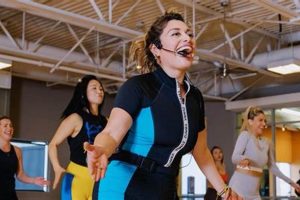
This foundational program equips individuals with the essential skills and knowledge required to lead introductory Zumba classes. It covers the core rhythms, basic steps, and fundamental teaching techniques necessary for creating a safe and effective Zumba experience for participants. Aspiring instructors learn how to break down choreography, cue movements, and modify exercises for varying fitness levels.
Successful completion of this initial training provides numerous advantages. It grants the license to teach Zumba Basic 1 classes, opening doors to employment opportunities at gyms, fitness studios, and community centers. Furthermore, it builds confidence and competence in leading group fitness activities while providing a foundation for further professional development in the Zumba instructor network, potentially leading to certifications in specialized Zumba programs.
The understanding gained from the program serves as a springboard for exploring advanced Zumba techniques and fitness methodologies. This primary certification establishes a crucial stepping stone for fitness professionals seeking to expand their expertise and offer a diverse range of classes to their clientele. The following sections will delve deeper into the curriculum, certification process, and career prospects associated with this initial qualification.
Guidance for Success
This section offers essential advice designed to assist prospective and current Zumba instructors in optimizing their experience and achieving professional excellence. These tips are based on best practices and common challenges encountered in the field.
Tip 1: Master the Fundamentals: Proficiency in the basic steps and rhythms is paramount. Consistent practice and repetition are crucial for developing muscle memory and ensuring smooth execution during instruction.
Tip 2: Prioritize Clear Cueing: Effective communication is key to guiding participants through the choreography. Use concise and anticipatory cues to signal upcoming movements and transitions. Focus on verbal and non-verbal cues for maximum clarity.
Tip 3: Adapt to Different Fitness Levels: Recognize that participants will possess varying levels of fitness. Provide modifications and progressions to accommodate individuals with limitations or those seeking a greater challenge.
Tip 4: Cultivate a Positive Atmosphere: Encourage a supportive and inclusive environment. Promote a sense of community and ensure that all participants feel comfortable and motivated.
Tip 5: Continuously Seek Improvement: Attend workshops and seminars to stay updated on the latest techniques and trends. Regular professional development enhances teaching skills and broadens the instructor’s knowledge base.
Tip 6: Emphasize Safety: Prioritize participant well-being by teaching proper form and technique. Be prepared to address common injuries and provide modifications for individuals with specific needs. Clear any physical limitations before the class.
Adherence to these guidelines will enhance the quality of instruction and contribute to a more rewarding experience for both the instructor and the participants. By focusing on the fundamental principles of Zumba instruction, instructors can create a positive and impactful experience in the classroom.
The subsequent sections will explore strategies for marketing your services and building a successful Zumba business.
1. Core Rhythms

Core Rhythms are the foundational musical styles that underpin the Zumba Basic 1 Instructor Training program. Mastery of these rhythms is essential for instructors to effectively choreograph and lead engaging Zumba classes. These rhythms dictate the movement patterns and energy of the class, providing a structure for the fitness experience.
- Salsa Rhythms and Application
Salsa, characterized by its eight-count structure and dynamic interplay of fast and slow steps, forms a cornerstone of Zumba instruction. Instructors learn to break down Salsa steps into manageable components, teaching participants how to execute these moves safely and effectively. Knowledge of Salsa rhythms enables instructors to create sequences that are both challenging and accessible, accommodating varying skill levels.
- Merengue Rhythms and Application
Merengue, with its simpler two-beat rhythm and distinctive hip movements, provides a contrasting element to the more complex Salsa. Understanding Merengue allows instructors to introduce variations in intensity and choreography, diversifying the workout experience. This rhythm is frequently used for warm-ups and cool-downs due to its lower impact and ease of execution.
- Cumbia Rhythms and Application
Cumbia introduces a grounded, earthy feel with its distinct syncopation. In Zumba, Cumbia steps promote coordination and balance. Instructors are trained to incorporate Cumbia rhythms into routines, blending traditional steps with modern fitness movements to create a dynamic and culturally rich experience. The rhythm typically moves at a moderate tempo.
- Reggaeton Rhythms and Application
Reggaeton introduces a more modern and energetic feel to the Zumba routine, with a strong emphasis on hip movements and dynamic energy. Instructors learn how to safely incorporate Reggaeton into the classes, using variations and alternative options for people who would prefer low impact.
The successful integration of these Core Rhythms into Zumba classes is a direct result of the training received during the Zumba Basic 1 Instructor Training. These rhythms, when correctly implemented, create a cohesive and enjoyable fitness experience for participants, underlining the importance of a thorough understanding of musicality in effective Zumba instruction.
2. Basic Steps

Basic steps are the fundamental building blocks of the Zumba Basic 1 Instructor Training curriculum. These steps, drawn from various dance styles, provide the foundation upon which instructors construct their classes. Without a solid command of these basic steps, instructors cannot effectively lead participants through routines or ensure proper form and safety. The training provides explicit instruction on the correct execution of these steps, including detailed explanations of footwork, arm movements, and body positioning. For example, the Merengue step requires instructors to demonstrate the correct hip motion and foot placement, while the Salsa step demands coordination and precise timing. The quality of the basic steps dictates the effectiveness of the Zumba Class
The training program emphasizes the importance of breaking down complex movements into their basic components. Instructors learn how to teach these basic steps in a clear and concise manner, using cueing techniques and modifications to accommodate participants of varying fitness levels. This approach ensures that beginners can grasp the fundamental movements, while more advanced participants can refine their technique. It is important to learn how to make everyone feel comfortable in their skin.
Mastery of basic steps is not merely a technical skill; it is a prerequisite for effective Zumba instruction. Instructors who possess a strong understanding of these foundational movements can create engaging and challenging classes that cater to the needs of all participants. Therefore, a focus on teaching and mastering the basic steps is vital, to contribute to a positive experience. This, in turn, helps create a loyal base of Zumba participants.
3. Cueing Techniques
Effective cueing constitutes a cornerstone of Zumba Basic 1 Instructor Training, directly impacting the participant experience and class safety. This training emphasizes the development of both verbal and non-verbal cueing skills, enabling instructors to guide participants smoothly through routines. A lack of proficient cueing can lead to confusion, improper form, and potential injury, thereby diminishing the effectiveness of the class. The techniques provide a predictable outline for the participants, enabling each person to anticipate what is coming next.
Zumba Basic 1 Instructor Training provides a range of cueing strategies, including anticipatory cues, directional cues, and motivational cues. Anticipatory cues prepare participants for upcoming movements, for example, verbally signaling “next we’ll switch to Salsa in four counts” before the transition. Directional cues guide movement execution, such as “push your hips to the right” during a Merengue step. Motivational cues foster a positive class atmosphere, encouraging participation and building confidence. These cues are applicable to a broad range of dance steps and are used throughout the class.
The mastery of cueing techniques during Zumba Basic 1 Instructor Training provides instructors with a fundamental skill set to deliver safe, effective, and enjoyable Zumba classes. Consistent and clear cues enhance participant understanding, promote correct form, and contribute to a positive fitness experience. Failure to implement effective cueing can impede participant progress and detract from the overall quality of the class. This foundation is what allows the Zumba participant to grow and improve.
4. Choreography Breakdown

Choreography breakdown is a central element within Zumba Basic 1 Instructor Training. The training dedicates substantial time to equipping instructors with the skills necessary to deconstruct complex routines into simpler, manageable components. This focus stems from the recognition that instructors must possess the ability to understand the structure and flow of Zumba routines to effectively teach them to participants. In essence, the instructor’s ability to breakdown routines directly affects the participant’s ability to learn and execute the movements correctly and safely. For example, a complex Salsa routine might be broken down into individual steps such as the basic step, cross-body lead, and shines, each taught separately before being combined into a fluid sequence. If the instructor cannot do this successfully, confusion will lead to a negative experience.
The importance of choreography breakdown extends beyond simply learning the steps. It allows instructors to identify potential problem areas for participants, such as challenging transitions or complex footwork patterns. By anticipating these challenges, instructors can provide targeted instruction and modifications to ensure that all participants can successfully navigate the routine, regardless of their fitness level or dance experience. In practice, this might involve providing alternative steps for participants who struggle with a particular move or breaking down the routine into smaller segments to allow for more repetition and reinforcement. This is not only beneficial for participant progress but also their safety, reducing the risk of injury due to improper form or overexertion.
Ultimately, choreography breakdown forms the bedrock of effective Zumba instruction. It empowers instructors to create accessible, engaging, and safe classes that cater to a diverse range of participants. Without a solid understanding of this skill, instructors are limited in their ability to adapt routines, address individual needs, and foster a positive learning environment. Therefore, choreography breakdown is not simply a component of Zumba Basic 1 Instructor Training, but rather a foundational skill that dictates the instructor’s overall effectiveness and the quality of the participant’s Zumba experience.
5. Modification Strategies

Modification strategies form an indispensable part of Zumba Basic 1 Instructor Training, addressing the inherent diversity in participant fitness levels, physical limitations, and learning styles. The training emphasizes the instructor’s responsibility to adapt routines to ensure inclusivity and safety. Failure to provide appropriate modifications can lead to participant discouragement, potential injuries, and an overall negative class experience. For example, a participant with knee issues may require a low-impact alternative to jumping jacks, while a beginner may need a simplified version of a complex Salsa step. These adjustments are not optional; they are crucial for fostering a supportive and effective learning environment.
The integration of modification strategies within the curriculum underscores the practical application of theoretical knowledge. Instructors are taught to identify potential challenges based on movement patterns and to proactively offer alternative options. This might include reducing the range of motion, slowing down the tempo, or providing chair-based modifications for individuals with mobility limitations. Furthermore, the training stresses the importance of clear communication when introducing modifications, ensuring that participants understand the rationale behind the adjustments and feel empowered to choose the options that best suit their needs. Real-world examples are used within the training to illustrate how to adapt routines effectively, demonstrating how small changes can make a significant difference in participant comfort and engagement.
In summary, modification strategies are not merely an add-on to Zumba Basic 1 Instructor Training but rather an integral component that shapes the instructor’s approach to teaching. The ability to modify routines effectively directly impacts participant safety, inclusivity, and overall enjoyment of the class. This understanding equips instructors with the skills necessary to create a welcoming and supportive fitness environment for individuals of all abilities, contributing to the long-term success and growth of their Zumba classes. The ability to modify moves provides a safe class for everyone.
6. Musicality Understanding

Musicality understanding constitutes a foundational element of Zumba Basic 1 Instructor Training, directly influencing the efficacy and appeal of Zumba classes. The training program equips instructors with the ability to discern and interpret musical structures, tempos, and rhythmic patterns, skills directly applicable to choreographing and cueing movements. Without a firm grasp of musicality, instructors may struggle to align movements effectively with the music, leading to a disjointed and less engaging class experience. For instance, recognizing the “one” count in a Salsa rhythm allows the instructor to cue steps accurately, ensuring participants move in synchronization with the music’s pulse. The instructor should also be able to provide the correct musical queues that provide anticipation.
This understanding extends beyond mere rhythm recognition. It encompasses the ability to identify musical phrasing, transitions, and changes in dynamics, enabling instructors to create routines that build intensity, provide contrast, and maintain participant interest. For example, recognizing a build-up in the music allows the instructor to choreograph increasingly energetic movements, culminating in a high-impact section that aligns perfectly with the musical climax. Furthermore, understanding different musical genres (Salsa, Merengue, Cumbia, Reggaeton) enables instructors to select appropriate steps and movements that complement the specific style, enhancing the authenticity and cultural richness of the Zumba experience. An instructor must be able to anticipate what is next and provide that feedback.
In conclusion, musicality understanding is not simply a desirable skill but a prerequisite for effective Zumba instruction. It enables instructors to create classes that are not only physically beneficial but also artistically engaging and culturally sensitive. By mastering musicality, instructors can transform a basic workout into a dynamic and immersive dance experience, contributing to participant motivation, enjoyment, and ultimately, adherence to the Zumba program. Failure to develop a strong understanding of the musicality can provide a class that is not engaging or not inspiring and can lead to an empty class.
7. Safety Protocols

Safety protocols are a crucial component of Zumba Basic 1 Instructor Training, serving as a preventative measure against potential injuries and ensuring participant well-being. The training emphasizes adherence to established guidelines and procedures to mitigate risks associated with physical activity. A direct correlation exists between comprehensive safety protocols and the reduction of incidents during Zumba classes. For example, instructors are taught to assess the physical space for hazards, ensure adequate ventilation, and provide clear instructions on proper form and technique. This proactive approach minimizes the likelihood of slips, falls, and musculoskeletal strains.
The training’s emphasis on safety protocols extends beyond the physical environment. Instructors are trained to screen participants for pre-existing conditions, such as cardiovascular issues or orthopedic limitations, and to offer appropriate modifications. This personalized approach demonstrates an understanding of individual needs and promotes inclusivity. Moreover, instructors learn emergency response procedures, including how to recognize signs of distress and administer basic first aid. The instructor must be trained to call the proper authorities for assistance. Real-world examples, such as scenarios involving sudden dizziness or muscle cramps, are used to illustrate the practical application of these protocols.
In summary, safety protocols are not merely a supplementary element of Zumba Basic 1 Instructor Training but a fundamental aspect that directly impacts participant health and safety. The comprehensive training equips instructors with the knowledge and skills to create a secure and supportive fitness environment. Challenges remain in ensuring consistent adherence to these protocols in diverse settings; however, the training provides a strong foundation for responsible and ethical Zumba instruction. These safety protocols will only help ensure safety.
Frequently Asked Questions
The following questions address common inquiries regarding the Zumba Basic 1 Instructor Training program. The intent is to provide clear and concise information to prospective participants.
Question 1: What are the prerequisites for enrolling in Zumba Basic 1 Instructor Training?
No formal prerequisites exist for participation. However, a basic level of physical fitness and an interest in dance and music are beneficial.
Question 2: What is the duration of Zumba Basic 1 Instructor Training?
The training typically spans one to two days, depending on the specific provider and format. Intensive courses may condense the material into a single, longer session.
Question 3: What certification is obtained upon successful completion of Zumba Basic 1 Instructor Training?
Successful completion results in a license to teach Zumba Basic 1 classes. This license is recognized by Zumba Fitness, LLC.
Question 4: Is continuing education required to maintain the Zumba Basic 1 Instructor license?
While not mandatory, ongoing education is strongly encouraged. Participation in Zumba Instructor Network (ZIN) provides access to updated choreography and marketing resources.
Question 5: What are the typical employment opportunities for a certified Zumba Basic 1 instructor?
Opportunities include teaching classes at gyms, fitness studios, community centers, and recreational facilities. Some instructors establish their own independent Zumba businesses.
Question 6: What is the cost associated with Zumba Basic 1 Instructor Training?
The cost varies depending on the location, instructor, and any bundled resources. Prospective participants should consult directly with training providers for specific pricing information.
In summary, Zumba Basic 1 Instructor Training offers a pathway to becoming a licensed Zumba instructor, providing the necessary skills and knowledge to lead introductory classes. Further professional development is recommended for continued success.
The next section will explore strategies for marketing Zumba services and building a successful Zumba business.
Conclusion
The preceding exploration has illuminated the critical aspects of Zumba Basic 1 Instructor Training. This program serves as the foundational step for aspiring Zumba instructors, imparting essential knowledge of core rhythms, basic steps, cueing techniques, choreography breakdown, modification strategies, musicality understanding, and safety protocols. Mastery of these components is paramount for delivering safe, effective, and engaging Zumba classes.
Investing in Zumba Basic 1 Instructor Training is not merely acquiring a license; it is committing to a standard of excellence in fitness instruction. The program’s thorough curriculum provides a solid base for professional growth and allows instructors to positively impact the health and well-being of their communities. Continued dedication to ongoing learning and application of best practices will determine the long-term success of instructors. The Zumba Basic 1 Instructor Training helps with the journey of success.