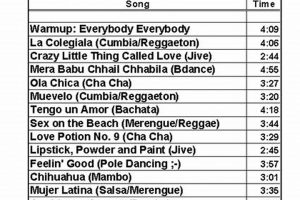
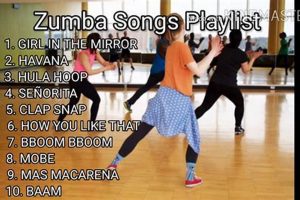
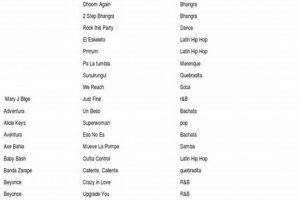
Selection of high-energy music is fundamental to the Zumba experience. These musical selections frequently feature Latin rhythms, international beats, and top-40 hits remixed to create a lively and motivating atmosphere. For example, tracks with a strong pulse and easy-to-follow melodies are often incorporated into Zumba classes to encourage participation and sustained physical activity.
The careful curation of the Zumba playlist contributes significantly to participant engagement and perceived enjoyment. Energetic music can enhance motivation, improve coordination, and foster a positive group dynamic. Historically, the Zumba program has evolved, continually incorporating current musical trends while maintaining its core focus on rhythmic movement and calorie expenditure, leading to an effective and enjoyable fitness routine.
The subsequent sections will delve into specific musical genres and artists frequently utilized in Zumba classes, offering insights into effective song selection strategies and highlighting the crucial role of music in achieving a successful and engaging workout session.
Effective Music Selection Guidelines for Zumba Instruction
Strategic incorporation of current musical trends and timeless classics is essential for maximizing participant engagement during Zumba sessions. Careful consideration of tempo, rhythm, and lyrical content will enhance the overall workout experience and promote adherence to the fitness program.
Tip 1: Tempo Consistency: Maintain a relatively consistent beats-per-minute (BPM) range throughout the playlist. A BPM between 130 and 145 is generally optimal for facilitating rhythmic movement and sustaining energy levels.
Tip 2: Genre Variety: Integrate a diverse range of musical genres, encompassing Latin rhythms, hip-hop influences, and international beats. This approach caters to varied musical preferences and prevents monotony.
Tip 3: Remix Considerations: Utilize remixes of popular tracks to provide a familiar yet novel listening experience. Ensure that the remix maintains the core energy and rhythm of the original song.
Tip 4: Cue Points: Identify clear musical cues within each song to facilitate seamless transitions between dance steps. This enhances the flow of the class and reduces participant confusion.
Tip 5: Song Structure Analysis: Analyze the structure of each song to identify sections suitable for high-intensity movements and recovery periods. This ensures a balanced workout profile.
Tip 6: Lyrical Appropriateness: Carefully review lyrical content to ensure alignment with the target audience and the overall fitness environment. Avoid songs with explicit or offensive language.
Tip 7: Gradual Intensity Increase: Structure the playlist to gradually increase in intensity, culminating in a peak energy level before tapering off towards the cooldown phase. This maximizes calorie expenditure and promotes cardiovascular conditioning.
Applying these music selection guidelines will contribute to a more engaging, effective, and enjoyable Zumba class, ultimately enhancing participant satisfaction and promoting long-term fitness adherence.
The subsequent section will address the practical application of these guidelines, providing concrete examples of songs and playlist structures that exemplify best practices in Zumba music selection.
1. Rhythmic Pulse

The rhythmic pulse of a song constitutes a foundational element of its suitability for Zumba instruction. A songs rhythmic properties directly influence movement coordination, energy expenditure, and overall participant engagement within a Zumba class. Selection of appropriate rhythmic pulses is therefore crucial in the assembly of an effective Zumba playlist.
- BPM Range Optimization
The ideal beats-per-minute (BPM) range for Zumba songs generally falls between 130 and 145. This range facilitates a pace conducive to cardiovascular conditioning without being excessively strenuous, enabling participants to maintain a consistent level of activity. A BPM outside this range can lead to either insufficient energy expenditure or premature fatigue.
- Consistent Beat Structure
Songs featuring a consistent and easily discernible beat structure are preferred. Irregular or complex rhythms can prove challenging for participants to follow, hindering movement coordination and potentially leading to frustration. A clear and predictable beat allows for ease of execution of Zumba choreography.
- Syncopation and Variation
While a consistent beat is essential, strategic use of syncopation and rhythmic variation can add complexity and interest to a Zumba routine. These elements can challenge participants and prevent monotony, but should be implemented judiciously to avoid overwhelming those less familiar with complex rhythmic patterns.
- Genre-Specific Rhythmic Qualities
Different musical genres possess distinct rhythmic characteristics. Latin rhythms, such as those found in salsa and merengue, are inherently suited to Zumba due to their inherent energy and danceability. Integrating other genres, such as hip-hop or reggaeton, requires careful consideration of their rhythmic qualities to ensure compatibility with Zumba choreography.
The careful selection of tracks based on rhythmic properties, therefore, forms a cornerstone of successful Zumba instruction. By prioritizing songs with an optimal BPM range, consistent beat structure, judicious use of syncopation, and genre-appropriate rhythms, instructors can create engaging and effective workouts that maximize participant enjoyment and fitness outcomes. A well-chosen rhythmic pulse amplifies the intrinsic energy of a Zumba class.
2. Genre Diversity

Genre diversity within Zumba playlists directly impacts participant engagement and long-term adherence. A playlist that is musically homogenous, even if initially appealing, may lead to monotony and decreased motivation over time. The inclusion of various genres caters to the diverse musical tastes within a typical Zumba class, ensuring a broader appeal and sustained interest. For example, a playlist primarily focused on Latin rhythms might exclude participants who prefer hip-hop or pop music, leading to reduced class attendance and participation rates.
The integration of diverse musical styles requires careful curation to maintain a cohesive workout experience. Seamless transitions between genres, facilitated through consistent BPMs and rhythmic compatibility, are essential. A playlist might, for instance, begin with a traditional salsa track, transition to a reggaeton remix of a popular hip-hop song, and then incorporate an Afrobeat number, each maintaining a similar energy level and rhythmic complexity. Effective use of remixes allows familiar songs from different genres to align rhythmically, preserving a consistent workout intensity.
In conclusion, strategic deployment of genre diversity in Zumba music selection is critical for fostering a positive and inclusive fitness environment. Ignoring genre preferences can inadvertently limit audience appeal, whereas thoughtful curation enhances engagement and promotes long-term program adherence. Recognizing this connection allows Zumba instructors to create more effective and enjoyable fitness experiences for a wider range of participants. The challenge lies in balancing diverse tastes with the need for rhythmic consistency and workout intensity, ultimately shaping a Zumba class that resonates with a broad audience and achieves its fitness objectives.
3. Familiarity Factor
The integration of readily recognizable musical selections constitutes a key determinant in the engagement and effectiveness of Zumba instruction. Participants often exhibit enhanced motivation and participation levels when exposed to songs already present within their existing auditory landscape. This phenomenon, termed the “Familiarity Factor,” plays a crucial role in shaping the Zumba experience.
- Reduced Cognitive Load
Familiar songs require less cognitive processing for recognition and pattern prediction. This lessened cognitive burden allows participants to focus more directly on the physical aspects of the Zumba routine, enhancing motor coordination and optimizing calorie expenditure. For instance, a popular radio hit requires minimal mental effort to identify, allowing for immediate physical engagement.
- Enhanced Emotional Connection
Musical familiarity frequently triggers positive emotional associations based on prior experiences. These pre-existing emotional connections can enhance enjoyment, reduce perceived exertion, and improve overall mood during the workout. A song previously associated with a positive life event can contribute to a more uplifting and engaging Zumba experience.
- Increased Confidence and Participation
The ability to anticipate musical cues and song structure based on familiarity fosters a sense of confidence among participants, encouraging more active participation. Individuals are more likely to engage in movements and routines associated with songs they know well, leading to improved technique and increased workout intensity. Predictable song segments encourage greater physical investment.
- Broader Audience Appeal
Incorporating readily recognizable songs expands the appeal of Zumba classes to a wider range of individuals, including those who may be hesitant to engage in unfamiliar fitness activities. Familiar musical selections reduce the perceived barrier to entry, creating a more welcoming and inclusive environment for potential participants. Accessibility is enhanced with popular, well-known songs.
By strategically leveraging the Familiarity Factor through the inclusion of widely recognized songs, Zumba instructors can cultivate a more engaging, enjoyable, and effective fitness experience. This principle necessitates a balance between familiar elements and novel choreographic challenges, creating a workout that is both accessible and stimulating, maximizing participant adherence and fitness outcomes. Judicious song selection facilitates a positive relationship with exercise.
4. Tempo Control
Tempo control is a critical aspect of utilizing popular songs for Zumba instruction. The selected tempo, measured in beats per minute (BPM), directly impacts the physical intensity and coordination demands of the workout. Improper tempo selection can lead to either insufficient cardiovascular stimulation or, conversely, premature fatigue and risk of injury. Songs with a BPM significantly below the optimal range of 130-145 may not provide sufficient aerobic challenge, while those exceeding this range may prove too demanding for many participants, particularly beginners.
Effective tempo control involves not only selecting songs within an appropriate BPM range but also strategically sequencing those songs to create a progressive and balanced workout. For instance, a Zumba class may begin with songs in the lower end of the range (around 130 BPM) to allow participants to warm up and gradually increase the tempo as the intensity of the choreography increases. The inclusion of songs with varying rhythmic structures and tempos can also prevent monotony and target different muscle groups. Consider a playlist incorporating a salsa track (typically 130-140 BPM) followed by a reggaeton remix (often 140-150 BPM), offering contrasting rhythms while maintaining a consistent energy level. Practical application necessitates instructors to be adept at identifying and manipulating the tempos of popular tracks.
In summary, tempo control is not merely a technical consideration but a fundamental element influencing the overall efficacy and enjoyment of Zumba classes. Failure to manage tempo effectively can diminish the intended fitness benefits and increase the risk of participant discouragement. By carefully curating a playlist with strategically selected tempos, Zumba instructors can optimize the workout experience, ensuring both its physical effectiveness and its appeal to a diverse range of participants.
5. Lyrical Content

The lyrical component of musical selections plays a significant, though often understated, role within the Zumba environment. While the rhythmic and melodic elements are primarily responsible for dictating movement and energy, the lyrics contribute subtly to the overall atmosphere and participant perception. Careful consideration of lyrical content is therefore imperative for fostering an inclusive and appropriate Zumba class.
- Inclusivity and Relevance
Lyrical content should resonate with the target demographic and avoid marginalizing any segment of the class. The inclusion of lyrics promoting positive self-image, body positivity, and empowerment can contribute to a more supportive and uplifting workout experience. Conversely, lyrics that are sexually suggestive, violent, or discriminatory should be avoided, as they can create an uncomfortable or alienating environment for some participants. For instance, a song celebrating body diversity is more appropriate than one that perpetuates unrealistic beauty standards.
- Language and Cultural Sensitivity
Given the global reach of Zumba, instructors must be mindful of language barriers and cultural nuances. The use of songs in multiple languages can enhance inclusivity, but it is essential to ensure that the lyrical content is culturally sensitive and does not contain any offensive or inappropriate references. Misinterpretations or unintentional offenses can undermine the positive atmosphere of the class. For example, a song that is popular in one culture may contain hidden meanings that are offensive in another.
- Motivational Messaging
Lyrical content can be strategically employed to enhance motivation and encouragement during the workout. Songs with themes of perseverance, overcoming challenges, and achieving goals can inspire participants to push themselves further and maintain a positive attitude. Lyrics that promote self-belief and celebrate progress can contribute to a more empowering and rewarding fitness experience. Consider songs with empowering messages to foster a sense of accomplishment within the class.
- Appropriateness and Context
Ultimately, the appropriateness of lyrical content depends on the specific context of the Zumba class, including the age and demographics of the participants, as well as the overall tone and objectives of the session. What is acceptable in one setting may not be appropriate in another. Instructors should exercise discretion and err on the side of caution to ensure that all participants feel comfortable and respected. For example, lyrics suitable for an adult Zumba class may be entirely inappropriate for a class with younger participants.
In conclusion, while rhythmic properties primarily govern Zumba’s physical aspect, lyrical content significantly affects the overall atmosphere. Carefully selecting songs with inclusive, culturally sensitive, motivational, and contextually appropriate lyrics ensures a positive, respectful, and engaging workout for all participants. The subtle yet powerful influence of lyrical content cannot be overlooked in the pursuit of a truly effective Zumba experience.
6. Motivational Energy

The intrinsic motivational energy embedded within the sonic characteristics of carefully selected tracks is a primary determinant of efficacy for musical selections in Zumba instruction. The connection between popular songs for Zumba and sustained participant engagement hinges on a synergistic effect: Popular songs provide an element of familiarity and accessibility, while the manipulation of tempo, rhythm, and lyrical content elevates the inherent energy, fostering a dynamic environment conducive to physical exertion. This is exemplified by remixes of Billboard chart-toppers re-engineered with a higher BPM and infused with Latin rhythms. Such adaptations capitalize on pre-existing recognition while amplifying the propulsive elements vital for maintaining high-intensity movement.
Consider the practical implications of omitting songs with high motivational energy. The result is a decreased level of participant enthusiasm, leading to diminished adherence to choreographed movements and ultimately reducing the overall effectiveness of the workout. Conversely, the strategic inclusion of tracks with strong rhythmic drive and uplifting lyrical themes directly correlates with elevated energy levels throughout the class. This can manifest in improved synchronization among participants, increased heart rates, and a greater degree of perceived enjoyment. A well-curated playlist, therefore, functions as a powerful catalyst for enhancing the physical and psychological benefits of Zumba.
In conclusion, understanding the critical importance of motivational energy as a core component of successful Zumba playlists is paramount. The skillful integration of tracks that are both familiar and dynamically invigorating is essential for maximizing participant engagement, adherence, and overall workout effectiveness. Challenges remain in identifying tracks that consistently elicit a positive response from diverse participant groups. Continuous evaluation and adaptation of musical selections are thus necessary to ensure the continued success and appeal of the Zumba program.
Frequently Asked Questions
The following addresses commonly encountered inquiries regarding the selection and utilization of musical compositions for Zumba instruction.
Question 1: What constitutes a “popular song” in the context of Zumba instruction?
The term “popular song” in Zumba generally refers to a musical piece exhibiting widespread recognition and appeal among a target demographic. These compositions frequently achieve prominence through radio airplay, streaming platforms, or inclusion in film and television soundtracks. Selection for Zumba purposes should prioritize rhythmic suitability and motivational qualities alongside popularity metrics.
Question 2: What criteria determine the suitability of a popular song for Zumba?
Suitability is assessed primarily through tempo (beats per minute), rhythmic consistency, lyrical appropriateness, and overall motivational impact. Optimal tempo typically ranges between 130 and 145 BPM. Lyrical content should be devoid of offensive or inappropriate themes, and the overall composition should evoke positive energy and encourage physical activity.
Question 3: How frequently should Zumba instructors update their playlists with new “popular songs”?
Playlist updates should occur regularly, ideally on a monthly or bi-monthly basis, to maintain participant engagement and prevent monotony. Integration of newly released “popular songs” allows instructors to cater to current musical trends and maintain the freshness of their Zumba classes.
Question 4: Are there copyright restrictions associated with using “popular songs” in Zumba classes?
Yes. Public performance of copyrighted musical works, including those employed in Zumba classes, necessitates adherence to copyright regulations. Instructors and facilities must secure appropriate licensing agreements from performing rights organizations (PROs) such as ASCAP, BMI, and SESAC to avoid legal repercussions.
Question 5: How does genre diversity impact the effectiveness of a Zumba playlist featuring “popular songs”?
Genre diversity is crucial for catering to a wider range of participant preferences and sustaining long-term engagement. Incorporating various musical styles, such as Latin, hip-hop, and pop, maintains interest and prevents monotony. Strategic sequencing of genres is essential for maintaining a cohesive and energetic workout experience.
Question 6: What strategies can instructors employ to identify emerging “popular songs” suitable for Zumba?
Instructors can monitor music streaming charts, radio airplay data, and social media trends to identify potential candidates. Attending industry conferences and workshops, consulting with fellow instructors, and soliciting feedback from participants are also effective methods for discovering new and engaging musical selections.
The preceding FAQs offer a foundational understanding of key considerations related to integrating widely recognized musical selections into Zumba fitness programs.
The following section will delve into specific examples of musical selections and playlist structures for Zumba, illustrating best practices in musical curation and application.
Conclusion
The preceding analysis has underscored the multifaceted role that popular songs for Zumba play in shaping participant engagement, motivation, and overall workout effectiveness. Key considerations encompass rhythmic suitability, lyrical appropriateness, tempo management, and genre diversity. Strategic application of these elements, informed by a thorough understanding of copyright regulations and participant preferences, is paramount for successful Zumba instruction.
Ongoing exploration of emergent musical trends and refinement of selection strategies are essential for maintaining the vitality and appeal of Zumba programming. Instructors are encouraged to prioritize thoughtful curation, adapting musical selections to optimize both the physical and psychological benefits of this globally recognized fitness modality.