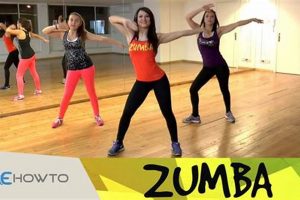
This exercise modality combines the energetic movements of a dance-based fitness program with the low-impact environment of a swimming pool. Participants perform synchronized routines to music while submerged in water, adapting traditional dance steps to the aquatic setting. An example would be executing modified salsa or merengue steps while maintaining buoyancy and water resistance.
The appeal lies in its capacity to provide a full-body workout that is gentle on the joints, making it suitable for individuals of varying fitness levels, including those recovering from injuries or managing chronic conditions like arthritis. The water’s resistance enhances muscle strength and endurance, while the buoyancy reduces stress on the skeletal system. Its origins can be traced to the increasing popularity of aquatic exercise and the desire for engaging, group-oriented fitness options.
The subsequent sections will delve into the specific advantages this method offers, the adaptations required for effective execution, and the target demographic for whom this activity is particularly beneficial.
Essential Considerations for Aquatic Dance Exercise
This section outlines critical aspects to maximize efficacy and minimize risks associated with aquatic dance exercise. Proper execution and awareness of environmental factors are paramount.
Tip 1: Hydration is Critical: Water workouts can still induce perspiration. Ensure adequate fluid intake before, during, and after participation to prevent dehydration. Consider bringing a water bottle to the pool.
Tip 2: Pool Depth Awareness: Choose a pool depth appropriate for individual height and comfort level. Water should ideally reach chest level to facilitate both buoyancy and ground contact. This ensures range of motion and comfort levels in the exercise.
Tip 3: Proper Footwear is Essential: Aquatic shoes enhance traction and prevent slipping on wet surfaces. Selecting the appropriate footwear is highly recommended.
Tip 4: Listen to Body’s Signals: While the aquatic environment is low-impact, it is crucial to heed any pain or discomfort. Modify movements or take breaks as needed. Overexertion is to be avoided.
Tip 5: Core Engagement is Key: Actively engage core muscles throughout the routines to stabilize the body and enhance postural control. This action supports balance and promotes effective movement patterns.
Tip 6: Gradual Progression: Increase the intensity and duration of workouts incrementally to allow the body to adapt. Avoid sudden increases in activity level to prevent injuries.
Tip 7: Sun Protection is Important: Even in indoor pools, sunlight can reflect off the water’s surface. Apply water-resistant sunscreen to exposed skin and wear a hat if appropriate. This protects from harmful UV rays.
Adhering to these guidelines promotes a safe and effective experience. Prioritizing safety and preparedness ensures the activity remains beneficial and enjoyable.
The following sections will address the ideal candidate for this activity and modifications for various fitness levels.
1. Buoyancy

Buoyancy, the upward force exerted by a fluid that opposes the weight of an immersed object, is a foundational principle underpinning aquatic dance fitness. In this exercise context, buoyancy effectively reduces the gravitational load on joints and skeletal structures. This reduction, in turn, allows for a greater range of motion and decreased risk of impact-related injuries. For instance, individuals with arthritis or those recovering from lower extremity injuries can participate with less discomfort than in land-based dance formats.
The degree of buoyancy experienced during the activity is directly related to the density of the participant’s body relative to water. Lean muscle mass tends to sink, whereas body fat tends to float. Instructors frequently adapt choreography to account for variations in buoyancy, modifying movements to ensure all participants maintain proper form and benefit from the workout. One practical application involves adjusting the depth of the water or adding flotation devices to compensate for individual differences in buoyancy.
In summary, the interaction between buoyancy and dance fitness extends beyond mere comfort. It directly influences exercise efficacy, accessibility, and safety. Understanding buoyancy principles enables instructors to create inclusive and effective programs, promoting both physical well-being and adherence to a beneficial fitness regimen. Failure to understand and account for individual differences could hinder progress or even lead to injuries, underscoring the critical importance of buoyancy awareness within the practice.
2. Resistance

Resistance, in the context of aquatic dance fitness, is the force that opposes movement through water. This physical property becomes a key component in enhancing the effectiveness of dance-inspired exercise performed in an aquatic environment.
- Increased Muscular Engagement
Water resistance necessitates increased muscular exertion to execute dance movements, promoting strength and endurance gains. Unlike air, water provides multi-directional resistance, engaging a broader range of muscle groups during each exercise. An example would be performing a simple arm extension, which, when done in water, activates muscles in the shoulders, arms, and core to a greater extent.
- Enhanced Caloric Expenditure
Overcoming water resistance requires a greater energy expenditure compared to performing the same movements on land. Consequently, the body burns more calories during an aquatic dance fitness session, contributing to weight management and overall metabolic health. This increased energy demand makes this a potentially efficient workout modality.
- Variable Intensity Control
The level of resistance can be manipulated by adjusting the speed of movement. Faster movements generate greater resistance, thereby intensifying the workout. Conversely, slower movements reduce resistance, providing an option for lower-intensity exercise or active recovery. This adaptability makes it suitable for diverse fitness levels.
- Joint Protection Through Viscosity
While providing resistance to muscle action, water’s viscosity also supports joints and reduces impact. This is particularly beneficial for individuals with joint pain or those recovering from injuries, allowing them to engage in more strenuous exercise without exacerbating their condition. The water’s resistance also acts as a natural cushion.
In essence, the strategic utilization of water resistance transforms basic dance steps into a full-body strength and conditioning routine. The manipulation of resistance levels allows for a highly adaptable workout experience catering to a broad spectrum of fitness capabilities. This aspect positions aquatic dance fitness as a valuable tool for both rehabilitation and general physical fitness improvement.
3. Low-Impact

The term “low-impact” signifies a crucial attribute within the realm of aquatic dance fitness. It describes the nature of physical activities that minimize stress and jarring forces on joints, thereby reducing the risk of injury. In the context of aquatic dance fitness, this characteristic becomes especially salient due to the supportive properties of water.
- Reduced Joint Stress
The buoyancy provided by water significantly diminishes the weight-bearing load on joints, particularly in the lower extremities. This allows participants to perform movements with less compressive force on the knees, ankles, and hips. For example, a jumping jack executed in water presents a substantially lower impact profile compared to its land-based counterpart, offering a safer alternative for individuals with joint sensitivities.
- Suitability for Diverse Populations
The low-impact nature of aquatic dance fitness broadens its accessibility to a wide range of populations, including older adults, pregnant women, individuals with arthritis, and those recovering from musculoskeletal injuries. These groups can often participate in aquatic dance fitness without experiencing the pain or discomfort associated with higher-impact activities. The water environment facilitates movement for those who may have limited mobility on land.
- Enhanced Range of Motion
The reduction in joint stress allows for greater freedom of movement and improved range of motion. Participants can often extend their limbs and perform dance steps with greater ease in water than on land. This can be particularly beneficial for individuals seeking to improve flexibility and mobility.
- Mitigation of Injury Risk
By minimizing the jarring forces associated with high-impact activities, aquatic dance fitness significantly reduces the risk of overuse injuries, such as stress fractures and tendinitis. The water cushions the joints and muscles, protecting them from repetitive strain. This protective effect makes aquatic dance fitness a sustainable and long-term fitness option.
The low-impact characteristic serves as a cornerstone of aquatic dance fitness, enabling individuals of varying ages and physical conditions to engage in enjoyable and effective exercise while minimizing the risk of injury. This attribute distinguishes it from many land-based fitness programs and contributes to its growing popularity as a safe and accessible means of improving overall health and well-being.
4. Music Rhythm
Music rhythm serves as the organizational framework upon which the physical movements of aquatic dance fitness are structured. It dictates the tempo, intensity, and stylistic elements of the exercise routine, directly influencing participant engagement and adherence. A consistent beat provides the temporal cues necessary for synchronization, enabling coordinated movements and fostering a sense of group cohesion. Without a clear rhythmic structure, exercises become disjointed, diminishing the effectiveness of the workout and potentially increasing the risk of improper form, leading to injury. For example, songs featuring a consistent 128 beats per minute (BPM) are frequently used to maintain a high-energy, aerobic pace, while slower tempos facilitate cool-down routines and improve balance.
The selection of musical genres and their associated rhythms plays a significant role in the overall exercise experience. Music from Latin American traditions, such as salsa, merengue, and cumbia, offers readily adaptable rhythms for aquatic environments, facilitating energetic and engaging movements. The rhythmic complexity of these genres promotes cognitive stimulation and motor coordination. Instructors often employ a combination of familiar and novel rhythms to maintain participant interest and challenge physical capabilities. Furthermore, the rhythmic structure of the music directly impacts the physiological response, modulating heart rate, respiration, and perceived exertion. Properly selected rhythms can enhance the cardiovascular benefits of the workout and improve overall fitness outcomes.
In conclusion, music rhythm is not merely an aesthetic component of aquatic dance fitness but an integral functional element that shapes the exercise experience, influencing movement coordination, intensity, and physiological response. Effective utilization of music rhythm requires careful consideration of tempo, genre, and the specific needs and abilities of the participants. The integration of appropriate rhythmic structures is essential for maximizing the benefits and minimizing the risks associated with this form of exercise. A successful aquatic dance fitness program relies on a well-curated musical playlist that complements the physical demands of the activity, ensuring both enjoyment and effectiveness.
5. Core Stability
Core stability forms a critical foundation for effective and safe participation in aquatic dance fitness. The inherent instability of the water environment necessitates constant engagement of the core muscles to maintain balance, posture, and control during dynamic movements. Specifically, muscles such as the transverse abdominis, obliques, rectus abdominis, and erector spinae work in concert to stabilize the spine and pelvis, preventing excessive rotation or lateral flexion that could lead to injury. For example, performing a salsa step in water requires significantly more core engagement than on land to counteract the displacing forces of the water. This active stabilization enables participants to execute dance movements with greater precision and reduces the likelihood of lower back pain or other musculoskeletal issues.
The benefits of enhanced core stability extend beyond injury prevention. A strong core facilitates more efficient transfer of power from the lower to the upper body, allowing for more fluid and coordinated movements. This is particularly relevant in routines that involve arm movements synchronized with legwork, such as aquatic merengue or cha-cha. Furthermore, improved core strength contributes to better overall posture, both in and out of the water, and can positively impact activities of daily living. Practical applications of this enhanced stability may include improved balance while walking or standing, reduced risk of falls, and increased comfort during prolonged periods of sitting or standing. Individuals who actively focus on engaging their core during aquatic dance fitness routines often report improvements in these areas.
In summary, core stability is not merely a peripheral consideration but an indispensable component of safe and effective aquatic dance fitness participation. It provides the necessary support to counteract the destabilizing effects of water, minimizes the risk of injury, and enhances the efficiency and coordination of movements. The integration of exercises that specifically target core strengthening can further amplify these benefits, making core stability a central focus for both instructors and participants. Neglecting core engagement can compromise balance and postural control which negatively effects from dance moves.
6. Social Engagement
The communal environment fostered by aquatic dance fitness significantly contributes to its adherence rates and perceived enjoyment. This positive social dynamic offers participants a shared experience, mitigating feelings of isolation that can sometimes accompany individual exercise regimens. Interactions with peers in a supportive setting enhance motivation and provide a sense of accountability. For example, individuals may be more likely to attend scheduled sessions when they know others are relying on their presence. This mutual support system extends beyond the confines of the pool, often leading to friendships and social connections that further reinforce participation.
The structured nature of aquatic dance fitness classes facilitates interaction among participants. Group choreography and partnered movements encourage communication and collaboration, fostering a sense of camaraderie. Instructors often play a key role in cultivating this social environment by encouraging interaction, creating a welcoming atmosphere, and facilitating group activities. Real-world observations demonstrate that classes with a strong social element tend to have higher attendance rates and lower dropout rates. Furthermore, the shared accomplishment of mastering dance steps in a challenging environment can lead to increased self-esteem and a strengthened sense of belonging.
In summary, social engagement is not merely a superficial aspect of aquatic dance fitness but an integral component that enhances its effectiveness and appeal. It provides a support system, fosters motivation, and contributes to an overall positive experience. The establishment of a strong social dynamic within aquatic dance fitness classes is a key determinant of participant adherence and long-term success. Classes that consider engagement are more likely to keep the public interested in participation.
Frequently Asked Questions Regarding Aqua Zumba Fitness
The following section addresses common inquiries concerning the nature, benefits, and practical considerations of aquatic dance fitness.
Question 1: Is Aqua Zumba Fitness suitable for individuals who cannot swim?
Participation does not necessitate advanced swimming proficiency. Most routines are performed in shallow water, typically chest-deep. Instructors provide modifications and ensure that participants maintain contact with the pool floor. However, basic water comfort and familiarity are advisable. Flotation devices can be used for additional support.
Question 2: What are the primary benefits of Aqua Zumba Fitness compared to land-based Zumba?
The aquatic environment provides reduced joint impact due to buoyancy, making it suitable for individuals with arthritis, joint pain, or injuries. Water resistance increases muscular effort, enhancing strength and caloric expenditure. Its effective for rehabilitation in a safe environment.
Question 3: Are there specific age limitations for Aqua Zumba Fitness participation?
No strict age limits exist. Suitability is determined by individual fitness levels and overall health. Older adults often find the low-impact nature beneficial, while younger individuals can benefit from the resistance training aspect. Consulting with a healthcare professional is always advised before beginning any new exercise program.
Question 4: What type of attire is recommended for Aqua Zumba Fitness?
Standard swimwear is appropriate. Aquatic shoes are highly recommended to provide traction and prevent slipping on wet surfaces. Rash guards or swim shirts can offer sun protection for outdoor pools.
Question 5: How frequently should one participate in Aqua Zumba Fitness to achieve noticeable results?
Consistency is key. Participating two to three times per week typically yields noticeable improvements in cardiovascular fitness, strength, and flexibility. Individual results may vary based on factors such as diet, lifestyle, and pre-existing fitness levels.
Question 6: Are there any medical conditions that would contraindicate participation in Aqua Zumba Fitness?
Individuals with certain medical conditions, such as uncontrolled hypertension, severe cardiovascular disease, or open wounds, should consult with a physician before participating. Furthermore, caution should be exercised by those with balance disorders or neurological conditions.
In conclusion, the information provided addresses fundamental aspects of this. Prior consultation with a healthcare professional is recommended to ascertain individual suitability.
The following sections will cover modifications for this aquatic activity.
Conclusion
This exploration has detailed the multifaceted nature of aqua zumba fitness, emphasizing its distinct advantages. The combination of rhythmic dance movements with the supportive properties of water creates a unique exercise modality. Key elements such as buoyancy, resistance, low-impact activity, musical rhythm, core stability, and social engagement contribute to its effectiveness and accessibility. Participants should consider these factors when evaluating participation.
The information presented underscores the importance of proper technique and environmental awareness for safe and beneficial engagement. Individuals considering this activity should consult with healthcare professionals to ensure suitability and optimize outcomes. Continuous advancements in aquatic exercise research and instruction promise further refinements in this dynamic fitness discipline.