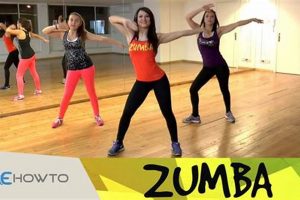
Clothing specifically designed for the high-energy dance fitness program known as Zumba typically prioritizes comfort, breathability, and freedom of movement. Examples include moisture-wicking tops, supportive sports bras, flexible leggings or athletic pants, and lightweight, cushioned sneakers. The aim is to facilitate unrestricted participation in the Zumba workout.
Proper apparel enhances the overall Zumba experience by allowing participants to fully engage in the routines without being hampered by restrictive clothing or inadequate support. Suitable garments contribute to effective performance, preventing overheating and minimizing the risk of injury. Its evolution reflects the increasing popularity of the Zumba program itself, mirroring trends in athletic wear and emphasizing both function and style.
The following sections will delve into specific features to consider when selecting appropriate garments and footwear for this dynamic activity, along with guidance on caring for such items to ensure longevity and continued performance.
Selection Guidance
The following recommendations aim to assist in choosing suitable items that optimize participation and comfort during Zumba workouts. Careful consideration of these factors contributes to an improved and safer exercise experience.
Tip 1: Prioritize Breathable Fabrics: Opt for materials such as moisture-wicking polyester blends or natural fibers like cotton. These fabrics facilitate ventilation and help regulate body temperature, minimizing discomfort caused by excessive perspiration.
Tip 2: Ensure Adequate Support: A supportive sports bra is essential for women. Choose a style that provides appropriate impact resistance based on individual needs. For men, consider supportive athletic underwear to enhance comfort and minimize chafing.
Tip 3: Select Flexible Bottoms: Leggings, athletic pants, or shorts should allow a full range of motion. Avoid overly restrictive garments that impede movement during Zumba routines. Test the flexibility by performing squats and lunges during the selection process.
Tip 4: Choose Supportive Footwear: Sneakers designed for cross-training or dance fitness are recommended. Look for features such as cushioning, arch support, and a non-slip sole to minimize the risk of injury and enhance stability.
Tip 5: Consider Layering Options: A lightweight jacket or wrap can be beneficial for warm-up or cool-down periods. Layering provides flexibility to adjust to changing body temperatures during the workout.
Tip 6: Pay Attention to Fit: Ensure garments fit comfortably without being too tight or too loose. Ill-fitting apparel can restrict movement or cause distractions during the workout.
Tip 7: Evaluate Seam Placement: Look for garments with flat seams or minimal seam construction. This reduces the likelihood of chafing and irritation during high-impact movements.
Adhering to these guidelines will assist in procuring selections that contribute to comfort, performance, and safety during Zumba participation. The correct choices enhance engagement and overall enjoyment.
The subsequent section will address maintenance procedures for prolonging the lifespan and functionality of acquired items.
1. Comfort

Comfort is a paramount consideration in Zumba fitness apparel. Its influence extends beyond mere physical sensation, affecting psychological engagement and overall workout effectiveness. Clothing that prioritizes comfort allows for unrestricted movement and sustained participation.
- Fabric Selection and Skin Irritation
The choice of fabric directly impacts skin comfort during a Zumba workout. Fabrics should be breathable and minimize friction to prevent chafing and irritation, particularly in high-movement areas such as the underarms and inner thighs. For example, moisture-wicking synthetic blends are often preferred over cotton, which can retain sweat and increase the likelihood of discomfort. This consideration is crucial for individuals with sensitive skin.
- Range of Motion and Garment Restriction
Comfortable clothing facilitates a full range of motion, essential for executing Zumba steps correctly. Restrictive garments hinder movement, potentially leading to improper form and increased risk of injury. For instance, overly tight leggings or non-stretchy fabrics limit flexibility, preventing participants from fully engaging in the dance routines. The cut and design must accommodate the dynamic movements inherent in Zumba.
- Temperature Regulation and Thermal Comfort
Comfort is intrinsically linked to temperature regulation. Apparel should allow for adequate ventilation to prevent overheating during the high-intensity workout. Lightweight and breathable fabrics promote airflow, aiding in the dissipation of heat and sweat. Conversely, overly insulated garments can cause discomfort and reduced performance due to excessive heat retention. Activewear fabrics that regulate body temperature provide an additional benefit.
- Psychological Impact of Comfortable Attire
Comfortable activewear can positively influence psychological state. Feeling comfortable and confident in one’s clothing can enhance motivation and self-esteem, leading to a more enjoyable and effective Zumba experience. Distracting discomfort can detract from focus and reduce engagement. A participant who feels physically at ease is more likely to fully immerse themselves in the workout, maximizing its benefits.
The interplay between these facets underscores the significance of prioritizing comfort in the selection of Zumba fitness apparel. Garments that address these considerations contribute to an enhanced workout experience, promoting both physical and psychological well-being. Choosing apparel that allows for freedom of movement, manages temperature, and minimizes skin irritation is essential for maximizing engagement and achieving optimal results in Zumba fitness.
2. Breathability

Breathability, a critical characteristic of Zumba fitness attire, directly impacts physiological comfort and exercise performance during high-intensity dance workouts. Inadequate breathability causes moisture accumulation against the skin, leading to discomfort, increased body temperature, and potential for skin irritation. The cause-and-effect relationship is clear: fabric that restricts airflow hinders the body’s natural cooling mechanisms, resulting in diminished workout effectiveness. For example, non-breathable synthetic materials like tightly woven polyester trap heat and sweat, contrasting sharply with open-weave or moisture-wicking fabrics designed to facilitate evaporation. The selection of breathable textiles is therefore not merely a matter of comfort, but a functional necessity.
The practical significance of breathability is evident in the design and material composition of athletic wear marketed for Zumba. Performance apparel often utilizes strategically placed mesh panels to enhance ventilation in areas prone to excessive sweating, such as the back and underarms. Furthermore, synthetic fabrics engineered with moisture-wicking properties draw sweat away from the skin, promoting rapid evaporation and maintaining a cooler body temperature. Natural fibers like merino wool, despite their warmth, also offer inherent breathability due to their ability to absorb and release moisture vapor. Choosing items with these features provides a tangible benefit, contributing to a more comfortable and productive exercise session.
In summary, breathability is a foundational element in the selection of effective Zumba fitness apparel. Its influence extends beyond immediate comfort, affecting physiological regulation, performance capacity, and skin health. While considerations such as style and fit are also relevant, the priority given to breathable materials ensures the wearer can fully engage in the workout without being hindered by discomfort or overheating. Overlooking this aspect can significantly compromise the overall exercise experience and potentially lead to adverse effects.
3. Support

Adequate support within Zumba fitness apparel is critical for mitigating injury risk and enhancing performance during the high-impact, dynamic movements characteristic of this exercise format. Specifically, supportive elements in garments, such as sports bras and athletic footwear, address biomechanical stresses placed on the body. Insufficient support can lead to strain, discomfort, and potential long-term damage to joints and soft tissues. For example, a sports bra with inadequate compression fails to minimize breast displacement during vigorous activity, resulting in pain and potential sagging. Similarly, footwear lacking arch support can contribute to plantar fasciitis and other foot-related injuries. The practical significance lies in the direct link between appropriate support and the ability to participate in Zumba routines safely and effectively.
The selection of supportive elements in Zumba garments should correspond to individual needs and body type. A larger-chested individual requires a higher-impact sports bra with encapsulation and compression features to minimize movement. Conversely, an individual with a smaller bust may benefit from a compression-only sports bra. Similarly, footwear should be chosen based on foot type and pronation patterns. Those with flat feet require footwear with increased arch support to prevent overpronation and associated injuries. Custom orthotics can further enhance support for individuals with specific foot conditions. Practical application involves assessing individual needs and selecting apparel that provides targeted support to vulnerable areas.
In summary, the integration of supportive features into Zumba fitness attire is not merely an aesthetic consideration but a functional necessity. The causal relationship between support and injury prevention is well-established, highlighting the importance of selecting garments that provide appropriate biomechanical support. Challenges exist in identifying products that offer both support and comfort, requiring careful evaluation of garment construction and material properties. However, prioritizing support ensures sustained participation and minimizes the risk of adverse physical outcomes, aligning with the broader goal of promoting safe and effective physical activity.
4. Flexibility

Flexibility in the context of Zumba fitness apparel refers to the garment’s capacity to accommodate the extensive range of motion required for effective participation. The restriction of movement can impede performance, increase the risk of injury, and diminish the overall exercise experience. Apparel design and material composition significantly influence this characteristic.
- Material Stretch and Rebound
Fabric elasticity is a primary determinant of garment flexibility. Materials containing spandex or other elastomeric fibers exhibit superior stretch and rebound properties, allowing the clothing to move in concert with the body. In contrast, rigid or non-stretch fabrics limit joint mobility and can cause discomfort or strain during dynamic movements. For example, leggings constructed from a high-spandex blend readily conform to the contours of the legs, enabling unrestricted hip flexion and extension during Zumba routines.
- Garment Cut and Construction
The cut and construction of the apparel also contribute to its flexibility. A well-designed garment incorporates strategic seam placement and avoids restrictive elements that inhibit movement. For instance, raglan sleeves in a Zumba top provide a wider range of motion in the arms and shoulders compared to traditional set-in sleeves. Similarly, gussets in the crotch of leggings enhance flexibility in the hip region, allowing for greater freedom of movement during lateral steps and jumps.
- Impact on Exercise Form
Flexibility in attire directly impacts the ability to maintain proper exercise form. Restrictive clothing can force compensatory movements, leading to inefficient technique and increased stress on joints. For example, if a participant is unable to fully extend their arms overhead due to a tight-fitting top, they may compensate by arching their back, increasing the risk of lower back pain. Flexible apparel allows for the unrestricted execution of Zumba steps, promoting correct form and reducing the potential for injury.
- Influence on Psychological Comfort
Garment flexibility can also influence psychological comfort and confidence. Apparel that allows for unrestricted movement can enhance a participant’s sense of freedom and control, leading to greater enjoyment and engagement in the Zumba workout. Conversely, restrictive clothing can create feelings of self-consciousness and discomfort, hindering performance and diminishing the overall exercise experience.
In summary, flexibility constitutes a crucial aspect of Zumba fitness apparel. Garments that prioritize this characteristic facilitate unrestricted movement, promote proper exercise form, and enhance the overall psychological experience. Selection of apparel with appropriate material stretch and strategic design elements is therefore essential for maximizing the benefits of Zumba fitness participation.
5. Durability

Durability, in the context of Zumba fitness attire, refers to the ability of garments to withstand the rigors of repeated high-intensity use and frequent laundering without significant degradation in performance or appearance. The causal relationship between garment quality and longevity is direct: inferior materials and construction methods inevitably lead to premature wear and tear, resulting in the need for frequent replacements. For example, seams that are not properly reinforced are prone to unraveling under the stress of dynamic movements, while inexpensive fabrics may lose their elasticity or fade after only a few washes. Consequently, durability is a crucial factor in the long-term cost-effectiveness and satisfaction associated with Zumba fitness apparel.
The practical significance of durability is particularly evident when considering the frequency with which Zumba apparel is used and laundered. Participants often engage in multiple sessions per week, necessitating frequent washing to maintain hygiene and prevent odor buildup. Garments that lack durability are unlikely to withstand this level of wear, requiring replacement within a relatively short period. This not only increases expenses but also contributes to environmental concerns related to textile waste. Apparel constructed from high-quality, resilient materials, such as performance-grade synthetic blends with reinforced stitching, demonstrates enhanced resistance to wear and tear, extending its lifespan and reducing the need for frequent replacements. The use of durable fabrics, therefore, constitutes a tangible benefit in terms of both economic and environmental sustainability.
In summary, durability is an essential attribute of Zumba fitness attire, influencing its long-term value and environmental impact. Addressing the challenges associated with identifying and selecting durable garments requires careful consideration of material composition, construction methods, and user reviews. Investing in higher-quality apparel with demonstrated durability may entail a greater initial cost, but it yields significant long-term benefits by reducing the need for frequent replacements and minimizing environmental footprint. Consequently, durability should be a primary consideration for individuals seeking to optimize their Zumba fitness experience.
Frequently Asked Questions
This section addresses common inquiries regarding apparel suitable for Zumba fitness activities, aiming to provide clarity and guidance for optimal selection.
Question 1: How does Zumba fitness apparel differ from standard athletic wear?
Zumba fitness apparel prioritizes unrestricted movement and breathability to accommodate the dance-based nature of the exercise. Standard athletic wear may not always offer the necessary flexibility or ventilation for the high-intensity, rhythmic movements involved in Zumba.
Question 2: What fabrics are most appropriate for Zumba fitness apparel?
Moisture-wicking synthetic blends, such as polyester and spandex combinations, are recommended. These materials facilitate ventilation and minimize moisture retention, enhancing comfort during strenuous activity. Natural fibers, such as cotton, may be acceptable in moderation but generally lack the moisture-wicking properties of synthetics.
Question 3: Is a supportive sports bra necessary for Zumba fitness activities?
A supportive sports bra is essential for women participating in Zumba. The high-impact nature of the workout requires adequate support to minimize breast displacement and reduce the risk of discomfort or injury. The appropriate level of support depends on individual cup size and activity intensity.
Question 4: What type of footwear is recommended for Zumba fitness?
Lightweight cross-training or dance sneakers with adequate cushioning and arch support are generally recommended. The footwear should allow for lateral movement and provide traction without excessive grip, which can impede dance steps. High-top sneakers are generally discouraged due to their restrictive nature.
Question 5: How should Zumba fitness apparel be cleaned and maintained?
Garments should be laundered according to the manufacturer’s instructions. Generally, machine washing in cold water with a mild detergent is recommended. Avoid fabric softeners, which can reduce the moisture-wicking properties of synthetic fabrics. Tumble drying on low heat or air drying is preferable to prevent damage.
Question 6: Are there specific style considerations for Zumba fitness attire?
While personal preference dictates style choices, functionality should remain the primary consideration. Loose-fitting garments that allow for freedom of movement are generally favored. Layering options can provide versatility to accommodate changing body temperatures during the workout.
In summary, the selection of appropriate attire significantly impacts the comfort, performance, and safety of Zumba fitness participants. Prioritizing breathability, support, flexibility, and durability ensures an optimal exercise experience.
The following section will offer guidance on selecting apparel based on specific body types and fitness goals.
Conclusion
The exploration of “zumba fitness attire” reveals its integral role in optimizing the exercise experience. Proper selection, prioritizing factors such as breathability, support, flexibility, and durability, directly influences performance, safety, and long-term engagement in Zumba fitness programs. Neglecting these considerations can compromise workout effectiveness and potentially increase the risk of injury.
Therefore, a deliberate and informed approach to choosing suitable apparel is paramount. Individuals are encouraged to carefully evaluate their needs and preferences, considering the specific demands of Zumba routines. The right selections yield significant benefits, fostering a more enjoyable and sustainable commitment to physical well-being.