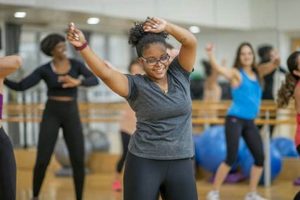
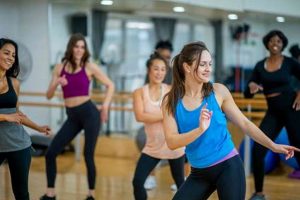
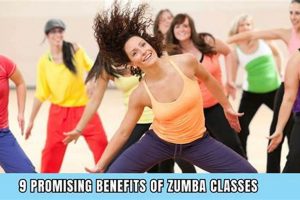
A group fitness program that combines Latin and international music with dance moves. It integrates elements of aerobics, interval training, and resistance exercise. The routines incorporate hip-hop, soca, samba, salsa, merengue and mambo. Squats and lunges are also included.
Its appeal lies in its accessible, party-like atmosphere, promoting physical activity through enjoyment. The benefits encompass cardiovascular improvement, calorie expenditure, enhanced coordination, and stress reduction. Originating in the mid-1990s, the program has since expanded globally, becoming a popular option for individuals seeking a fun and effective workout.
The following sections will delve deeper into the structure of these sessions, the typical exercises involved, and the skills required to participate. Furthermore, it will explore how to maximize individual benefit from this type of fitness activity. The various modifications available to accommodate different fitness levels will be outlined.
Tips for Engaging in a Zumba Class
This section provides essential guidelines for maximizing the benefits derived from participation in a Zumba class.
Tip 1: Prioritize Proper Footwear. Adequate support and cushioning are critical to prevent ankle or knee injuries. Select athletic shoes designed for lateral movement.
Tip 2: Hydrate Consistently. Dehydration can impede performance and increase the risk of muscle cramps. Ensure sufficient water intake before, during, and after the session.
Tip 3: Master Basic Steps Initially. Focus on learning core movements before attempting advanced variations. This facilitates correct form and reduces the likelihood of errors.
Tip 4: Listen to the Body’s Signals. If experiencing pain or discomfort, modify movements or take a break. Overexertion can result in injury.
Tip 5: Arrive Prepared with Appropriate Attire. Wear comfortable, breathable clothing that allows for a full range of motion. Avoid restrictive garments.
Tip 6: Consider Class Format and Instructor Style. Different instructors emphasize different rhythms and intensity levels. Explore various classes to find the best fit for individual preferences.
Tip 7: Focus on Core Engagement. Maintaining a braced core throughout the workout will improve stability and protect the spine.
These guidelines will contribute to a safer and more rewarding experience, allowing participants to reap the full physical and mental benefits of Zumba training.
The subsequent section will explore common misconceptions regarding Zumba and address potential safety concerns to further inform prospective participants.
1. Dance-fitness integration

The incorporation of dance and fitness techniques is a foundational characteristic of the Zumba program, distinguishing it from conventional exercise regimens.
- Choreographic Structure
The routines are designed to seamlessly blend dance steps with fitness movements. The choreographed sequences integrate various dance styles, such as salsa, merengue, and cumbia, while simultaneously incorporating fitness elements like squats, lunges, and interval training. This dual approach facilitates a comprehensive workout that targets multiple muscle groups and improves cardiovascular health.
- Motivational Impact
The integration of dance serves as a significant motivator for participants. The party-like atmosphere, driven by upbeat music and engaging choreography, encourages sustained participation and reduces the perceived exertion associated with traditional exercise. The focus on movement and rhythm, rather than solely on physical exertion, fosters a positive and enjoyable experience.
- Accessibility and Adaptability
The dance-fitness integration promotes accessibility to individuals of diverse fitness levels. The basic steps are relatively simple to learn, and instructors typically offer modifications to accommodate different abilities. This adaptability allows participants to gradually increase the intensity and complexity of the routines as their fitness improves.
- Cognitive Benefits
The requirement to learn and execute dance sequences engages cognitive functions, such as memory, coordination, and spatial awareness. Participants must actively remember and synchronize their movements with the music, which contributes to improved cognitive performance and enhanced motor skills. The integration of mental and physical activity provides a more holistic approach to overall well-being.
In conclusion, the combination of dance and fitness creates a unique and effective workout modality within a Zumba session. This approach promotes physical activity, engagement, and enjoyment for individuals with different fitness backgrounds. It also presents a blend of health benefits related to cardiovascular function, muscular endurance, cognitive process, and general stress levels.
2. Latin-inspired rhythms

The integration of Latin-inspired rhythms forms a core component. These rhythms are not merely aesthetic additions; they are fundamental to the program’s structure and its distinctive approach to fitness. The infectious energy and diverse musical styles inherent in Latin music, such as salsa, merengue, cumbia, and reggaeton, dictate the movement patterns and intensity levels that characterize a typical session. For example, the fast-paced footwork of a salsa routine can elevate heart rate quickly, while the swaying motions of a cumbia sequence may improve core stability and balance. The use of Latin music has a direct impact on participant engagement and motivation. The energetic and culturally relevant music encourages participants to move more freely and expressively, which, in turn, enhances the overall workout experience.
The importance of these rhythms extends beyond mere enjoyment. The specific rhythmic patterns and tempos dictate the timing and coordination required for executing each move effectively. For instance, the syncopated beats of samba demand precise footwork and body isolations, thereby improving agility and spatial awareness. The consistent exposure to diverse Latin musical styles also provides participants with a form of cultural immersion. The exposure can foster appreciation for Latin culture and increase personal engagement. Beyond the fitness benefits, the rhythmic components of a class can provide a form of stress relief and emotional release. The expressive nature of the dance movements, combined with the uplifting rhythms, facilitates a sense of joy and liberation, which can contribute to improved mental and emotional well-being.
In summary, Latin-inspired rhythms are an intrinsic aspect, driving the choreography, influencing participant engagement, and contributing to the program’s distinct character. Understanding the relationship between Latin rhythms and program structure is essential for participants to maximize their workout experience and benefit from the holistic advantages. The incorporation of Latin music and movements makes it accessible, enjoyable, and culturally relevant, allowing individuals to experience various personal and professional levels of wellness.
3. Interval training included

Interval training forms an integral component of the overall structure. Its presence contributes significantly to the exercise benefits and distinguishes it from continuous, steady-state workouts.
- Alternating Intensity Levels
The session incorporates periods of high-intensity exercise interspersed with periods of lower-intensity recovery. For example, a fast-paced salsa sequence may be followed by a slower, more controlled merengue segment. This fluctuation in intensity challenges the cardiovascular system, leading to improved aerobic capacity and calorie expenditure.
- Enhanced Calorie Expenditure
Compared to steady-state exercise, interval training promotes increased calorie burning both during and after the workout. The body expends more energy recovering from high-intensity bursts, resulting in a prolonged metabolic effect. This element is particularly relevant for individuals seeking weight management or improved body composition.
- Improved Cardiovascular Fitness
The alternating demands placed on the heart and lungs lead to adaptations that improve cardiovascular function. The heart becomes more efficient at pumping blood, and the lungs become more effective at extracting oxygen. As a result, individuals experience increased endurance and overall fitness.
- Reduced Risk of Plateaus
The variability of interval training helps prevent the body from adapting to a consistent workload. By constantly challenging the system in different ways, individuals are more likely to continue seeing progress in their fitness levels over time. This variety maintains engagement and avoids the stagnation often associated with repetitive exercise routines.
The incorporation of interval training enhances its efficacy as a fitness activity, offering a multifaceted approach to improving cardiovascular health, calorie expenditure, and overall physical conditioning. This structure ensures a dynamic and challenging workout experience, maximizing the potential for participants to achieve their fitness goals. By combining high-energy dance moves with strategic bursts of intensity, it becomes a highly effective means of physical conditioning.
4. Calorie expenditure promoted
Within a session, the principle of calorie expenditure is actively promoted via sustained physical activity and variations in intensity. The integration of both high-impact and low-impact movements necessitates the body’s utilization of stored energy, resulting in an elevated metabolic rate during and after the activity. As an example, a 60-minute class may result in an average calorie expenditure ranging from 300 to 900 calories, contingent upon individual factors such as weight, fitness level, and exertion. This considerable energy expenditure is a primary factor driving its popularity as a weight management and fitness enhancement tool.
The promotion of calorie expenditure in these class environments directly correlates with improved cardiovascular health and metabolic function. Participants engaging in regular classes may experience reductions in body fat percentage, improvements in cholesterol levels, and enhanced insulin sensitivity. Furthermore, the emphasis on energetic movement and group participation contributes to increased adherence to the program, fostering long-term behavioral changes related to physical activity. This creates a positive feedback loop, wherein the enjoyment of the class promotes consistent attendance, leading to further improvements in physical health and calorie management.
In summary, calorie expenditure is a fundamental characteristic of, and primary benefit derived from participation in, a Zumba class. Its emphasis on dynamic movement and varying intensity levels facilitates a substantial metabolic response, contributing to weight management, improved cardiovascular health, and enhanced metabolic function. This principle underpins its effectiveness as a popular and widely accessible fitness modality. Therefore, the promotion of calorie use within a Zumba context not only aids in achieving immediate fitness goals but also supports the maintenance of long-term wellness.
5. Cardiovascular improvement
Cardiovascular improvement is a significant health benefit associated with regular participation. Its dynamic structure, characterized by varying intensity levels and continuous movement, presents a potent stimulus for enhancing the circulatory system.
- Increased Heart Rate Variability
During a typical session, heart rate fluctuates significantly, mirroring the shifts between high-intensity dance sequences and lower-impact recovery periods. This variability challenges the heart muscle, promoting increased efficiency and improved adaptation to changing physical demands. Regular exposure to such fluctuations can lead to enhanced heart rate variability, a marker of cardiovascular health and resilience.
- Enhanced Oxygen Uptake
The combination of aerobic dance movements and interval training stimulates increased oxygen uptake by the body. As participants engage in faster-paced choreography, the lungs work more effectively to deliver oxygen to working muscles. The increased oxygen demand prompts physiological adaptations that enhance the body’s capacity to extract and utilize oxygen during physical exertion. This improvement translates to increased endurance and reduced fatigue during daily activities.
- Improved Blood Lipid Profile
Consistent participation can positively impact blood lipid profiles. Regular aerobic exercise has been shown to reduce levels of LDL cholesterol (often referred to as “bad” cholesterol) and triglycerides, while simultaneously increasing levels of HDL cholesterol (“good” cholesterol). These favorable changes in blood lipid profiles contribute to a reduced risk of atherosclerosis and cardiovascular disease.
- Reduced Blood Pressure
Participation can contribute to a decrease in resting blood pressure. The physical activity stimulates the release of nitric oxide, a vasodilator that helps relax blood vessels and improve blood flow. Over time, regular engagement in aerobic exercise can lead to sustained reductions in blood pressure, mitigating the risk of hypertension and associated cardiovascular complications.
In conclusion, cardiovascular improvement is a multifaceted benefit derived from the dynamic and engaging nature of these classes. The combination of increased heart rate variability, enhanced oxygen uptake, improved blood lipid profiles, and reduced blood pressure underscores the efficacy of this fitness modality in promoting overall cardiovascular well-being. Participation in such classes offers a practical and enjoyable means of achieving and maintaining optimal cardiovascular health.
6. Coordination enhancement

The execution of choreographed routines, a defining characteristic of this type of class, directly fosters coordination enhancement. Participants are required to synchronize movements with music, a process that necessitates precise timing, spatial awareness, and motor control. For instance, a sequence involving a salsa step, followed by a merengue turn, demands the integration of different movement patterns within a specific rhythmic framework. Repeated exposure to such exercises stimulates the development of neural pathways, leading to improved neuromuscular efficiency.
The importance of coordination enhancement extends beyond the physical domain. Enhanced coordination contributes to improved balance and stability, reducing the risk of falls, particularly in older adults. Moreover, the cognitive demands of learning and executing dance routines can enhance memory, focus, and cognitive flexibility. Consider, for example, an individual who initially struggles to coordinate footwork and arm movements but, with practice, gradually develops proficiency. This process strengthens the mind-body connection and cultivates a greater sense of kinesthetic awareness.
In summary, coordination enhancement is an intrinsic benefit derived from participation in a this class. The structured integration of dance movements with rhythmic music promotes improved motor skills, balance, and cognitive function. Understanding the link between coordinated movement and these types of classes highlights its value as a comprehensive fitness modality with benefits extending beyond cardiovascular health and calorie expenditure.
7. Stress reduction enabled

The rhythmic movements, social interaction, and musicality inherent in a session collectively contribute to stress reduction. The physical exertion prompts the release of endorphins, natural mood elevators that counteract the physiological effects of stress. Endorphins interact with receptors in the brain that reduce perception of pain and trigger a positive feeling in the body. This biological response is amplified by the group setting and the engaging nature of the dance movements. A study in the Journal of Sport & Exercise Psychology found that group exercise, particularly dance-based programs, resulted in significantly lower perceived stress levels compared to individual workouts.
Furthermore, the focus on choreography and rhythm diverts attention from daily stressors and anxieties, providing a mental respite. The combination of physical activity and focused concentration creates a “flow state,” characterized by a sense of energized focus, full involvement, and enjoyment. This state effectively interrupts negative thought patterns and promotes a sense of calm. Many participants report experiencing a release of tension and emotional catharsis during and after a class, indicating a reduction in accumulated stress. Additionally, the social support and camaraderie within the class environment offer a valuable source of emotional support, further mitigating stress levels.
In summary, the stress reduction enabled through participation in these sessions is a multifaceted benefit arising from the interplay of physical activity, social interaction, and cognitive engagement. The release of endorphins, diversion from daily stressors, and social support contribute to a comprehensive stress management strategy. Understanding this connection underscores the potential of this fitness modality as a means of promoting mental and emotional well-being, in addition to physical health. The collective experience of rhythmic movement and social connection contributes to an overall reduction in perceived stress and an enhanced sense of well-being, solidifying its value as a stress-reducing activity.
Frequently Asked Questions about What’s a Zumba Class
This section addresses common inquiries and dispels misconceptions surrounding Zumba classes, providing prospective participants with accurate information.
Question 1: What specific attire is recommended?
Comfortable, breathable athletic clothing is advised. The attire should allow for a full range of motion without restriction. Athletic shoes providing adequate support and cushioning are also essential. Bare feet or street shoes are not appropriate.
Question 2: Is prior dance experience necessary?
No prior dance experience is required. The routines are designed to be accessible to individuals of all fitness and experience levels. Instructors typically provide modifications for different abilities.
Question 3: What is the typical duration of a class?
Most classes are 60 minutes in length, including a warm-up and cool-down period. Some classes may be shorter or longer, depending on the format and instructor.
Question 4: Is it suitable for individuals with physical limitations?
Individuals with physical limitations should consult with their physician before participating. Modifications can often be made to accommodate various conditions, but instructor awareness of limitations is critical.
Question 5: What should one expect during the initial class?
New participants can expect a high-energy, engaging workout experience. The focus will be on learning basic steps and following the instructor’s cues. There may be a degree of initial disorientation, but consistent participation will facilitate familiarity with the routines.
Question 6: How does it differ from traditional aerobics?
Unlike traditional aerobics, the activity emphasizes dance movements and Latin rhythms. The focus is on enjoying the music and movement, rather than strict adherence to specific steps or repetitions. The integration of interval training also sets it apart.
In summary, these Q&A pairs provide essential information, allowing prospective participants to make informed decisions regarding their involvement.
The following section will explore the potential safety considerations of engaging in a Zumba class.
Concluding Remarks on Zumba Classes
This exploration has provided a comprehensive overview of what a Zumba class entails, encompassing its foundational elements, derived benefits, and potential considerations. The synthesis of dance and fitness principles, the integration of Latin-inspired rhythms, and the promotion of cardiovascular improvement have been delineated as integral aspects. Likewise, the emphasis on calorie expenditure, coordination enhancement, and stress reduction has been presented as substantial advantages.
Ultimately, the decision to participate in this type of fitness activity necessitates careful consideration of individual fitness levels, potential limitations, and personal objectives. Prospective participants are encouraged to consult with healthcare professionals and qualified instructors to ascertain suitability and optimize the benefits derived from engagement. Informed participation is paramount to ensure a safe and rewarding fitness experience.