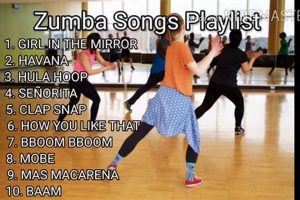
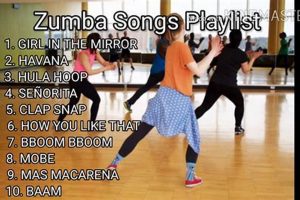
Musical selections utilized within a Zumba fitness program represent a critical element of the overall experience. These tracks are carefully curated to provide the energy and rhythmic foundation for various dance-fitness routines. The selection process often involves considering factors such as tempo, genre, and the cultural relevance of the music.
The strategic incorporation of these rhythmic pieces significantly enhances the effectiveness of Zumba sessions. High-energy music motivates participants, encouraging them to maintain intensity and engagement throughout the workout. Furthermore, the diverse range of musical styles, encompassing Latin, international, and popular genres, contributes to the program’s global appeal and accessibility. Historically, the integration of world music has been a defining characteristic, promoting cultural appreciation alongside physical fitness.
The following sections will delve into specific aspects of this musical element. We will examine the criteria for selection, popular genres commonly featured, and the impact of music licensing on the program’s implementation.
Strategic Selection of Rhythmic Components for Zumba Fitness Programs
The effective implementation of a Zumba fitness program hinges significantly on the strategic selection of its rhythmic components. Prioritizing suitability can maximize participant engagement and optimize the fitness benefits derived from each session.
Tip 1: Tempo Considerations. Selection should begin with a focus on appropriate tempos. Music employed needs to align with the intended intensity level of the routines. Higher intensity routines benefit from faster tempos, while slower tempos are more suited for cool-down periods or routines requiring greater precision of movement.
Tip 2: Genre Diversity. Broaden the selection to incorporate a diverse range of genres. Exposure to various Latin rhythms, alongside international and popular music, can enhance cultural appeal and maintain participant interest over extended periods.
Tip 3: Rhythmic Variation. Introduce rhythmic variation within playlists. This ensures that participants are consistently challenged and engaged, preventing monotony and promoting adaptation to different movement patterns.
Tip 4: Structuring of Songs. Consider the structure of songs for effective exercise transitions. Intro beats and clear verses are necessary in this regard, to help participants transition into, maintain, and exit the song’s movements.
Tip 5: Cue Integration. Select music that allows for easy integration of verbal and non-verbal cues. Clear musical phrasing facilitates instructors in guiding participants through complex choreography.
Tip 6: Licensing Compliance. Adhere strictly to copyright regulations and licensing agreements. Ensure that all musical selections are appropriately licensed for public performance within a fitness context.
Tip 7: Continuous Evaluation. Regularly evaluate the effectiveness of the rhythmic selections. Monitor participant feedback and adjust playlists accordingly to optimize engagement and satisfaction.
Strategic consideration of these factors can significantly improve the effectiveness of a Zumba program, creating a more engaging, culturally enriching, and physically beneficial experience for all participants.
The concluding section will summarize the broader impact of carefully considered rhythmic choices and will discuss future trends in the domain of group fitness music.
1. Rhythm Intensity

Rhythm intensity, referring to the tempo and rhythmic complexity of music used, directly influences the physiological and psychological impact of Zumba fitness sessions. The selection of musical pieces with appropriate rhythm intensity is a critical factor in achieving the desired fitness outcomes. A correlation exists between the tempo of the music and the heart rate of participants; higher tempos generally elicit elevated heart rates, contributing to cardiovascular conditioning. For example, routines designed to improve aerobic endurance often incorporate music with tempos in the range of 130-145 beats per minute (BPM), while lower-intensity segments, such as warm-ups or cool-downs, utilize music with significantly reduced tempos.
The practical significance of understanding rhythm intensity lies in its ability to modulate the exercise intensity levels within a Zumba class. Instructors strategically manipulate the rhythm intensity to target specific fitness goals, such as fat burning or muscle toning. Moreover, the careful selection of musical pieces with varying rhythm intensities allows for the creation of balanced and progressive workout programs. By progressively increasing rhythm intensity over time, instructors can facilitate gradual improvements in participants’ fitness levels while minimizing the risk of injury. A Zumba routine that begins with a moderate-tempo salsa track, transitions to a high-energy reggaeton song, and concludes with a slower-paced cumbia piece illustrates the practical application of varied rhythm intensity.
In summary, the appropriate selection and manipulation of rhythm intensity within musical selections is a fundamental component of effective Zumba class design. Failure to account for rhythm intensity can compromise the effectiveness of the workout and potentially increase the risk of injury. Integrating a carefully considered approach to the arrangement of musical rhythm is vital for Zumba instructors to deliver safe, effective, and engaging fitness experiences.
2. Genre Diversity

Genre diversity, in the context of musical selections for Zumba fitness sessions, is a strategic element contributing to participant engagement and program accessibility. The inclusion of a variety of musical genres expands the appeal of Zumba, accommodating diverse cultural backgrounds and preferences within a single class environment.
- Cultural Representation
Genre diversity allows for the representation of various cultures and geographic regions within the Zumba program. The inclusion of Latin rhythms (Salsa, Merengue, Cumbia), international genres (Bollywood, Soca, African Dance), and popular music provides participants with exposure to different musical traditions. This enhances the educational aspect of the program and fosters a sense of inclusivity. Neglecting cultural representation limits accessibility and potentially alienates certain demographic groups.
- Enhanced Engagement
Exposure to diverse genres mitigates the risk of monotony, thereby enhancing participant engagement over extended periods. Different genres offer varying rhythmic structures, tempos, and choreographic possibilities, which stimulate different muscle groups and cognitive processes. A Zumba class incorporating Salsa, followed by Reggaeton, and concluding with a Bollywood-inspired routine demonstrates the practical application of this facet. The contrast in music maintains interest and challenges participants in novel ways.
- Expanded Choreographic Possibilities
Genre diversity directly informs the range of choreographic styles that can be incorporated. Latin genres naturally lend themselves to partner-style steps and hip movements, while African rhythms encourage dynamic full-body movements. Popular music provides a familiar foundation for incorporating contemporary dance trends. Limiting genre selection restricts the choreographic possibilities and potentially diminishes the overall fitness benefits derived from the session.
- Accessibility and Inclusivity
Offering a wide range of genres ensures that the program caters to individuals with varying musical tastes and fitness backgrounds. Participants who may not be familiar with traditional Latin dance styles can find entry points through the incorporation of more familiar popular music genres. Creating an inclusive environment fosters a sense of community and promotes long-term adherence to the Zumba program.
The strategic implementation of genre diversity within musical selections for Zumba fitness significantly impacts participant experience, contributing to enhanced engagement, broader cultural exposure, and increased program accessibility. The effective integration of a variety of genres represents a fundamental element of a well-designed and successful Zumba program.
3. Cultural Relevance

Cultural relevance, in the context of music utilized in Zumba fitness classes, significantly influences participant engagement, program authenticity, and overall impact. Music selections reflective of specific cultural traditions, and sensitive to cultural nuances, are essential for creating an inclusive and respectful fitness environment.
- Authenticity of Rhythmic Expression
The authenticity of the chosen musical selections directly impacts the genuineness of the movement experience. Utilizing rhythms and melodies accurately representative of a particular cultural heritage ensures that the dance movements are performed with appropriate style and intention. For instance, a Zumba routine incorporating Salsa music should adhere to the rhythmic structure and musical phrasing characteristic of traditional Salsa, as opposed to a generic Latin-infused pop song. This authenticity fosters a deeper connection between the participant, the music, and the cultural tradition it embodies.
- Respect for Cultural Heritage
Careful consideration must be given to the historical and social context of the music employed. Certain musical genres may be associated with specific cultural events, rituals, or social movements. Utilizing such music in a fitness context requires sensitivity to its original purpose and meaning. Inappropriately incorporating sacred or culturally sensitive music can be perceived as disrespectful or trivializing, leading to cultural appropriation. Selecting music with thoughtful awareness of its cultural significance promotes respect and prevents misrepresentation.
- Representation and Inclusivity
Zumba fitness classes often attract diverse participants from varied cultural backgrounds. The musical selection offers a powerful opportunity to represent and celebrate this diversity. Incorporating music from different cultures fosters a sense of belonging and inclusivity among participants. For example, a Zumba class may include segments featuring Bollywood music, African rhythms, or Caribbean beats. Such representation not only caters to the preferences of specific cultural groups but also exposes all participants to a broader range of musical traditions.
- Avoiding Cultural Appropriation
Care must be taken to avoid cultural appropriation, which occurs when elements of a minority culture are adopted by members of the dominant culture without understanding or respecting their original meaning. This can manifest in the superficial or exploitative use of music or dance styles without acknowledging their cultural origins. To avoid appropriation, instructors should research the historical and cultural context of the music they use and engage with members of the relevant cultural communities. Acknowledging the origins of the music and giving credit to the artists and cultures that created it demonstrates respect and promotes cultural understanding.
The conscientious integration of culturally relevant music within Zumba classes fosters a fitness environment that is not only physically engaging but also culturally enriching and respectful. By prioritizing authenticity, sensitivity, and representation, instructors can create a positive and inclusive experience for all participants, while also promoting greater awareness and appreciation of diverse cultural traditions within the context of fitness.
4. Instructional Cues

The effective integration of instructional cues within musical selections is a fundamental component of successful Zumba fitness classes. The rhythmic structure and phrasing within a Zumba song provide essential cues for instructors to guide participants through choreography. The strategic placement of verbal or non-verbal cues, synchronized with musical accents or transitions, directly affects the clarity and flow of the workout. Without appropriately embedded instructional cues, participants struggle to anticipate movements, hindering their ability to execute choreography accurately and maintain the desired intensity level. A practical example involves a Salsa track where a distinct musical break signals a change in steps, allowing instructors to provide a corresponding verbal cue, such as “Step right,” thus ensuring synchronization and minimizing confusion.
The significance of clearly defined musical cues extends beyond simply signaling step changes. It enables instructors to layer more complex choreography on top of the foundational rhythms. By aligning cues with predictable musical patterns, instructors create opportunities for participants to anticipate variations and adapt to progressively challenging routines. This promotes cognitive engagement and fosters a sense of accomplishment as participants master new sequences. For example, in a Merengue track, a specific percussive element may be used to indicate the start of a grapevine sequence, with visual cues reinforcing the auditory signal. This multi-sensory approach enhances learning and improves retention of choreography.
In conclusion, the symbiotic relationship between instructional cues and rhythmic components within Zumba selections is essential for creating an effective and engaging fitness experience. Properly integrated cues facilitate clear communication, enhance choreographic comprehension, and promote a sense of flow within the class. Ignoring this critical connection can result in participant frustration, reduced workout efficacy, and diminished overall satisfaction. Ongoing attention to the strategic integration of instructional cues within the musical framework of Zumba remains paramount for delivering high-quality fitness programming.
5. Licensing Compliance

Licensing compliance represents a critical, and often overlooked, aspect of Zumba class programming. The unauthorized use of copyrighted music in fitness classes carries significant legal and financial implications for instructors and facilities. A thorough understanding of licensing requirements is essential for ethical and sustainable operation of Zumba programs.
- Public Performance Rights
Public performance rights are granted to copyright holders of musical works, allowing them to control how their music is performed publicly. Fitness classes, including Zumba, constitute public performances. Instructors must secure licenses from performing rights organizations (PROs) such as ASCAP, BMI, and SESAC in the United States, or their equivalents in other countries, to legally play copyrighted music. Failure to obtain these licenses constitutes copyright infringement and can result in substantial penalties. For example, a Zumba instructor playing unlicensed music at a local gym could be subject to fines for each instance of copyright violation.
- Synchronization Licenses
While public performance licenses cover the performance of the music itself, synchronization licenses are required when music is synchronized with visual media, such as in Zumba videos or online classes. Creating and distributing Zumba workout videos online without the appropriate synchronization licenses is a separate violation of copyright law and carries additional legal risks. A Zumba instructor who creates a YouTube video using copyrighted music without permission is infringing on the copyright owner’s rights. Securing these licenses can be a complex and costly process.
- Cover Song Considerations
Playing cover songs does not circumvent the need for licensing. While the instructor is not playing the original recording, the underlying musical composition is still protected by copyright. The same public performance licensing requirements apply to cover songs as they do to original recordings. A Zumba instructor using a cover band’s rendition of a popular song must still obtain the necessary licenses to publicly perform the musical composition.
- Consequences of Non-Compliance
The consequences of failing to comply with music licensing laws can be severe. Copyright holders have the right to sue infringers for damages, which can include statutory damages per song played illegally, as well as attorney’s fees. Repeated violations can result in cease and desist orders, preventing instructors from continuing to use copyrighted music in their classes. Furthermore, gyms and fitness facilities can also be held liable for the actions of their instructors, potentially leading to legal action against the facility itself. The financial burden of non-compliance can be crippling for individual instructors and businesses alike.
The complexities of music licensing necessitate a proactive approach for Zumba instructors. Obtaining the necessary licenses, accurately reporting music usage, and staying informed about copyright law are essential steps to ensure legal and ethical operation. Failing to prioritize licensing compliance can have devastating consequences for individuals and businesses operating within the Zumba fitness industry.
Frequently Asked Questions
The following addresses common inquiries regarding the selection, usage, and legal aspects of musical compositions within Zumba fitness programs.
Question 1: What criteria govern the selection of appropriate musical tracks for a Zumba session?
Selection criteria include tempo, genre diversity, cultural relevance, rhythmic clarity, and suitability for choreographic interpretation. Music should align with the intended intensity level and facilitate seamless integration of instructional cues.
Question 2: How does the tempo of the music impact the overall effectiveness of a Zumba workout?
Tempo is a primary determinant of exercise intensity. Higher tempos elevate heart rates, promoting cardiovascular conditioning, while lower tempos are more appropriate for warm-ups, cool-downs, or exercises requiring precise movements.
Question 3: Why is genre diversity considered important in a Zumba class setting?
Genre diversity enhances engagement by accommodating diverse cultural backgrounds and musical preferences. Exposure to various rhythms mitigates monotony and stimulates different muscle groups and cognitive processes.
Question 4: What constitutes cultural relevance in the selection of musical compositions for Zumba?
Cultural relevance involves selecting music reflective of specific cultural traditions while remaining sensitive to cultural nuances. Authentic representation, respect for cultural heritage, and inclusivity are paramount to avoiding cultural appropriation.
Question 5: How do instructional cues relate to the musical components of a Zumba class?
Instructional cues, whether verbal or non-verbal, must be synchronized with musical accents or transitions to facilitate clear communication and accurate execution of choreography. Predictable musical patterns create opportunities for layering complex movements.
Question 6: What are the legal implications of playing copyrighted music in a Zumba class, and how can instructors ensure compliance?
The unauthorized use of copyrighted music constitutes copyright infringement. Instructors must secure public performance licenses from performing rights organizations (PROs) and, if applicable, synchronization licenses. Compliance requires diligent reporting of music usage and adherence to copyright law.
In summary, careful consideration of musical attributes and legal obligations is essential for delivering safe, effective, and legally compliant Zumba fitness programs. Prioritizing appropriate selection, cultural sensitivity, and legal adherence ensures a positive experience for participants and protects instructors from legal repercussions.
The subsequent section will explore emerging trends in music selection and technology integration within the Zumba fitness industry.
Conclusion
The preceding analysis has illuminated the multifaceted role of Zumba class songs within the broader context of fitness programming. From the strategic selection of rhythms to the imperative of licensing compliance, musical elements significantly influence participant engagement, cultural representation, and legal accountability. Emphasis has been placed on the interplay between tempo, genre diversity, instructional cues, and cultural sensitivity, each contributing to the overall efficacy and sustainability of Zumba classes.
The effective utilization of rhythmic components requires diligence and a commitment to ethical practices. As the fitness industry evolves, ongoing attention to musical innovation, legal compliance, and participant preferences remains essential. The informed application of these principles will ensure the continued success and positive impact of Zumba programs worldwide.