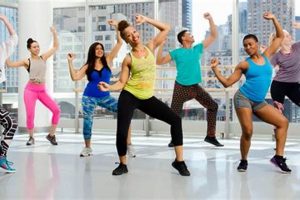
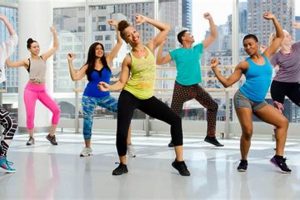
This specific dance style represents a fusion of Kizomba, a partner dance originating in Angola, with elements of Zumba, a fitness program incorporating Latin rhythms and movements. This combination results in a workout that blends the sensuality and connection of Kizomba with the energetic and accessible nature of Zumba, creating a unique experience for participants.
This activity offers multiple benefits, extending beyond physical fitness. The Kizomba component fosters partner work and communication skills, enhancing coordination and body awareness. Zumba’s influence introduces a high-energy, fun environment that encourages cardiovascular health and improves overall mood. Historically, both Kizomba and Zumba have roots in cultural expression and community building, contributing to the inclusive and social aspects of this hybrid form.
The subsequent sections will delve deeper into the specific steps and techniques involved, explore the musicality that drives the movements, and outline the advantages of participating in this activity for physical and mental well-being. It will also consider its place within broader dance and fitness contexts.
Guidance for Optimizing the Kizomba-Zumba Dance Experience
The following guidelines are designed to enhance the effectiveness and enjoyment of integrating the Kizomba and Zumba dance disciplines, thereby maximizing physical and artistic expression.
Tip 1: Foundation in Fundamentals: Prior to engaging in complex routines, establish a solid base in both Kizomba’s basic steps and Zumba’s core movements. A strong foundation ensures proper technique and reduces the risk of injury.
Tip 2: Partner Communication is Paramount: In partnered segments, clear and consistent communication is vital. Subtle cues and adjustments between partners ensure synchronized movement and prevent misinterpretations.
Tip 3: Emphasize Posture and Alignment: Maintain correct posture throughout the activity. Proper alignment optimizes muscle engagement, improves balance, and promotes long-term physical well-being.
Tip 4: Musicality and Rhythm: Listen attentively to the music. Understanding the rhythm and nuances of both Kizomba and Zumba soundtracks allows for more fluid and expressive movement.
Tip 5: Gradual Progression: Increase intensity and complexity gradually. Avoid overexertion by allowing the body to adapt to new movements and rhythms over time. This approach supports sustainable participation.
Tip 6: Appropriate Attire: Selection of appropriate clothing and footwear is crucial for comfort and safety. Choose breathable materials and shoes that provide adequate support and traction on the dance floor.
Tip 7: Hydration and Recovery: Ensure adequate hydration before, during, and after engaging in this type of dance. Post-activity stretching and rest are essential for muscle recovery and preventing stiffness.
Adherence to these principles promotes a safer, more effective, and more enriching experience. Mastering these aspects will lead to greater confidence and skill within this dance form.
The concluding section will explore advanced techniques and further resources for individuals seeking to deepen their understanding and proficiency in this unique blend of dance and fitness.
1. Rhythmic synchronization

Rhythmic synchronization forms a foundational element of this dance form, enabling cohesive movement and expressive potential. It necessitates a keen awareness of musical timing and the ability to translate auditory cues into coordinated physical action. The interplay between partners further amplifies the complexity, requiring both individual precision and mutual responsiveness.
- Tempo Alignment
Tempo alignment involves the precise matching of movement speed to the underlying beat of the music. In this context, dancers must accurately interpret the tempo of Kizomba rhythms, which often feature syncopated patterns, and seamlessly integrate them with the energetic pulse of Zumba. Discrepancies in tempo can lead to disjointed movements and a loss of fluidity.
- Pattern Harmony
Pattern harmony pertains to the coordinated execution of dance sequences. This requires both leaders and followers to anticipate and respond to changes in steps and formations, maintaining visual and physical connection. Examples include synchronized turns, traveling steps, and weight shifts, all performed in unison to create a unified aesthetic.
- Energy Concordance
Energy concordance focuses on the dynamic matching of energy levels between partners and within the group. Whether it’s the smooth, grounded energy of Kizomba or the high-impact exuberance of Zumba, dancers must adjust their intensity to reflect the overall mood and character of the music and movement. Mismatched energy can disrupt the flow and diminish the impact of the performance.
- Pulse Integration
Pulse integration describes the internalizing of the rhythmic pulse, leading to movements that are not just on the beat, but imbued with the spirit of the music. The dancers respond instinctively, expressing the rhythmic feel in their posture, weight shifts, and expressive gestures, conveying a sense of seamless connection to the music and their partner.
The culmination of these rhythmic facets elevates the dance beyond mere physical exercise, transforming it into a dynamic form of artistic expression. It illustrates how individuals are responding both on and off the beat and how the synchronization works to create something greater than the parts.
2. Partner Connection
Partner connection represents a critical element within this dance framework, directly influencing its execution, aesthetic appeal, and potential benefits. As a hybrid form integrating Kizomba, a partner dance, a strong connection becomes paramount. The degree of rapport between dancers dictates their ability to execute intricate steps, maintain synchronization, and convey the intended emotion and expression embedded within the choreography. The interaction extends beyond physical contact, encompassing non-verbal communication and a shared understanding of the music’s underlying nuances.
Successful partner work leads to several practical outcomes. Improved coordination between individuals enhances spatial awareness and body control. Furthermore, it encourages a reciprocal learning environment where both participants refine their skills through observation and adaptation. As an example, in a complicated sequence involving a lead and follow dynamic, a clear and supportive connection can enable dancers to navigate the pattern seamlessly, showcasing their mastery of the style while creating a shared experience. Without that connection, the choreography might appear disjointed, leading to mistakes and a reduced sense of accomplishment.
In summary, partner connection serves as a cornerstone of this dance form. Its presence enriches the physical and artistic dimensions of the experience, fostering coordination, communication, and a shared sense of accomplishment. The integration of these points culminates in a more engaging and rewarding encounter for those involved, emphasizing the importance of nurturing the connection when participating in partnered dance styles.
3. Cardiovascular Exertion

Cardiovascular exertion constitutes a fundamental component of the physical benefits derived from engaging in this particular dance form. As a hybrid activity, it blends the partner-oriented movements of Kizomba with the high-energy routines of Zumba, creating a dynamic workout that significantly elevates heart rate and metabolic activity.
- Elevated Heart Rate Variability
The rapid shifts between Kizomba’s controlled, grounded steps and Zumba’s more energetic, expansive movements result in heightened heart rate variability. This fluctuation challenges the cardiovascular system, promoting increased efficiency and resilience. Unlike steady-state cardio, the varying intensity keeps the body from adapting as quickly, leading to greater caloric expenditure and improved cardiovascular conditioning.
- Increased Oxygen Consumption
The dynamic choreography and continuous motion inherent in this dance stimulate increased oxygen consumption. This demand forces the body to work harder to deliver oxygen to working muscles, improving lung capacity and overall aerobic fitness. The combination of partner work and rhythmic movements encourages deeper, more frequent breathing, further enhancing oxygen uptake and utilization.
- Enhanced Caloric Expenditure
The continuous, high-energy nature of this activity results in substantial caloric expenditure. The combination of complex footwork, body isolations, and partner coordination requires significant energy input, promoting weight management and improved body composition. The engaging and enjoyable nature of the dance can make it a more sustainable and effective method for achieving caloric deficits compared to more traditional forms of exercise.
- Improved Peripheral Circulation
The continuous movement and muscle engagement stimulate improved peripheral circulation. The increased blood flow helps to deliver nutrients to tissues and remove waste products, promoting faster recovery and reducing the risk of muscle soreness. This enhanced circulation also contributes to improved overall vascular health, reducing the risk of cardiovascular disease.
In summary, the cardiovascular exertion elicited by this dance represents a critical factor in its overall health benefits. The combination of increased heart rate variability, oxygen consumption, caloric expenditure, and improved peripheral circulation makes it an effective and enjoyable form of exercise for promoting cardiovascular health and overall physical well-being. This positions it as a valuable activity for individuals seeking to improve their fitness levels while engaging in a culturally enriching and socially engaging experience.
4. Cultural integration
The hybrid dance form inherently embodies cultural integration, primarily through its fusion of Kizomba’s Angolan roots and Zumba’s Latin American influences. The Kizomba component introduces participants to Angolan music, movement vocabulary, and partner dynamics, offering a glimpse into the cultural traditions of Angola. Zumba, on the other hand, brings in Latin rhythms and dance styles such as salsa, merengue, and cumbia, exposing participants to a broader spectrum of Latin American culture.
The amalgamation of these distinct cultural elements creates a space where individuals can appreciate and learn about different cultural expressions through movement. For example, a class might begin with Kizomba steps emphasizing groundedness and connection, followed by a Zumba sequence incorporating salsa-inspired footwork and arm movements. This juxtaposition allows participants to experience the contrasting yet complementary nature of these cultural forms. Furthermore, instructors often incorporate explanations of the origins and significance of specific movements or music, enriching the learning experience beyond the purely physical.
In conclusion, cultural integration serves as a foundational element, imbuing it with educational and social significance beyond mere physical exercise. It fosters cross-cultural understanding, promotes appreciation for diverse artistic traditions, and creates an inclusive environment where participants can connect with one another through shared movement and cultural exploration.
5. Coordination Refinement

Coordination refinement constitutes a pivotal benefit derived from participation in this dance, influencing both physical proficiency and cognitive function. The complex interplay of steps, rhythms, and partner work necessitates the development of precise motor skills and heightened awareness of spatial relationships. This multifaceted demand contributes to measurable improvements in coordination across various domains.
- Enhanced Motor Sequencing
Motor sequencing, the ability to execute movements in a specific order, is significantly enhanced through consistent practice. The dance routines often involve intricate sequences of steps and arm movements that require precise timing and coordination. For example, transitioning from a Kizomba side step to a Zumba-inspired grapevine requires accurate sequencing of foot placements and body weight shifts. This skill translates to improved performance in other activities that demand precise motor control, such as sports or playing musical instruments.
- Improved Spatial Awareness
Spatial awareness, the ability to perceive and understand one’s position in relation to the surrounding environment, is crucial for successful execution of partnered dance movements. This dance, with its emphasis on partner interaction and synchronized movements, demands a heightened sense of spatial relationships. For instance, navigating a crowded dance floor while maintaining connection with a partner requires constant adjustment of body position and awareness of surrounding dancers. This improved spatial awareness can benefit activities such as driving or navigating unfamiliar environments.
- Heightened Body Awareness (Proprioception)
Proprioception, the sense of one’s body position and movement in space, is sharpened through the constant feedback provided by dancing. The intricate steps and rhythmic patterns require dancers to be acutely aware of their body’s position and movement at all times. Maintaining proper posture and balance while executing complex steps demands a high degree of proprioceptive awareness. This heightened body awareness can improve balance and stability in everyday activities, reducing the risk of falls and injuries.
- Cross-Lateral Coordination
Cross-lateral coordination, the ability to coordinate movements between the left and right sides of the body, is essential for executing many of the dance’s complex steps and patterns. The integration of Kizomba’s grounded movements with Zumba’s more expansive steps requires coordinated use of both sides of the body. Executing a chass to the right followed by a hip roll to the left demands effective communication between the two sides of the body. This improved cross-lateral coordination can enhance cognitive function and improve performance in activities that require bilateral coordination, such as swimming or playing the drums.
These facets collectively underscore the significant impact of coordination refinement. The improved motor sequencing, spatial awareness, proprioception, and cross-lateral coordination contribute to enhanced physical proficiency and cognitive function. As such, participation in this dance extends beyond mere physical exercise, offering tangible benefits for overall well-being and performance in a variety of daily activities.
6. Expressive movement

Expressive movement forms an integral component, serving as a primary means of communication and artistic interpretation. It transcends mere physical activity, becoming a vehicle for conveying emotion, personality, and cultural narrative. In the context of this dance, expressive movement elevates the experience from a simple workout to a form of artistic expression.
- Emotional Conveyance
Emotional conveyance refers to the dancer’s ability to communicate feelings through posture, gesture, and facial expression. Within the dance, steps can be infused with joy, sensuality, or playful energy. For instance, a fluid hip movement during a Kizomba sequence can convey sensuality, while energetic arm movements during a Zumba section communicate excitement. A dancer’s facial expressions, from a focused gaze during a partner connection to a joyful smile during a high-energy segment, further enhances the emotional impact.
- Stylistic Interpretation
Stylistic interpretation involves infusing personal flair and understanding into the movements. Each dance style has a particular aesthetic, but dancers can add their individual interpretation through variations in timing, intensity, and emphasis. In a Kizomba framework, this might involve adding subtle body isolations or rhythmic variations. Within Zumba, this may include variations in the execution of the steps, putting greater or lesser emphasis on certain actions. The ability to express one’s individual style enhances the aesthetic appeal of this dance.
- Narrative Communication
Narrative communication extends beyond individual expression to convey stories and cultural narratives through movement. Certain steps and sequences have cultural origins and symbolic meanings. Understanding and communicating these narratives can add depth and richness to the performance. For example, Kizomba’s close embrace and connection symbolize intimacy and partnership, while Zumba’s Latin rhythms evoke a sense of celebration and community.
- Musical Embodiment
Musical embodiment is the process of translating musical rhythms and nuances into physical movement. Dancers must listen attentively to the music and respond with corresponding physical actions. This involves not only moving in time with the beat but also capturing the subtle variations in melody, dynamics, and instrumentation. By fully embodying the music, dancers enhance the emotional impact of their performance and create a more immersive experience for themselves and their audience.
By embracing these facets, practitioners can transform the dance into a powerful medium for artistic expression and cultural exchange. This emphasizes that engaging in this hybrid form surpasses standard fitness practices, leading to cultural and interpersonal understanding.
Frequently Asked Questions About Ki Zumba Dance
This section addresses common inquiries regarding the nature, execution, and benefits of Ki Zumba dance, providing clear and concise answers to promote a deeper understanding.
Question 1: What are the primary components of Ki Zumba dance?
This dance form primarily combines elements of Kizomba, a partner dance characterized by close connection and rhythmic movement, with Zumba, a fitness program incorporating Latin rhythms and energetic choreography. The integration of these two styles creates a workout that blends sensuality, coordination, and cardiovascular exercise.
Question 2: What level of dance experience is required to participate in Ki Zumba dance?
While prior dance experience can be beneficial, it is not a strict requirement. Many classes are designed to accommodate individuals with varying levels of skill and fitness. Instructors typically provide modifications and guidance to ensure that all participants can safely and effectively engage with the choreography.
Question 3: What are the potential physical benefits of engaging in Ki Zumba dance?
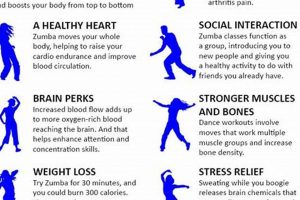
Regular participation can yield several physical benefits, including improved cardiovascular health, increased muscular endurance, enhanced coordination, and increased caloric expenditure. The varied movements and rhythmic patterns challenge the body in multiple ways, promoting overall fitness and well-being.
Question 4: Is a partner required to participate in Ki Zumba dance classes?
The necessity of a partner varies depending on the specific class format and instructor. Some classes focus solely on individual movements inspired by both styles, while others incorporate partnered segments. It is advisable to inquire about the class structure beforehand to determine whether a partner is required.
Question 5: What type of attire and footwear is recommended for Ki Zumba dance?
Comfortable, breathable clothing that allows for a full range of motion is generally recommended. Footwear should provide adequate support and traction while allowing for ease of movement. Dance sneakers or athletic shoes with non-slip soles are often suitable choices.
Question 6: Are there any potential risks or precautions to consider before participating in Ki Zumba dance?
As with any physical activity, it is important to consult with a healthcare professional before participating, especially for individuals with pre-existing health conditions. Proper warm-up and cool-down routines are essential to minimize the risk of injury. Participants should also be mindful of their physical limitations and avoid pushing themselves beyond their comfort level.
In summary, Ki Zumba dance offers a unique blend of cultural expression, physical fitness, and social interaction. Understanding the components, requirements, and potential benefits can assist individuals in making informed decisions about participation.
The following section will delve deeper into the historical and cultural context of these dances.
Ki Zumba Dance
This examination has illuminated several key facets of Ki Zumba dance. From its origins as a hybrid form blending Angolan Kizomba with Latin-inspired Zumba, to its demonstrated capacity for cardiovascular enhancement, coordination refinement, and expressive movement, this activity presents a multifaceted engagement. The inherent cultural integration further distinguishes it, fostering appreciation for diverse artistic traditions and promoting inclusivity.
The synthesis of these elements underscores Ki Zumba dance’s significance as more than mere exercise; it is a holistic pursuit capable of enriching both physical and mental well-being. Continued exploration and responsible engagement with this dance form promises to yield further insights into its potential for individual and community enrichment. Future research may focus on its therapeutic applications and its role in promoting cultural understanding, solidifying its position within the landscape of dance and fitness.