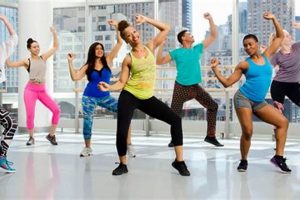
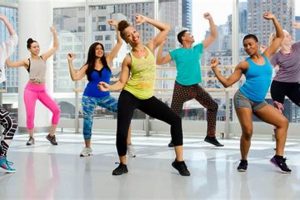
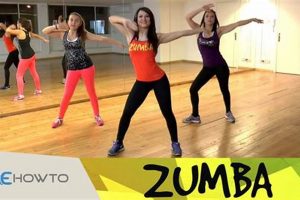
Fundamental Zumba movements constitute the foundational building blocks of this popular fitness program. These movements typically involve simplified steps drawn from various Latin dance styles, such as salsa, merengue, and cumbia, executed in a manner accessible to individuals regardless of prior dance experience. A characteristic example involves a basic step-touch combined with rhythmic arm movements to achieve coordination and cardiovascular engagement.
Mastering these foundational elements is crucial for participant safety, effective workout performance, and progressive skill development. Understanding the underlying rhythm and mechanics allows for greater enjoyment and a reduced risk of injury. The historical development of the program emphasizes inclusivity and accessibility, adapting complex dance routines into manageable and effective fitness activities, thereby promoting widespread participation and positive health outcomes.
Further exploration of advanced choreographies, variations, and modifications can build upon this established understanding, allowing individuals to deepen their skills and achieve more personalized fitness goals. The following sections will delve into specific steps and training techniques to enhance participant knowledge and ability.
Essential Pointers for Zumba Foundations
The following recommendations aim to enhance understanding and execution of fundamental actions, leading to improved performance and reduced risk of injury.
Tip 1: Maintain Correct Posture: Engage core muscles to support the spine and maintain an upright posture throughout each routine. A neutral spine minimizes strain and facilitates efficient movement.
Tip 2: Focus on Rhythm and Timing: Pay close attention to the music’s beat and strive to synchronize movements accordingly. Precise timing maximizes the workout’s effectiveness and promotes coordination.
Tip 3: Start Slowly and Gradually Increase Intensity: Begin with low-impact variations and gradually increase the range of motion and tempo as proficiency improves. This approach allows the body to adapt and prevents overexertion.
Tip 4: Master Basic Steps Before Progressing: Ensure a solid grasp of fundamental routines such as the merengue step, salsa step, and cumbia step before attempting more complex combinations. Proficiency in these elements forms the basis for advanced choreography.
Tip 5: Listen to the Body: Pay attention to any signals of discomfort or pain and modify movements accordingly. Avoiding overtraining prevents injuries and promotes long-term participation.
Tip 6: Wear Appropriate Footwear: Choose supportive athletic shoes that allow for lateral movement and provide adequate cushioning. Proper footwear reduces the risk of ankle and knee injuries.
Tip 7: Stay Hydrated: Drink water before, during, and after each session to maintain optimal hydration levels. Hydration is essential for muscle function and overall performance.
Adhering to these guidelines will facilitate a safer, more effective, and ultimately more enjoyable experience. Consistent application of these principles will enable participants to progress steadily and realize the full benefits of the program.
Moving forward, consider incorporating these techniques into individual training regimens to enhance overall fitness levels and improve technique. Further discussion regarding advanced progressions can provide additional insights and maximize the workout’s potential.
1. Foundational Rhythm
Foundational rhythm is inextricably linked to the execution and efficacy of Zumba. It serves as the temporal framework upon which all movements are structured, ensuring synchronization and facilitating the intended cardiovascular and muscular engagement.
- Tempo Synchronization
Tempo synchronization is the alignment of physical movements with the underlying beat of the music. This alignment is not merely aesthetic; it optimizes the physiological response to exercise by maintaining a consistent level of exertion. For example, in a merengue-based Zumba routine, precise adherence to the fast-paced rhythm is necessary to sustain elevated heart rates and caloric expenditure.
- Rhythmic Variation and Progression
Rhythmic variation involves the introduction of subtle changes in tempo or beat emphasis within a routine. These variations prevent monotony and allow for targeted muscle engagement. Progression involves a gradual increase in tempo or rhythmic complexity as participant skill improves, ensuring continued challenge and adaptation. An example is transitioning from a basic salsa step on a steady beat to incorporating syncopated rhythms to challenge coordination.
- Musicality and Movement Expression
Musicality is the ability to interpret and express the emotional content of music through physical movement. In Zumba, musicality enhances the participant’s engagement and enjoyment, fostering a deeper connection to the workout. For example, a participant may accentuate specific beats with arm movements to highlight the energy of a salsa track.
- Rhythm as a Cueing Mechanism
Rhythm serves as a cueing mechanism for instructors, providing audible signals for transitioning between steps and routines. This facilitates seamless choreography and allows participants to anticipate upcoming movements. A distinct drum pattern, for instance, can signal the start of a cumbia sequence.
Mastery of foundational rhythm is thus paramount for both instructors and participants. It ensures effective cardiovascular workouts, enhances coordination, and promotes a fulfilling Zumba experience. The deliberate manipulation of rhythmic elements allows for progressive challenges and variations, catering to diverse fitness levels and preferences.
2. Core Step Patterns
Core step patterns constitute the fundamental movements upon which all Zumba routines are built. Understanding and mastering these steps is essential for effective participation and progression within the Zumba program.
- Merengue Step
The Merengue step, characterized by its rapid, two-beat rhythm and hip movements, forms a cornerstone of many Zumba routines. This step builds cardiovascular endurance and enhances coordination, serving as a foundational element for more complex sequences. Its prevalence in Zumba stems from its simplicity and adaptability.
- Salsa Step
The Salsa step involves a series of quick side steps and weight transfers, typically performed on counts of one, two, and three. The incorporation of hip movements and arm styling adds complexity and enhances the overall aesthetic. In Zumba, the Salsa step is often modified to increase its accessibility and fitness benefits, emphasizing large muscle movements and cardiovascular exertion.
- Cumbia Step
The Cumbia step, originating from Colombian folk music, is characterized by its swaying motion and rhythmic footwork. In Zumba, the Cumbia step provides a low-impact alternative to more intense movements, making it suitable for individuals of varying fitness levels. Its inclusion in routines adds diversity and promotes inclusivity.
- Reggaeton Step
The Reggaeton step, derived from the Reggaeton music genre, involves a more grounded and powerful movement style, often incorporating squats and isolations. This step engages larger muscle groups and contributes to lower body strength and endurance. Its integration into Zumba routines adds a high-energy element and caters to diverse musical preferences.
These core step patterns, while originating from specific dance forms, are adapted and integrated into Zumba to create a comprehensive fitness experience. Mastery of these steps allows participants to execute more complex routines with confidence and precision, maximizing the health and fitness benefits of the program.
3. Proper Body Posture

Maintaining correct body alignment is paramount within foundational Zumba movements, directly influencing workout safety, efficacy, and long-term participant well-being. The following aspects illustrate the significance of posture in the context of Zumbas fundamental steps.
- Spinal Alignment and Core Engagement
Neutral spinal alignment, achieved through consistent core muscle engagement, safeguards against lower back strain and injuries during repetitive Zumba motions. For instance, maintaining a slightly tucked pelvis during merengue steps minimizes lumbar hyperextension, promoting spinal stability. Improper alignment can lead to discomfort and potential musculoskeletal issues over time.
- Shoulder Placement and Upper Body Mobility
Correct shoulder placement, characterized by a relaxed and slightly retracted position, optimizes upper body mobility and reduces the risk of shoulder impingement or rotator cuff injuries. Actively engaging the scapular stabilizers during arm movements ensures efficient energy transfer and proper joint mechanics, especially during high-energy routines. Conversely, rounded shoulders limit range of motion and increase vulnerability to injury.
- Knee Alignment and Lower Extremity Stability
Proper knee alignment, maintaining knees in line with the hips and ankles during squats and lunges, is critical for lower extremity stability and injury prevention. Preventing excessive knee valgus (inward collapse) during reggaeton steps protects the medial collateral ligament and reduces the risk of patellofemoral pain. Actively engaging the gluteal muscles further enhances stability and alignment.
- Head and Neck Positioning and Neuromuscular Control
Appropriate head and neck positioning, maintaining a neutral gaze and avoiding forward head posture, contributes to cervical spine stability and overall postural control. Consciously engaging the deep neck flexors during dynamic movements prevents neck strain and optimizes neuromuscular coordination. Poor head and neck posture disrupts balance and increases the risk of headaches and neck pain.
These postural considerations are not merely aesthetic; they are fundamental to ensuring that Zumba’s core movements are executed safely and effectively. Adhering to these principles not only minimizes the risk of injury but also maximizes the fitness benefits derived from the program, enabling participants to engage in Zumba for prolonged periods with reduced risk of complications.
4. Coordination emphasis

Coordination, the harmonious integration of multiple muscle groups to produce fluid and efficient movements, holds a central position within foundational Zumba routines. Its development enhances motor skills, improves proprioception, and contributes significantly to the overall effectiveness of the workout. The structured choreography inherent in Zumba relies heavily on the ability to synchronize upper and lower body movements, necessitating a focused approach to coordination training.
- Upper-Lower Body Synchronization
Synchronization of upper and lower body movements involves executing legwork (such as salsa or merengue steps) in tandem with coordinated arm patterns. An example includes combining a basic salsa step with rhythmic arm swings or claps on specific counts. Proficiency in this facet enhances kinesthetic awareness and motor control, crucial for progressing to more intricate Zumba routines. Failure to adequately develop this synchronization can lead to disjointed movements and decreased workout efficiency.
- Spatial Awareness and Body Positioning
Spatial awareness entails understanding one’s position in space and maintaining balance while executing dynamic movements. In Zumba, this translates to accurately judging distances, avoiding collisions with other participants, and maintaining a stable center of gravity during turns and transitions. Poor spatial awareness can result in falls or injuries, particularly in crowded class settings. Drills focused on balance and agility can improve this aspect of coordination.
- Rhythmic Accuracy and Timing
Rhythmic accuracy involves precisely aligning movements with the underlying beat of the music, maintaining a consistent tempo, and executing transitions at the appropriate times. For instance, accurately performing a cumbia step on the correct counts requires a well-developed sense of rhythm and timing. Inaccurate timing diminishes the effectiveness of the workout and disrupts the flow of the routine. Rhythmic drills, using metronomes or music with clear rhythmic patterns, can help improve timing and accuracy.
- Neuromuscular Pathways and Motor Learning
Coordination relies heavily on the establishment of efficient neuromuscular pathways, which are strengthened through repetitive practice. As individuals repeatedly execute Zumba routines, their brains become more adept at recruiting the necessary muscle groups in the correct sequence, leading to improved motor control and efficiency. This process of motor learning is essential for progressing from beginner to advanced levels of Zumba. Lack of consistent practice hinders the development of these pathways, limiting overall coordination and skill acquisition.
The integration of these facets within foundational Zumba promotes a holistic approach to fitness, enhancing not only cardiovascular health and muscular endurance but also cognitive function and motor skills. Through deliberate practice and focused attention, participants can maximize the benefits derived from Zumba routines, improving their overall physical and mental well-being.
5. Rhythmic movement
Rhythmic movement constitutes an indispensable element of fundamental Zumba. This component is not merely an aesthetic addition but forms the functional core around which the entire exercise regime revolves. The consistent, patterned motion inherent in routines facilitates cardiovascular stimulation, muscle engagement, and caloric expenditure. The effect of this deliberate rhythmic structure is a synergistic benefit where music and movement coalesce to create an accessible and engaging fitness experience. For example, the synchronized stepping and arm movements within a basic salsa sequence directly stimulate the heart, promote blood circulation, and activate various muscle groups simultaneously. Therefore, the presence and accuracy of rhythmic movement are causative factors in the efficacy of a Zumba workout.
The importance of rhythmic motion also extends to the accessibility of the dance-fitness activity. By grounding routines in predictable patterns, it becomes easier for individuals, irrespective of their prior dance experience, to participate and internalize the choreography. A practical example lies in the merengue routine. The simplicity of the basic step combined with a discernible rhythm allows even novice participants to grasp the core movement and adapt variations. Understanding rhythmic patterns allows instructors to gradually layer complexity onto foundational elements. The result is a scalable learning curve. This encourages sustained involvement and progression within the Zumba program.
In summary, rhythmic movement is not only a defining characteristic of basic Zumba but also a critical determinant of its effectiveness and accessibility. By combining simple steps with predictable rhythmic structures, the activity facilitates both cardiovascular benefits and skill acquisition, making it a viable fitness option for a broad range of individuals. Challenges in maintaining accurate rhythm may necessitate modifications to routines or additional practice; however, its central role within the overall Zumba methodology remains steadfast.
Frequently Asked Questions Regarding Zumba Dance Basic
This section addresses common inquiries and clarifies misunderstandings surrounding fundamental Zumba techniques, providing informative responses grounded in established fitness principles.
Question 1: What precisely constitutes “Zumba Dance Basic?”
It refers to simplified movements derived primarily from Latin dance styles (e.g., salsa, merengue, cumbia) and adapted for fitness purposes. These movements emphasize accessibility and ease of execution, designed to be suitable for individuals without prior dance experience.
Question 2: Why is understanding the fundamental steps emphasized so strongly?
Mastering core steps ensures participant safety, enables effective engagement, and allows for progressive skill development. A solid foundation reduces the risk of injury and facilitates a more enjoyable and productive exercise experience.
Question 3: What are the crucial elements for accurate execution of the “Zumba Dance Basic?”
Essential elements include maintaining proper posture (core engagement, spinal alignment), synchronizing movements with the music’s rhythm, coordinating upper and lower body actions, and achieving spatial awareness to avoid collisions.
Question 4: What if individuals struggle with the initial coordination requirements?
Starting with slow-tempo variations, focusing on isolated movements, and engaging in consistent practice are recommended. The gradual increase in complexity, coupled with patient instruction, supports progressive skill acquisition.
Question 5: Are there specific footwear recommendations for “Zumba Dance Basic?”
Supportive athletic shoes that allow for lateral movement and adequate cushioning are advisable. Such footwear reduces the risk of ankle and knee injuries and enhances overall stability during dynamic movements.
Question 6: How does “Zumba Dance Basic” contribute to overall fitness?
It enhances cardiovascular endurance, muscular strength, coordination, and body awareness. The combination of rhythmic movements and musical engagement promotes both physical and psychological well-being.
In conclusion, mastering the core elements of “Zumba Dance Basic” is vital for maximizing the benefits and minimizing the risks associated with this fitness modality. Through consistent practice and adherence to established principles, individuals can achieve their fitness goals and enhance their overall quality of life.
The following section will explore advanced techniques and considerations for experienced Zumba practitioners.
Zumba Dance Basic
This exploration has clarified the essential components of Zumba Dance Basic, emphasizing foundational rhythms, core step patterns, proper posture, coordination, and rhythmic movement. Mastering these elements is not merely advantageous but critical for ensuring participant safety, workout effectiveness, and long-term adherence to the program. The deliberate integration of Latin-inspired dance movements, adapted for accessibility, constitutes the defining characteristic of this fitness modality.
Continued study and practice of these core tenets will enable participants to progress safely and effectively, maximizing the inherent benefits of the Zumba program. The commitment to refining technique and understanding the underlying principles will further unlock its potential for enhancing cardiovascular health, muscular endurance, and overall well-being. The value of rigorous application cannot be overstated.