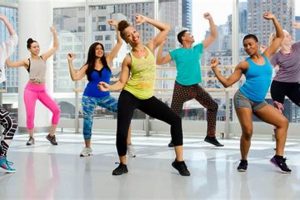
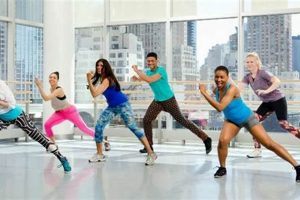
A fitness program that combines Latin and international music with dance moves, it integrates interval training, alternating fast and slow rhythms, to enhance cardiovascular health and sculpt the body. The routines incorporate styles such as salsa, merengue, cumbia, and reggaeton, creating a dynamic and engaging workout. As an illustration, one might perform a cha-cha step followed by a squat, seamlessly transitioning to a series of energetic arm movements synchronized with the music.
This type of exercise promotes overall well-being through increased calorie expenditure, improved coordination, and enhanced mood. Its origins trace back to the mid-1990s, emerging from a fitness class in Colombia. The format quickly gained popularity due to its accessibility and its ability to make exercise feel less like a chore and more like a celebration. The benefits extend beyond physical health, often fostering a sense of community and reducing stress.
The subsequent sections will delve into specific routines and their variations, detailing the muscle groups targeted, providing guidance on proper form and technique, and outlining modifications for individuals with varying fitness levels. Further discussion will explore the considerations for selecting appropriate footwear and apparel, along with tips for maximizing effectiveness and preventing injuries.
Guidance for Effective Engagement
To optimize the experience and maximize the physical benefits associated with rhythmic exercise programs, adherence to several key principles is essential. The following guidance promotes safety, enhances efficacy, and ensures sustained participation.
Tip 1: Prioritize Proper Warm-Up: A thorough warm-up, lasting at least ten minutes, is crucial. It prepares the muscles and joints for the increased demands of the routine, reducing the risk of injury. Examples include light cardio, dynamic stretching, and joint rotations.
Tip 2: Maintain Correct Posture: Throughout the workout, attention to posture is paramount. Engage core muscles, keep the spine elongated, and maintain proper alignment of the head, shoulders, and hips. Mirror checks and mindful awareness can aid in posture correction.
Tip 3: Modify Intensity as Needed: Adapt the movements to suit individual fitness levels. Lower impact variations should be utilized when necessary, particularly during initial stages or when experiencing fatigue. Listen to the body and avoid pushing beyond comfortable limits.
Tip 4: Hydrate Adequately: Water intake is vital before, during, and after the routine. Dehydration can lead to decreased performance, muscle cramps, and dizziness. Sip water regularly throughout the session.
Tip 5: Wear Supportive Footwear: Choose shoes that provide adequate cushioning and lateral support. Cross-training shoes are generally suitable. Avoid running shoes, as they are designed primarily for forward motion and may not provide sufficient stability for side-to-side movements.
Tip 6: Cool Down Effectively: Conclude the session with a cool-down period, incorporating static stretching of major muscle groups. This aids in muscle recovery, reduces soreness, and promotes flexibility. Hold each stretch for 20-30 seconds.
Tip 7: Engage Core Muscles: Actively engage the core muscles throughout the routine. This provides stability, improves posture, and enhances the effectiveness of movements. Focus on drawing the navel towards the spine.
Consistently implementing these recommendations can enhance the experience, minimize the risk of injury, and yield optimal results. Focus on gradual progression, proper technique, and mindful awareness to achieve the desired fitness outcomes.
The following section will explore common mistakes, addressing strategies for effective correction and providing solutions for overcoming challenges that may arise during participation.
1. Rhythmic Latin Music

Rhythmic Latin music serves as the fundamental auditory framework upon which the physical expression of this exercise is constructed. Its pervasive presence dictates the tempo, style, and overall energy of the routine, thereby influencing participant engagement and physiological response.
- Tempo Regulation
The speed of Latin music, measured in beats per minute (BPM), directly controls the pace of the choreographed movements. Faster tempos, characteristic of styles like Salsa and Merengue, elicit higher heart rates and increased caloric expenditure. Conversely, slower tempos, prevalent in genres such as Cumbia, allow for greater emphasis on controlled movements and muscular engagement.
- Stylistic Diversity
The inclusion of diverse Latin genres introduces variations in movement patterns and intensity levels. Salsa inspires intricate footwork and partner-inspired steps. Reggaeton contributes dynamic hip movements and powerful isolations. The amalgamation of styles offers a holistic and adaptable workout experience that engages multiple muscle groups.
- Motivational Enhancement
The culturally resonant rhythms and melodies of Latin music foster a sense of enjoyment and motivation among participants. Familiar tunes and invigorating beats facilitate immersion in the activity, reducing perceived exertion and promoting sustained engagement. The intrinsic energy of the music encourages rhythmic precision and enthusiastic participation.
- Cultural Immersion
Exposure to Latin music provides an opportunity for cultural appreciation and understanding. The integration of authentic musical styles introduces participants to the rich heritage and traditions associated with various Latin American cultures. This element enhances the overall experience and fosters a sense of connection beyond the physical aspects of the workout.
In summary, the strategic incorporation of rhythmic Latin music is integral to the effectiveness and appeal of the described fitness regimen. Its influence extends beyond mere accompaniment, actively shaping the intensity, style, and motivational aspects of the exercise format.
2. Interval Training Structure

The interval training structure, a core component, manipulates exertion levels to optimize physical benefits. This structure alternates between periods of high-intensity activity and lower-intensity recovery phases. The rhythmic dance integrates this principle by switching between faster-paced sequences and slower, more controlled movements. The faster segments elevate heart rate and challenge the cardiovascular system, while the slower intervals allow for brief recovery, preparing the body for the next high-intensity burst. For instance, a fast-paced salsa combination might be followed by a cumbia segment emphasizing hip movements and core engagement at a moderate pace. This design enables participants to sustain the activity for a longer duration compared to continuous high-intensity exercise.
The integration of interval training enhances the efficiency of the workout. By systematically varying the workload, the body is challenged to adapt and improve its metabolic capabilities. This approach promotes greater calorie expenditure and improved cardiovascular endurance compared to steady-state exercise. Studies have shown that interval training can lead to significant improvements in VO2 max, a measure of the body’s ability to utilize oxygen during exercise. Furthermore, the varied nature of the intervals prevents the body from adapting too quickly, ensuring continued progress over time. An example of practical application is the incorporation of short bursts of jumping jacks or high knees within a choreographed routine, providing an intense cardiovascular challenge followed by active recovery movements that maintain momentum.
In summary, the interval training structure provides a framework for achieving optimal fitness outcomes. This intentional fluctuation between high and low intensity periods enhances cardiovascular health, promotes calorie expenditure, and sustains participant engagement. Properly understanding this structure enables effective execution of the routine and allows for modifications to suit individual fitness levels. The integration of this structure is a key differentiating factor, contributing to its widespread appeal and perceived effectiveness within the fitness landscape.
3. Choreographed Dance Steps

Choreographed dance steps are fundamental to the structure and execution of the exercise routine. These pre-arranged sequences of movements, set to music, provide a framework for participants to engage in a coordinated and physically demanding activity. Their role is causal; without choreographed steps, it would lack structure, flow, and the characteristic features that differentiate it from free-form dance or general aerobic exercise. The incorporation of steps derived from Latin dance styles, such as salsa, merengue, and cumbia, is critical, lending the program its distinctive character and cultural identity. An example is the basic salsa step, which requires precise footwork and body rhythm, incorporated into a sequence combined with squats and arm movements. The sequence’s importance lies in providing a structured workout that effectively combines cardiovascular fitness with muscle engagement.
Further analysis reveals that choreography is not merely decorative but a functional element of fitness. It determines the intensity and targeted muscle groups. The sequence of steps dictates the duration of specific movements, affecting both cardiovascular exertion and muscular endurance. Well-designed choreography progressively increases complexity, challenging participants to improve coordination, balance, and spatial awareness. Consider a routine that starts with simple merengue steps, gradually introducing more complex turns and footwork patterns. The practical application of understanding this is that instructors can tailor routines to different fitness levels, modifying steps for beginners or adding advanced variations for experienced participants. This adaptable nature enhances accessibility and ensures sustained engagement.
In summary, choreographed dance steps are integral components of the overall exercise system, providing structure, facilitating physical engagement, and contributing to its unique cultural identity. The success of this program relies on the careful selection and arrangement of steps to maximize fitness benefits and maintain participant interest. Challenges may arise in maintaining originality and avoiding repetitive sequences; however, a thorough understanding of dance principles and fitness goals enables instructors to overcome such obstacles. The routine further serves as an accessible entry point to dance and fitness, offering an alternative to conventional workout routines.
4. Cardiovascular Fitness Focus
The routine, by its very nature, places a significant emphasis on cardiovascular fitness. This is not merely a coincidental outcome; it is a designed objective, interwoven into the structure and execution of the format. The continuous movement, elevated heart rates, and rhythmic engagement of large muscle groups collectively contribute to substantial cardiovascular demands. The frequent transitions between high- and low-intensity segments further challenge the cardiovascular system, promoting adaptations that improve overall fitness. For example, a participant consistently engaging in these activities can expect to observe improvements in resting heart rate, blood pressure, and VO2 max, all indicators of enhanced cardiovascular health.
The integration of Latin dance styles amplifies this effect. The inherent dynamism of salsa, the energetic rhythms of merengue, and the pulsating beats of reggaeton drive sustained physical exertion, thereby maintaining elevated heart rates for extended periods. Moreover, the social and engaging nature of the format fosters adherence, leading to consistent participation and long-term cardiovascular benefits. An illustrative scenario involves a group class where participants enthusiastically follow the instructor’s lead, their collective energy fueling a more intense and sustained workout than might be achieved through solitary exercise. Therefore, the routines design and social aspects contribute to this effective workout that can benefit the participant.
In summary, the cardiovascular fitness focus is an inseparable and pivotal component. The structured choreography, rhythmic Latin music, and interval training design all work synergistically to elevate heart rate, challenge the cardiovascular system, and promote lasting improvements in fitness. Understanding this connection enables participants to maximize the health benefits. Its practical significance lies in the opportunity to engage in an enjoyable and accessible form of exercise that delivers demonstrable improvements in cardiovascular health. Challenges may involve individual modifications to accommodate varying fitness levels; however, the underlying principle remains constant: to elevate cardiovascular function through dynamic rhythmic movement.
5. Group Class Environment

The group class environment significantly influences participation in and adherence to this fitness activity. The format is intrinsically linked to social interaction and shared experience, factors that contribute to increased motivation and enjoyment. A structured class, guided by a trained instructor, provides a supportive and encouraging atmosphere where individuals can learn and progress together. For example, participants often report feeling more motivated to push themselves when exercising alongside others, creating a collective momentum that enhances individual performance. Therefore, the group dynamic serves as a catalyst for sustained engagement, converting a potentially solitary activity into a communal endeavor.
The instructor’s role within the group setting extends beyond simply leading the routine. The instructor facilitates a sense of community, providing personalized feedback, modifying movements to accommodate varying fitness levels, and fostering a positive and inclusive atmosphere. Consider a class where the instructor actively encourages participants, celebrates their progress, and creates opportunities for social interaction outside of the workout. Such actions contribute to a sense of belonging and camaraderie, increasing the likelihood of continued participation. This promotes a unique connection between exercise and social enrichment. The importance lies in its ability to transform the exercise routine from a mere physical activity to a social and emotional experience, thereby increasing overall wellness.
The group class environment represents a crucial component that contributes to the overall experience. The social support, collective motivation, and structured guidance provided within this setting enhance adherence, increase enjoyment, and promote positive outcomes. Challenges may arise in maintaining inclusivity and accommodating diverse fitness levels; however, the benefits of a supportive group environment outweigh these considerations. This environment promotes a greater adherence and better outcomes for people seeking a sustainable fitness approach by incorporating the human element that solitary workout routines often lack.
Frequently Asked Questions About Zumba Dance Form
The following section addresses common inquiries regarding the exercise and aims to provide clear, concise, and factual responses to assist in understanding its principles and practice.
Question 1: Is it suitable for individuals with no prior dance experience?
Yes, the exercise is designed to be accessible to participants of all fitness levels, including those with no prior dance background. Instructors typically provide modifications and variations to accommodate beginners, ensuring that all individuals can participate and progress at their own pace.
Question 2: What type of footwear is recommended?
Cross-training shoes are generally recommended. They offer a balance of cushioning and lateral support, crucial for the varied movements involved. Avoid running shoes, as they are designed primarily for forward motion and may not provide adequate stability for side-to-side movements.
Question 3: How often should one participate to see results?
Consistent participation is key to achieving noticeable results. Attending classes 2-3 times per week is generally sufficient to improve cardiovascular fitness, burn calories, and enhance muscle tone. Individual results may vary depending on factors such as diet, overall activity level, and genetics.
Question 4: Are there any potential risks or injuries associated with this type of exercise?
As with any form of exercise, there are potential risks, including muscle strains, sprains, and joint injuries. However, these risks can be minimized by warming up properly, using correct form, listening to the body, and modifying movements as needed. Individuals with pre-existing medical conditions should consult a healthcare professional before participating.
Question 5: Does the exercise effectively contribute to weight loss?
The exercise can be an effective component of a weight-loss program. The high-intensity intervals and continuous movement promote calorie expenditure, while the social and engaging nature of the classes can improve adherence. However, weight loss is also dependent on dietary factors and overall lifestyle habits.
Question 6: How does this exercise compare to other forms of cardio exercise?
This exercise offers a unique blend of cardiovascular fitness, muscle toning, and cultural immersion. Compared to other cardio exercises such as running or cycling, it provides a more engaging and enjoyable experience for many individuals, potentially leading to greater adherence. Its integration of dance elements distinguishes it from purely aerobic activities.
In summary, this is a dynamic and accessible fitness option that offers numerous physical and social benefits. By understanding its principles and following recommended guidelines, participants can maximize its effectiveness and minimize potential risks.
The following section will explore the historical origins, tracing its evolution and influence on the fitness world.
Conclusion
The preceding exploration of the Zumba dance form has revealed a multifaceted exercise discipline that successfully blends fitness with cultural expression. Key points include its reliance on rhythmic Latin music, its interval training structure, and its incorporation of choreographed dance steps. The analysis has further highlighted the cardiovascular benefits and the significant role played by the group class environment in fostering adherence and community.
This activity represents a significant development in accessible fitness options. Its sustained popularity indicates an effective approach to physical well-being that warrants continued study and refinement. Future research should focus on optimizing choreography for diverse populations and measuring long-term health outcomes. The future depends on adapting to new fitness trend and people preference.