Achieving qualification to lead Zumba classes involves completing a specialized training program recognized by Zumba Fitness, LLC. This training ensures instructors possess the knowledge and skills necessary to deliver safe, effective, and engaging fitness experiences. The process culminates in the awarding of a license, allowing individuals to teach officially branded Zumba classes.
Certification provides several advantages, including the authority to use the Zumba trademark, access to marketing resources, and inclusion in the Zumba instructor network. These benefits contribute to increased visibility, professional credibility, and the opportunity to connect with a global community of fitness professionals. Historically, formalizing fitness instruction through certification has helped standardize the quality and safety of exercise programs.
The subsequent sections will detail the specific steps involved in pursuing Zumba instructor qualification, including registration requirements, course content, licensing agreements, and ongoing education opportunities. This information will provide a clear understanding of the path to becoming a certified Zumba instructor.
Essential Guidance for Aspiring Zumba Instructors
The path to becoming a qualified Zumba instructor requires dedication and adherence to specific guidelines. The following tips are designed to aid candidates in navigating the certification process effectively.
Tip 1: Thoroughly Review Prerequisites: Before enrolling in a training session, ensure that all specified prerequisites are met. These may include a minimum age requirement or a general level of fitness experience. Failure to meet prerequisites may result in ineligibility for certification.
Tip 2: Research Official Training Programs: Zumba Fitness, LLC offers various training programs. Investigate each program’s content and format to determine which best aligns with individual learning styles and professional goals. Consider factors such as location, schedule, and instructor credentials.
Tip 3: Prepare Physically for the Training: Zumba training sessions are physically demanding. Engage in regular cardiovascular and strength training exercises to build stamina and prevent injury. Familiarity with basic Zumba steps can also be beneficial.
Tip 4: Actively Participate in the Training: Attend all sessions, engage in discussions, and practice the taught choreography. Active participation is crucial for understanding the principles of Zumba instruction and developing confidence in leading classes.
Tip 5: Understand Licensing Requirements: Upon completion of the training, instructors must obtain a license to legally teach Zumba classes. Familiarize yourself with the terms and conditions of the licensing agreement, including fees and renewal procedures.
Tip 6: Practice Teaching Regularly: After certification, practice teaching regularly to refine skills and develop a unique teaching style. Consider offering free classes to friends and family to gain experience and feedback.
Tip 7: Stay Current with Zumba Updates: Zumba Fitness, LLC regularly updates its choreography and teaching techniques. Participate in continuing education courses and workshops to stay current with the latest trends and maintain certification.
Consistently applying these suggestions can significantly enhance the likelihood of successful certification and a rewarding career as a Zumba instructor.
The following section will address frequently asked questions regarding the Zumba instructor certification process.
1. Registration

The initial step toward qualification involves registration with Zumba Fitness, LLC. This process establishes a formal record of an individual’s intention to pursue certification. Registration typically requires providing personal information, agreeing to terms and conditions, and paying a registration fee. Completion of registration is a prerequisite for enrollment in the Basic 1 training, which is the foundational course for Zumba instructors.
Effective registration is crucial. Incomplete or inaccurate registration can cause delays or invalidate subsequent training. For example, providing an incorrect email address can prevent access to essential training materials and updates. Individuals who fail to register before attending a training session are generally ineligible to receive certification. Therefore, registration is not merely a formality but a required element in the certification pathway.
Proper registration provides access to official Zumba resources, facilitates communication regarding training schedules and updates, and initiates the process of becoming a licensed Zumba instructor. The information gathered during registration also assists Zumba Fitness, LLC in managing its instructor network and ensuring the integrity of its brand.
2. Basic 1 Training

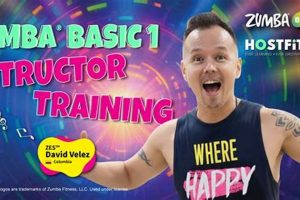
Basic 1 training serves as the cornerstone of Zumba instructor certification. Successful completion of this initial training is a mandatory step in the process and provides candidates with the foundational knowledge and skills necessary to lead introductory Zumba classes. This training equips aspiring instructors with essential techniques and pedagogical approaches that are critical for effective instruction.
- Core Rhythms and Basic Steps
Basic 1 training introduces participants to the fundamental rhythms and steps that form the basis of Zumba choreography. This includes learning the proper execution of steps from various dance styles, such as salsa, merengue, and cumbia. Understanding these core rhythms is critical because they are the building blocks of all Zumba routines. Without a solid grasp of these foundational elements, instructors cannot effectively lead classes or create original choreography.
- Instructional Techniques and Cueing
The training emphasizes effective instructional techniques, including verbal and non-verbal cueing methods. Participants learn how to clearly communicate steps and transitions to participants, ensuring that individuals of varying fitness levels can follow along safely and effectively. Accurate cueing is vital for maintaining class flow and preventing injuries. For instance, instructors are taught how to provide anticipatory cues, alerting participants to upcoming changes in choreography.
- Class Structure and Music Integration
Basic 1 training provides a framework for structuring a Zumba class, including warm-up routines, high-intensity intervals, and cool-down exercises. Participants learn how to select and integrate music effectively, creating an energetic and motivating atmosphere. For example, they learn how to match the intensity of the music to the exercise being performed, thereby enhancing the overall workout experience. The correct blending of music and movement makes for a satisfying and complete fitness session.
- Safety and Modifications
The training underscores the importance of safety, teaching participants how to modify exercises to accommodate individuals with physical limitations or injuries. This includes providing alternative movements and postural adjustments to ensure that all participants can engage in the class without risk. The ability to make necessary adjustments demonstrates inclusivity and provides a safe and comfortable atmosphere for all fitness levels.
The concepts and skills acquired during Basic 1 training are instrumental in fulfilling the requirements for Zumba instructor certification. A comprehensive understanding of these elements enables instructors to deliver safe, effective, and enjoyable classes, which reflects directly on the Zumba brand. Consequently, thorough preparation for and active participation in Basic 1 training are essential steps towards achieving certification.
3. Licensing Agreement

The licensing agreement represents a critical juncture in achieving formal recognition as a Zumba instructor. Successful completion of the Basic 1 training does not automatically confer the right to teach Zumba classes. Instead, it qualifies an individual to enter into a licensing agreement with Zumba Fitness, LLC. This agreement grants permission to utilize the Zumba brand, choreography, and music in exchange for adherence to specific terms and conditions. These terms commonly include payment of a monthly licensing fee, adherence to brand standards, and participation in continuing education programs. Without a valid licensing agreement, an individual, irrespective of training completion, lacks the legal authority to represent themselves as a certified Zumba instructor or to conduct Zumba classes.
The importance of the licensing agreement is underscored by legal and brand protection considerations. Zumba Fitness, LLC actively safeguards its intellectual property, including the Zumba name, logo, and copyrighted choreography. Engaging in unauthorized instruction or use of the Zumba brand can result in legal action, including cease and desist orders and potential financial penalties. The licensing agreement ensures that instructors operate within a legally defined framework, protecting both the instructor and the Zumba brand. For instance, an instructor who has completed Basic 1 training but teaches Zumba classes without a license is in violation of copyright laws and subject to legal recourse. The licensing agreement, therefore, is not merely a formality but a legal instrument that defines the scope and limitations of authorized Zumba instruction.
In conclusion, the licensing agreement is an indispensable component of the certification process. It bridges the gap between training completion and authorized instruction, providing the legal framework within which certified Zumba instructors operate. While Basic 1 training imparts the necessary skills and knowledge, the licensing agreement formalizes the relationship between the instructor and Zumba Fitness, LLC, safeguarding brand integrity and ensuring compliance with applicable laws. Therefore, understanding and adhering to the licensing terms are paramount for individuals seeking to establish a legitimate and sustainable career as a Zumba instructor.
4. Continuing Education

Continuing Education represents an essential element in maintaining active certification as a Zumba instructor. While initial certification through Basic 1 training and the licensing agreement grants the privilege to instruct, ongoing professional development ensures instructors remain current with evolving techniques, methodologies, and safety standards within the fitness industry and specific to the Zumba program.
- Maintaining License Validity
Active Zumba instructor status necessitates periodic license renewal. Continuing education credits, often obtained through workshops, online courses, or specialized training sessions offered by Zumba Fitness, LLC, are typically a prerequisite for license renewal. Failure to meet continuing education requirements can result in the lapse of instructor certification, thereby prohibiting the individual from legally teaching Zumba classes. Regular participation ensures adherence to best practices and protects the integrity of the Zumba brand. For example, participating in a Zumba Pro Skills workshop provides instructors with new choreography and techniques, improving class content and demonstrating commitment to ongoing professional development.
- Enhancing Instructional Skills
Continuing education provides instructors with opportunities to refine their teaching skills, explore advanced cueing techniques, and learn modifications for diverse participant populations. Workshops often focus on specific dance styles, musicality, or adaptations for individuals with physical limitations. The acquisition of these enhanced skills allows instructors to deliver more effective, engaging, and inclusive classes. An instructor who attends a workshop on teaching Zumba to seniors, for instance, will learn modified routines and communication strategies tailored to that demographic, broadening their potential client base and enhancing the quality of their instruction.
- Staying Abreast of Program Updates
Zumba Fitness, LLC regularly updates its choreography, music, and teaching methodologies. Continuing education provides a mechanism for instructors to remain informed about these program updates and incorporate them into their classes. Instructors who fail to participate in continuing education risk teaching outdated routines or using superseded techniques, potentially diminishing the participant experience and affecting class safety. Attendance at a Zumba Convention, for example, provides access to the latest routines and insights from master trainers, ensuring that instructors are teaching the most current version of the Zumba program.
- Expanding Knowledge Base
Beyond Zumba-specific content, continuing education can encompass broader areas of fitness and wellness, such as anatomy, physiology, nutrition, and injury prevention. Instructors who possess a comprehensive understanding of these topics are better equipped to address participant questions, provide informed advice, and promote overall health and well-being. Completing a certification in CPR/AED, for example, equips instructors with life-saving skills and demonstrates a commitment to participant safety, enhancing their credibility and professionalism.
In summary, continuing education is not merely a supplementary activity but an integral component of remaining a certified and effective Zumba instructor. By participating in ongoing professional development, instructors maintain their license validity, enhance their instructional skills, stay abreast of program updates, and expand their knowledge base, ultimately delivering a higher quality and safer experience to their participants while upholding the standards of the Zumba brand. The benefits are both tangible, in terms of renewed certification, and intangible, in terms of increased professional competence and participant satisfaction.
5. Renewal Requirements

Maintaining Zumba instructor certification necessitates adherence to specific renewal requirements. These requirements represent a continuous commitment to professional development and adherence to Zumba Fitness, LLC standards. Successful completion of initial certification does not guarantee perpetual authorization to instruct; ongoing compliance with renewal protocols is mandatory to preserve certification status. Failure to meet these requirements results in the suspension or revocation of the instructor’s license, effectively preventing the individual from conducting officially sanctioned Zumba classes. Renewal requirements are therefore an integral and non-negotiable aspect of sustained certification.
Typically, renewal requirements involve the accrual of continuing education units (CEUs) within a designated timeframe. CEUs can be earned through participation in workshops, online courses, or attendance at Zumba conventions. These educational activities are designed to enhance instructional skills, introduce new choreography, and update instructors on evolving fitness trends and safety protocols. Additionally, instructors may be required to maintain a current CPR/AED certification and submit proof of liability insurance. Compliance with these stipulations ensures instructors are both qualified and protected, thus upholding the integrity and safety of the Zumba program. For instance, an instructor who allows their certification to lapse due to failure to obtain the required CEUs cannot legally teach Zumba classes and must complete reinstatement procedures, often involving additional training and fees, to regain active status. The ongoing nature of these requirements emphasizes a commitment to continuous learning and professional refinement.
In summary, understanding and fulfilling renewal requirements are paramount for those seeking to maintain their Zumba instructor certification. These requirements are not merely administrative hurdles but represent a dedication to providing high-quality, safe, and current instruction. By actively engaging in continuing education and adhering to all stipulated renewal criteria, instructors demonstrate their commitment to the Zumba brand and their participants, ensuring the continued validity of their certification and their ability to legally and ethically lead Zumba classes. The successful navigation of these renewal procedures reinforces the significance of sustained learning and professional responsibility in the field of Zumba instruction.
6. Practical Application
The attainment of certification as a Zumba instructor is inextricably linked to practical application of acquired knowledge and skills. While theoretical understanding derived from training programs such as Basic 1 is foundational, its translation into competent instruction is paramount. Certification bodies assess not only comprehension of Zumba principles but also the ability to effectively demonstrate these principles in a classroom setting. For instance, an instructor may possess detailed knowledge of various Zumba rhythms but fail to accurately cue steps or maintain appropriate energy levels during a mock class. This disconnect between theory and practice can impede the certification process. The capacity to adapt choreography to diverse fitness levels, manage class dynamics, and provide constructive feedback are equally important determinants of certification success. These elements hinge on practical experience and the refinement of instructional techniques through repetitive application.
The practical application component extends beyond the initial certification assessment. Aspiring instructors are often encouraged to gain experience by assisting certified instructors, teaching practice classes to friends and family, or volunteering at community centers. These activities provide invaluable opportunities to hone instructional skills, build confidence, and receive constructive criticism in a low-pressure environment. Real-world scenarios often present unforeseen challenges, such as participant injuries or technical difficulties, which require instructors to think critically and adapt their approach accordingly. For example, an instructor may need to modify a routine on the spot to accommodate a participant with a knee injury or troubleshoot audio equipment malfunctions while maintaining class momentum. These experiences foster resilience and problem-solving skills, which are essential for long-term success as a Zumba instructor.
In conclusion, practical application is not merely a supplementary aspect of Zumba instructor certification but a fundamental requirement for achieving and maintaining competence. The ability to translate theoretical knowledge into effective and engaging instruction is the ultimate measure of an instructor’s preparedness. By actively seeking opportunities to practice and refine their skills, aspiring instructors can increase their chances of successful certification and establish a solid foundation for a rewarding career in the fitness industry. The challenges encountered during practical application serve as valuable learning experiences, shaping instructors into confident, adaptable, and highly effective leaders of Zumba classes.
Frequently Asked Questions
The following addresses common inquiries regarding the Zumba instructor certification process. The information provided is intended to clarify procedures and address potential misconceptions.
Question 1: Is prior fitness certification required to become a Zumba instructor?
No, prior fitness certification is generally not a prerequisite for enrolling in Basic 1 training. However, a reasonable level of physical fitness is recommended to effectively participate in the physically demanding training sessions.
Question 2: How long does the Zumba instructor certification process take?
The duration of the certification process varies based on individual scheduling and course availability. Basic 1 training is typically a one-day session. Obtaining the necessary licensing and completing continuing education requirements can extend the overall timeframe.
Question 3: What are the ongoing costs associated with maintaining Zumba instructor certification?
Ongoing costs primarily consist of monthly licensing fees and expenses related to continuing education. Licensing fees provide the right to use the Zumba brand and access marketing resources. Continuing education costs depend on the chosen workshops or courses.
Question 4: Can Zumba instructors teach online classes?
Yes, certified Zumba instructors are generally permitted to teach online classes, provided they adhere to the terms and conditions outlined in the licensing agreement. Online instruction may require specific equipment and software to ensure optimal audio and video quality.
Question 5: What happens if a Zumba instructor’s license expires?
If a Zumba instructor’s license expires due to failure to meet renewal requirements, the individual loses the right to teach Zumba classes. Reinstatement procedures, often involving additional training and fees, are typically required to regain active status.
Question 6: Is it possible to teach Zumba without official certification?
Teaching Zumba classes without official certification and a valid licensing agreement constitutes copyright infringement and is a violation of Zumba Fitness, LLC intellectual property rights. Such actions can result in legal consequences.
These FAQs offer a concise overview of critical aspects of the Zumba instructor certification journey. Prospective instructors are encouraged to consult official Zumba Fitness, LLC resources for the most up-to-date and comprehensive information.
The following section will provide a summary of the key points discussed in this article.
Achieving Zumba Instructor Certification
This article has explored the structured pathway governing “how to get certified as a Zumba instructor.” It has detailed critical stages, encompassing initial registration, foundational Basic 1 training, the legally binding licensing agreement, the necessity of consistent continuing education, and the imperative to meet ongoing renewal requirements. The importance of practical application in transforming theoretical knowledge into demonstrable instructional competence has also been highlighted.
Prospective Zumba instructors should recognize certification not as a singular event, but as a sustained commitment to professional growth and adherence to brand standards. The pursuit of qualification demands diligence and a dedication to providing safe, effective, and engaging fitness experiences. Therefore, thorough preparation and continuous learning are essential for those seeking to establish a legitimate and rewarding career within the Zumba fitness community.