



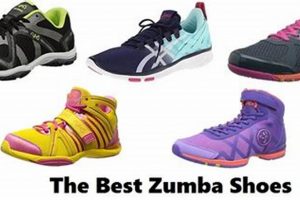
Footwear designed specifically for Zumba fitness activities provides the support and flexibility necessary for the high-impact, lateral movements characteristic of the dance-based workout. This specialized footwear differs significantly from typical athletic shoes, emphasizing features that enhance agility and reduce the risk of injury during Zumba sessions.
Appropriate footwear offers numerous advantages, including improved performance, enhanced comfort, and a reduced chance of developing common foot and ankle problems associated with repetitive, high-energy dance movements. Historically, generic athletic shoes were often used, leading to discomfort and injuries; the development of specialized options addressed these specific needs, contributing to safer and more enjoyable Zumba experiences.
The subsequent discussion will delve into key considerations when selecting appropriate footwear for this activity. Examination of features such as support, sole construction, breathability, and fit will be presented to guide informed decision-making.
Guidance on Selecting Optimal Footwear for Zumba Fitness
The following considerations are crucial when choosing footwear for effective and safe Zumba participation.
Tip 1: Prioritize Lateral Support: Footwear should provide robust lateral support to accommodate the side-to-side movements inherent in Zumba. Insufficient lateral support can lead to ankle instability and potential injuries.
Tip 2: Assess Sole Flexibility: A flexible sole, particularly in the forefoot area, enables unrestricted movement and agility. Rigidity in this area can hinder performance and increase fatigue.
Tip 3: Evaluate Impact Absorption: Adequate cushioning in the midsole is essential for absorbing impact and reducing stress on joints. Shoes with minimal cushioning are unsuitable for the high-impact nature of Zumba.
Tip 4: Consider Pivot Points: Pivot points on the sole facilitate smooth turns and reduce strain on the knees. Shoes lacking this feature can increase the risk of knee injuries.
Tip 5: Ensure Proper Fit: Footwear must fit securely and comfortably to prevent slippage and blisters. A snug, but not constricting, fit is optimal. Accurate sizing is essential; consult sizing charts and consider trying on shoes with Zumba-appropriate socks.
Tip 6: Opt for Breathable Materials: Breathable uppers, such as mesh, help regulate temperature and prevent excessive perspiration. Reduced moisture contributes to comfort and hygiene.
Tip 7: Examine Sole Material: Non-marking soles are recommended to avoid damaging studio floors. Ensure the sole provides adequate traction without being overly grippy, which could impede movement.
Adherence to these guidelines facilitates the selection of footwear that supports performance, minimizes injury risk, and enhances the overall Zumba experience.
The subsequent section will offer recommendations based on these criteria.
1. Lateral Support

Lateral support constitutes a critical element in footwear designed for Zumba fitness activities. The dynamic, multi-directional movements characteristic of Zumba place considerable stress on the feet and ankles, necessitating footwear that provides adequate stability and prevents injuries.
- Ankle Stabilization
Lateral support features, such as reinforced sidewalls and supportive overlays, directly contribute to ankle stabilization during lateral movements. This reduces the risk of ankle sprains and strains by limiting excessive pronation or supination. An example includes shoes with TPU (thermoplastic polyurethane) cages integrated into the upper, providing a rigid structure that resists lateral forces.
- Medial and Lateral Stability
Effective lateral support addresses both medial (inner) and lateral (outer) stability of the foot. Shoes with dual-density midsoles or stability posts offer enhanced support in these areas, preventing the foot from rolling inward or outward during quick changes in direction. Lack of sufficient medial support can lead to plantar fasciitis, while inadequate lateral support increases the risk of peroneal tendonitis.
- Impact on Performance
Adequate lateral support not only prevents injuries but also enhances performance. By providing a stable platform, it allows for more efficient transfer of energy during lateral movements, resulting in increased agility and responsiveness. Conversely, shoes lacking sufficient support can lead to a feeling of instability, hindering performance and increasing fatigue.
- Shoe Construction Materials
The materials used in shoe construction significantly impact lateral support. Stiffer materials, such as synthetic leather or reinforced mesh, provide greater stability compared to softer, more flexible materials. The design and placement of these materials also play a crucial role. For instance, strategically placed overlays can reinforce areas prone to stress, enhancing the overall lateral support of the shoe.
The integration of robust lateral support mechanisms into footwear is essential for mitigating the risks associated with Zumbas demanding movements. The selection of shoes exhibiting these characteristics directly influences user safety, performance, and long-term foot health.
2. Sole Flexibility

Sole flexibility is a critical attribute of footwear intended for Zumba fitness activities. The range of motion required in Zumba necessitates a sole that allows for natural foot movement, facilitating agility and responsiveness.
- Enhanced Range of Motion
A flexible sole enables a greater range of motion in the foot, particularly at the metatarsophalangeal joints. This increased flexibility allows for smoother transitions between steps and reduces strain on the foot during complex dance movements. For example, a shoe with a highly flexible forefoot allows a dancer to point and flex the foot more easily, enhancing both performance and comfort.
- Reduced Risk of Foot Fatigue
Inflexible soles can lead to increased foot fatigue during prolonged activity. A flexible sole allows the foot to move more naturally, distributing stress more evenly and reducing the strain on specific muscles and tendons. This is particularly important in Zumba, where participants often engage in extended sessions with repetitive movements. Studies have shown that footwear with increased sole flexibility reduces plantar pressure, thereby decreasing fatigue.
- Improved Ground Contact
Sole flexibility facilitates improved ground contact, allowing the foot to adapt to varying surfaces and movements. This enhances stability and responsiveness, enabling dancers to maintain balance and control during quick changes in direction. Shoes that permit natural foot flexion allow the wearer to feel the ground more effectively, contributing to better proprioception.
- Impact on Injury Prevention
Inflexible soles can restrict natural foot movement, potentially leading to injuries such as plantar fasciitis, Achilles tendonitis, and metatarsalgia. A flexible sole allows the foot to absorb impact more effectively and reduces stress on vulnerable areas. Footwear that promotes natural foot mechanics is essential for minimizing the risk of overuse injuries associated with Zumba.
The characteristics of sole flexibility directly influence the suitability of footwear for Zumba. Footwear lacking this attribute can impede performance and increase the risk of injury, while shoes with adequate flexibility support natural foot mechanics and enhance the overall Zumba experience.
3. Impact Absorption
Impact absorption is a fundamental property in footwear designed for high-intensity activities such as Zumba. The repetitive, high-impact movements inherent in Zumba place considerable stress on the musculoskeletal system, particularly the feet, ankles, knees, and hips. Inadequate impact absorption in footwear can lead to an increased risk of stress fractures, joint pain, and other overuse injuries. Therefore, the capacity of a shoe to effectively attenuate the forces generated during Zumba significantly contributes to its overall suitability for this activity. For example, a shoe featuring a midsole constructed from materials such as EVA (ethylene-vinyl acetate) or polyurethane provides a cushioning effect, reducing the magnitude of the forces transmitted to the body with each step.
The effectiveness of impact absorption is directly related to the materials used in the midsole and outsole of the shoe, as well as the overall design and construction. A thicker midsole generally provides greater cushioning, while specialized technologies such as gel inserts or air pockets can further enhance impact attenuation. Furthermore, the outsole material affects the shoe’s ability to absorb shock; rubber compounds with higher resilience can provide additional cushioning and contribute to a more comfortable and less fatiguing Zumba experience. Many high-performance Zumba shoes incorporate multiple layers of cushioning materials, strategically placed to maximize impact absorption in areas subject to the greatest stress, such as the heel and forefoot.
In summary, impact absorption is a crucial determinant in selecting appropriate footwear for Zumba. The ability of a shoe to effectively mitigate the forces generated during this activity directly influences the risk of injury and the overall comfort and performance of the participant. Prioritizing footwear with adequate cushioning and shock-absorbing properties is essential for promoting long-term musculoskeletal health and maximizing the benefits of Zumba as a fitness activity.
4. Pivot Points

Pivot points are strategically designed areas on the outsole of footwear that facilitate rotational movements. In the context of dance-fitness activities like Zumba, where frequent turns and pivots are integral to the choreography, pivot points are a significant component. The absence of adequately designed pivot points in footwear can increase friction between the shoe and the floor, leading to elevated stress on the knees and ankles. This, in turn, elevates the risk of injury, particularly during rapid directional changes. Shoes deemed suitable for Zumba typically feature pivot points located beneath the ball of the foot, allowing for smoother, more controlled rotations. These features help to minimize shear forces that would otherwise be transmitted to the joints.
An example of the importance of pivot points can be observed when comparing Zumba-specific footwear to running shoes. Running shoes, designed for linear motion, often lack prominent pivot points. Wearing running shoes during Zumba can lead to jerky, less fluid movements and increase the likelihood of knee pain or ankle sprains. Conversely, footwear designed with well-defined pivot points allows for seamless transitions between dance steps, reducing strain and enhancing the overall fluidity of the workout. Different designs offer varying degrees of pivot functionality; some shoes utilize a circular indentation, while others incorporate segmented, multi-directional grooves to achieve similar results.
Understanding the role of pivot points in footwear selection for Zumba has practical implications for both instructors and participants. Individuals experiencing discomfort or pain during Zumba should assess the pivot point design of their shoes. Footwear with inadequate pivot points should be replaced with shoes specifically engineered to support rotational movements. This adjustment can significantly improve comfort, reduce the risk of injury, and enhance performance by allowing for more fluid and controlled dance movements, thus aligning with the goals of fitness and safety in Zumba practice.
5. Secure Fit

A secure fit is an essential attribute in footwear categorized as being among the “best shoes for zumba women”. Its absence creates a direct causal link to potential injuries, reduced performance, and diminished comfort. Footwear that does not adequately secure the foot can result in slippage within the shoe, leading to blisters, chafing, and instability. The energetic and dynamic nature of Zumba necessitates footwear that functions as a stable platform, translating the dancer’s movements efficiently without allowing the foot to shift independently. As a practical example, a shoe with a loose heel counter can lead to heel slippage during rapid directional changes, compromising balance and increasing the risk of ankle sprains. A secure fit, conversely, minimizes these risks by maintaining the foot’s position within the shoe, optimizing energy transfer and enhancing control.
The construction of footwear contributes significantly to achieving a secure fit. Lacing systems, heel counters, and upper materials all play critical roles. Lacing systems should allow for customizable adjustments to accommodate varying foot shapes and sizes. A well-designed heel counter provides support and prevents excessive pronation or supination. The upper material should be breathable yet supportive, conforming to the foot without constricting movement. Furthermore, features such as padded collars and tongues enhance comfort and contribute to a more secure and snug fit. Choosing footwear with attention to these details facilitates a more confident and stable experience during Zumba sessions, mitigating potential distractions and discomforts.
In summary, the presence of a secure fit is indispensable for any shoe aiming to be considered among the “best shoes for zumba women”. It directly impacts safety, performance, and overall enjoyment. The challenges involved in achieving a secure fit are addressed through deliberate design considerations encompassing lacing systems, heel counters, and upper materials. Prioritizing footwear that effectively secures the foot, in turn, empowers Zumba participants to fully engage in the activity without compromising stability or risking injury, ultimately aligning with the objectives of safe and effective fitness practices.
6. Breathability
Breathability is a critical factor in determining the suitability of footwear for Zumba, particularly when considering options categorized as “best shoes for zumba women.” The sustained, high-intensity nature of Zumba sessions generates significant heat and perspiration within the shoe. Inadequate breathability can lead to discomfort, reduced performance, and an elevated risk of dermatological issues.
- Temperature Regulation
Breathable footwear facilitates temperature regulation within the shoe by allowing for the dissipation of heat generated by the foot during exercise. Materials with enhanced breathability, such as mesh uppers or perforated designs, promote air circulation, preventing the buildup of excessive heat. The failure to regulate temperature effectively can result in overheating, discomfort, and decreased endurance. For example, shoes constructed with non-breathable synthetic materials can trap heat, leading to discomfort and reduced performance during extended Zumba sessions.
- Moisture Management
Breathability directly impacts moisture management within the shoe. As the foot perspires, breathable materials allow moisture vapor to escape, preventing the accumulation of sweat. Excessive moisture creates a breeding ground for bacteria and fungi, increasing the risk of foot infections such as athlete’s foot. Shoes with moisture-wicking linings further enhance breathability by drawing sweat away from the skin. Footwear lacking these features can lead to a damp, uncomfortable environment, compromising hygiene and potentially causing skin irritation.
- Material Composition
The material composition of the shoe significantly influences its breathability. Synthetic materials, such as PVC, generally offer lower breathability compared to natural materials like leather or textiles such as mesh. The weave and construction of these materials also affect air permeability. Densely woven synthetic fabrics impede airflow, while open-weave mesh allows for greater ventilation. Selecting footwear constructed from breathable materials is paramount for maintaining a comfortable and hygienic environment within the shoe during Zumba.
- Impact on Comfort and Performance
Breathability significantly affects the comfort and performance of Zumba participants. Shoes that effectively manage temperature and moisture provide a more comfortable and less distracting experience, allowing dancers to focus on their movements. Furthermore, excessive moisture can lead to slippage within the shoe, compromising stability and potentially increasing the risk of injury. Footwear with enhanced breathability contributes to a more secure, comfortable, and high-performing Zumba experience.
In conclusion, the breathability of footwear is a key consideration when evaluating options for “best shoes for zumba women.” Its impact on temperature regulation, moisture management, material composition, and overall comfort and performance directly influences the suitability of a shoe for this high-intensity activity. Prioritizing breathable materials and designs is essential for maintaining a comfortable, hygienic, and safe environment within the shoe, maximizing the benefits of Zumba participation.
7. Non-Marking Soles

The presence of non-marking soles constitutes a definitive characteristic of footwear intended for studio use and deemed among the “best shoes for zumba women.” This feature is essential for preserving the integrity and appearance of dance and fitness studio floors, ensuring adherence to facility regulations and maintaining a safe environment for all participants.
- Preservation of Flooring Surfaces
Non-marking soles are engineered using specialized rubber compounds that do not leave scuff marks or residues on flooring surfaces. This prevents damage to hardwood, linoleum, and other common studio floor materials, reducing maintenance costs and extending the lifespan of the flooring. In contrast, footwear with conventional soles can deposit unsightly marks and scratches, degrading the appearance and potentially compromising the safety of the floor. The utilization of non-marking soles ensures that the cleanliness and aesthetic appeal of the studio environment are maintained.
- Compliance with Facility Regulations
Many dance and fitness studios enforce strict regulations regarding footwear to protect their flooring investments. Non-marking soles are often a mandatory requirement for participation in classes. Failure to adhere to these regulations can result in denial of entry or expulsion from the facility. Therefore, selecting footwear with non-marking soles ensures compliance with studio policies and facilitates uninterrupted access to Zumba classes. Adherence to facility regulations demonstrates respect for the establishment and its commitment to maintaining a safe and professional environment.
- Enhanced Safety
Non-marking soles typically exhibit superior traction compared to other types of soles, providing a secure grip on the floor and reducing the risk of slips and falls. This is particularly important during Zumba, which involves rapid movements and frequent changes in direction. Footwear with inadequate traction can lead to instability and increase the likelihood of injuries. The enhanced grip afforded by non-marking soles contributes to a safer and more confident Zumba experience, enabling participants to focus on their movements without fear of slipping.
- Material Composition and Durability
The non-marking properties of a sole are directly related to its material composition. Specialized rubber compounds are formulated to minimize friction and prevent the transfer of color or residue to the floor. These compounds are also engineered for durability, ensuring that the non-marking properties are retained over extended periods of use. Lower-quality materials may exhibit non-marking characteristics initially, but can degrade rapidly, losing their effectiveness and potentially damaging flooring surfaces. Selection of footwear from reputable brands known for using high-quality, non-marking compounds ensures both performance and longevity.
The integration of non-marking soles into footwear constitutes a non-negotiable attribute for considerations regarding “best shoes for zumba women.” This element preserves flooring, ensures regulatory compliance, bolsters safety, and supports prolonged durability. Thus, shoes exhibiting this characteristic play a crucial role in the Zumba fitness experience.
Frequently Asked Questions About Footwear for Zumba Fitness
The following questions address common inquiries and concerns regarding the selection and use of appropriate footwear for Zumba fitness activities.
Question 1: What differentiates Zumba footwear from standard athletic shoes?
Zumba footwear emphasizes lateral support, sole flexibility, and pivot points, catering to the multi-directional movements inherent in Zumba. Standard athletic shoes, often designed for linear activities, may lack these features, potentially increasing injury risk.
Question 2: How frequently should Zumba footwear be replaced?
The lifespan of Zumba footwear depends on usage frequency and intensity. However, it is generally recommended to replace shoes every 6 to 12 months, or sooner if signs of wear and tear, such as decreased cushioning or loss of support, are evident.
Question 3: Can running shoes be used for Zumba?
While running shoes may provide adequate cushioning, they often lack the necessary lateral support and pivot points required for Zumba. Consistent use of running shoes for Zumba can elevate the risk of ankle and knee injuries.
Question 4: What features should be prioritized for individuals with flat feet?
Individuals with flat feet should prioritize footwear with enhanced arch support and motion control features to prevent overpronation and maintain proper foot alignment during Zumba activities.
Question 5: Is it necessary to purchase expensive footwear for Zumba?
While price is not always indicative of quality, investing in footwear with appropriate features, such as lateral support and sole flexibility, is essential for safety and performance. Mid-range options often provide adequate support and durability.
Question 6: How can proper footwear fit be ensured when purchasing online?
Consult sizing charts provided by the manufacturer and carefully measure foot length and width. Consider ordering multiple sizes to ensure a proper fit and utilize return policies if necessary. Reading reviews can also provide insights into the fit characteristics of specific footwear models.
Selecting the right footwear significantly contributes to a safer and more enjoyable Zumba experience. Consideration of the above points is crucial for making informed decisions.
The ensuing discussion will provide specific recommendations for various foot types and Zumba styles.
Conclusion
The selection of appropriate footwear fundamentally influences the safety, performance, and overall experience in Zumba fitness activities. This exploration has identified lateral support, sole flexibility, impact absorption, pivot points, secure fit, breathability, and non-marking soles as critical attributes. Footwear lacking these features presents a heightened risk of injury and compromised performance.
Therefore, diligent consideration of these factors is paramount when choosing footwear. Prioritizing function over aesthetics and carefully assessing individual needs ensures a safer and more effective engagement with Zumba. The pursuit of optimal footwear represents a commitment to both physical well-being and the sustained enjoyment of this dynamic fitness discipline.
![Top-Rated: Best Zumba Dance App [2024 Guide] | The Ultimate Zumba Guide: Dance Your Way to a Healthier You](https://mamazumba.com/wp-content/uploads/2025/12/th-16-300x200.jpg "Top-Rated: Best Zumba Dance App [2024 Guide] The Ultimate Zumba Guide: Dance Your Way to a Healthier You")