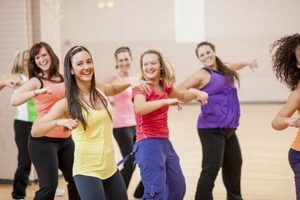
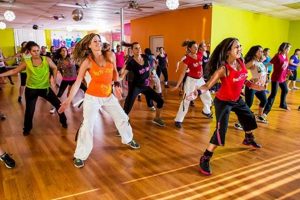
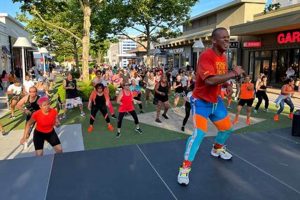
Zumba, a dance fitness program, offers modified sessions tailored to individuals exceeding the age of fifty. These classes adapt the intensity and complexity of traditional Zumba to accommodate varying physical capabilities and potential age-related limitations. The modified routines often incorporate lower-impact movements and extended warm-up and cool-down periods.
Participation in appropriate exercise regimens provides multiple benefits for the mature demographic. These include improved cardiovascular health, enhanced muscle strength and flexibility, increased bone density, and potential cognitive enhancements. Social interaction within a group fitness environment also contributes to psychological well-being, mitigating feelings of isolation and promoting a sense of community. The history of exercise programs aimed at older adults reveals a growing awareness of the importance of physical activity in maintaining overall health and independence.
The following sections will examine the specific modifications incorporated into these fitness programs, considerations regarding safety and injury prevention, the potential physical and mental health advantages, and guidance for selecting a suitable class and instructor. Furthermore, information regarding accessible resources and support systems for maintaining an active lifestyle will be provided.
Guidance for Participating in Modified Dance Fitness
The following recommendations aim to provide valuable insight for individuals interested in participating in dance fitness programs tailored for those over fifty.
Tip 1: Consultation with Healthcare Provider: Prior to commencing any new exercise program, a consultation with a healthcare professional is advisable. This assessment can identify any pre-existing conditions or limitations that may necessitate modifications to the exercise routine.
Tip 2: Class Observation: Before enrolling in a course, observe a class session. This allows for assessment of the instructor’s teaching style, the intensity of the movements, and the overall suitability of the program to individual fitness levels.
Tip 3: Gradual Progression: Begin with introductory-level classes and gradually increase the intensity and complexity of the routines as fitness levels improve. Avoid overexertion in the initial stages of participation.
Tip 4: Focus on Proper Form: Prioritize correct form and technique over speed or range of motion. Proper form minimizes the risk of injury and maximizes the effectiveness of the exercises.
Tip 5: Hydration and Nutrition: Maintain adequate hydration by consuming water before, during, and after exercise. A balanced diet supports energy levels and muscle recovery.
Tip 6: Appropriate Attire: Wear supportive athletic shoes and comfortable clothing that allows for unrestricted movement. Consider using supportive undergarments if needed.
Tip 7: Listen to the Body: Pay attention to any pain or discomfort during exercise. Modify or discontinue movements that cause pain and consult with a healthcare professional if necessary.
Adhering to these guidelines can contribute to a safe and effective exercise experience, enabling individuals to reap the numerous benefits of dance fitness. It is critical to recognize that individual needs and capabilities vary.
The subsequent sections will focus on strategies for maintaining a long-term commitment to fitness and exploring alternative exercise modalities suitable for this demographic.
1. Modified Movements

The adaptation of movement patterns represents a critical component in the design and implementation of dance fitness programs for individuals exceeding the age of fifty. These modifications address the physiological changes associated with aging, aiming to maximize benefits while minimizing potential risks.
- Reduced Impact Exercises
Traditional dance fitness routines often involve high-impact movements such as jumping and leaping, which can place undue stress on joints and increase the risk of injury, particularly among older adults. Modified programs replace these high-impact exercises with low-impact alternatives, such as marching, stepping, and gliding. These adaptations maintain cardiovascular benefits while reducing stress on the musculoskeletal system. For example, instead of a jump squat, a participant might perform a standard squat or a wall sit, maintaining muscle engagement without the jarring impact.
- Slower Tempo and Increased Rest Periods
The pace of instruction is adjusted to accommodate varying levels of fitness and coordination. Slower tempos allow participants more time to learn and execute movements correctly, reducing the risk of errors and potential injuries. Extended rest periods between routines provide opportunities for recovery and prevent overexertion. A routine section that might be completed in 3 minutes at a standard pace might be slowed to 4-5 minutes and include intermittent pauses.
- Expanded Warm-up and Cool-down
Adequate warm-up and cool-down periods are essential for preparing the body for exercise and facilitating recovery. Modified programs typically include extended warm-up routines that focus on joint mobilization and dynamic stretching to improve flexibility and range of motion. Cool-down routines incorporate static stretching to promote muscle relaxation and reduce the risk of delayed-onset muscle soreness. The length of these sections increase to prioritize full recovery.
- Simplified Choreography
Complex dance routines can be challenging for individuals with limited experience or coordination. Modified programs often simplify the choreography, focusing on basic steps and repetitive movements that are easier to learn and execute. This approach promotes confidence and reduces the risk of frustration, encouraging continued participation. Instructions focus on only the essential elements of the move.
These modifications are not simply alterations; they are strategic adjustments designed to enhance safety, accessibility, and effectiveness for a specific demographic. By adapting the intensity, pace, and complexity of traditional dance fitness routines, these programs empower older adults to engage in physical activity safely and enjoyably, reaping the numerous physical and mental health benefits associated with regular exercise.
2. Joint-friendly alternatives
The integration of joint-friendly alternatives is a foundational element of Zumba fitness programs designed for individuals over the age of fifty. Traditional Zumba routines, characterized by high-impact movements, pose a potential risk to the musculoskeletal health of older adults, who may experience age-related joint degeneration or pre-existing conditions such as arthritis. Joint-friendly alternatives mitigate these risks by replacing jarring or high-stress exercises with movements that place less strain on weight-bearing joints such as the knees, hips, and ankles. The implementation of these alternatives is not merely a suggestion but a necessity to ensure the safety and long-term participation of mature adults.
Examples of such alternatives include substituting jumping jacks with step-outs, replacing high knees with marching in place, and modifying plyometric exercises to static versions. In a traditional Zumba routine, a grapevine step might involve a hop or jump; a joint-friendly adaptation would eliminate the vertical movement, focusing instead on lateral steps. Similarly, squats are modified to partial squats or wall sits, reducing the load on the knees. The effect of these modifications is a decrease in compressive forces and repetitive stress on the joints, facilitating participation without exacerbating existing conditions. Instructors are trained to provide clear demonstrations of both the traditional and modified versions of each movement, empowering participants to choose the option that best suits their individual needs and capabilities.
In summary, joint-friendly alternatives are not merely a superficial adjustment; they represent a fundamental adaptation that transforms Zumba into a safe and accessible form of exercise for the over-fifty demographic. The strategic implementation of these alternatives underscores the importance of understanding the physiological considerations specific to older adults. The use of this knowledge allows participants to maintain their physical activity through safe and effective means.
3. Cardiovascular health

Cardiovascular health, encompassing the efficient functioning of the heart and blood vessels, is a primary consideration when evaluating the suitability of exercise programs for individuals over the age of fifty. Dance fitness programs offer a potential avenue for improving and maintaining cardiovascular function in this demographic.
- Aerobic Exercise and Heart Function
Dance fitness, characterized by rhythmic movement and sustained activity, qualifies as an aerobic exercise modality. Regular aerobic exercise stimulates the cardiovascular system, increasing heart rate and enhancing the heart’s ability to pump blood efficiently. This results in improved circulation, reduced blood pressure, and decreased risk of cardiovascular events. The modifications integrated into tailored dance fitness courses allow participants to maintain an elevated heart rate within a safe and beneficial range.
- Cholesterol Management
Elevated cholesterol levels, particularly low-density lipoprotein (LDL) cholesterol, are a significant risk factor for cardiovascular disease. Physical activity, including dance fitness, can positively influence cholesterol profiles by increasing high-density lipoprotein (HDL) cholesterol, often referred to as “good” cholesterol, and reducing LDL cholesterol and triglycerides. These improvements contribute to a decreased risk of plaque buildup in the arteries, reducing the likelihood of atherosclerosis.
- Weight Management and Metabolic Health
Maintaining a healthy weight is integral to cardiovascular health. Dance fitness assists in weight management by increasing energy expenditure and promoting fat loss. Obesity is closely linked to several cardiovascular risk factors, including hypertension, insulin resistance, and dyslipidemia. Regular participation in dance fitness programs can mitigate these risks and improve overall metabolic health.
- Improved Vascular Function
Exercise positively impacts the function of blood vessels by promoting vasodilation, or the widening of blood vessels, which improves blood flow and reduces blood pressure. Dance fitness can also enhance endothelial function, referring to the health of the cells lining the blood vessels, which plays a critical role in preventing atherosclerosis and other cardiovascular complications. Improved vascular function contributes to enhanced oxygen delivery to tissues and organs.
The facets presented underscore the potential of appropriately modified dance fitness programs in positively influencing numerous aspects of cardiovascular health in individuals over fifty. The benefits extend beyond mere exercise, encompassing measurable physiological improvements, reduced risk factors for cardiovascular disease, and overall enhancement of well-being. The incorporation of these activities can be a practical strategy for promoting cardiovascular health and reducing the incidence of cardiovascular disease in mature adults.
4. Social engagement

Social engagement constitutes a significant, albeit often overlooked, component of dance fitness programs designed for individuals over fifty. The structured environment of a class provides a platform for interaction, fostering relationships and combating social isolation, a common concern within this demographic. The shared experience of physical activity generates a sense of camaraderie among participants. The effect of reduced isolation is improved mental and emotional well-being. A practical understanding of this dynamic enhances the value of the exercise program.
The structured setting of group fitness facilitates consistent interaction, enabling the development of supportive networks. Participants often engage in conversations before and after class, sharing experiences and offering encouragement. This social interaction can extend beyond the class, with participants forming friendships and participating in other social activities together. For example, a group of classmates might organize a potluck dinner or attend a local event, strengthening their bonds and creating a sense of belonging. These interactions are instrumental in fostering a sense of community.
In summary, the social engagement aspect of dance fitness programs is a critical factor contributing to overall well-being. It addresses the issue of social isolation and fosters a sense of community, thereby enhancing adherence to the exercise program and improving mental and emotional health. This understanding underscores the importance of considering social dynamics when designing and promoting fitness programs for the mature adult population. The challenges related to social issues are unique to this demographic and are important to be addressed.
5. Balance improvement

Balance improvement is a critical factor in maintaining functional independence and preventing falls among individuals over the age of fifty. Dance fitness programs, when appropriately modified, can serve as a valuable tool for enhancing balance and stability in this demographic.
- Weight Shifting and Postural Control
Dance movements necessitate frequent weight shifting, requiring the body to constantly adjust its center of gravity. This dynamic process challenges postural control, the ability to maintain equilibrium while standing or moving. Regular participation in dance fitness programs strengthens the neuromuscular pathways responsible for balance, enhancing the body’s ability to react to perturbations and maintain stability. For example, lateral steps and turns engage the core and lower body muscles, improving balance during these movements. The positive implication in the context of dance fitness is enhanced stability which reduces the risk of falls.
- Core Strength and Stability
A strong core is fundamental to balance and stability. Dance fitness routines often incorporate movements that engage the core muscles, including the abdominals, obliques, and lower back muscles. Strengthening these muscles improves postural alignment and provides a stable base of support for movement. The constant engagement of the core assists in maintaining an upright posture which is essential for balance. A practical result of dance fitness that is geared toward an active core is reducing the risk of falls or other events.
- Proprioceptive Awareness
Proprioception, or the sense of body position and movement, plays a crucial role in balance. Dance fitness routines enhance proprioceptive awareness by requiring participants to coordinate movements and maintain spatial awareness. This improved awareness allows for faster and more accurate adjustments to maintain balance. Reaching for an extended arm position or extending leg away from the midline are practical scenarios. These situations demand a heightened sense of body awareness.
- Coordination and Motor Skills
Balance is closely linked to coordination and motor skills. Dance fitness programs improve coordination by requiring participants to synchronize movements with music and execute complex patterns. This enhances the communication between the brain and muscles, improving motor control and balance. Memorizing and executing dance steps facilitates improvements in motor skills and coordination that can translate to other activities of daily living. The result is decreased risk of falls, better balance and an active lifestyle for mature adults.
In summary, the multifaceted benefits of dance fitness extend to balance improvement through various mechanisms, including weight shifting, core strengthening, proprioceptive enhancement, and coordination. These improvements contribute to increased stability, reduced risk of falls, and enhanced functional independence for individuals over fifty. These points are very important.
6. Cognitive function
Cognitive function, encompassing memory, attention, and executive processes, is increasingly recognized as a critical beneficiary of physical activity, particularly in individuals over the age of fifty. Zumba fitness programs, adapted for this demographic, present a unique opportunity to stimulate and maintain cognitive health. The relationship between dance, exercise, and cognition is multifaceted, involving both physiological and psychological mechanisms.
Physiologically, aerobic exercise, such as that incorporated in Zumba, enhances cerebral blood flow, delivering more oxygen and nutrients to the brain. This increased perfusion supports neuronal health and synaptic plasticity, the brain’s ability to form new connections. The memorization of dance steps and routines engages working memory, while the coordination of movements necessitates attention and focus. The executive functions, including planning, organization, and decision-making, are challenged as participants learn and adapt to new routines. Real-world examples include improved reaction time, enhanced spatial awareness, and greater ease in multitasking among regular participants. Dance fitness programs, in comparison to repetitive exercises, encourage cognitive flexibility due to the diverse and evolving nature of the choreography. The memorization of dance routines and sequences are practical examples of exercise for the brain.
In conclusion, the link between cognitive function and dance fitness extends beyond mere physical exertion. Zumba classes, appropriately tailored for the mature adult, present a viable strategy for maintaining and enhancing cognitive abilities. This understanding underscores the importance of incorporating activities that challenge both the body and the mind into wellness regimens for individuals over fifty, contributing to a higher quality of life and greater cognitive reserve as individuals age.
7. Injury prevention

Injury prevention is a paramount concern in any physical activity program, particularly for individuals over fifty. Dance fitness, while offering numerous physical and mental health benefits, presents potential risks if not appropriately adapted and implemented. Understanding the strategies for mitigating these risks is crucial for ensuring the safety and sustained participation of mature adults.
- Proper Warm-up and Cool-down
Inadequate warm-up routines fail to prepare the muscles and joints for the demands of exercise, increasing the risk of strains, sprains, and other musculoskeletal injuries. Effective warm-ups should include dynamic stretching and joint mobilization exercises. Similarly, neglecting cool-down routines can lead to muscle stiffness and delayed-onset muscle soreness. Cool-down exercises should incorporate static stretching to promote muscle relaxation. The length of these sections should be considered.
- Appropriate Exercise Modification
Traditional dance fitness routines often include high-impact movements that may be unsuitable for individuals with pre-existing joint conditions or reduced bone density. Modifications involve replacing high-impact exercises with low-impact alternatives and adjusting the intensity and duration of movements. For example, jumping jacks may be replaced with step-outs and full squats may be substituted with wall sits. These adaptations are essential for injury prevention.
- Proper Footwear and Attire
Inadequate footwear can contribute to foot, ankle, and knee injuries. Supportive athletic shoes with adequate cushioning and arch support are crucial. Loose-fitting clothing that allows for unrestricted movement is also important. The use of supportive undergarments can provide additional stability and comfort. Selecting the proper attire minimizes the risk of injury.
- Hydration and Nutrition
Dehydration can impair muscle function and increase the risk of cramps and fatigue, predisposing individuals to injuries. Adequate hydration involves consuming water before, during, and after exercise. A balanced diet provides the necessary nutrients for muscle repair and recovery. Nutritional guidance should be part of any successful class.
These considerations demonstrate the multifaceted approach required for effective injury prevention. Implementing these strategies is imperative for maximizing the benefits of dance fitness while minimizing the potential risks, ensuring the long-term health and well-being of participants.
Frequently Asked Questions
The following addresses common inquiries regarding Zumba fitness programs specifically designed for individuals aged fifty and above. The information aims to clarify program suitability, modifications, and potential benefits.
Question 1: Are these classes excessively strenuous for individuals with limited exercise experience?
No. Zumba classes designed for this demographic incorporate modifications to reduce intensity. Instructors often offer low-impact alternatives and encourage participants to work at their own pace. Initial participation should involve introductory-level classes to gradually build fitness levels.
Question 2: Is prior dance experience required to participate?
No. These classes are designed for individuals of all fitness and experience levels. The choreography is simplified, focusing on basic steps and repetitive movements that are easy to learn. The primary objective is to engage in physical activity in an enjoyable manner.
Question 3: How are the classes modified to accommodate potential joint pain or arthritis?
Instructors implement joint-friendly alternatives to high-impact movements. These alternatives may include replacing jumping with stepping or modifying squats to partial squats. Such modifications minimize stress on weight-bearing joints.
Question 4: What are the cardiovascular benefits of participating in these classes?
These fitness programs qualify as aerobic exercise, elevating heart rate and improving cardiovascular function. Regular participation can lead to improved circulation, reduced blood pressure, and a decreased risk of cardiovascular disease.
Question 5: Is it necessary to consult with a healthcare provider before enrolling in a class?
Consultation with a healthcare professional is advisable, particularly for individuals with pre-existing medical conditions. This assessment can identify any limitations or modifications that may be necessary to ensure safe participation.
Question 6: How do these classes address the issue of social isolation?
Group fitness classes provide a structured environment for social interaction, fostering a sense of community and combating social isolation. Participants often form friendships and engage in social activities outside of the class setting.
These inquiries highlight key considerations related to Zumba fitness programs. By understanding these modifications and benefits, potential participants can make informed decisions regarding their fitness regimen.
The next section will explore the importance of instructor qualifications and class selection criteria for maximizing safety and effectiveness.
Conclusion
This article has explored various facets of Zumba classes for over 50, emphasizing the importance of modified routines, joint-friendly alternatives, cardiovascular benefits, social engagement, balance improvement, cognitive function, and injury prevention. The information presented underscores the potential for these activities to positively impact the health and well-being of the mature adult demographic.
The adoption of appropriately tailored exercise programs represents a critical component of maintaining functional independence and quality of life as individuals age. Further research and continued development of specialized programs are warranted to optimize the benefits and ensure the safety of participants. Continued participation fosters long-term physical and mental well-being.