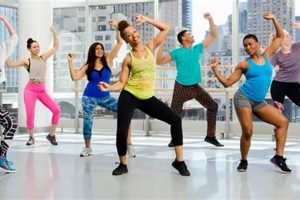
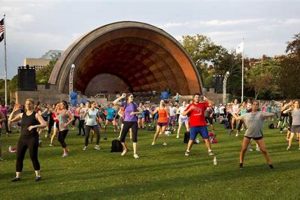
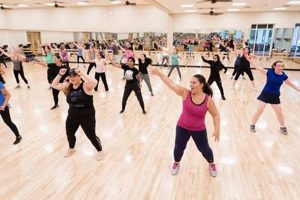
Zumba in New York City refers to fitness sessions that incorporate Latin-inspired dance movements and rhythms, providing a cardio workout suitable for a range of skill levels. These sessions typically blend elements of salsa, merengue, cumbia, and reggaeton, creating an energetic and engaging exercise experience. A typical session might involve routines that alternate between fast and slow rhythms, with resistance training interspersed throughout.
Participation offers multiple advantages, including improved cardiovascular health, increased muscle tone, and enhanced coordination. Furthermore, these activities provide a social outlet and can be a stress-relieving alternative to traditional gym workouts. The presence of this type of fitness offering in a major metropolitan area reflects the demand for diverse and accessible exercise options catering to varied lifestyles and fitness goals. It has grown from a niche offering to a mainstream fitness choice due to its accessibility and engaging nature.
The subsequent sections will delve into the range of options available, factors to consider when choosing a suitable provider, and insights into pricing and location considerations within the city’s diverse neighborhoods. Furthermore, we’ll explore how to maximize the benefits derived from consistent attendance.
Optimizing Participation in Dance Fitness Sessions Within the Five Boroughs
The following tips aim to enhance the experience and effectiveness of attending Latin-inspired dance fitness workouts in New York City. Adherence to these guidelines can contribute to improved fitness outcomes and a more fulfilling participation.
Tip 1: Prioritize Location Accessibility. Select a studio or class venue that is conveniently located relative to residence or workplace. Reduced commute time minimizes barriers to consistent attendance, especially given the city’s varied transportation challenges. Consider proximity to subway lines or bus routes.
Tip 2: Evaluate Instructor Qualifications. Inquire about instructor certifications and experience. A qualified instructor should possess appropriate licenses and demonstrate a thorough understanding of safe movement practices and modifications for varying fitness levels. Verify certifications such as Zumba Instructor Training levels 1, 2, or beyond.
Tip 3: Consider Class Format and Style. Different studios offer varied styles of dance fitness, ranging from traditional programs to specialized variations focusing on specific dance genres. Research the class format to ensure alignment with personal fitness goals and preferred musical styles. Trial classes can be valuable in determining suitability.
Tip 4: Assess Facility Amenities. The availability of amenities such as changing rooms, showers, and secure storage facilities can significantly impact the overall experience. Evaluate the cleanliness and maintenance of the facility before committing to long-term attendance.
Tip 5: Review Class Schedules and Pricing. Compare class schedules across different studios to identify options that fit individual availability and time constraints. Analyze pricing structures, including drop-in rates, class packages, and membership options, to determine the most cost-effective solution. Look for promotional offers or discounts.
Tip 6: Monitor Personal Progress and Adjust Intensity. Track personal fitness improvements over time, such as increased endurance or improved coordination. As fitness levels increase, consider gradually increasing the intensity of workouts by incorporating more challenging variations or attending more advanced classes.
Tip 7: Prioritize Proper Hydration and Nutrition. Maintain adequate hydration levels before, during, and after each session. Consume a balanced diet that supports energy levels and muscle recovery. Consult with a registered dietitian or nutritionist for personalized dietary recommendations.
Following these recommendations can contribute to a more rewarding and effective fitness journey. Careful consideration of logistical factors, instructor qualifications, and personal preferences can optimize the benefits derived from participation.
The subsequent section will address the importance of setting realistic fitness goals and maintaining motivation to ensure long-term adherence to a fitness regimen.
1. Location Accessibility and Zumba Classes in NYC
Location accessibility represents a fundamental determinant in participation and adherence to group fitness activities in densely populated urban environments. In the context of dance fitness activities in New York City, ease of access to studios and class venues significantly impacts individual’s willingness to engage consistently.
- Proximity to Public Transportation
The availability of accessible subway and bus lines directly impacts the feasibility of attending classes for many residents. Locations situated near major transit hubs minimize commute times and reduce the reliance on personal vehicles, which may be impractical or cost-prohibitive. For example, a studio located directly above or adjacent to a subway station offers a considerable advantage in terms of convenience.
- Walkability and Bike Accessibility
For individuals residing within a relatively short distance of a studio, walkability and bike accessibility can be significant factors. Safe and well-maintained sidewalks, bike lanes, and available bike storage facilities contribute to the appeal of locations that are easily reached without relying on motorized transport. Neighborhoods with high walk scores are particularly conducive to this type of accessibility.
- Parking Availability and Cost
For individuals who rely on personal vehicles, parking availability and associated costs can pose a significant barrier. Areas with limited street parking or high garage fees may deter potential participants. Studios that offer validated parking or are located near affordable parking options can mitigate this concern.
- Neighborhood Safety
The perceived safety of the surrounding neighborhood, particularly during evening hours, influences individual’s willingness to travel to and from a fitness class. Well-lit streets, visible security presence, and low crime rates contribute to a sense of safety and security, enhancing the appeal of the location.
The confluence of these accessibility factors directly impacts the attendance rates and overall success of offerings. Studios that prioritize location accessibility considerations demonstrate a commitment to catering to the diverse needs of the city’s population, thereby maximizing their potential reach and impact within the fitness landscape.
2. Instructor Qualification and Zumba Classes in NYC
Instructor qualification is a critical factor influencing the efficacy, safety, and overall quality of Zumba classes offered in New York City. Competent instruction ensures participant well-being and optimizes fitness outcomes, setting the foundation for an engaging exercise environment.
- Formal Zumba Certification
The Zumba Instructor Training (ZIT) program provides foundational knowledge of Zumba choreography, music, and cueing techniques. ZIT certifications, levels 1 and beyond, demonstrate an instructor’s adherence to the official Zumba methodology. Enrollment in ZIT is not a guarantee of teaching quality, but it signifies a baseline understanding of the program’s core principles. Absence of ZIT certification raises concerns about adherence to standardized practices and potential safety risks. For example, a class led by a certified instructor will typically follow a structured sequence of movements designed to progressively increase intensity, while an uncertified instructor might deviate significantly from established protocols.
- CPR and First Aid Certification
Possession of current CPR and First Aid certifications demonstrates an instructor’s preparedness to respond to medical emergencies that may arise during a class. Given the physically demanding nature of Zumba, participants are susceptible to injuries such as sprains, strains, or even cardiac events. Instructors with CPR and First Aid training can administer immediate assistance, potentially mitigating the severity of such incidents. A hypothetical scenario involves a participant experiencing chest pain during a high-intensity segment of a class; a certified instructor would be equipped to assess the situation, provide appropriate care, and contact emergency medical services if necessary.
- Experience and Teaching Acumen
Beyond formal certifications, practical experience and effective teaching skills are essential components of instructor qualification. Experienced instructors possess the ability to adapt their teaching style to accommodate diverse fitness levels and learning styles. They can provide clear and concise instructions, offer modifications for participants with physical limitations, and create a supportive and motivating class atmosphere. An example is a teacher who recognizes a student struggling with a particular move, and offers alternatives, or breaks down the move more slowly for easier understanding.
- Liability Insurance Coverage
Instructors should maintain adequate liability insurance coverage to protect themselves and the studio from potential claims arising from injuries sustained during a class. This insurance provides financial protection in the event of negligence or other unforeseen circumstances. Participants may inquire about an instructor’s insurance coverage to ensure that they are adequately protected in the event of an incident.
These factors collectively define the level of instructor qualification within the landscape. Classes led by properly qualified instructors enhance the participant experience, promoting safer engagement. The above information can aid participants in their search for the most beneficial and secure way to engage with this form of fitness.
3. Class Schedule Flexibility and Zumba Classes in NYC
In the context of New York City, class schedule flexibility represents a critical determinant of accessibility and sustained engagement with fitness activities. The correlation between schedule adaptability and dance fitness participation stems from the demanding and unpredictable nature of urban lifestyles. Individuals often face constraints related to work commitments, family responsibilities, and commuting challenges, necessitating fitness options that can accommodate fluctuating schedules. The presence of diverse class timings, encompassing early morning, midday, evening, and weekend slots, directly enhances accessibility for a broader segment of the population. For example, a professional working a standard 9-to-5 job may only be able to attend classes offered before or after work, whereas a shift worker may require midday or weekend options. Without adequate schedule flexibility, participation becomes logistically challenging, potentially leading to reduced adherence and diminished fitness outcomes.
The practical significance of schedule adaptability extends to various aspects of program effectiveness. Consistent attendance, facilitated by convenient scheduling, allows individuals to progressively develop fitness skills and achieve tangible health benefits. Moreover, access to a range of class times provides the opportunity to compensate for occasional missed sessions due to unforeseen circumstances, thereby maintaining continuity in the fitness regimen. A studio offering multiple sessions of the same class throughout the week allows participants to seamlessly switch between different time slots based on their availability. Conversely, limited class schedules restrict participant choice and increase the likelihood of missed opportunities, hindering progress and reducing motivation. For example, a student may be excited to attend a dance fitness class, but if only a Tuesday/Thursday offering exists, their attendance may be erratic or impossible.
Ultimately, class schedule flexibility forms an integral component of accessible. It is crucial to acknowledge the diverse scheduling needs of individuals when offering classes within the city. The studios offering the classes contribute significantly to enhancing the reach and impact of the class. Prioritizing schedule adaptability allows fitness providers to better cater to the rhythms of modern urban life, promoting sustained participation and positive health outcomes among the residents of the city.
4. Pricing Structure and Zumba Classes NYC

Pricing structures significantly influence accessibility and participation rates for Zumba classes across New York City. Diverse pricing models, ranging from per-class fees to monthly memberships, directly impact the ability of individuals with varying financial resources to engage in regular physical activity. High per-class rates can deter infrequent attendees, while restrictive membership agreements may discourage those with unpredictable schedules. Conversely, affordable class packages or flexible membership options can incentivize consistent participation and promote long-term adherence. For example, a student on a limited budget might opt for a studio offering discounted rates for off-peak hours or multi-class packages, enabling them to participate without straining their finances.
The selection of a particular pricing model often reflects the studio’s operational costs, target demographic, and competitive landscape. Studios located in high-rent districts may need to charge higher rates to cover expenses, whereas community-based organizations may offer subsidized programs to promote inclusivity. The availability of trial classes or introductory discounts also serves as a mechanism for attracting new participants and allowing them to assess the value of the offering before committing to a longer-term membership. A real-world scenario involves a new studio launching in a gentrifying neighborhood, employing tiered pricing: one rate for long-time residents, another for new arrivals. These tactics underscore pricing’s strategic role in shaping market access and catering to diverse consumer segments within the city.
Ultimately, an understanding of the pricing structure represents a crucial component of informed decision-making for individuals seeking dance fitness opportunities. The affordability and flexibility of pricing models directly impact accessibility, participation, and long-term sustainability of attendance. Price considerations also determine if people are able to attend with consistency. Addressing challenges related to pricing equity and transparency can contribute to broader efforts promoting fitness access for all New Yorkers, reinforcing the potential of dance fitness as a vehicle for individual and community well-being.
5. Class Size and Zumba Classes in NYC
Class size represents a significant variable influencing the experience and effectiveness of dance fitness sessions in the New York City environment. The number of participants directly impacts the level of individual attention received, the availability of space for movement, and the overall dynamics of the class.
- Individualized Attention and Form Correction
Smaller class sizes facilitate greater interaction between the instructor and participants, allowing for more personalized feedback and form correction. Instructors can more readily observe individual technique, identify potential areas of improvement, and provide tailored guidance to prevent injuries. Conversely, larger classes often limit the instructor’s ability to provide individualized attention, potentially leading to improper form and increased risk of injury. In a small class, the instructor may notice that someone’s knee is moving the wrong way during a squat; in a large class, the instructor may have less opportunities to notice such things.
- Space Availability and Movement Range
Sufficient space per participant is essential for executing dance movements safely and effectively. Overcrowded classes restrict movement range and increase the likelihood of collisions, compromising both the workout quality and participant safety. Studios with larger floor areas can accommodate larger class sizes without sacrificing individual space, while smaller studios may need to limit class size to ensure adequate room for movement. Imagine a series of turns that could cause collisions in a densely packed room. That is a practical example of the issue.
- Class Atmosphere and Social Interaction
Class size influences the overall atmosphere and social dynamics of the session. Smaller classes often foster a more intimate and supportive environment, promoting camaraderie among participants. Larger classes, while potentially offering a higher energy level, can feel less personal and may limit opportunities for social interaction. A class that is very high volume may not allow students to get to know one another easily or at all.
- Instructor Management and Control
Large class sizes present greater challenges for instructors in terms of managing the class, maintaining control, and ensuring that all participants are engaged. Instructors may need to project their voice more loudly, use more assertive cues, and rely on pre-choreographed routines to maintain order and momentum. Smaller classes allow for more flexible instruction and greater adaptability to participant needs and preferences. Therefore, classes with a large number of participants will require a different approach.
These considerations highlight the importance of class size as a determinant of quality and efficacy. Prospective participants are encouraged to inquire about class sizes and assess whether the offered ratios align with their individual preferences and fitness goals. A smaller class size may be preferrable for beginners or those who require more individualized support, while more experienced individuals may enjoy the energy and intensity of a larger class.
6. Studio Amenities and Zumba Classes in NYC

The availability and quality of studio amenities directly impact the experience and perceived value of Zumba classes in New York City. These amenities, ranging from basic necessities to enhanced offerings, contribute to participant comfort, convenience, and overall satisfaction. The absence of essential amenities can deter attendance, while well-maintained and thoughtfully designed facilities can serve as a competitive differentiator, attracting and retaining clients. For example, adequate changing rooms and shower facilities are particularly crucial for individuals attending classes before or after work, enabling them to seamlessly integrate fitness into their daily routines. Similarly, secure storage lockers provide peace of mind, allowing participants to focus on their workout without concern for personal belongings.
Beyond basic necessities, additional amenities can enhance the value proposition of Zumba classes. Climate control systems, ensuring comfortable temperatures throughout the year, are vital in a city with extreme seasonal variations. High-quality sound systems contribute to an immersive and motivating workout environment, while well-maintained flooring minimizes the risk of injuries. Some studios offer supplementary services, such as towel service, water bottle filling stations, or on-site childcare, further enhancing convenience and attracting a broader clientele. A Zumba class held in a modern studio, featuring state-of-the-art sound systems and climate control, will invariably be considered more appealing than a similar class held in a sparsely equipped, outdated facility. This disparity in perceived value translates into higher attendance rates and improved customer loyalty for studios that prioritize amenity investments.
In conclusion, studio amenities are an integral component of the Zumba class experience. Attending to participant comfort and convenience by providing well-maintained facilities and supplementary services represents a strategic investment that can significantly impact attendance, satisfaction, and long-term success. A comprehensive understanding of the importance of studio amenities enables both Zumba providers and prospective participants to make informed decisions, optimizing the fitness experience within the competitive landscape of New York City’s fitness industry.
Frequently Asked Questions
The following questions address common inquiries regarding participation in dance fitness sessions in New York City, providing clarity on logistical, financial, and safety-related aspects of these activities.
Question 1: What certifications should instructors possess to ensure safety and competence?
Instructors should hold current Zumba Instructor Training (ZIT) certifications, levels 1 and above, demonstrating adherence to standardized Zumba methodology. Additionally, CPR and First Aid certifications are essential, indicating preparedness to respond to medical emergencies. Evidence of liability insurance further mitigates risks associated with participation.
Question 2: How can potential participants assess the accessibility of a class location?
Evaluate proximity to subway and bus lines, as well as walkability and bike accessibility from residential or workplace areas. Consider the availability and cost of parking for those relying on personal vehicles. Assess neighborhood safety, particularly during evening hours, to ensure a comfortable and secure commute.
Question 3: What factors should be considered when evaluating different pricing structures?
Compare per-class rates, class packages, and membership options to determine the most cost-effective solution. Inquire about trial classes or introductory discounts to assess the value of the offering before committing to long-term attendance. Explore options for subsidized programs or discounted rates, if applicable.
Question 4: How does class size impact the workout experience?
Smaller class sizes facilitate individualized attention from the instructor and ample space for movement, while larger classes may offer a higher energy level and social interaction. Individuals should assess their personal preferences and fitness goals when considering class size, prioritizing personalized support or a more dynamic group setting.
Question 5: What studio amenities contribute to a more comfortable and convenient experience?
Essential amenities include changing rooms, shower facilities, and secure storage lockers. Climate control systems, high-quality sound systems, and well-maintained flooring enhance the overall workout environment. Supplementary services, such as towel service and water bottle filling stations, provide added convenience.
Question 6: What considerations are important to ensure class schedule flexibility?
The studios should provide a wide variety of class times across the day. This variety helps meet a range of possible schedules. These include early morning, midday, evening, and weekend slots. Check that there are consistent access times for specific days of the week.
These responses highlight the key considerations for individuals seeking dance fitness in New York City. Assessing instructor qualifications, location accessibility, pricing structures, class sizes, studio amenities, and class schedule flexibility, allows for informed decision-making and optimal fitness experiences.
The concluding section will provide a summary of the key points discussed and offer additional resources for further exploration of dance fitness options.
Conclusion
This exploration of Zumba classes NYC has underscored the multifaceted considerations involved in selecting an appropriate and beneficial fitness program. Key aspects examined include instructor qualifications, location accessibility, pricing structures, class sizes, studio amenities, and schedule flexibility. Each element plays a critical role in shaping the participant experience and influencing long-term adherence to a fitness regimen.
The information presented serves as a foundation for informed decision-making, empowering individuals to navigate the diverse landscape of dance fitness opportunities within the city. Careful consideration of these factors is essential for maximizing the potential benefits of Zumba classes NYC, promoting both physical well-being and sustained engagement in an active lifestyle. Further research and direct engagement with local studios are encouraged to facilitate personalized program selection and optimal fitness outcomes.