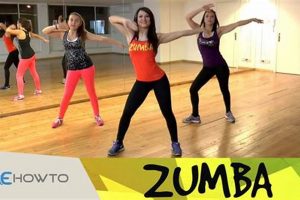
This interactive exercise program combines the popular Zumba dance fitness craze with the motion-sensing capabilities of the Microsoft Xbox 360 Kinect. It allows users to participate in Zumba routines from the comfort of their homes, using the Kinect sensor to track their movements and provide feedback.
The system offers a fun and engaging way to achieve a full-body workout. It provides an alternative to traditional gym settings, encouraging participation through its game-like interface. Its release coincided with a surge in popularity of both motion-controlled gaming and dance-based fitness programs, making it accessible to a wide audience seeking convenient and entertaining exercise options.
The following sections will delve into the specifics of its features, gameplay mechanics, and overall impact on the home fitness market.
Maximizing the Exercise Experience
To derive the most benefit from the interactive fitness routine, consider the following guidelines.
Tip 1: Calibrate the Kinect Sensor Accurately. Proper calibration is essential for the system to accurately track movements. Ensure sufficient lighting in the play area and position the sensor at the recommended height.
Tip 2: Clear Ample Play Space. The software requires a significant amount of free space to allow for uninhibited movement. Remove any obstacles that could impede exercise or pose a safety hazard.
Tip 3: Begin with Beginner Routines. Start with the introductory routines to familiarize oneself with the game mechanics and fundamental Zumba steps. Gradually progress to more challenging routines as fitness improves.
Tip 4: Maintain Proper Form. Pay close attention to the on-screen instructors and strive to replicate their movements with precision. Maintaining proper form minimizes the risk of injury and maximizes the effectiveness of the workout.
Tip 5: Utilize the Feedback System. The system provides real-time feedback on performance. Use this information to identify areas for improvement and refine technique.
Tip 6: Hydrate Adequately. Drink water before, during, and after each workout session to maintain hydration and prevent fatigue.
Tip 7: Wear Appropriate Attire. Wear comfortable, breathable clothing and supportive athletic shoes to facilitate movement and reduce the risk of discomfort or injury.
Adhering to these tips will optimize the user’s experience, leading to improved fitness outcomes and a reduced risk of injury.
The subsequent section will address common troubleshooting issues that may arise during gameplay.
1. Motion Tracking

Motion tracking forms the foundational technology upon which the entire interactive experience of the Zumba fitness program on the Xbox 360 Kinect is built. Its accuracy and responsiveness directly influence the efficacy and enjoyment derived from the fitness routines.
- Skeletal Recognition and Interpretation
The Kinect sensor utilizes infrared technology and specialized algorithms to identify and track the user’s skeletal structure. This allows the system to translate physical movements into in-game actions, enabling interaction with the Zumba routines. The precision of skeletal recognition determines how faithfully the on-screen avatar mirrors the user’s actions.
- Real-Time Feedback and Correction
The system provides immediate feedback based on the analysis of tracked movements. It compares the user’s actions to the instructor’s demonstration and provides visual or auditory cues to correct posture or timing. This real-time feedback loop is crucial for learning the Zumba routines and maintaining proper form.
- Lag and Latency Considerations
The effectiveness of motion tracking is dependent on minimizing lag and latency. Delays between the user’s movements and the on-screen response can disrupt the flow of the routine and lead to frustration. The processing power of the Xbox 360 and the efficiency of the Kinect sensor contribute to the overall responsiveness of the system.
- Spatial Volume and Range of Motion
The Kinect sensor has a defined spatial volume within which it can accurately track movements. Users must remain within this range to ensure consistent and reliable tracking. Limitations in the range of motion that can be tracked can affect the system’s ability to accurately register certain Zumba steps and combinations.
In summary, the quality of the motion tracking capabilities directly impacts the user’s ability to effectively participate in the Zumba routines and achieve the desired fitness outcomes. Reliable and responsive motion tracking is essential for a seamless and engaging exercise experience.
2. Workout Variety

The extent of workout variation within the Xbox 360 Kinect Zumba fitness program is a critical factor determining its long-term user engagement and effectiveness as a fitness tool. A diverse range of routines and customizable options contribute to preventing exercise monotony and targeting different muscle groups.
- Diverse Dance Styles
The program incorporates various dance styles beyond traditional Zumba, including salsa, merengue, cumbia, and reggaeton. This stylistic breadth provides users with exposure to different rhythms and movement patterns, enhancing coordination and overall fitness. For instance, a salsa routine emphasizes quick footwork and partner-style movements, while a cumbia routine focuses on hip and torso isolations. This variety keeps the workouts engaging and prevents plateaus in fitness progress.
- Intensity Levels and Program Lengths
The software offers routines of varying intensity levels, catering to users of different fitness backgrounds. Shorter, lower-intensity workouts are suitable for beginners or warm-up sessions, while longer, high-intensity workouts challenge more advanced users. This scalability allows users to gradually increase their fitness levels over time. Furthermore, the option to customize workout playlists with different songs and routines contributes to personalized fitness goals.
- Choreography Complexity
The choreographic complexity of the routines also varies. Some routines feature simpler, repetitive movements that are easy to learn and follow, while others incorporate more complex combinations requiring greater coordination and memorization. This tiered approach allows users to gradually progress from basic to advanced choreography, ensuring continuous learning and challenge. As an example, early routines may focus on single steps, while later routines combine multiple steps into intricate sequences.
- Customizable Playlists and Routines
The capability to create personalized workout playlists is essential for maintaining user motivation and addressing specific fitness objectives. Users can select their preferred music and routines to construct a workout tailored to their individual tastes and goals. This customization enhances the sense of ownership and control over the exercise experience. For example, a user aiming to improve cardiovascular fitness might prioritize high-energy routines with a fast tempo.
The multifaceted workout variety within the Xbox 360 Kinect Zumba fitness program contributes significantly to its appeal and effectiveness. By offering diverse dance styles, intensity levels, choreography complexity, and customizable playlists, the software provides a platform for sustainable fitness engagement and continuous improvement.
3. Calorie Tracking

Calorie tracking within the Zumba fitness program for the Xbox 360 Kinect serves as a quantifiable metric for assessing the energy expenditure during exercise sessions. The system utilizes algorithms based on the user’s detected movements, estimated body weight, and the intensity of the workout to provide an approximate calorie burn figure. This feature aims to motivate users by visualizing the impact of their physical activity. For example, a user consistently participating in 30-minute Zumba sessions and tracking their calorie expenditure may be more likely to adhere to a fitness regimen due to the perceived positive reinforcement.
The accuracy of calorie estimation is a crucial factor determining the utility of this feature. While the system provides an estimate, individual metabolic rates and varying levels of exertion introduce potential discrepancies between the displayed calorie burn and the actual energy expenditure. Therefore, the calorie tracking function serves best as a relative indicator of workout intensity and a comparative tool for assessing progress over time rather than an absolute measure of caloric consumption. A user might, for instance, compare the calorie burn reported for a high-intensity routine against that of a low-intensity one, gaining insights into the energetic demands of different workout types.
In conclusion, calorie tracking in the Zumba fitness program offers a valuable motivational tool for users, providing a quantifiable measure of workout intensity and facilitating progress monitoring. Despite potential inaccuracies inherent in estimation models, the features practical significance lies in its ability to encourage adherence to a fitness routine and promote a greater awareness of energy expenditure during physical activity. However, users should recognize the limitations of these estimates and consider them as supplemental information within a broader fitness and dietary strategy.
4. Instructor Guidance

Instructor guidance is an integral component of the interactive Zumba fitness experience on the Xbox 360 Kinect. The quality and effectiveness of the virtual instruction directly influence the user’s ability to learn the routines, maintain proper form, and ultimately achieve their fitness goals.
- Demonstration and Visual Cues
The on-screen instructors provide visual demonstrations of each Zumba step and routine. These demonstrations serve as a primary source of information for the user, illustrating the correct posture, movements, and timing. Visual cues, such as directional arrows and highlighted body parts, further enhance the clarity of the instruction. For example, an instructor might emphasize hip movements during a salsa routine by exaggerating the motion and providing visual prompts to focus on that specific area. This visual learning approach caters to a wide range of user preferences and learning styles.
- Verbal Instruction and Rhythm Cues
In addition to visual demonstrations, instructors provide verbal cues to guide users through the routines. These cues include step-by-step instructions, rhythm counts, and motivational encouragement. For example, an instructor might say, “Step to the left, two, three, four,” to synchronize the user’s movements with the music and choreography. The rhythmic nature of the verbal cues reinforces the musicality of Zumba and aids in memorization of the routines. Furthermore, positive reinforcement from the instructor contributes to a more engaging and motivating workout experience.
- Real-Time Feedback and Correction
The Kinect sensor, in conjunction with the software, provides real-time feedback on the user’s performance. The system analyzes the user’s movements and compares them to the instructor’s demonstration, offering visual or auditory cues to correct posture or timing. This feedback mechanism helps users identify areas for improvement and refine their technique. For instance, if a user’s arm movements are too low during a particular step, the system might display a visual prompt indicating the need to raise their arms higher. This iterative feedback loop is crucial for learning proper form and maximizing the effectiveness of the workout.
- Difficulty Progression and Modification Options
The program offers routines of varying difficulty levels, allowing users to gradually progress as their fitness improves. Instructors provide modifications for certain steps or movements to accommodate users with physical limitations or varying levels of experience. For example, a user with knee problems might be advised to modify a jump by taking a step instead. This adaptability ensures that the program remains accessible to a broad audience and minimizes the risk of injury. The ability to select routines based on difficulty and to modify movements according to individual needs contributes to a more personalized and effective fitness experience.
The multifaceted instructor guidance provided within the Xbox 360 Kinect Zumba fitness program is essential for its accessibility and effectiveness. By combining visual demonstrations, verbal cues, real-time feedback, and modification options, the program caters to diverse learning styles and fitness levels, ensuring a rewarding and engaging workout experience for all users.
5. Gamified Experience

The integration of gamification principles within the Zumba fitness program for the Xbox 360 Kinect significantly contributes to its appeal and effectiveness. Gamification, in this context, refers to the incorporation of game-design elements and game principles in non-game contexts. This approach leverages inherent human motivations such as competition, achievement, and reward to enhance engagement and encourage sustained participation in the exercise routines. The incorporation of points, virtual badges, and unlockable content transforms the workout into a more interactive and rewarding experience. The system’s feedback mechanisms, such as on-screen displays of performance scores and progress bars, create a sense of accomplishment, fostering continued motivation. A direct result of this approach is increased adherence to the fitness program, which positively impacts health outcomes.
The specific implementation of gamification in the Zumba program includes several key features. The awarding of points based on movement accuracy and synchronization with the on-screen instructor provides immediate feedback and encourages users to refine their technique. Unlockable content, such as new songs and routines, incentivizes continued participation and exploration of the program’s offerings. Leaderboards, whether local or online, introduce a competitive element that motivates users to strive for higher scores and improve their performance. The use of virtual environments and avatars adds an element of personalization and immersion, enhancing the overall enjoyment of the workout. The practical application of these elements transforms a potentially monotonous exercise routine into a more engaging and entertaining activity. For example, a user may be more likely to complete a challenging workout session if they are motivated by the prospect of unlocking a new song or achieving a higher score than their friends.
In summary, the gamified experience is a critical factor in the success of the Zumba fitness program on the Xbox 360 Kinect. By leveraging game-design principles to enhance motivation and engagement, the program effectively addresses the challenge of maintaining long-term adherence to a fitness regimen. While the inherent effectiveness of Zumba as a workout routine is a foundation, the gamification layer serves to amplify its appeal and accessibility, making it a more sustainable and enjoyable exercise option for a wider range of individuals. Further research could explore the specific impact of different gamification elements on user behavior and fitness outcomes.
6. Home Convenience

The integration of home convenience with the Zumba fitness program on the Xbox 360 Kinect significantly impacted its adoption and sustained use. The primary cause of this connection stems from the elimination of barriers associated with traditional fitness venues. Travel time, gym membership costs, and scheduling conflicts are effectively circumvented, directly contributing to increased accessibility. The program provides the opportunity to engage in structured exercise routines without leaving the residence, effectively transforming any living room into a personal fitness studio. This convenience lowers the threshold for participation and facilitates spontaneous workout sessions that align with individual schedules.
Home convenience, as a core component, influences adherence to fitness goals. The ability to exercise at any time, regardless of external factors like weather or operating hours, promotes consistency. The elimination of social anxieties sometimes associated with public gyms fosters a more comfortable and private workout environment. Real-life examples abound: individuals with demanding work schedules or childcare responsibilities often find it challenging to commit to fixed gym times. The Zumba fitness program offers a viable alternative, allowing them to integrate exercise seamlessly into their existing routines. Furthermore, families can participate together, fostering a supportive and motivating environment. The practical significance of this understanding highlights the importance of accessible fitness solutions in promoting overall health and well-being.
In conclusion, the symbiotic relationship between home convenience and the Xbox 360 Kinect Zumba fitness program underscores the value of accessible and adaptable fitness options. The program effectively addresses common barriers to exercise, thereby fostering greater participation and adherence. While the program may not replicate the social interaction of a group fitness class, its convenience factor provides a compelling alternative for individuals seeking to integrate exercise into busy lifestyles. Future fitness programs will likely continue to prioritize home convenience as a key design principle.
7. Affordable Option

The economic considerations associated with fitness programs play a significant role in accessibility and adherence. The Zumba fitness program on the Xbox 360 Kinect presents a comparatively affordable alternative to traditional gym memberships and in-person fitness classes, impacting its reach and long-term viability.
- Upfront Investment vs. Recurring Costs
The primary expenditure involves the initial purchase of the Xbox 360 console (if not already owned), the Kinect sensor, and the Zumba fitness game software. This upfront investment contrasts with the recurring monthly or annual fees associated with gym memberships or specialized fitness classes. While the initial cost may be substantial, the absence of ongoing charges positions the program as a more budget-friendly option over time. A family, for instance, may find that the one-time expense of the game and equipment is significantly less than the collective cost of multiple gym memberships.
- Elimination of Ancillary Expenses
Beyond membership fees, traditional fitness settings often incur additional costs such as transportation, specialized workout attire, and childcare. The home-based nature of the Zumba program eliminates these supplementary expenses, further enhancing its affordability. Individuals living in areas with limited public transportation or high fuel costs can realize substantial savings by exercising at home. Similarly, the ability to exercise during nap times or after children are asleep removes the need for costly childcare services.
- Longevity and Reusability
The Xbox 360 Kinect and the Zumba fitness software retain their functionality over an extended period. Unlike perishable goods or services, the program can be utilized repeatedly for months or years without incurring additional charges. This longevity provides a significant return on investment, particularly for individuals who consistently engage with the program. Furthermore, the console and Kinect sensor can be used for other games and applications, broadening their overall utility and justifying the initial expenditure.
- Accessibility to Budget-Conscious Individuals
For individuals with limited financial resources, the Zumba fitness program offers a means to access structured exercise routines that might otherwise be inaccessible. The affordability of the program expands the opportunity for physical activity to a broader demographic, promoting health equity. Students, unemployed individuals, and those on fixed incomes can benefit from the program’s low long-term cost, enabling them to prioritize their health and well-being without incurring significant financial strain.
In summation, the affordability of the Zumba fitness program on the Xbox 360 Kinect, relative to traditional fitness alternatives, contributes to its accessibility and long-term value. By minimizing recurring expenses, eliminating ancillary costs, and offering sustained usability, the program provides a cost-effective means to engage in structured exercise, thereby promoting wider participation and improved health outcomes for budget-conscious individuals.
Frequently Asked Questions
The following addresses common inquiries regarding the Zumba fitness program for the Xbox 360 Kinect, providing clarity on functionality and usage.
Question 1: Does the Zumba Fitness program for Xbox 360 Kinect require internet connectivity for gameplay?
No. The core gameplay functionality, including workout routines and motion tracking, operates offline. Internet connectivity is only required for downloadable content or accessing online features, if available within the specific game version.
Question 2: What are the minimum spatial requirements for optimal Kinect sensor performance with the Zumba Fitness program?
The Kinect sensor necessitates a clear and unobstructed play space. A minimum of approximately 6 feet of distance between the user and the sensor is recommended for optimal motion tracking accuracy. Insufficient space may impede accurate movement recognition.
Question 3: Is it possible to use the Zumba Fitness program without the Kinect sensor?
No. The Zumba Fitness program relies on the Kinect sensor for motion tracking and interactive gameplay. Without the Kinect sensor, the game is rendered non-functional.
Question 4: What steps are necessary to calibrate the Kinect sensor for the Zumba Fitness program?
The Kinect sensor calibration process is initiated through the Xbox 360 system settings. The system guides the user through a series of steps to ensure proper sensor alignment and optimal motion tracking performance. Following the on-screen instructions precisely is crucial for accurate calibration.
Question 5: Does the Zumba Fitness program provide customized workout plans based on fitness level?
The program typically offers routines of varying intensity levels, allowing users to select workouts that align with their fitness capabilities. While it may not generate fully customized plans, users can create playlists and choose routines that match their individual fitness goals and limitations.
Question 6: How accurate is the calorie tracking feature within the Zumba Fitness program?
The calorie tracking feature provides an estimated approximation of energy expenditure based on detected movements and workout intensity. However, individual metabolic rates and exertion levels vary. The reported calorie burn should be considered a relative indicator of workout intensity rather than an absolute measure of caloric consumption.
These responses aim to provide informative guidance regarding the functionality and operation of the Zumba Fitness program on the Xbox 360 Kinect. Understanding these points facilitates effective and safe utilization of the software.
The next section will discuss troubleshooting common technical issues encountered during gameplay.
Conclusion
This exploration has detailed the various facets of the Xbox 360 Kinect Zumba Fitness program. From its core mechanics involving motion tracking and workout variety to the supplementary features of calorie tracking and instructor guidance, the program offers a multifaceted approach to home-based fitness. Gamification elements and the convenience of in-home access further contribute to its accessibility and potential for sustained engagement. The program also presents a comparatively affordable avenue for individuals seeking structured exercise, particularly when weighed against traditional gym memberships or specialized fitness classes.
The legacy of this interactive fitness experience serves as a reminder of the potential for technology to democratize access to physical activity. Its success underscores the value of considering convenience, affordability, and engagement when designing fitness solutions. As technology continues to evolve, future iterations of home fitness programs may build upon the foundations established by the Xbox 360 Kinect Zumba Fitness, further refining the interactive experience and contributing to improved public health outcomes. Continued research into the efficacy of such programs remains critical to maximizing their impact.