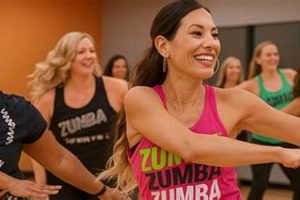
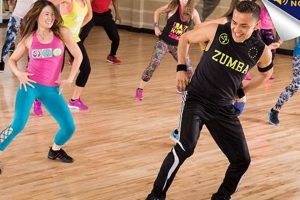
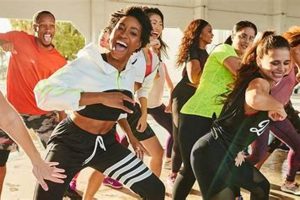
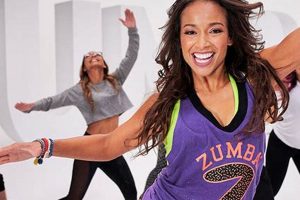
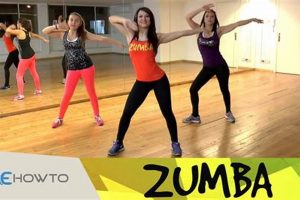
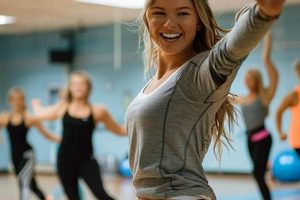
Apparel designed for those who lead Zumba classes often serves a dual purpose. First, it functions as a practical garment, suitable for the energetic movements and physical demands of instruction. Secondly, it can act as a form of branding, signifying the instructor’s role and promoting their classes or affiliation with a specific Zumba program. An example might include a breathable, moisture-wicking top displaying a Zumba logo or personalized instructor information.
Appropriate garments offer several advantages. Comfort and freedom of movement are paramount for instructors to effectively demonstrate routines. The visibility provided by branded or identifiable apparel can build recognition and trust within the class environment. Historically, the evolution of such items mirrors the growth and professionalization of the Zumba fitness program itself, shifting from generic workout wear to increasingly specialized and branded options.
The following will address considerations in selecting appropriate clothing, design elements, and the role of such apparel in creating a professional image for fitness instruction.
Tips for Selecting Instructor Apparel
Choosing appropriate garments for leading Zumba sessions is essential for both comfort and projecting a professional image. Consider the following guidelines when selecting suitable options.
Tip 1: Prioritize Comfort and Mobility: Opt for fabrics that are breathable and allow for a full range of motion. Garments should not restrict movement during high-energy routines. Examples include moisture-wicking materials and flexible designs.
Tip 2: Choose Durable and Washable Fabrics: Fitness instruction involves frequent wear and washing. Select materials that can withstand repeated laundering without losing shape or color. Synthetic blends are often a practical choice.
Tip 3: Consider Visibility and Color: While personal preference plays a role, consider colors that are easily visible within the class environment. Bright or contrasting colors can help students follow movements. Dark colors may conceal perspiration.
Tip 4: Explore Options With Branding or Personalization: Items displaying a Zumba logo or instructor name can enhance professionalism and build class recognition. However, ensure that branding aligns with any applicable Zumba licensing agreements.
Tip 5: Evaluate Fit and Coverage: Ensure that garments fit appropriately and provide adequate coverage during dynamic movements. Avoid excessively loose or tight clothing that could impede performance or create distractions.
Tip 6: Accessorize Thoughtfully: If incorporating accessories, such as headbands or wristbands, prioritize function and safety. Accessories should not obstruct vision or pose a hazard to the instructor or participants.
These considerations regarding instructor apparel are significant for ensuring comfort, practicality, and a polished presentation during Zumba instruction.
The subsequent sections will explore design elements and the broader implications of professional image within the fitness industry.
1. Comfort

The comfort factor of a garment significantly impacts a Zumba instructor’s ability to lead classes effectively. Ill-fitting or uncomfortable clothing can restrict movement, cause distractions, and impede performance. For instance, a garment constructed from non-breathable material may lead to excessive perspiration and discomfort, hindering the instructor’s focus and ability to demonstrate routines accurately. Conversely, apparel made from moisture-wicking fabrics and designed for a full range of motion allows the instructor to move freely and confidently, enhancing the overall quality of instruction.
The selection of comfortable apparel also influences the instructor’s perceived professionalism. An instructor who appears at ease and unencumbered by their clothing projects an image of confidence and competence. This can foster a more positive and engaging learning environment for participants. Example scenarios include instructors who consistently choose lightweight, flexible tops that allow them to demonstrate complex dance steps without restriction, thereby inspiring confidence in their students. Furthermore, comfortable footwear is essential for protecting the feet and preventing injuries during prolonged periods of high-impact activity.
In summary, the relationship between comfort and apparel is vital for effective Zumba instruction. Prioritizing comfortable fabrics, appropriate fit, and unrestricted movement enhances the instructor’s performance, projects a professional image, and creates a more conducive learning environment for participants. Neglecting this aspect can lead to decreased performance, distractions, and potential discomfort for both the instructor and class attendees.
2. Durability

Durability is a crucial attribute of apparel designed for Zumba instructors. The physical demands of leading fitness classes necessitate garments capable of withstanding frequent use and repeated washing without compromising structural integrity or aesthetic appeal.
- Fabric Integrity Under Stress
The fabric must maintain its structural integrity during dynamic movements. Stretches, bends, and twists inherent in Zumba routines place stress on seams and material fibers. Garments constructed from substandard materials may exhibit tearing, seam separation, or fiber degradation, reducing their lifespan and requiring frequent replacement. Higher-quality fabrics, reinforced stitching, and careful construction techniques enhance resistance to these stressors.
- Colorfastness Through Repeated Washing
Maintaining vibrant color through repeated wash cycles is essential for projecting a professional image. Zumba instructors typically launder their apparel frequently due to perspiration. Materials susceptible to fading or bleeding after washing will quickly appear worn and unprofessional. Colorfastness is achieved through the use of high-quality dyes and appropriate fabric treatments during the manufacturing process. Resistance to pilling after washing is another critical attribute that contributes to durability.
- Resistance to Environmental Degradation
Exposure to environmental factors, such as sunlight and moisture, can accelerate the degradation of certain fabrics. Garments worn outdoors or stored in humid environments may be susceptible to fading, discoloration, or mildew growth. Fabrics treated with UV protectants or antimicrobial agents offer enhanced resistance to these forms of degradation, extending the garment’s lifespan and preserving its appearance.
- Shape Retention Over Time
The ability of a garment to retain its original shape after repeated wear and washing is a key indicator of its durability. Fabrics with poor shape retention may stretch out of shape, become misshapen, or lose their elasticity. This can result in a less flattering and less functional garment. Fabrics with inherent elasticity, such as those containing spandex or elastane, and construction techniques that minimize stretching contribute to better shape retention.
The collective impact of fabric integrity, colorfastness, environmental resistance, and shape retention directly influences the overall lifespan and professional appearance. Investing in garments constructed with durable materials and employing robust construction techniques results in long-term cost savings and contributes to a consistently polished image for fitness professionals.
3. Visibility
In the context of a Zumba instructor’s apparel, visibility refers to the degree to which the instructor is easily seen and recognized by class participants. This encompasses both visual clarity during instruction and the ability of the clothing to communicate the instructor’s role and affiliation. The following factors contribute to achieving optimal visibility.
- Color Contrast and Clarity
The selection of colors that contrast sharply with the background and the surrounding environment is crucial for enhancing visibility. Bright, saturated hues or contrasting patterns can make the instructor stand out against a crowded studio or dimly lit space. For example, a top in a vibrant color like electric blue or neon green will be more easily seen than a neutral shade such as gray or beige. This is especially important for participants who are positioned further away from the instructor or who have visual impairments.
- Strategic Placement of Logos and Branding
When incorporating logos or branding elements onto apparel, the strategic placement of these elements is essential. Logos should be sized appropriately and positioned in locations that are readily visible to participants, such as the chest, upper back, or sleeves. The use of contrasting colors for the logo itself can further enhance its visibility. For example, a white Zumba logo placed on a black top will be more easily recognized than a logo that is the same color as the fabric.
- Use of Reflective Elements
Reflective elements can significantly enhance visibility in low-light conditions or during classes conducted outdoors. These elements, which may take the form of strips, panels, or small accents, reflect light back towards its source, making the instructor more easily seen by others. Reflective materials are particularly beneficial for instructors who teach evening classes or who conduct classes in spaces with limited lighting.
- Appropriate Fit and Movement
While color and branding contribute to overall visibility, the fit and style of apparel can also play a role. Clothing that allows for a full range of motion and does not impede movement enhances the instructor’s ability to demonstrate routines effectively. Clear and fluid movements, unencumbered by restrictive garments, contribute to overall visual clarity and make it easier for participants to follow along. Excessively baggy or tight clothing, on the other hand, can be distracting and may hinder the instructor’s ability to perform movements accurately.
These four facets work in concert to maximize the visual presence of a Zumba instructor. By selecting clothing that incorporates contrasting colors, strategically placed branding, reflective elements, and an appropriate fit, instructors can enhance their visibility and create a more engaging and effective learning environment for participants. The integration of these visual elements into apparel choices demonstrates a commitment to professionalism and enhances the overall participant experience.
4. Branding

The integration of branding with instructor apparel is a critical aspect of professional representation and marketing within the Zumba fitness program. Apparel serves as a visible extension of the Zumba brand and the instructor’s affiliation, influencing class participation, perceived credibility, and overall brand recognition. For example, an instructor wearing officially licensed apparel with the Zumba logo not only signals their certified status but also reinforces the brand’s visual identity, creating a unified and professional image within the class environment. This branding extends beyond the logo itself to include consistent color schemes, font usage (if applicable), and design elements that align with Zumba’s overall aesthetic. Failure to adhere to these branding guidelines can dilute the brand’s message and potentially lead to licensing issues.
The benefits of branded instructor clothing include enhanced class enrollment due to perceived professionalism and trustworthiness. Potential students are more likely to trust an instructor who visibly represents the Zumba brand compared to one wearing generic fitness apparel. Furthermore, branded garments serve as a walking advertisement outside of the class setting. Instructors wearing their branded apparel while commuting or running errands passively promote their classes and the Zumba program itself. The practicality lies in the ease of marketing achieved through everyday wear, generating organic visibility and reinforcing brand awareness within the community. For instance, Zumba has its own online store in which instructors can purchase branded apparel, ensuring brand compliance and providing a convenient avenue for instructors to represent the company well.
Despite the advantages, challenges exist. Licensing agreements and branding guidelines dictate permissible use of logos and design elements, potentially limiting instructors’ creative freedom. Furthermore, cost considerations may deter some instructors from investing in officially branded apparel. A carefully considered balance is vital between maintaining brand standards and allowing instructors to express their individuality while representing Zumba professionally. Effectively utilizing apparel for branding is a key component of successful Zumba instruction and overall brand growth.
5. Mobility

Garment mobility is of paramount importance for Zumba instructors. The dynamic and high-energy nature of Zumba instruction necessitates clothing that allows for unrestricted movement. Apparel that hinders mobility can impede an instructor’s ability to demonstrate routines effectively, potentially impacting the quality of instruction and participant engagement. The characteristics of garment design that enable a full range of motion are significant to the success and comfort of instructors.
- Fabric Flexibility
The fabric composition directly influences garment mobility. Materials with inherent stretch and elasticity, such as those containing spandex or elastane, provide a greater range of motion compared to rigid or non-stretch fabrics. A garment constructed from a flexible material will move with the instructor’s body, allowing for seamless transitions between dance steps and minimizing resistance during high-impact movements. For instance, a top made from a blend of polyester and spandex will offer superior mobility compared to a 100% cotton top. The selection of flexible materials is thus a fundamental consideration for apparel design.
- Cut and Design
The cut and design of a garment dictate how it fits the body and how it moves during activity. A well-designed garment will feature strategically placed seams and darts that allow for a full range of motion without constricting movement. For example, a raglan sleeve design, which extends the shoulder seam to the neckline, offers greater arm mobility compared to a traditional set-in sleeve. Similarly, a looser fit in the torso and hips will allow for greater freedom of movement during twisting and bending motions. Attention to the cut and design of a garment is therefore essential for optimizing mobility.
- Seam Construction
The type of seam construction can impact garment mobility. Flatlock seams, which lie flat against the skin, minimize chafing and irritation during movement. These seams are particularly important in areas where the garment rubs against the body during high-impact activity. Reinforced seams, which are double-stitched or otherwise strengthened, enhance durability and prevent seam tearing during strenuous movements. The selection of appropriate seam construction techniques is thus crucial for ensuring both comfort and mobility.
- Garment Length and Coverage
The length and coverage of a garment must be carefully considered to ensure both mobility and modesty. A top that is too short may ride up during movement, exposing the midriff and potentially hindering the instructor’s confidence. Conversely, a top that is too long may restrict leg movement or become tangled during dance steps. The ideal garment length will provide adequate coverage without impeding mobility. Similarly, the placement and design of sleeves or straps must allow for a full range of arm movement without causing restriction or discomfort. Consideration of garment length and coverage is therefore important for achieving optimal mobility and comfort.
These considerations fabric flexibility, cut and design, seam construction, and garment length and coverage are intertwined, and collectively determine the garment’s ability to facilitate unrestricted motion. Selecting apparel that addresses these aspects of mobility is crucial for allowing instructors to effectively demonstrate Zumba routines. Furthermore, clothing that does not impede the instructor during performance leads to a better experience and enhances professionalism within the studio.
6. Fit
In the selection of a garment for Zumba instruction, the concept of “fit” extends beyond mere size; it encompasses the relationship between the clothing, the instructor’s body, and the dynamic movements inherent to the activity. Apparel that fits appropriately promotes comfort, unrestricted mobility, and a professional image, contributing directly to effective instruction. Ill-fitting garments can hinder performance, create distractions, and undermine the instructor’s confidence.
- Range of Motion and Restriction
A properly fitted garment allows for a full range of motion without constriction. Shoulders, arms, torso, and legs must be able to move freely. Overly tight apparel impedes circulation, limits movement, and can lead to discomfort or even injury during high-energy routines. Conversely, excessively loose garments may snag or become entangled, creating distractions and safety hazards. A fit that complements natural movement patterns is critical for optimal performance.
- Coverage and Security
Adequate coverage is essential for maintaining modesty and professionalism. A garment that rides up, slides down, or exposes inappropriate areas during movement undermines the instructor’s credibility and creates distractions for participants. Secure straps, appropriate necklines, and sufficient torso length are necessary to ensure that the garment remains in place throughout the class. Proper fit addresses both functional and professional considerations.
- Body Type and Proportionality
An appropriate fit accounts for individual body types and proportions. A garment designed for one body shape may not fit another equally well. Considerations include shoulder width, bust size, waist circumference, hip width, and torso length. Garments that accommodate individual variations in body shape are more likely to provide a comfortable and flattering fit. Understanding one’s body type and selecting styles that complement those proportions is crucial.
- Psychological Impact and Confidence
The psychological impact of a well-fitted garment cannot be overlooked. Apparel that fits comfortably and flatteringly enhances the instructor’s confidence and self-assurance. This translates into a more positive and engaging teaching style. Conversely, ill-fitting garments can lead to self-consciousness and decreased confidence, negatively impacting performance. The connection between apparel and psychological well-being is a key factor in selecting appropriate garments for Zumba instruction.
The interplay of range of motion, coverage, body type, and psychological impact underscores the importance of proper fit. Selecting garments that accommodate the demands of Zumba instruction, individual body shapes, and psychological well-being ensures optimal performance, professionalism, and instructor confidence. A thoughtful approach to garment selection, with careful consideration of fit, is therefore essential for Zumba instructors.
7. Material

The selection of appropriate materials constitutes a foundational element in the design and functionality of apparel intended for Zumba instructors. Fabric choice directly influences comfort, durability, mobility, moisture management, and overall performance during high-intensity physical activity. Consequently, an informed understanding of material properties and their suitability for the demands of Zumba instruction is crucial for optimizing both the instructor’s experience and the longevity of the garment. For example, a garment constructed from a non-breathable, heavy fabric such as 100% cotton is likely to cause overheating and restrict movement, negatively impacting the instructor’s ability to lead the class effectively.
Conversely, materials engineered for athletic performance, such as moisture-wicking polyester blends, offer significant advantages. These fabrics actively draw perspiration away from the skin, promoting evaporation and maintaining a comfortable body temperature. The addition of elastane or spandex provides elasticity, allowing for a full range of motion without constriction. Furthermore, durable materials such as those with reinforced stitching withstand frequent washing and resist wear and tear, extending the garment’s lifespan. Real-world examples include popular athletic brands offering specifically designed tops for fitness instructors, utilizing proprietary fabric blends optimized for comfort, performance, and durability. The selection of a suitable material is therefore not merely an aesthetic consideration but a practical necessity for effective Zumba instruction.
Ultimately, the material selection process for instructor apparel involves a careful balance between performance characteristics, durability requirements, and cost considerations. While high-performance fabrics offer demonstrable benefits, their price point may present a challenge for some instructors. Striking a balance between affordability and functionality is key. The implications of this material choice extend beyond immediate comfort, impacting the longevity of the apparel and the instructor’s sustained performance. Therefore, the informed selection of materials for apparel reflects a professional commitment to both the quality of instruction and the long-term investment in personal presentation.
Frequently Asked Questions
This section addresses common inquiries and misconceptions regarding clothing choices for Zumba instructors, focusing on practical considerations and professional standards.
Question 1: What are the essential qualities of effective clothing for Zumba instructors?
Apparel for instructors should prioritize comfort, durability, mobility, visibility, and professional branding. Fabrics must be breathable, allowing a full range of motion. Colors should enhance visibility within the class environment. The garment should allow one to move without hinderance while teaching to a large group. These qualities are critical for effective instruction.
Question 2: Does Zumba International mandate specific attire for its instructors?
While Zumba International does not strictly mandate specific attire, it encourages instructors to represent the brand professionally. Wearing officially licensed apparel or clothing featuring the Zumba logo is a common practice. Adherence to branding guidelines is advisable.
Question 3: How does clothing impact the instructor’s performance and the student’s experience?
Restrictive or uncomfortable clothing can hinder an instructor’s ability to demonstrate routines accurately, potentially confusing students and diminishing the overall class experience. Appropriate apparel facilitates clear instruction and promotes a positive learning environment.
Question 4: Is it necessary to invest in expensive or high-end athletic wear?
While high-end athletic wear may offer performance benefits, it is not strictly necessary. The key is to select apparel that meets the fundamental criteria of comfort, durability, and mobility, regardless of brand or price point. Functionality should be the primary consideration.
Question 5: How can instructors personalize their apparel while maintaining a professional image?
Instructors can personalize their apparel through color choices, accessory selection (within reasonable limits), and subtle branding elements, such as a name tag or small logo. Maintaining a clean, well-maintained appearance is paramount to preserving professionalism. Avoid clothing that does not promote such an image.
Question 6: What are the potential consequences of wearing inappropriate clothing during instruction?
Wearing inappropriate clothing, such as excessively revealing or restrictive garments, can detract from the instructor’s credibility, create distractions for students, and potentially violate professional conduct standards. A conservative and functional approach is always recommended.
In summary, the selection of instructor apparel involves a careful consideration of practicality, professionalism, and branding. Informed choices contribute to effective instruction and a positive student experience.
The following resources provide further guidance on professional development for fitness instructors.
Concluding Remarks
This exploration of the garment worn by those leading Zumba classes has underscored several essential attributes. Such apparel functions as both practical attire for rigorous physical activity and a means of professional branding. Considerations of comfort, durability, visibility, fit, and material composition directly influence the effectiveness and perceived credibility of the instructor.
The conscious selection of a Zumba instructor’s garment, therefore, warrants deliberate consideration. It is not merely a matter of personal preference but a decision that reflects upon the instructor’s professionalism and commitment to the discipline. The appropriate selection contributes to successful instruction and ongoing representation of the Zumba brand.