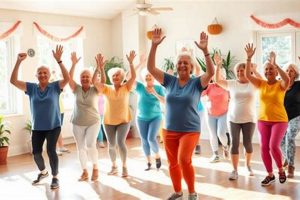
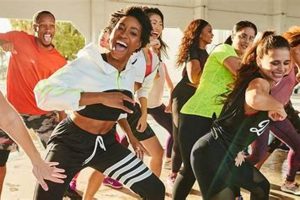
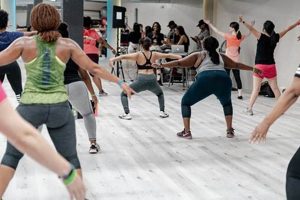
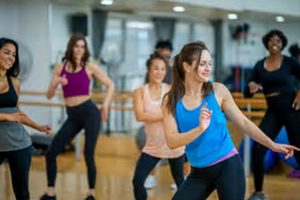
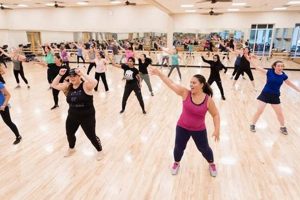
Attire selected for participation in a Zumba fitness session encompasses clothing and footwear designed to facilitate movement, manage perspiration, and provide support during high-energy activities. An example would include moisture-wicking athletic tops, supportive sports bras, flexible leggings or shorts, and cross-training shoes.
Appropriate exercise apparel is vital for a comfortable and effective Zumba experience. Such garments promote freedom of motion, help regulate body temperature, and prevent injuries. Historically, the evolution of such apparel reflects advancements in textile technology and a growing awareness of the specific physiological needs of participants engaged in physical activity.
The subsequent discussion will elaborate on the specific characteristics of suitable tops, bottoms, and footwear for Zumba, along with considerations for fabric choices, support levels, and individual preferences to optimize workout performance and enjoyment.
Guidance on Selecting Appropriate Zumba Attire
The selection of suitable workout garments is crucial for optimal comfort and performance during Zumba sessions. Consider these guidelines to enhance the exercise experience.
Tip 1: Prioritize Moisture-Wicking Fabrics: Opt for synthetic materials like polyester or nylon blends that effectively draw sweat away from the body, promoting evaporation and preventing discomfort from dampness. Avoid cotton, which tends to retain moisture.
Tip 2: Ensure Freedom of Movement: Choose garments that allow a full range of motion. Consider stretchable fabrics and designs that do not restrict arm and leg movements during dance routines.
Tip 3: Select Supportive Undergarments: A supportive sports bra is essential for women to minimize bounce and provide adequate chest support during high-impact movements. Select a style appropriate for the intensity of the workout.
Tip 4: Consider Layering Options: Depending on the ambient temperature, layering can be beneficial. A lightweight, breathable jacket or vest can be worn during the warm-up and cool-down phases.
Tip 5: Choose Appropriate Footwear: Cross-training shoes are generally recommended. Look for shoes with good lateral support, cushioning, and a non-marking sole to prevent slipping and provide stability during various dance steps.
Tip 6: Opt for Breathable Materials: Ensure that garments allow for adequate airflow. Mesh panels or strategically placed ventilation can enhance breathability and prevent overheating.
Tip 7: Evaluate Garment Fit: Ensure clothing fits properly. Avoid garments that are too tight, which can restrict movement, or too loose, which can pose a tripping hazard.
Adhering to these guidelines will contribute to a more comfortable, safe, and enjoyable Zumba experience, facilitating optimal performance and minimizing distractions.
The subsequent sections will address specific fabric recommendations and style options to further personalize the selection process, based on individual needs and preferences.
1. Breathable fabrics
The selection of breathable fabrics is paramount when assembling exercise apparel for a Zumba fitness session. The physiological demands of this activity necessitate garments that facilitate effective heat dissipation and moisture management to maintain comfort and optimize performance.
- Material Composition and Air Permeability
Fabrics such as polyester, nylon blends, and merino wool exhibit inherent breathability characteristics due to their fiber structure and weave. These materials allow air to circulate freely, facilitating the evaporation of perspiration and reducing the risk of overheating. Conversely, tightly woven or non-porous fabrics impede airflow and can lead to discomfort.
- Moisture-Wicking Properties and Sweat Evaporation
Breathable fabrics often incorporate moisture-wicking technology, which enhances their ability to draw sweat away from the skin’s surface. This process promotes faster evaporation, keeping the wearer dry and comfortable during strenuous activity. Examples include fabrics treated with hydrophobic finishes that repel moisture, thereby preventing saturation and maintaining breathability.
- Impact on Body Temperature Regulation
The use of breathable fabrics directly influences the body’s ability to regulate its internal temperature. By facilitating heat dissipation and sweat evaporation, these materials help prevent overheating, which can negatively impact performance and increase the risk of heat-related illnesses. This is particularly crucial in high-intensity Zumba sessions conducted in warm environments.
- Comfort and Skin Health Implications
Breathable fabrics contribute significantly to overall comfort during exercise. By minimizing moisture build-up and promoting airflow, they reduce the risk of skin irritation, chafing, and the development of microbial growth. This is particularly important for individuals with sensitive skin or those prone to skin conditions exacerbated by heat and moisture.
Therefore, when selecting apparel for a Zumba class, prioritizing breathable fabrics is essential for ensuring participant comfort, optimizing performance, and mitigating potential health risks associated with overheating and moisture retention during high-intensity physical activity. Selecting such fabrics directly enhances the overall workout experience.
2. Supportive footwear

Supportive footwear is an indispensable component of appropriate attire for Zumba sessions. The dynamic nature of Zumba, characterized by high-impact movements and lateral shifts, necessitates footwear designed to provide stability, cushioning, and protection against injury. The selection of suitable shoes significantly impacts participant safety and performance.
- Ankle Stability and Injury Prevention
Supportive footwear mitigates the risk of ankle sprains and other lower extremity injuries by providing lateral support and preventing excessive pronation or supination. Shoes with reinforced heel counters and medial posts offer enhanced stability during rapid changes in direction, common in Zumba routines. Lack of adequate support can lead to instability, increasing the likelihood of injury.
- Cushioning and Impact Absorption
The high-impact nature of Zumba places considerable stress on the joints, particularly the knees and ankles. Supportive footwear incorporates cushioning technologies, such as gel inserts or foam midsoles, to absorb impact forces and reduce stress on these joints. Insufficient cushioning can result in discomfort and increase the risk of overuse injuries, such as stress fractures or plantar fasciitis.
- Traction and Grip
Adequate traction is essential for maintaining balance and preventing slips or falls during Zumba sessions. Supportive footwear typically features non-marking rubber outsoles with a tread pattern designed to provide optimal grip on a variety of surfaces. Insufficient traction can compromise stability and increase the risk of injury, especially on smooth or polished floors.
- Proper Fit and Comfort
Beyond specific features, ensuring a proper fit is paramount. Shoes should provide adequate room in the toe box to prevent constriction and allow for natural foot movement. The heel should fit snugly to minimize slippage. A comfortable fit enhances the overall Zumba experience, reducing distractions and allowing participants to focus on the workout.
The considerations outlined above underscore the critical role of supportive footwear in the context of attire for Zumba classes. Choosing footwear that prioritizes stability, cushioning, traction, and fit is essential for ensuring participant safety, comfort, and optimal performance during these dynamic fitness activities. The integration of supportive footwear completes the exercise ensemble and enhances the overall benefits derived from the Zumba session.
3. Range of motion

Range of motion, as it relates to exercise apparel for Zumba classes, directly impacts a participant’s ability to perform the various dance movements effectively and safely. Restrictive clothing can impede flexibility, limiting the full expression of each step and potentially increasing the risk of strains or pulls. The selection of a Zumba class ensemble must, therefore, prioritize garments that facilitate an uninhibited range of motion. For instance, leggings with high elasticity allow for deep squats and lunges without constriction, while loose-fitting tops permit full arm extensions during choreography.
Conversely, clothing that excessively restricts movement can lead to altered biomechanics. Compensatory movements to overcome these limitations can overload specific muscle groups, causing fatigue and increasing the likelihood of injury. For example, tight-fitting jeans are entirely unsuitable for Zumba, as they severely limit hip flexion and rotation, essential components of many dance steps. This limitation can force participants to compensate with altered posture or reduced step amplitude, compromising the exercise’s effectiveness and increasing the risk of musculoskeletal problems.
Ultimately, the consideration of range of motion is integral to selecting appropriate attire for Zumba classes. Clothing should be chosen that facilitates, rather than inhibits, the full spectrum of movements inherent to the activity. By prioritizing garments that allow for unrestricted flexibility, participants can maximize the benefits of the workout while minimizing the risk of injury. The informed selection of garments that accommodate range of motion contributes significantly to a positive and effective Zumba experience.
4. Moisture-wicking

Moisture-wicking fabrics are a critical component of effective attire for Zumba classes. The high-intensity nature of Zumba workouts invariably leads to significant perspiration. Clothing constructed from materials without moisture-wicking properties becomes saturated, leading to discomfort, chafing, and potential skin irritation. Fabrics with moisture-wicking capabilities draw sweat away from the skin’s surface, facilitating evaporation and promoting a cooling effect. For example, a participant wearing a polyester top will experience a drier, more comfortable workout compared to someone wearing a cotton top, which retains moisture.
The benefits of moisture-wicking extend beyond mere comfort. Saturated clothing can become heavy and restrictive, hindering movement and potentially impacting performance. Moisture-wicking fabrics, by maintaining dryness, allow for greater freedom of movement and prevent the distraction of damp, clinging garments. Furthermore, prolonged exposure to moisture can create an environment conducive to bacterial growth, increasing the risk of skin infections. Moisture-wicking fabrics mitigate this risk by keeping the skin drier and cleaner. Instances of heat rash or fungal infections are reduced when appropriate moisture management is incorporated into the selected apparel.
In summary, the integration of moisture-wicking technology into Zumba attire is not merely a matter of preference but a practical necessity. It directly impacts comfort, performance, and hygiene. While advancements in fabric technology continue to provide increasingly effective moisture management solutions, the fundamental principle remains the same: the selection of fabrics designed to wick away sweat is essential for a safe, comfortable, and productive Zumba workout. The appropriate selection of such materials minimizes distractions and enhances overall engagement in the fitness activity.
5. Appropriate fit

The concept of “appropriate fit” is intrinsically linked to the selection of a suitable “zumba class outfit.” Garment fit directly influences the comfort, safety, and performance of participants during Zumba sessions. Clothing that is either too tight or too loose can impede movement, cause chafing, or create safety hazards. Appropriate fit, therefore, represents a critical factor in optimizing the Zumba experience. For example, a sports bra that is too constrictive can restrict breathing, while excessively loose pants can pose a tripping hazard during dynamic dance routines.
The consequences of ill-fitting attire extend beyond mere discomfort. Clothing that is too tight can restrict circulation, potentially leading to numbness or tingling. Garments that are too loose, on the other hand, can get caught on equipment or other participants, increasing the risk of falls or injuries. Proper fit ensures that the clothing moves with the body, allowing for a full range of motion without restriction or distraction. Consider the impact of properly fitted shoes: they provide adequate support and prevent blisters, enabling sustained participation in the class. Conversely, shoes that are too small cause discomfort, while those that are too large offer insufficient support.
In summary, the appropriate fit of a “zumba class outfit” is not a matter of mere aesthetic preference but a practical requirement for ensuring safety, comfort, and optimal performance. Participants should prioritize garments that allow for a full range of motion without restriction or excess. Attention to appropriate fit minimizes distractions, reduces the risk of injury, and enhances the overall enjoyment and effectiveness of the Zumba workout. Challenges may arise in accommodating diverse body types and personal preferences, but the fundamental principle remains: garments should conform to the body’s shape without impeding its function. The overall goal is to facilitate, rather than hinder, the physical activity involved.
6. Layering options

The strategic use of layering options significantly enhances the adaptability and overall effectiveness of a Zumba class ensemble. This approach acknowledges the dynamic nature of physical activity and varying environmental conditions, allowing participants to modulate their attire for optimal comfort and performance.
- Thermoregulation and Adaptability
Layering provides a mechanism for regulating body temperature during different phases of a Zumba class. A light jacket or vest worn during the warm-up can be removed as the intensity increases, preventing overheating. This adaptable approach allows participants to respond to changing thermal demands, maintaining comfort and optimizing performance throughout the session. The ability to add or remove layers facilitates a consistent core temperature, preventing discomfort and potential performance decrements.
- Moisture Management
Base layers constructed from moisture-wicking fabrics play a critical role in managing perspiration. These garments draw sweat away from the skin, promoting evaporation and preventing chilling. Layering over a moisture-wicking base allows participants to stay dry and comfortable, even during high-intensity portions of the class. The strategic combination of layers optimizes moisture management, reducing the risk of skin irritation and discomfort.
- Style and Personalization
Layering enables individuals to express their personal style while adhering to the functional requirements of a Zumba class. Outer layers can be chosen to reflect individual preferences, while base layers provide the necessary performance characteristics. This balance of style and function allows participants to feel confident and comfortable in their attire, enhancing their overall enjoyment of the activity. The opportunity for personalization can positively influence motivation and engagement.
- Seasonal and Environmental Considerations
Layering is particularly valuable in accommodating seasonal temperature variations and diverse workout environments. In cooler climates, multiple layers provide insulation, while in warmer settings, lightweight, breathable layers promote ventilation. This adaptability allows participants to engage in Zumba classes year-round, regardless of external conditions. The ability to adjust attire based on environmental factors ensures consistent comfort and performance, regardless of the season or location.
The implementation of layering options within a Zumba class outfit is a strategic approach to optimizing comfort, performance, and personal expression. This adaptable system allows participants to respond to varying thermal demands, manage moisture effectively, personalize their style, and accommodate diverse environmental conditions. The intelligent application of layering principles enhances the overall Zumba experience and supports sustained engagement in this dynamic fitness activity.
Frequently Asked Questions
The following addresses common inquiries regarding appropriate attire for participation in Zumba fitness activities. The information aims to provide clarity and facilitate informed decisions to optimize comfort, safety, and performance.
Question 1: Is specialized apparel required for Zumba participation?
Specialized apparel is not strictly mandated; however, specific garment characteristics significantly enhance the workout experience. Clothing should prioritize freedom of movement, moisture management, and appropriate support. While branded Zumba attire exists, functional equivalents from other athletic apparel providers are generally acceptable.
Question 2: What are the recommended footwear characteristics for Zumba?
Footwear should provide adequate lateral support, cushioning, and non-marking soles. Cross-training shoes are generally suitable. Running shoes, with their emphasis on forward motion, may offer insufficient lateral stability, increasing the risk of ankle injuries. Barefoot participation is strongly discouraged due to potential injury risks.
Question 3: How does fabric choice impact Zumba performance?
Fabric selection significantly influences comfort and performance. Moisture-wicking fabrics, such as polyester or nylon blends, are recommended to facilitate sweat evaporation and prevent discomfort. Cotton garments, which retain moisture, are generally less suitable for high-intensity Zumba sessions.
Question 4: What considerations apply to undergarment selection?
Supportive undergarments are essential, particularly for women. A sports bra that provides adequate support minimizes bounce and prevents discomfort during high-impact movements. Underwear should be chosen for its moisture-wicking properties and comfortable fit to prevent chafing.
Question 5: Should layering be considered for Zumba attire?
Layering can be beneficial, particularly during warm-up and cool-down phases, to regulate body temperature. A lightweight jacket or vest can be worn initially and removed as the workout intensity increases. The base layer should always consist of moisture-wicking materials.
Question 6: How does garment fit influence Zumba participation?
Garments should fit appropriately, allowing for a full range of motion without restriction. Clothing that is too tight can impede movement and circulation, while excessively loose garments can pose a tripping hazard. Proper fit ensures comfort and prevents distractions during the workout.
In conclusion, selecting a Zumba class ensemble requires careful consideration of various factors, including fabric properties, footwear characteristics, undergarment support, layering options, and garment fit. Prioritizing these elements optimizes comfort, safety, and performance, contributing to a more enjoyable and effective Zumba experience.
The following section will provide guidance on care and maintenance to preserve garment integrity and prolong the lifespan of your Zumba attire.
Conclusion
The preceding analysis has explored the multifaceted considerations inherent in selecting appropriate garments for Zumba participation. Key aspects include moisture-wicking capabilities, range of motion facilitation, supportive footwear, appropriate fit, and the strategic use of layering options. Each element contributes significantly to participant comfort, safety, and ultimately, the effectiveness of the exercise regimen. The selection of a suitable Zumba ensemble transcends mere aesthetic preference; it represents a pragmatic investment in personal well-being and performance optimization.
The ongoing evolution of fabric technologies and athletic apparel design promises to further enhance the functionality and comfort of Zumba attire. Individuals should remain informed regarding advancements in these areas to make judicious choices aligned with their specific needs and preferences. Prioritizing well-informed decision-making in the selection of a Zumba class outfit will contribute to a sustained and positive engagement with this dynamic fitness activity.