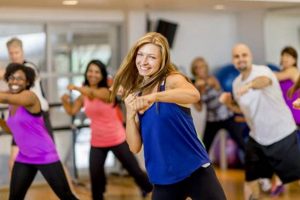
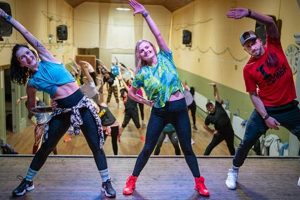
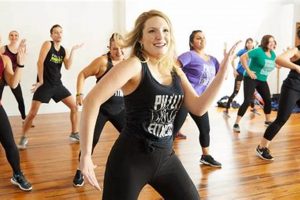
High-intensity interval training (HIIT) fused with Zumba movements constitutes a specific type of group fitness activity. This exercise approach blends the dance-like choreography of Zumba with the powerful, rhythmic elements of HIIT, focusing on muscle conditioning, cardio, and plyometric exercises. For example, participants may execute a sequence of squats, lunges, and push-ups set to a fast-paced musical beat, interspersed with periods of active recovery.
The potential impact of this workout format on physical fitness can be substantial. It may contribute to improvements in cardiovascular health, muscular endurance, and overall body composition. Historically, Zumba gained popularity for its accessibility and fun, dance-oriented approach to fitness. Incorporating HIIT principles seeks to enhance the intensity and effectiveness of these dance-based workouts.
The following sections will detail the physiological mechanisms, equipment considerations, class structures, and target populations for this particular exercise modality. This information aims to provide a comprehensive understanding of the features and potential advantages of this blended fitness program.
Guidance for Optimized Participation
To maximize benefits and minimize potential risks during intense, rhythm-based fitness sessions, adherence to specific guidelines is recommended.
Tip 1: Prioritize Proper Warm-Up. A dynamic warm-up, encompassing joint mobilization and muscle activation, is crucial to prepare the body for high-intensity movements. Examples include arm circles, leg swings, and torso twists.
Tip 2: Emphasize Correct Form. Maintaining proper alignment and technique during each exercise is paramount. Incorrect form can increase the risk of injury. Pay close attention to instructor cues and mirror feedback.
Tip 3: Hydrate Adequately. Dehydration can impair performance and increase the risk of muscle cramps. Consume water before, during, and after the activity to maintain fluid balance.
Tip 4: Listen to the Body’s Signals. Recognizing signs of fatigue or pain is essential. Modifying exercises or taking breaks when needed can prevent overexertion and potential injuries.
Tip 5: Gradual Progression is Key. Increasing the intensity or duration of workouts gradually allows the body to adapt and reduces the likelihood of strain or injury. Avoid sudden jumps in intensity.
Tip 6: Appropriate Footwear Selection. Supportive athletic shoes designed for lateral movement and impact absorption are crucial for protecting joints and preventing foot injuries.
Tip 7: Cool-Down and Stretch. Static stretching after the activity helps improve flexibility and reduce muscle soreness. Hold each stretch for 20-30 seconds.
Consistent application of these guidelines can contribute to a safer and more effective experience, enhancing the potential for fitness gains while minimizing potential drawbacks.
The following sections will address common misconceptions and frequently asked questions regarding this exercise modality.
1. High-Intensity Intervals

High-intensity intervals (HIIT) are a defining characteristic of structured fitness activities aiming to maximize caloric expenditure and enhance cardiovascular fitness. In the context of the keyword term, the integration of HIIT principles serves as a critical differentiator from standard Zumba programs. Specifically, these classes incorporate short bursts of intense anaerobic exercise, such as plyometric jumps, high-knee sprints, or burpees, interspersed with brief recovery periods. The incorporation of these intervals drives metabolic rate and promotes adaptations in both aerobic and anaerobic energy systems. For instance, a typical class might alternate between a 30-second sprint followed by a 30-second active recovery, repeated multiple times within a song set. This methodology elevates the overall intensity profile of the workout compared to traditional Zumba, where the emphasis is primarily on sustained, moderate-intensity dance movements.
The implementation of HIIT protocols necessitates careful consideration of participant fitness levels and exercise technique. Novices may require modifications to reduce the impact and complexity of certain exercises. For example, a low-impact alternative to a jump squat could involve a regular squat with a focus on controlled movement and proper form. Moreover, qualified instructors play a crucial role in monitoring participant exertion levels and providing appropriate feedback to ensure safety and effectiveness. The strategic use of HIIT not only increases the physical demands of the class but also requires a higher level of engagement and coordination from participants, potentially leading to improved neuromuscular control.
In summary, high-intensity intervals are integral to the structure and physiological impact of the specified fitness activity. Their deliberate inclusion distinguishes this approach from traditional Zumba and contributes to enhanced cardiovascular fitness, increased caloric expenditure, and improved muscular endurance. Challenges may arise in adapting HIIT protocols to diverse fitness levels, highlighting the importance of qualified instruction and appropriate exercise modifications. The effective application of HIIT principles enhances the overall fitness benefits, aligning the class with goals of intense, time-efficient workouts.
2. Rhythmic Movement Integration

Rhythmic movement integration serves as a foundational element underpinning the structure and efficacy of high-intensity Zumba fitness activities. The purposeful synchronicity of movement with musical rhythm provides the framework for delivering cardiovascular and muscular endurance benefits. Without rhythmic coherence, the transition between high-intensity bursts and active recovery periods becomes disjointed, potentially diminishing the workout’s overall effectiveness and increasing the risk of improper form. For instance, a specific combination of plyometric exercises may be paired with a Latin musical beat to guide the tempo and duration of each repetition, thus influencing both the intensity and the coordination demands of the exercise.
The careful selection of musical genres and tempos directly influences the exertion level and the engagement of participants. Faster tempos are often associated with high-intensity intervals, while slower tempos are used for active recovery or cool-down segments. Furthermore, specific dance styles or cultural influences embedded within the music can enhance the motivational aspect of the fitness activity, fostering greater adherence and enjoyment among participants. For example, integrating elements of salsa, merengue, or reggaeton music not only dictates the rhythm but also introduces distinct movement patterns that challenge different muscle groups and improve overall coordination. The success of this integrated approach depends on the ability of instructors to seamlessly weave rhythmic components into the exercise sequences.
In summation, the integration of rhythmic movement within high-intensity Zumba sessions is not merely aesthetic; it is a crucial determinant of exercise intensity, coordination demands, and participant engagement. Challenges lie in striking a balance between rhythmic complexity, exercise intensity, and participant skill level. A well-designed program incorporates these elements strategically to maximize fitness benefits and minimize the risk of injury, thereby underscoring the importance of instructor expertise in rhythmic cueing and exercise choreography.
3. Muscular Endurance Enhancement

Muscular endurance enhancement is a direct consequence of participation in, and a primary benefit derived from, this specific type of exercise classes. These classes integrate high-repetition resistance exercises with cardiovascular activity, thereby subjecting targeted muscle groups to sustained periods of exertion. This exertion challenges the muscles’ capacity to resist fatigue, driving adaptations that improve their endurance. For example, repeated squats, lunges, and push-ups performed in time with the music during a session contribute to increased leg and core muscle endurance. The classes are specifically structured to overload muscle groups through prolonged activity rather than heavy weight, which differentiates them from traditional strength training. The importance of muscular endurance enhancement in these programs is significant, as it contributes to improved functional fitness, enabling individuals to perform everyday tasks with greater ease and less fatigue.
The design of these classes deliberately incorporates elements to progressively challenge muscular endurance. Instructors often utilize modifications and progressions to accommodate various fitness levels, ensuring that participants are consistently working at a challenging but sustainable intensity. For instance, novice participants may perform modified push-ups on their knees, while more advanced individuals may perform full push-ups with increased repetitions. Furthermore, the rhythmic nature of the class serves as a metronome, encouraging participants to maintain a consistent pace and duration, which in turn further promotes muscular endurance adaptations. Outside the classroom, this enhanced muscular endurance translates to tangible benefits, such as improved stamina during activities like hiking, cycling, or even simply walking for extended periods.
In conclusion, muscular endurance enhancement is an integral component and a key outcome resulting from participation in these fitness sessions. The combination of high-repetition resistance exercises, rhythmic movement, and progressive overload contribute synergistically to improve the muscles’ ability to resist fatigue. A challenge lies in individualizing the program to accommodate diverse fitness levels while maintaining a challenging intensity. However, the practical significance of enhanced muscular endurance extends beyond the classroom, improving functional fitness and overall quality of life.
4. Cardiovascular System Benefits

The link between cardiovascular system benefits and the specified fitness classes is predicated on the sustained elevation of heart rate and respiratory rate achieved during the workout. Classes of this nature, characterized by intermittent high-intensity bursts and active recovery periods, impose significant demands on the cardiovascular system. This demand stimulates physiological adaptations, including improved cardiac output, increased oxygen uptake efficiency, and enhanced vascular function. The integration of plyometric exercises, such as jump squats and burpees, further amplifies cardiovascular stress, leading to greater improvements in aerobic capacity. Consider, for example, an individual with a sedentary lifestyle who begins regularly attending these fitness classes. Over time, this individual is likely to experience a decrease in resting heart rate, an increase in VO2 max (maximal oxygen consumption), and a reduction in blood pressureall indicative of improved cardiovascular health. The importance of cardiovascular benefits as a component is underscored by the reduced risk of cardiovascular diseases, such as coronary artery disease and stroke, associated with regular participation in such fitness regimens.
The practical application of this understanding extends to the design and modification of class structures. Instructors must be cognizant of participants’ individual cardiovascular fitness levels and adjust the intensity and duration of intervals accordingly. For instance, participants with pre-existing cardiovascular conditions may require modified exercises or extended recovery periods to prevent overexertion. Additionally, the use of heart rate monitors can provide real-time feedback on cardiovascular strain, allowing participants and instructors to make informed decisions about exercise intensity. This personalized approach ensures that the potential cardiovascular benefits are maximized while minimizing the risk of adverse events. Regular assessment of participants’ cardiovascular fitness, such as through treadmill stress tests or submaximal exercise tests, can further guide program adjustments and track progress over time. The fitness activity must be tailored to individual needs while achieving cardiovascular fitness.
In summary, the positive impact on the cardiovascular system is a primary outcome and a foundational rationale for participation in high-intensity, rhythm-based fitness. Challenges may arise in adapting the intensity and complexity of classes to accommodate diverse cardiovascular fitness levels and pre-existing health conditions. However, a carefully structured and individualized approach, incorporating heart rate monitoring and appropriate exercise modifications, can effectively mitigate these challenges and maximize the potential for cardiovascular improvement, contributing to long-term health and well-being. The knowledge of cardiovascular fitness will significantly impact these fitness activities.
5. Choreography Complexity Variation

The level of choreography complexity represents a crucial variable influencing participant engagement and the overall effectiveness of fitness activity. Within the context of high-intensity Zumba workouts, varying the intricacy of dance sequences enables the class to cater to a diverse range of fitness levels and coordination abilities. High choreography complexity, characterized by rapid transitions between movements and intricate step patterns, may challenge experienced participants, fostering continuous skill development. Conversely, simpler choreography with fewer transitions and easier-to-follow steps can accommodate beginners or individuals with coordination limitations. The lack of variation in choreography complexity can result in participant disengagement, frustration, or increased risk of injury due to improper execution. An example is a class primarily composed of intricate salsa steps which could alienate new attendees. The significance lies in its ability to adapt the class to the needs of the attendees and prevent a skill plateau that could hinder progress.
The practical application of choreography complexity variation can be observed in class design strategies. Instructors may incorporate “layering,” where basic steps are introduced first, followed by progressively more complex variations as participants become comfortable. Furthermore, the use of visual cues and verbal instruction can assist participants in mastering more challenging choreography. Experienced instructors often scan the room and adjust the choreography based on the average skill level of the group, providing modifications or alternative steps for those who are struggling. This adaptive approach ensures that all participants are challenged appropriately and can experience a sense of accomplishment, regardless of their initial skill level. The integration of diverse musical styles and dance genres also contributes to choreography complexity variation, offering a broader range of movement patterns and challenging different muscle groups.
In summary, choreography complexity variation is a critical component for sustaining participant engagement and optimizing the effectiveness of high-intensity, rhythm-based fitness activities. Challenges include accurately assessing participant skill levels and adapting choreography on the fly. However, a thoughtful and well-executed approach to choreography complexity variation can mitigate these challenges and create a more inclusive and rewarding fitness experience, contributing to higher participant retention and improved fitness outcomes. These variations in choreography are one of the many methods for an engaging, well rounded exercise program.
6. Proper Form Emphasis

The adherence to correct biomechanical alignment during exercise execution, designated as “Proper Form Emphasis,” directly influences the safety and efficacy of “strong zumba classes.” The high-intensity nature of these classes, characterized by rapid transitions and repetitive movements, amplifies the risk of musculoskeletal injuries if proper form is neglected. For example, improper landing mechanics during plyometric exercises or inadequate core engagement during squats can place excessive stress on joints and muscles, potentially leading to strains, sprains, or more chronic conditions. The inclusion of explosive movements requires precision. Proper form not only minimizes injury risk but also maximizes the activation of targeted muscle groups, optimizing the fitness benefits derived from the activity.
The practical application of this emphasis necessitates a multi-faceted approach. Qualified instructors provide clear and concise verbal cues, demonstrating correct form and offering individualized feedback to participants. Visual aids, such as mirrors, allow participants to self-assess their alignment and technique. Furthermore, modifications and progressions are implemented to accommodate varying fitness levels and physical limitations, ensuring that all participants can execute exercises safely and effectively. Real-world scenarios include modifying a full push-up to a knee push-up for someone with limited upper body strength, or reducing the range of motion during squats for individuals with knee pain. Consistent reinforcement of proper form throughout the class is essential to cultivate a culture of safety and promote long-term adherence.
In conclusion, a strong correlation exists between adherence to “Proper Form Emphasis” and the overall safety and effectiveness of “strong zumba classes.” Challenges may arise in maintaining consistent form amidst high-intensity movements and accommodating diverse skill levels. However, the implementation of qualified instruction, visual aids, and exercise modifications can mitigate these challenges. This emphasis serves to minimize injury risk, maximize fitness benefits, and foster a sustainable and enjoyable fitness experience. The dedication to proper form ensures that the benefits of the exercise activity are reached in a way that is safe and effective.
Frequently Asked Questions Regarding Intense Rhythm-Based Fitness Activities
The following section addresses prevalent inquiries concerning the mechanics, benefits, and potential drawbacks of high-intensity Zumba-style exercise programs. The objective is to provide clear and concise answers, clarifying common misconceptions and guiding informed participation.
Question 1: Is prior dance experience necessary to participate effectively in this exercise program?
No. While prior dance experience may facilitate quicker adaptation to choreography, it is not a prerequisite. Instructors typically offer modifications and progressions to accommodate varying skill levels. A willingness to learn and an aptitude for following rhythmic cues are sufficient for successful participation.
Question 2: What differentiates this exercise modality from traditional Zumba classes?
The primary distinction lies in the incorporation of high-intensity interval training (HIIT) principles. Traditional Zumba focuses on sustained, moderate-intensity dance movements, whereas this modality integrates short bursts of intense anaerobic exercise followed by brief recovery periods.
Question 3: What are the potential cardiovascular risks associated with this high-intensity exercise, and how can they be mitigated?
Individuals with pre-existing cardiovascular conditions may experience increased risk. Mitigation strategies include consulting with a physician prior to participation, monitoring heart rate during exercise, and modifying intensity levels as needed.
Question 4: How frequently should one engage in this type of exercise to maximize benefits without risking overtraining?
A frequency of 2-3 sessions per week, with adequate rest and recovery periods in between, is generally recommended. Overtraining can lead to fatigue, injury, and decreased performance. Individual responses to exercise vary, necessitating careful self-monitoring.
Question 5: Are modifications available to accommodate individuals with joint pain or mobility limitations?
Yes. Qualified instructors typically provide a range of modifications to reduce impact and accommodate various physical limitations. These modifications may involve altering range of motion, using low-impact alternatives, or eliminating certain exercises altogether.
Question 6: What type of footwear is recommended to minimize the risk of foot and ankle injuries during these classes?
Supportive athletic shoes designed for lateral movement and impact absorption are crucial. Shoes with adequate cushioning and ankle support can help prevent injuries and improve performance.
In summary, understanding the nuances of high-intensity, rhythm-based fitness activities is essential for safe and effective participation. By addressing common concerns and providing clear guidelines, individuals can make informed decisions and maximize the potential benefits of this exercise modality.
The following sections will delve into specific class formats, equipment considerations, and program design strategies.
Conclusion
This article has explored facets of strong Zumba classes, emphasizing the integration of high-intensity interval training, rhythmic movement, muscular endurance enhancement, cardiovascular system benefits, choreography complexity variation, and proper form emphasis. The multifaceted nature of this exercise modality necessitates careful consideration of participant fitness levels, exercise technique, and potential risks. A comprehensive understanding of these factors is essential for optimizing program design and ensuring participant safety.
Further research and continued refinement of training methodologies are warranted to fully elucidate the long-term effects of strong Zumba classes on various populations. The potential benefits of this blended fitness approach should be weighed against potential risks, and personalized guidance from qualified professionals remains paramount for informed participation. The data gathered from this fitness program has contributed significant information for future health initiatives.