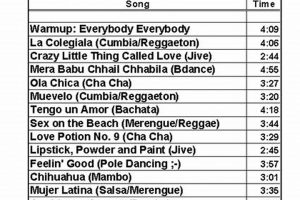
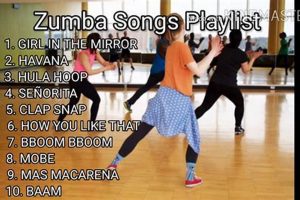
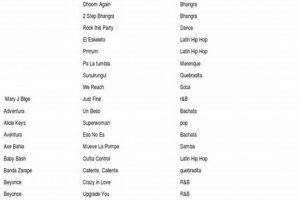
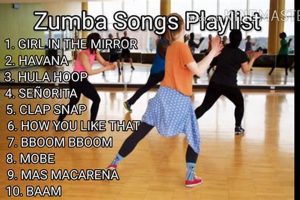
This particular fusion blends the energetic and fitness-oriented nature of Zumba with musical compositions originating from Spanish-speaking regions. The music typically includes genres like salsa, merengue, reggaeton, and cumbia, providing a vibrant and culturally rich backdrop for the dance workout. As an example, a Zumba class might incorporate a popular Latin pop hit or a traditional salsa rhythm to guide the choreography.
The combination offers several advantages. The incorporation of diverse Latin rhythms adds variety and cultural immersion to the exercise routine, potentially increasing participant enjoyment and motivation. Furthermore, exposure to different musical styles can broaden one’s appreciation for Latin American culture while simultaneously providing a high-energy cardiovascular workout. Historically, Zumba’s global appeal has naturally led to the integration of numerous international musical influences, with Hispanic music playing a significant role.
Subsequent sections will delve into the specific genres commonly featured, explore the choreographic elements adapted to complement these rhythms, and examine the broader impact of this musical integration on fitness culture and participant engagement.
Guidance for Optimizing Routines Rooted in Hispanic Rhythms
The following suggestions aim to enhance the experience and effectiveness of fitness routines that integrate Hispanic music and dance elements.
Tip 1: Prioritize Authentic Musicality: Selection of authentic Hispanic musical forms, such as salsa, merengue, or cumbia, ensures appropriate rhythmic structure and culturally resonant experience. Generic or imitation tracks may lack the nuances necessary for effective choreography.
Tip 2: Emphasize Fundamental Steps: Mastery of fundamental steps corresponding to each musical genre is crucial for both participant safety and effective muscle engagement. For instance, understanding the basic salsa step pattern is essential before attempting more complex variations.
Tip 3: Adapt Choreography to Skill Levels: Choreography should be adaptable to various fitness levels. Modifications must be provided to accommodate beginners while challenging more advanced participants. This ensures inclusivity and prevents potential injuries.
Tip 4: Cultivate Cultural Awareness: Incorporating information about the cultural origins and historical context of the music can enrich the overall experience. A brief introduction to the dance’s roots can enhance participant appreciation and engagement.
Tip 5: Maintain Rhythmic Accuracy: The choreography must precisely align with the rhythmic structure of the music. Deviations from the beat or inconsistent timing can compromise the effectiveness of the workout and create a disjointed experience.
Tip 6: Incorporate Variety in Tempo and Style: Varying the tempo and incorporating different styles within a session prevent monotony and target different muscle groups. Alternating between high-energy merengue and slower, more sensual bachata can create a well-rounded workout.
Tip 7: Focus on Clear Cueing: Precise and unambiguous cueing is essential for guiding participants through the choreography. Verbal cues should be synchronized with the music and movements, allowing participants to anticipate transitions effectively.
Adhering to these guidelines ensures a more effective, enjoyable, and culturally enriching fitness experience, promoting participant engagement and maximizing the physical benefits.
Subsequent sections will address common challenges encountered in implementing these routines and strategies for overcoming them.
1. Authentic Rhythms

The incorporation of authentic rhythms constitutes a foundational element within effective “zumba dance spanish songs” experiences. Deviation from genuine rhythmic structures undermines the integrity of the choreography and diminishes the cultural representation. When Zumba classes utilize correctly interpreted salsa, merengue, or cumbia rhythms, the steps become intrinsically linked to the music, resulting in a more natural and engaging workout. A flawed rhythm can negatively impact the intended exercise benefits, and often fails to immerse participants in the vibrant cultural context that the music is intended to evoke. For example, improperly applying reggaeton rhythms would alter the energy levels of moves.
The selection process and accurate execution of these rhythms have practical significance. Instructors must choose from a broad range of music, ensuring the chosen tracks are both rhythmically sound and appropriate for varying fitness levels. Moreover, instructors must possess sufficient cultural awareness and training to discern authentic rhythms from generic, imitative versions, which often lack the nuances and complexities of their authentic counterparts. Effective choreography translates the unique rhythmic patterns of each music genre into dynamic and understandable movement sequences.
In summary, authentic rhythms form the backbone of any successful incorporation of Hispanic music in Zumba. Maintaining the authenticity of the source music serves as the catalyst for a more engaging, culturally enriching, and physically beneficial workout experience for participants, thereby minimizing the potential for misrepresentation and maximizing the positive impact of integrating this musical style into the fitness regime. The careful and deliberate selection of the music and the instructors knowledge are both essential elements of authenticity.
2. Cultural Context

The cultural context inextricably links to and informs the implementation of Hispanic-themed routines. The dances and rhythms originate from specific societal traditions, each possessing a unique history and social significance. Disregarding this context not only diminishes the authentic experience but can also lead to misrepresentation and cultural appropriation. The execution of a salsa step, for example, derives its character from the broader cultural milieu of the dance, influenced by its evolution in Cuban communities. This context shapes the posture, movement quality, and emotional expression inherent in the dance.
Understanding and respecting this foundation carries practical significance. Instructors armed with cultural knowledge can impart a more comprehensive understanding of the movements, enhancing participant appreciation and fostering a more inclusive and respectful fitness environment. For instance, informing participants about the origins of cumbia in Colombia, its roots in indigenous and African traditions, and its evolving social role adds depth to the experience. It also helps them engage with the movements in a more meaningful way. Moreover, accurate representation safeguards against perpetuating stereotypes or oversimplifying complex cultural traditions, therefore contributing to a more responsible and ethical approach to incorporating international music in fitness settings.
In summary, cultural context acts as a critical component. Respect for this context goes beyond mere imitation, fostering a more enriching, respectful, and culturally sensitive class environment. Challenges may arise in acquiring sufficient knowledge and representing diverse cultural forms accurately; however, continued education, research, and collaboration with cultural experts provide avenues for responsible and meaningful integration of Hispanic music. The adherence to these principles ensures a more authentic and impactful Zumba experience, benefiting both participants and the wider cultural landscape.
3. Choreography Alignment

Within a fitness paradigm utilizing Hispanic rhythms and dance styles, choreography alignment represents a critical factor in determining the overall effectiveness and fidelity of the program. Improper alignment between the dance steps and the underlying musical structure diminishes the intended physiological benefits and creates a disjointed, potentially frustrating, experience for participants. A specific example involves the implementation of salsa choreography. If the footwork does not consistently coincide with the clave rhythm, the movements become desynchronized, hindering the ability to effectively execute the steps and diluting the cardiovascular workout. This lack of alignment also compromises the dances authentic expression.
The practical significance of maintaining alignment is observed in several aspects. Firstly, accurate alignment ensures the efficient engagement of specific muscle groups, leading to improved muscle endurance and strength. Secondly, it enhances coordination and rhythm, promoting cognitive benefits associated with dance. Thirdly, the maintenance of alignment creates a more immersive and enjoyable experience for participants, driving motivation and adherence to the fitness routine. Fitness instructors often use count cues to aid participants. A failure to align verbal cues with a songs beat leads to disorientation, especially among beginner Zumba attendees.
In summary, choreography alignment is not merely an aesthetic consideration but a functional necessity. Failure to achieve this jeopardizes the workout’s effectiveness and undermines the cultural integrity of the dance form. The challenges in achieving accurate alignment involve a deep understanding of diverse Hispanic musical forms and effective translation of these rhythms into dance sequences suited for varied fitness levels. By prioritizing rhythmically congruent routines, one ensures a safe, engaging, and culturally respectful fitness experience.
4. Energy Expenditure

Energy expenditure, representing the total calories burned during physical activity, constitutes a central factor in evaluating the efficacy of any exercise program, including those integrating Hispanic musical elements.
- Rhythmic Intensity and Metabolic Demand
Different rhythms within the Hispanic musical spectrum exert varying degrees of metabolic demand. For example, the high-tempo nature of merengue typically elicits a greater caloric expenditure compared to the slower, more controlled movements characteristic of bachata. Understanding the metabolic demands of each rhythm allows for the design of workouts that strategically manipulate energy expenditure for targeted fitness goals. Calorie expenditure depends on movement complexity.
- Choreographic Complexity and Caloric Consumption
The intricacy of the choreography directly influences caloric consumption. Routines that incorporate complex footwork, large muscle group involvement, and dynamic transitions require greater energy output. Conversely, simplified choreography, designed for beginners or those with physical limitations, results in a lower rate of energy expenditure. The inclusion of jumps raises energy consumption.
- Interval Training and Enhanced Caloric Burn
The application of interval training principles, alternating between periods of high-intensity movement and low-intensity recovery, represents an effective strategy for maximizing caloric burn within Hispanic music-based fitness routines. Incorporating short bursts of high-intensity salsa interspersed with periods of less demanding cumbia allows for a sustained elevation of heart rate and metabolic rate. The benefits are often short term.
- Individual Factors and Energy Use
Individual factors such as body weight, fitness level, and metabolic rate exert significant influence on energy expenditure. Individuals with higher body weights or lower fitness levels generally expend more calories during the same activity compared to fitter, lighter individuals. It is essential to acknowledge these variations when designing and implementing programs. This ensures that everyone benefits from zumba.
The interplay between rhythmic intensity, choreographic complexity, interval training strategies, and individual factors highlights the multifaceted nature of energy expenditure in the context of these fitness programs. Manipulating these variables allows for the design of workouts tailored to optimize caloric burn, improve cardiovascular health, and enhance overall fitness outcomes, while respecting individual differences and limitations.
5. Genre Variety

Genre variety constitutes a pivotal component. The selection and integration of diverse musical forms directly impact participant engagement, physiological benefits, and the overall cultural richness of the fitness experience. Incorporating only a single genre may lead to repetitive movements and diminished participant interest, thereby reducing long-term adherence to the program. Conversely, a well-curated selection of genres, such as salsa, merengue, bachata, reggaeton, and cumbia, creates a dynamic and stimulating workout experience. For example, a class might transition from the fast-paced energy of salsa to the more sensual and controlled movements of bachata, thus targeting different muscle groups and promoting a broader range of motion.
The practical significance of genre variety extends beyond mere participant enjoyment. Each genre possesses distinct rhythmic patterns, tempos, and movement qualities, engaging different muscle groups and promoting diverse physiological adaptations. The varied instrumentation and melodic structures contribute to a richer sensory experience, potentially enhancing mood and reducing perceived exertion. Furthermore, exposure to multiple genres fosters a deeper appreciation for Latin American musical traditions, enriching the cultural experience and promoting inclusivity. By carefully selecting and sequencing genres, instructors can create a well-rounded workout that maximizes both physical and psychological benefits.
In summary, genre variety serves as a cornerstone of effective Zumba. The strategic integration of diverse musical styles enhances participant engagement, promotes physiological diversity, and enriches the cultural dimensions of the fitness experience. The challenge lies in selecting genres that complement each other while remaining authentic to their cultural origins. When this approach is used, participant satisfaction will be higher because it enhances the overall experience.
6. Participant Engagement
The level of participation in fitness activities incorporating Hispanic musical elements depends significantly on various factors. The inherent appeal of rhythms, cultural familiarity, and the instructor’s ability to create a motivating environment influence engagement. A direct correlation exists between the quality of musical selection, appropriateness of choreography, and the degree to which individuals actively participate in a routine. A fitness class utilizing popular and recognizable tunes is expected to generate higher participation rates compared to a class featuring obscure or unfamiliar music. The instructor’s demeanor also plays a significant role in increasing levels of interaction from each of the participants. The increased participation is a direct effect of the instructors involvement.
Participant retention relies on sustained interest and perceived value. A Zumba class solely based on high-intensity reggaeton may alienate participants with preferences for slower, more traditional genres like salsa or cumbia. Sustained involvement occurs when the program adequately addresses diverse skill levels and interests. An instructor providing modifications for complex steps and offering variations in intensity can foster a more inclusive atmosphere, encouraging broader participation. For instance, a sequence that begins with a core salsa step and progresses to a series of regressions will encourage a broader audience participation.
Ultimately, maintaining an engaged class necessitates a balanced approach. Authenticity, coupled with a responsiveness to participant needs, determines the success of routines. The most successful instructors adapt their class, maximizing the levels of engagement of each class, and allowing the attendees to get the most out of it. The degree to which one integrates the rhythms, their culture, and their own skills is of the utmost importance.
7. Musicality Awareness

Musicality awareness, the sensitivity and responsiveness to the nuances of music, holds significant importance within the domain of routines incorporating Hispanic musical styles. It enables both instructors and participants to move in synchronicity with the rhythmic and melodic elements, enhancing the overall effectiveness and cultural authenticity of the experience.
- Rhythmic Interpretation
The capacity to accurately interpret rhythmic patterns forms a cornerstone of musicality. In the context of routines based on Hispanic songs, this translates to a precise understanding of the clave in salsa, the syncopation in merengue, or the steady beat of cumbia. Choreography should not only match the tempo but also reflect the rhythmic subtleties, enabling participants to internalize the music and move with greater fluency. For instance, recognizing the “one” count in salsa allows for proper execution of the basic step, grounding the dancer in the music.
- Dynamic Expression
Musicality extends beyond mere rhythmic accuracy to encompass the dynamic expression inherent in the music. Identifying variations in volume, intensity, and phrasing informs the movement quality and adds emotional depth to the dance. A crescendo in a reggaeton track might inspire a more energetic and powerful movement, whereas a softer passage in bachata could elicit a more fluid and sensual style. Expressiveness enhances connection with the song.
- Genre Differentiation
An understanding of different musical genres allows for appropriate choreographic choices that reflect the unique characteristics of each style. While salsa often involves intricate footwork and partner work, merengue typically features simpler steps and a more straightforward rhythm. Recognizing these distinctions prevents the homogenization of styles and ensures that the movements align with the cultural and musical context. Different genres evoke certain dance moves.
- Instrumentation Sensitivity
Musicality entails an awareness of the various instruments contributing to the overall sonic landscape. Paying attention to the percussion, bass line, melodic instruments, and vocal elements can inspire different choreographic ideas and movement qualities. For example, the sound of the timbales in a salsa song might prompt a sharp, percussive movement, while a soaring trumpet solo could elicit a more expansive and expressive arm gesture. The sonic landscape influences moves.
These facets collectively contribute to a more immersive and authentic experience. By cultivating musicality awareness, instructors can guide participants beyond rote memorization of steps, fostering a deeper connection with the music and its cultural origins. This enhances not only the physical benefits of the routine but also the psychological and emotional rewards, promoting greater enjoyment and adherence.
Frequently Asked Questions
The following section addresses common inquiries and clarifies essential aspects of utilizing Hispanic music within Zumba and similar fitness formats.
Question 1: What specific musical genres commonly feature?
Commonly, rhythms originate from genres such as salsa, merengue, cumbia, bachata, and reggaeton. The selection depends on factors like participant skill level, desired intensity, and the overall objective of the fitness class.
Question 2: How does cultural authenticity influence the quality of the routine?
Cultural authenticity significantly enhances the experience. Genuine rhythms and movements that align with cultural traditions fosters a richer, more respectful, and engaging workout for all participants.
Question 3: What considerations are crucial when selecting musical tracks?
The selection depends on tempo, rhythmic complexity, and lyrical content. Tracks must be appropriate for a fitness setting, devoid of offensive language, and possess a consistent beat suitable for choreographic interpretation.
Question 4: How does an instructor accommodate participants with varying skill levels?
The instructor provides modifications and regressions for complex steps. Offering alternative movements caters to different fitness levels and ensures inclusivity within the class.
Question 5: What role does rhythmic accuracy play in minimizing risk of injury?
Rhythmic accuracy and choreography alignment promotes correct form. This minimizes stress on joints and muscles, therefore reducing the likelihood of injury during the session.
Question 6: How can one enhance the cultural understanding of the dance forms involved?
Incorporate brief explanations about the origins and history of each dance style, providing context that enriches the experience and fosters appreciation for diverse cultural traditions.
In summary, selecting culturally authentic music, providing appropriate modifications, and emphasizing rhythmic accuracy are key to a safe and engaging fitness experience.
The next section will explore best practices for instructors.
Conclusion
The preceding exploration underscores the multifaceted nature of “zumba dance spanish songs”. Effective integration hinges on the selection of authentic musical forms, respect for cultural context, precise choreography alignment, and conscious consideration of participant engagement. Musicality awareness, encompassing rhythmic interpretation, dynamic expression, and genre differentiation, emerges as a central competency for instructors seeking to create immersive and beneficial experiences.
The continued integration of “zumba dance spanish songs” into the fitness landscape necessitates ongoing education and a commitment to responsible cultural representation. The successful implementation of these elements provides a gateway to enhanced physical well-being and a deeper appreciation for the rich heritage of Hispanic musical traditions. A sustained effort towards authenticity and understanding will ensure the enduring value of this fusion within the fitness community.