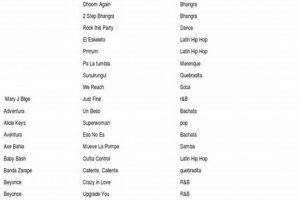
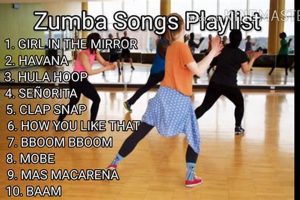
Musical pieces originating from Portugal and other Lusophone regions, specifically designed or adapted for Zumba fitness classes, constitute a vibrant subgenre within the broader Zumba music landscape. These selections often feature rhythms like kuduro, baile funk, and kizomba, lending an authentic cultural flavor to the workout experience. An example would be a popular tune adapted with a faster tempo and Zumba-friendly choreography.
The incorporation of such material brings several advantages. It introduces participants to diverse musical traditions, enhancing the cultural enrichment aspect of Zumba. Furthermore, it caters to individuals of Portuguese-speaking heritage, fostering a sense of community and inclusivity within the class. Historically, the inclusion of music from various cultures has been a key element in Zumba’s global appeal, promoting movement and enjoyment across diverse demographics.
Therefore, a detailed examination of the specific characteristics, popular artists, and choreographic considerations associated with these musical selections is warranted. Analysis of the rhythmic structures, lyrical themes, and typical dance moves enables a greater understanding of their integration within the Zumba framework.
Tips for Incorporating Lusophone Music in Zumba
This section offers practical guidance on effectively integrating musical selections from Portuguese-speaking regions into Zumba classes, ensuring authenticity and cultural sensitivity.
Tip 1: Research Authentic Artists and Genres: Prioritize sourcing music directly from Portuguese-speaking artists and familiarizing oneself with genres like Kuduro, Kizomba, and Baile Funk. This ensures the use of culturally accurate rhythms and styles.
Tip 2: Adapt Tempo and Arrangement Appropriately: While retaining the essence of the original track, adjust the tempo to align with Zumba’s energetic pace. Consider creating shortened or remixed versions suitable for class duration.
Tip 3: Choreograph Culturally Relevant Movements: Integrate steps and movements that are naturally associated with the specific musical genre. This enhances the authenticity and cultural appreciation of the routine.
Tip 4: Provide Cultural Context: Briefly explain the origin and significance of the music and dance styles being used. This educates participants and fosters a greater understanding of the culture.
Tip 5: Pronounce Lyrics Correctly: Invest time in learning the proper pronunciation of Portuguese lyrics. This demonstrates respect for the language and prevents miscommunication.
Tip 6: Vary the Playlist: Balance the inclusion of popular selections with lesser-known tracks to expose participants to a wider range of Lusophone music. This maintains variety and encourages exploration.
Tip 7: Seek Feedback: Solicit input from participants regarding their enjoyment and understanding of the music. This allows for continuous improvement and ensures cultural sensitivity.
By following these guidelines, instructors can effectively introduce musical works from Portuguese-speaking regions into their Zumba classes, creating a more enriching and globally-aware fitness experience.
The next section will explore the challenges and opportunities presented by the inclusion of diverse musical styles in group fitness settings.
1. Rhythmic Diversity

The incorporation of “portuguese zumba songs” directly contributes to the rhythmic diversity of Zumba fitness programs. These selections introduce participants to musical structures and percussive patterns distinct from the more commonly used Latin American genres typically associated with Zumba. This broader exposure enhances the overall workout experience, challenging participants to adapt to varying tempos and rhythmic complexities, leading to improved coordination and physical engagement. A prime example is the integration of Kuduro, an Angolan genre characterized by its fast-paced, driving beat and syncopated rhythms, which provides a marked contrast to the smoother, more predictable rhythms of Salsa or Merengue.
The significance of rhythmic diversity extends beyond mere variety; it impacts the physiological and psychological benefits of the workout. Different rhythmic patterns stimulate different muscle groups and cognitive processes. Baile Funk, with its heavy bass and rapid-fire vocal delivery, engages the core muscles and demands a higher level of focus and coordination. Conversely, Kizomba’s slower, more sensual rhythm promotes balance and control. The strategic alternation of these diverse rhythms prevents plateauing, maintaining participants’ interest and maximizing the fitness benefits derived from each session. Furthermore, it fosters a deeper appreciation for global musical traditions and their unique physical expressions.
In summary, the infusion of music from Portugal and other Lusophone regions enriches the Zumba experience by injecting crucial rhythmic diversity. This not only elevates the physical challenges and potential fitness outcomes but also broadens cultural awareness and promotes a more inclusive and engaging environment. While selecting and implementing these diverse rhythms requires careful consideration of cultural sensitivity and appropriate tempo adjustments, the resulting benefits in terms of participant engagement and overall fitness enhancement are substantial and contribute significantly to the program’s ongoing success.
2. Cultural Authenticity

The integration of musical selections from Portuguese-speaking regions into Zumba classes presents a unique opportunity to enhance cultural authenticity. When accurately representing the musical and choreographic traditions of these regions, a sense of genuine cultural exchange is fostered. This contrasts with a superficial appropriation of styles, which can diminish the educational and experiential value for participants. For instance, incorporating authentic Kizomba steps and rhythms with a properly sourced Kizomba track from Angola or Portugal provides a more authentic and respectful experience than simply using a generic “Latin” beat with vaguely similar movements. This approach respects the origin and meaning behind the art form.
Maintaining cultural authenticity requires a conscious effort to avoid stereotypes and misrepresentations. Careful research into the specific genres, artists, and dances is essential. Consulting with individuals from Portuguese-speaking communities can further ensure accuracy and prevent unintentional cultural insensitivity. Furthermore, it’s crucial to present the music and dance within its proper historical and social context, providing participants with a deeper understanding and appreciation. For example, explaining the origins of Baile Funk in the favelas of Rio de Janeiro adds a layer of context that elevates the Zumba experience beyond a mere workout, transforming it into a cross-cultural educational opportunity.
Ultimately, prioritizing cultural authenticity when incorporating songs from Portuguese-speaking regions enriches the Zumba experience for both instructors and participants. It promotes respect for diverse cultures, expands participants’ understanding of global music and dance traditions, and creates a more inclusive and engaging fitness environment. While challenges may arise in accessing authentic resources and accurately representing cultural nuances, the resulting benefits in terms of cultural appreciation and educational value make the effort worthwhile, ensuring that the integration of these musical selections is done responsibly and respectfully.
3. Tempo Adaptation

Tempo adaptation is a critical element in the successful integration of musical selections from Portuguese-speaking regions into Zumba fitness routines. Original compositions, while culturally rich and rhythmically diverse, may not inherently align with the energy levels and pace expected in a typical Zumba class. The process involves modifying the speed of the track to achieve a suitable beats-per-minute (BPM) range conducive to effective choreography and participant engagement. Without proper tempo adjustment, the music might prove too slow to maintain the desired aerobic intensity, or conversely, too fast, leading to participant frustration and compromised form. For example, traditional Kizomba, often characterized by a slower, more sensual tempo, would necessitate a significant acceleration to fit the high-energy demands of Zumba. This adaptation, however, requires careful execution to avoid distorting the integrity and feel of the original piece.
The importance of tempo adaptation extends beyond simply speeding up or slowing down a track. It necessitates a nuanced understanding of musical structure and arrangement. The adapted tempo must maintain the integrity of the original rhythm and harmonic progression, preserving its cultural essence. In some instances, this may involve creating remixes or edits that re-structure the song to suit the demands of a Zumba routine. For instance, a longer, more complex piece might be shortened to focus on the most impactful rhythmic sections, ensuring consistent energy levels throughout the class. Furthermore, the choice of tempo should be strategically aligned with the specific movements and choreography planned for each segment, maximizing the effectiveness of the workout. Improper tempo selection can lead to mismatched movements, causing confusion and reducing the overall enjoyment and effectiveness of the Zumba session.
In conclusion, tempo adaptation is an indispensable element in integrating music from Portuguese-speaking regions into Zumba. It necessitates a delicate balance between maintaining cultural authenticity and achieving the desired fitness outcomes. While presenting challenges in terms of technical expertise and musical sensitivity, the successful implementation of tempo adjustments ensures that these selections contribute to a more diverse, engaging, and effective Zumba experience. Careful consideration of these factors is paramount for instructors seeking to incorporate Lusophone music responsibly and effectively into their classes.
4. Choreography Integration
Effective choreography integration is paramount when incorporating music from Portuguese-speaking regions into Zumba routines. The chosen movements must not only align with the tempo and rhythm but also reflect the cultural nuances inherent in the musical genre. A disconnect between choreography and music can result in a diluted or misrepresented cultural experience.
- Authentic Movement Vocabulary
The choreography should draw upon authentic movement vocabularies associated with the specific musical genre. For example, when using a Kuduro track, steps should incorporate the fast-paced, energetic footwork and upper body isolations characteristic of Kuduro dance. Simply applying generic Zumba steps would fail to capture the essence of the genre and potentially misrepresent its cultural significance. A lack of authentic choreography can lead to a superficial and inaccurate representation of Lusophone dance forms.
- Rhythmic Synchronization
Precise synchronization between movement and rhythm is crucial. The choreography must accent key musical phrases and percussive elements, enhancing the connection between the dancer and the music. For instance, during a Baile Funk track, incorporating syncopated hip movements and isolations that directly correlate with the drum patterns amplifies the energetic and rhythmic impact of the music. When the dance is disconnected from the rhythm, the overall effect diminishes, reducing both the fitness benefits and the cultural appreciation of the musical selection.
- Cultural Contextualization
The choreography should reflect the cultural context of the music. Movements should evoke the spirit and emotions associated with the specific genre and its origins. Using Kizomba, for instance, a more sensual, connected style of dance emphasizes partnership and emotional expression. Failure to acknowledge and integrate such contextual elements reduces the experience to a purely physical exercise, stripping away layers of cultural meaning and understanding. Therefore, integrating dance steps that respect the origins of the dance style are crucial.
- Progressive Sequencing
The choreography should progress logically, building in intensity and complexity as the song develops. Starting with simpler movements and gradually introducing more challenging steps allows participants to gradually adapt to the unique rhythms and patterns of the music. Withholding progressive sequencing could overwhelm participants new to the musical style, undermining their engagement and potentially leading to frustration. Appropriate sequencing is critical for facilitating both physical fitness and cultural appreciation.
The aspects outlined above underscore the necessity of careful and considered choreography when employing Portuguese-language songs in Zumba classes. Integration of authentic movement vocabularies, rhythmic precision, and cultural context leads to a rich and rewarding exercise experience, one that effectively bridges fitness and cultural appreciation.
5. Linguistic Nuance

The incorporation of musical selections from Portuguese-speaking regions into Zumba classes necessitates a consideration of linguistic nuance. The proper interpretation and delivery of lyrics can significantly impact the cultural authenticity and educational value of the fitness experience.
- Phonetic Accuracy
Correct pronunciation is paramount to respecting the language and culture. Inaccurate phonetic rendering can distort the meaning and aesthetic quality of the lyrics, diminishing the intended effect. For example, mispronouncing vowel sounds or consonant clusters can alter the rhythm and rhyme scheme, undermining the overall musicality of the piece.
- Semantic Understanding
Beyond pronunciation, comprehending the meaning of the lyrics is essential. A literal translation may not always capture the intended emotional or cultural context. Understanding the metaphorical language and idiomatic expressions common in Portuguese songs from various regions allows the instructor to convey the true spirit of the music and its message. For instance, analyzing slang usage in Baile Funk.
- Cultural Contextualization
Linguistic nuances are often deeply intertwined with cultural context. Understanding the social, historical, and geographical origins of the lyrics enhances appreciation and avoids potential misinterpretations. Linguistic elements can contribute to the overall Zumba dance, emphasizing both cultural knowledge and entertainment.
- Communicative Delivery
The manner in which lyrics are delivered, both verbally and through body language, significantly influences the overall experience. Conveying the energy, emotion, and attitude embedded in the lyrics enhances participant engagement and fosters a deeper connection to the music. Failing to accurately convey the communicative nuances can result in a flat or uninspired performance, reducing the impact of the Zumba routine.
Therefore, attention to phonetic accuracy, semantic understanding, cultural contextualization, and communicative delivery elevates the integration of songs from Portuguese-speaking regions beyond a mere workout, transforming it into a culturally enriching experience.
6. Genre Fusion

The incorporation of music from Portuguese-speaking regions into Zumba fitness programs inherently involves genre fusion. These selections often represent blends of traditional Lusophone rhythms with contemporary pop or electronic elements, or incorporate influences from other global musical styles. This fusion creates a unique sonic landscape that differentiates it from more conventional Zumba fare. The selection of a particular piece can be a strategic choice, where genre fusion highlights both cultural heritage and dance styles popular within a region. A Baile Funk track remixed with electronic elements to increase BPM is a prime illustration, blending traditional rhythms from the favelas of Rio de Janeiro with a contemporary dance-club sensibility.
Genre fusion is a key mechanism through which traditional music styles gain wider appeal and accessibility, particularly among younger demographics. The hybridization process can introduce listeners to musical traditions they might not otherwise encounter, fostering cross-cultural appreciation and broadening their musical horizons. For example, Kizomba fused with R&B or hip-hop elements can create a more approachable sound for individuals unfamiliar with traditional Angolan music. Such mixtures can then influence more original creations within a specific community, creating a continuously evolving hybrid musical form. Further, the fusion of varied tempos within one piece or Zumba program can provide an inclusive, energizing dance experience.
Understanding the dynamics of genre fusion is essential for Zumba instructors seeking to create inclusive and culturally sensitive fitness experiences. By recognizing the specific elements that contribute to a successful fusion, instructors can curate playlists that are both engaging and respectful of cultural traditions. A carefully blended dance program, integrating both tempo and origins is an essential component of the Zumba experience, facilitating not only fitness but cultural immersion and education.
7. Community Engagement
The incorporation of Portuguese-language musical selections within Zumba fitness programs facilitates community engagement, fostering a sense of belonging and shared cultural experience among participants. This engagement manifests in several distinct facets.
- Shared Cultural Identity
Musical selections from Lusophone regions provide a connection point for individuals of Portuguese-speaking heritage, creating a shared sense of identity and cultural pride. For instance, individuals from Brazil, Portugal, Angola, or Mozambique may find common ground through the music and dance, fostering a sense of community within the Zumba class.
- Cross-Cultural Understanding
Exposure to musical traditions from diverse cultures promotes cross-cultural understanding and appreciation among participants. Those unfamiliar with Portuguese language or Lusophone musical styles gain exposure to new sounds and rhythms, fostering empathy and respect for different cultural expressions. As participants learn dances from other cultures, there is an educational component to a Zumba dance program.
- Inclusive Environment
The intentional inclusion of music from diverse regions creates a more inclusive environment within the Zumba class. Participants feel welcomed and valued, regardless of their background or cultural heritage. This inclusivity can encourage participation from a wider range of individuals, strengthening the sense of community within the fitness group.
- Social Interaction
Shared participation in dance activities creates opportunities for social interaction and connection among participants. Learning new steps, sharing experiences, and celebrating cultural traditions together strengthens bonds and builds relationships. This social interaction can extend beyond the Zumba class, fostering a wider sense of community and belonging.
The benefits of community engagement, facilitated through the use of Portuguese-language musical selections, extend beyond the physical fitness benefits of Zumba. By fostering shared cultural identity, promoting cross-cultural understanding, creating an inclusive environment, and encouraging social interaction, these musical selections contribute to a more vibrant and supportive community within the Zumba setting, as well as potentially outside of the dance context.
Frequently Asked Questions
This section addresses common inquiries regarding the utilization of Portuguese-language musical selections within Zumba and related fitness programs, clarifying their purpose and appropriate application.
Question 1: What defines a musical piece for Zumba as “Portuguese?”
The designation applies to compositions primarily sung in the Portuguese language, originating from Portugal, Brazil, Angola, Mozambique, or other Lusophone countries. Furthermore, the musical style often reflects cultural elements of these regions, though it may also incorporate influences from other musical traditions.
Question 2: Is familiarity with Portuguese required to effectively use these musical selections in a fitness class?
Formal fluency in the language is not a strict prerequisite. However, a basic understanding of common phrases and accurate pronunciation are beneficial for conveying the music’s intended meaning and demonstrating respect for the culture.
Question 3: What are the primary musical genres typically incorporated from Portuguese-speaking regions?
Commonly utilized genres include, but are not limited to: Kuduro, Baile Funk, Kizomba, Samba, and Brazilian Pop. The selection depends on the desired energy level and choreographic style of the fitness routine.
Question 4: Are there specific considerations for adapting tempo and rhythm from the original recordings?
Tempo adjustments are often necessary to align the music with the demands of a fitness class. However, care must be taken to maintain the integrity of the original rhythm and preserve its cultural essence. Excessive alteration can dilute the cultural authenticity of the music.
Question 5: How can cultural sensitivity be ensured when using musical pieces from Portuguese-speaking regions?
Instructors should engage in thorough research to understand the cultural context of the music and choreography. Consulting with individuals from Portuguese-speaking communities can provide valuable insights and prevent unintentional misrepresentation.
Question 6: What are the potential benefits of incorporating Portuguese-language selections into fitness routines?
Benefits include enhanced cultural awareness, increased rhythmic diversity, promotion of inclusivity, and fostering a sense of community among participants. Additionally, it can offer a unique and engaging fitness experience that differentiates the class from others.
In summation, thoughtful and informed integration of Portuguese-language musical selections offers a multifaceted approach to fitness, promoting both physical well-being and cultural appreciation. Attention to linguistic details, appropriate adaptation, and cultural sensitivity are essential for maximizing the benefits.
The subsequent section provides resources and tools for instructors seeking to expand their knowledge and repertoire of Lusophone-inspired fitness routines.
Conclusion
The examination of “portuguese zumba songs” reveals their significant contribution to the Zumba landscape. Their rhythmic diversity, cultural authenticity when properly implemented, adaptability for fitness purposes, and capacity to foster community highlight their value. The correct integration of these musical elements into fitness classes provides for both physical exercise and cultural enrichment.
Continued exploration and mindful application of Lusophone musical elements within Zumba ensures that these selections persist as a positive influence. The ongoing education of instructors and responsible curation of playlists contribute to the enduring appreciation of both fitness and global musical diversity. Musical works from Portuguese-speaking areas allow for an inclusive environment where rhythm and dance combine effectively.