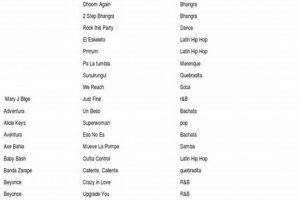
Musical selections designed to accompany cool-down or flexibility exercises performed within a Zumba fitness class context facilitate post-workout recovery. These selections typically feature slower tempos and gentler rhythms compared to the high-energy music used during the main portion of the Zumba session. An example might include a Latin-infused acoustic ballad or a mellow Caribbean-inspired tune.
The utilization of appropriate audio pieces in this phase offers several advantages. It assists in gradually lowering the heart rate and promoting muscle relaxation, mitigating potential soreness and stiffness. Furthermore, the inclusion of calming melodies can enhance the overall participant experience, creating a sense of closure to the physical activity. Historically, the incorporation of designated music for stretching evolved alongside the formalized structure of group fitness routines.
The subsequent discussion will explore specific considerations for selecting and utilizing audio tracks effectively for post-exercise cool-down in fitness programs.
Selecting Audio Tracks for Post-Zumba Flexibility Work
Strategic selection of musical accompaniment can significantly enhance the effectiveness and enjoyment of post-Zumba cool-down routines.
Tip 1: Tempo Reduction: Opt for pieces featuring significantly slower tempos compared to the core Zumba workout. A target range of 60-80 beats per minute (BPM) is often suitable for promoting relaxation.
Tip 2: Genre Appropriateness: While maintaining a Latin or world music influence can preserve continuity, explore subgenres known for their calming qualities, such as bossa nova, acoustic versions of Latin pop songs, or even instrumental pieces.
Tip 3: Rhythm Considerations: Avoid tracks with highly syncopated or complex rhythmic patterns. Simpler, more predictable rhythms tend to be more conducive to relaxation and focused stretching.
Tip 4: Lyrical Content Assessment: Evaluate the lyrical content of potential selections. While some find familiar lyrics comforting, others may find them distracting. Consider instrumental versions or pieces with minimal lyrical components.
Tip 5: Gradual Transition: Implement a smooth transition from the high-energy Zumba music to the slower stretching selections. A gradual decrease in volume and tempo can ease participants into the cool-down phase.
Tip 6: Volume Control: Maintain a comfortable and moderate volume level during the stretching segment. Excessively loud music can hinder relaxation and impede instructor cues.
Tip 7: Length of Selection: Choose tracks that are sufficiently long to accommodate the duration of each stretching exercise. A selection should ideally last the full duration of the stretching sequence.
Careful consideration of tempo, genre, rhythm, lyrics, transition, volume, and duration during the song selection process contributes to a more effective and enjoyable post-exercise flexibility routine, benefiting participants’ physical and mental well-being.
The subsequent section will address methods for integrating selected musical pieces into a complete Zumba cool-down program.
1. Tempo and Rhythm

Tempo and rhythm are defining characteristics of musical selections used in post-Zumba flexibility exercises, directly influencing physiological and psychological responses. Slower tempos, typically within the range of 60-80 beats per minute (BPM), are preferred due to their capacity to lower heart rate and promote parasympathetic nervous system activation. For example, a high-energy Zumba session at 140 BPM might transition to a selection at 70 BPM, signaling the body to shift from exertion to recovery. Rhythmic simplicity is equally important; complex or syncopated rhythms can be stimulating, counteracting the desired relaxation response. Consequently, choices with regular, predictable beats are better suited for facilitating muscle relaxation and mental calmness.
The impact of tempo and rhythm extends to the efficacy of stretching itself. When the music’s pace encourages a gradual and controlled range of motion, individuals are more likely to execute stretches correctly, minimizing the risk of injury. For instance, a steady, even rhythm can guide inhalations and exhalations, synchronizing breath with movement and promoting deeper muscle relaxation. Conversely, a tempo that is too fast or a rhythm that is erratic can lead to rushed or jerky movements, potentially negating the benefits of the stretching exercise. Real-world implementations often involve instructors adjusting the musical selection based on participant feedback, ensuring the pace is conducive to effective stretching and relaxation.
In summary, tempo and rhythm are not merely aesthetic qualities of audio accompanying post-Zumba routines but rather integral components that directly impact physiological and psychological outcomes. The selection of tracks with slower, more regular rhythmic patterns is paramount to maximizing the benefits of stretching, facilitating muscle recovery, and promoting a sense of well-being. Understanding and prioritizing these elements are essential for instructors aiming to create an optimal cool-down experience for their participants.
2. Genre Suitability
Genre suitability plays a pivotal role in the efficacy of audio selections used during post-Zumba flexibility exercises. The chosen genre significantly impacts participant engagement, physiological response, and overall cool-down effectiveness. Maintaining some thematic connection to Zumba’s core genres while emphasizing relaxation is key.
- Latin Acoustic Variations
Acoustic versions of popular Latin songs provide a familiar sonic landscape while stripping away high-energy elements. This creates a bridge between the workout’s intensity and the cool-down’s serenity. The familiar melodies can maintain engagement without overstimulation, fostering a sense of continuity and comfort. For example, a fast-paced salsa hit can be transformed into a gentle guitar ballad, preserving cultural relevance while reducing the tempo and intensity.
- Bossa Nova Influence
Bossa nova, a Brazilian genre characterized by its smooth, sophisticated rhythms and mellow melodies, is inherently conducive to relaxation. Its gentle sway and acoustic instrumentation align well with the objectives of a cool-down phase. The understated nature of bossa nova encourages mindful movement and breath awareness, complementing stretching exercises. Incorporating selections from this genre can introduce a layer of elegance and sophistication to the post-workout experience.
- World Music Ambient
Instrumental pieces derived from world music traditions offer diverse sonic textures while typically avoiding lyrical distractions. Genres such as ambient flamenco guitar or Celtic-inspired melodies can provide a calming and immersive backdrop for stretching. The absence of vocals allows participants to focus on their internal state and the physical sensations of stretching, enhancing mindfulness and promoting relaxation. It’s vital, however, that the chosen world music does not contain jarring rhythms that would counter the intended relaxation.
- Reggaeton Ballads
Reggaeton ballads represent slower tempos that often feature themes of love or reflection. These pieces still maintain the connection to the Latin cultural influences of the Zumba workout, yet provide a gentle reduction in BPM. The utilization of these selections can help participants to slowly transition away from the high intensity activity, and ease into a cool down phase.
The selection of appropriate genres, therefore, is not merely an aesthetic consideration but a critical component of a well-designed post-Zumba flexibility routine. By carefully considering genres that balance familiarity with relaxation, instructors can enhance the effectiveness of the cool-down phase and promote positive physiological and psychological outcomes for participants. The application of these facets can positively support post workout routines.
3. Relaxation Induction

Relaxation induction is a critical objective when incorporating music into post-Zumba stretching routines. The audio selections serve as a catalyst for shifting participants from a state of high-energy exertion to one of calmness and recovery. The following facets explore the methods by which appropriately chosen musical pieces facilitate this transition.
- Parasympathetic Nervous System Activation
Slower tempos and simpler rhythmic patterns in musical selections trigger the parasympathetic nervous system, responsible for the “rest and digest” response. This activation counteracts the sympathetic nervous system’s “fight or flight” response initiated during the Zumba workout. For example, a shift from high-BPM reggaeton to a low-BPM bossa nova song influences heart rate and breathing patterns, facilitating relaxation.
- Mindfulness Enhancement
Audio pieces without complex melodies or disruptive lyrics enable greater focus on internal sensations during stretching. Minimalistic instrumental music, for instance, allows individuals to concentrate on muscle lengthening and breath control, fostering a state of mindfulness. This enhanced self-awareness improves the effectiveness of the stretches and promotes mental relaxation.
- Stress Hormone Reduction
Calming melodies can reduce cortisol levels, a stress hormone elevated during intense physical activity. Certain musical intervals and harmonic progressions have demonstrated an ability to elicit feelings of peace and tranquility. The presence of these elements in post-Zumba audio selections contributes to the alleviation of physical and mental stress.
- Emotional Regulation
Music’s capacity to evoke specific emotions can be harnessed to promote relaxation. Tracks with soothing melodies or familiar instrumentation can generate feelings of comfort and security, facilitating emotional regulation after the physical intensity of the Zumba workout. This sense of emotional balance contributes to the overall well-being of participants.
The selection of appropriate musical tracks for post-Zumba stretching routines extends beyond mere aesthetic considerations. By consciously targeting the activation of the parasympathetic nervous system, enhancing mindfulness, reducing stress hormones, and promoting emotional regulation, instructors can leverage the power of music to create a comprehensive and effective relaxation experience.
4. Seamless Transition
The concept of a seamless transition is critical to effectively implementing audio accompaniment within post-Zumba stretching routines. A jarring shift in music style or tempo can negate the relaxation benefits of the cool-down phase, potentially causing discomfort or disrupting the physiological processes of recovery. The objective is to create a fluid and progressive movement from the high-energy Zumba workout to the lower-intensity stretching segment.
- Gradual Deceleration of Tempo
The most effective seamless transition involves a deliberate and measured reduction in tempo over a series of audio tracks. Abruptly switching from 140 BPM to 70 BPM can shock the system. A more gradual approach incorporates intermediate tempos, allowing the heart rate and breathing to decelerate incrementally. For example, a transition might progress from 140 BPM to 120 BPM, then to 100 BPM, and finally to 70 BPM over a period of several minutes.
- Genre Modulation
Parallel to tempo reduction, a carefully modulated shift in genre can contribute to a seamless transition. If the Zumba class features predominantly high-energy reggaeton, the transition might begin with acoustic reggaeton remixes before moving to bossa nova or instrumental Latin pieces. This approach maintains some familiarity while gently guiding participants toward a more relaxed sonic environment. The goal is to avoid any jarring stylistic changes that could disrupt the overall flow of the cool-down.
- Volume Adjustment
Subtle manipulation of volume levels is another critical element of a seamless transition. A sudden drop in volume can be as disruptive as an abrupt change in tempo. Instead, a gradual decrease in volume, synchronized with the deceleration of tempo, creates a smoother and more comfortable transition. This allows participants to gradually shift their focus from external stimulation to internal sensations, enhancing mindfulness during stretching.
- Instructor Cues and Verbal Guidance
Verbal cues from the instructor play a crucial role in facilitating a seamless transition. These cues can prepare participants for the shift in music and activity level. For example, the instructor might say, “As we move into our cool-down, notice how the music begins to slow, allowing your heart rate to gradually return to normal.” These verbal cues reinforce the intent of the transition and help participants anticipate the change, minimizing potential disruption.
In summation, creating a seamless transition through careful selection and implementation of audio tracks is paramount to maximizing the effectiveness of post-Zumba stretching routines. A deliberate approach to tempo reduction, genre modulation, volume adjustment, and instructor cues ensures a smooth and comfortable transition, promoting relaxation, facilitating physiological recovery, and enhancing the overall participant experience. The integration of these elements within Zumba formats contributes to a more holistic and beneficial fitness program.
5. Length Appropriateness

Length appropriateness, in the context of audio selections used during post-Zumba flexibility exercises, refers to the duration of musical tracks relative to the time allocated for each stretching exercise. The temporal alignment between the audio piece and the stretch is critical for maintaining engagement, promoting consistent breathing patterns, and maximizing the physiological benefits of the cool-down phase. A track that concludes prematurely can interrupt the stretch and disrupt the sense of relaxation. Conversely, a selection that is excessively long may lead to boredom or disengagement. For instance, a hamstring stretch held for 30 seconds necessitates a corresponding musical segment of approximately that length to provide continuous auditory support and maintain focus.
The practical significance of length appropriateness extends to the design of the entire Zumba class structure. Instructors must carefully plan the cool-down phase, allocating specific timeframes for each stretching exercise based on accepted best practices for flexibility training. Once these timeframes are established, the corresponding musical selections must be chosen to match. This process may involve editing longer tracks to create shorter segments or looping shorter tracks to achieve the desired duration. The use of digital audio editing software facilitates the precise manipulation of musical selections to ensure they align perfectly with the stretching protocol. Without this proper alignment, participants may experience a disjointed or ineffective cool-down, undermining the overall benefits of the Zumba program. An example of what can happen in real life is a participant can get cramps and muscle pains.
In conclusion, length appropriateness is not merely a logistical detail, but an integral element of effective audio implementation during post-Zumba flexibility routines. The careful consideration of track duration relative to the time allocated for stretching exercises enhances participant engagement, promotes consistent breathing, and maximizes the physiological benefits of the cool-down phase. While challenges may arise in sourcing or editing musical selections to achieve the desired length, the resulting benefits justify the effort. Ultimately, a commitment to length appropriateness reflects a dedication to providing a well-designed and holistic Zumba experience.
Frequently Asked Questions
The following questions and answers address common inquiries and concerns regarding the selection and utilization of audio tracks designed for post-Zumba stretching routines.
Question 1: What specific BPM range is recommended for audio used during Zumba stretching?
A range of 60-80 BPM is generally considered suitable for promoting relaxation and muscle recovery during post-Zumba stretching. However, the ideal BPM may vary depending on individual preferences and the specific goals of the stretching routine.
Question 2: Is it necessary to use Latin-themed music for Zumba stretching, or are other genres acceptable?
While maintaining a connection to Latin themes can provide continuity, other genres known for their calming qualities, such as bossa nova, ambient world music, or acoustic instrumentals, are often appropriate and effective.
Question 3: How can instructors ensure a smooth transition from the high-energy Zumba portion to the stretching segment?
A gradual deceleration of tempo, a modulated shift in genre, subtle volume adjustments, and clear verbal cues from the instructor are essential for facilitating a seamless transition.
Question 4: What is the ideal length for an audio track used during a 30-second hamstring stretch?
The audio track should ideally be approximately 30 seconds in duration to provide continuous auditory support and maintain focus throughout the stretch.
Question 5: Are there specific lyrical themes that should be avoided in audio selections for Zumba stretching?
Lyrics that are overly stimulating, emotionally charged, or incongruent with the goal of relaxation should be avoided. Instrumental pieces are often preferable.
Question 6: How important is it to consider the cultural background of participants when selecting audio for Zumba stretching?
While not always essential, cultural sensitivity is advisable. Choosing selections that resonate with participants’ cultural backgrounds can enhance engagement and create a more inclusive environment.
The appropriate implementation of musical selections significantly enhances the effectiveness and enjoyment of post-Zumba cool-down routines.
The following section will address advanced strategies for optimizing the use of musical selection.
Conclusion
The exploration of the “zumba stretching songs” demonstrates the nuanced considerations involved in selecting appropriate audio for post-exercise flexibility routines. Factors such as tempo, rhythm, genre, transition, and length each play a crucial role in facilitating relaxation, promoting muscle recovery, and enhancing the overall participant experience. The effective integration of music requires careful planning and attention to detail.
The understanding and application of these principles contribute to a more holistic and beneficial fitness program. Continued research and refinement of these techniques remain essential for optimizing the use of music in promoting physical and mental well-being within Zumba and similar exercise modalities. The future lies in even more personalized approaches, potentially leveraging biometrics to tailor musical selections to individual physiological responses, further enhancing the benefits derived from post-exercise stretching.